

You step out of the shower, reach for a towel, and notice that familiar tight feeling across your arms and legs. Your body wash cleaned the skin, but it may also have left it wanting more comfort. An almond shower oil offers a different kind of bathing experience, combining cleansing ingredients with a plant-derived oil that helps skin feel soft and conditioned after rinsing.
The important detail is that not every oil cleanser works the same way. Formula design, ingredient order, fragrance, rinsability, and your own skin sensitivities all matter. This guide will help you read the label, understand what sweet almond oil contributes, and build a routine that feels both pleasant and sensible.
What Is Almond Shower Oil
An almond shower oil is a rinse-off body cleanser made with oil, gentle cleansing agents, and other supporting ingredients. Sweet almond oil is usually the featured plant-derived emollient. Unlike a pure body oil, the finished product is designed to meet water, spread across damp skin, and rinse away rather than remain as a dense layer.
Think of it as a hybrid between a cleanser and a light moisturizer that works while you rinse. It still needs cleansing ingredients to lift sweat, excess sebum, and everyday residue, but its oil phase can leave the skin feeling less dry immediately afterward.
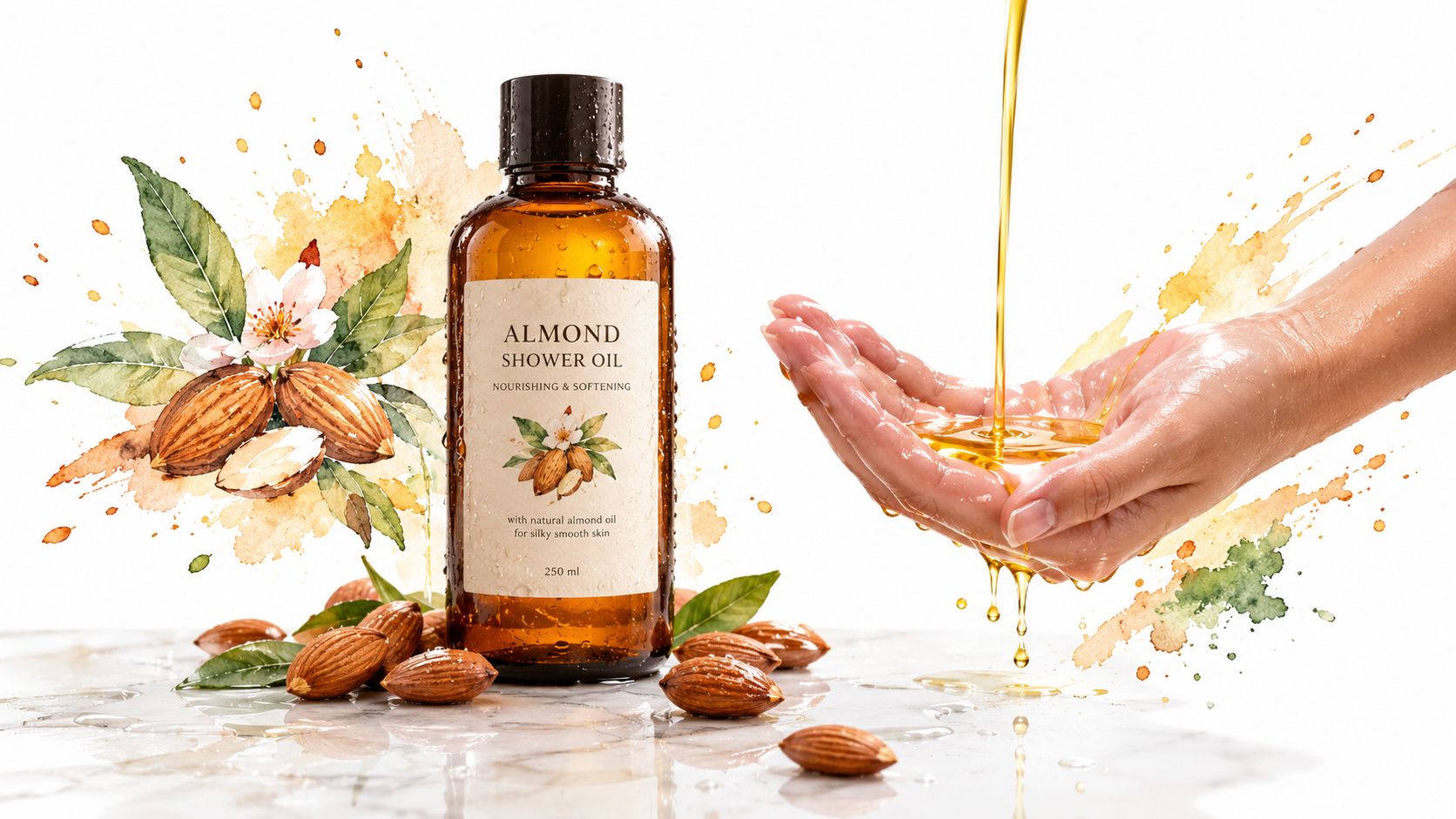
Consider someone who normally uses a strongly foaming shower gel. The product creates a satisfying lather, yet their elbows and shins feel tight once the water stops. Switching to an almond shower oil may offer a silkier application and a softer after-feel, especially when the formula contains a balanced cleansing system rather than oil alone.
That doesn't mean every shower oil is automatically gentle, or that it suits every person. A pure oil without an appropriate emulsifier may feel slippery, rinse unevenly, and leave excess residue. A well-designed product should transform or disperse in water so it cleanses comfortably without making the shower floor unnecessarily slick.
How it differs from familiar body cleansers
Traditional bar soap often creates a firm, rich lather and can leave a very clean sensation. Conventional shower gel usually has a fluid or gel texture, with surfactants doing most of the cleansing work. An almond shower oil tends to feel more cushiony and leaves a thin conditioned film after rinsing.
The right choice depends on what you want from bathing:
- For a strong lather, a shower gel may feel more familiar.
- For a soft, oil-rich texture, an almond shower oil may be more appealing.
- For leave-on moisture, a separate body oil belongs after washing, not in place of cleansing.
ArtNaturals offers a helpful explanation of how bath oils fit into a broader self-care routine in its guide to what bath oil is. The distinction matters because bath oil and shower oil may share plant oils, but they serve different purposes and are used in different amounts of water.
Key Ingredients and Skin Benefits
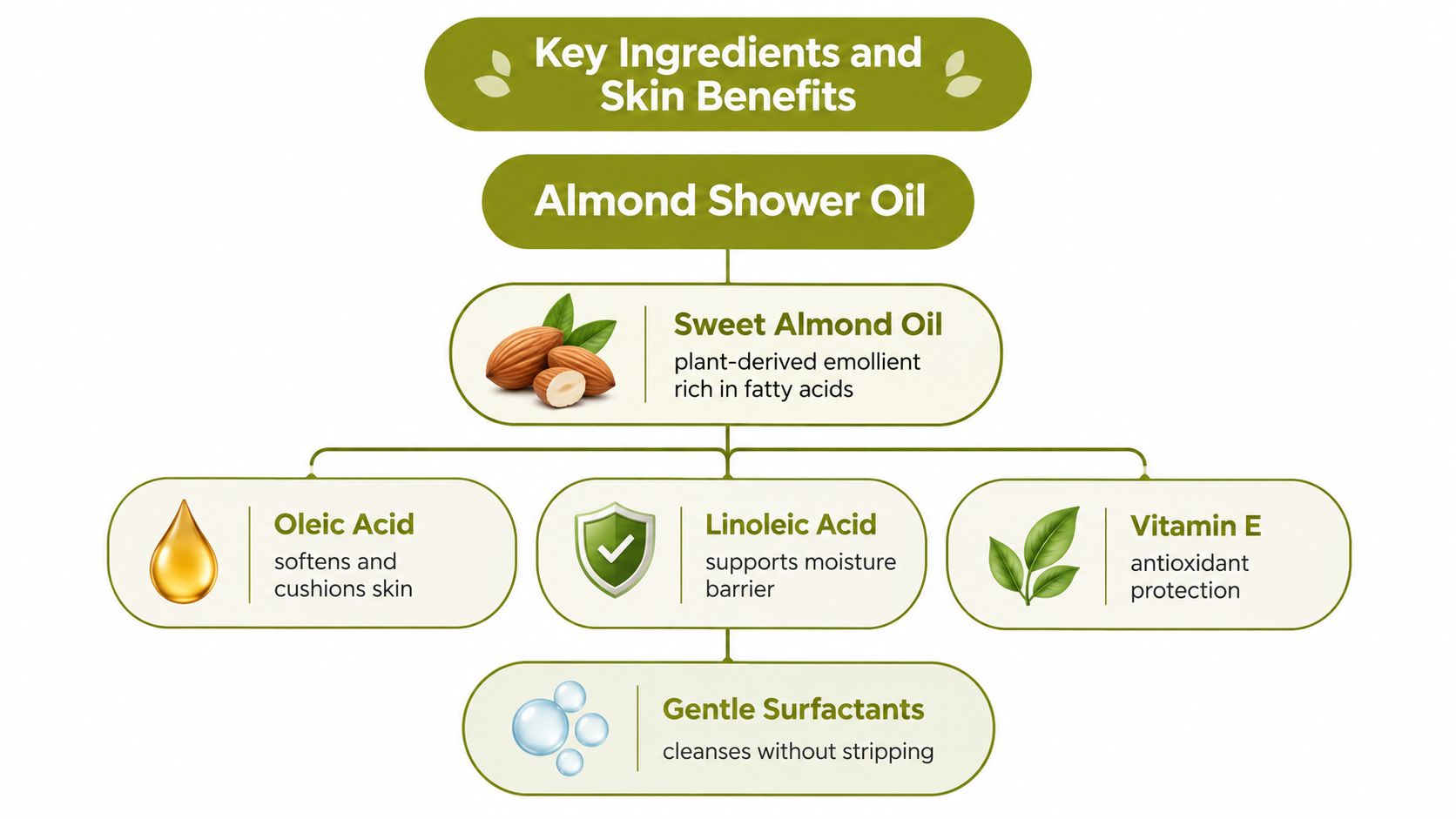
The central ingredient is usually sweet almond oil, a triglyceride-rich emollient made primarily from unsaturated fatty acids. Reported compositions vary by almond variety, growing conditions, maturity, and processing method. A peer-reviewed review places oleic acid at approximately 50 to 84% and linoleic acid at approximately 6 to 37% in analyzed almond oils, with palmitic and stearic acids also present. These four fatty acids together account for more than 99% of total fatty-acid content in most samples, according to the same review of almond oil composition.
What the fatty acids contribute
Oleic acid helps give almond oil its smooth spreadability. In a rinse-off formula, that can make the product glide over damp skin and create a comfortable, cushioned feel during massage.
Linoleic acid contributes to the skin's surface lipid environment. That doesn't mean a shower oil delivers a deep treatment. Because you rinse it away shortly after application, its most realistic role is to help reduce the feeling of post-cleansing tightness by leaving a light lipid film.
Palmitic and stearic acids are also part of almond oil's profile, although they appear in smaller ranges than the two unsaturated fatty acids above. The finished sensory effect depends on the complete formula, not almond oil in isolation.
Sweet almond oil also contains approximately 5 to 8 milligrams of beta-tocopherol per 100 grams, although amounts vary among samples, as reported in the same composition review. Brands may also add vitamin E or another antioxidant system to help protect the product from oxidation.
Why the cleansing base matters
An almond shower oil isn't just almond oil poured into a bottle. It needs surfactants or emulsifiers that help oil and water interact. These ingredients support rinsability, distribute the product across the body, and help prevent an oil-only formula from leaving too much residue.
The formula should balance three experiences:
- Cleansing, so everyday residue lifts from the skin.
- Rinsability, so the product doesn't remain excessively slippery.
- Conditioning, so skin feels comfortable rather than stripped.
The Cosmetic Ingredient Review panel concluded that sweet almond oil is safe for topical use under present cosmetic practices and concentrations, as summarized in this ingredient safety review. That conclusion concerns cosmetic use of the ingredient, not a guarantee about every finished product. Fragrance, preservatives, surfactant choice, concentration, and personal sensitivity still influence how a formula feels.
For a broader look at how a plant oil can fit into body care, ArtNaturals discusses natural body oil as a leave-on category. A shower oil and a body oil may share ingredients, but the shower product needs a cleansing and rinse-off system.
How to Use Almond Shower Oil Properly
Start with damp skin, not completely dry skin. Water helps the formula spread and allows its cleansing ingredients to work as intended without requiring a large amount of product.

A simple shower method
- Wet your body with lukewarm water. Very hot water can leave skin feeling drier and may make an oil-rich formula harder to control.
- Dispense a small amount into your palm. Begin with less than you think you need. You can add more to dry areas rather than trying to rinse away an excess.
- Massage gently over the skin. Use circular movements on arms, legs, torso, elbows, and knees. Avoid vigorous scrubbing, especially if your skin already feels uncomfortable.
- Add water gradually. Many formulas become milky or lightly creamy as oil, water, and cleansing ingredients combine.
- Rinse thoroughly. Check areas where product can collect, including behind the knees and around the ankles.
- Pat dry. Press the towel against the skin instead of rubbing hard.
Practical rule: The best amount is the smallest amount that gives you even coverage and a comfortable rinse.
Whether an almond shower oil can replace your body wash depends on the product label and your preferences. A formulated cleansing oil can serve as your main body cleanser, while a pure sweet almond oil cannot remove water-soluble residue in the same way. If you want to use both, cleanse with the shower oil and apply a small amount of leave-on body oil afterward to damp skin.
You may not need another moisturizer after every use. If your skin still feels dry, apply a light lotion once you've patted dry, concentrating on areas that feel rough. Consistency matters more than using a large amount at one time.
This short visual demonstration can help you observe the texture and application style before adding a shower oil to your routine:
Keep the bottle on a stable shelf rather than directly under a strong stream of water. Oil can make surfaces slippery, so rinse the shower floor if any product lands there and close the container between uses.
Almond Shower Oil vs Shower Gel and Body Oil
These three products may sit beside one another in a bathroom, but they aren't interchangeable. The difference comes down to the balance between cleansing strength, oil content, lather, rinsability, and after-feel.
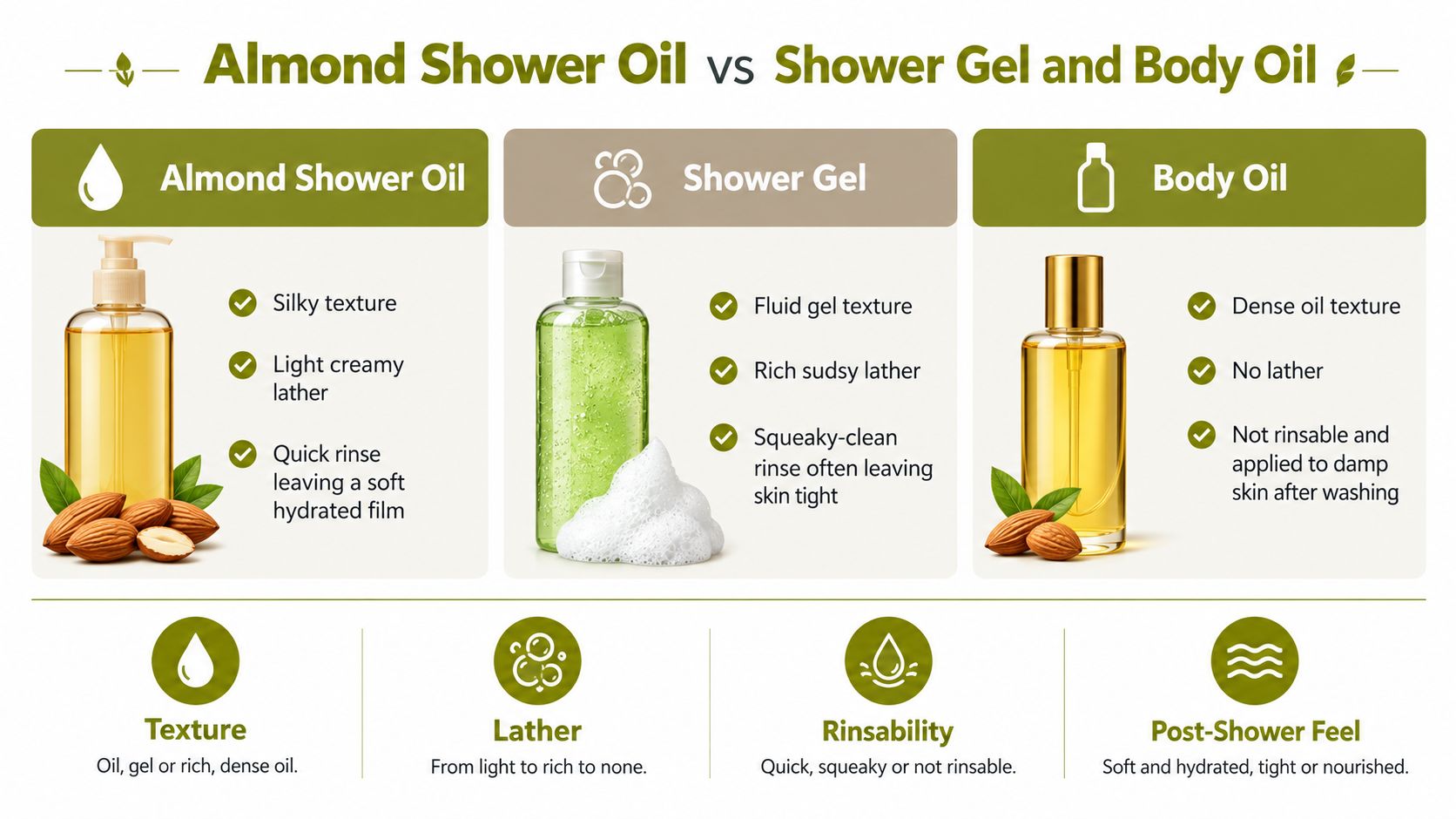
| Product type | Texture and lather | Rinsability | Best fit |
|---|---|---|---|
| Almond shower oil | Silky texture with light creamy lather | Designed to rinse from damp skin | People who want cleansing with a conditioned finish |
| Shower gel | Fluid gel with more noticeable suds | Usually rinses quickly | People who prefer a familiar, foamy wash |
| Body oil | Dense oil with no lather | Meant to remain on skin | People seeking leave-on moisture after bathing |
Almond shower oil
A formulated almond shower oil uses cleansing agents alongside oil. It generally feels richer than gel and less substantial than a leave-on body oil. The result may be a soft, lightly hydrated film, although the exact finish depends on the formula and how thoroughly you rinse.
This can suit someone whose skin feels tight after washing but who doesn't want a separate body-care step. It may be less appealing if you prefer abundant foam or a completely weightless finish.
Shower gel
Shower gel usually gives the clearest lather and the most direct cleansing sensation. Some people prefer that freshness, especially after exercise or on areas where they want a more thorough wash. Others find certain formulas leave their skin feeling tight, particularly when they use hot water or wash repeatedly.
Choosing a body cleanser also involves practical considerations such as texture, packaging, fragrance, and the needs of a household or hospitality setting. A resource on how to choose the right bulk body wash can help clarify those broader purchasing criteria.
Body oil
Pure body oil is a leave-on product, not a cleanser. Apply it after bathing while skin is still slightly damp, then allow it to absorb before dressing. It won't create lather and isn't meant to rinse clean in the same way as a shower oil.
The better choice isn't universal. Choose based on the experience you want: a foamy cleanse, a silky rinse-off product, or a finishing layer after the shower.
Safety and Allergy Considerations
“Natural” doesn't mean universally risk-free. Almond-derived ingredients can be appropriate for many people, but tree-nut allergy, irritation, and fragrance sensitivity are different concerns and should be considered separately.
Highly refined almond oil may contain little or no allergenic protein, but processing varies. An ingredient fact sheet notes that almond oil appears in products including shower gels, bath oils, shampoos, and moisturizers, and recommends checking the complete ingredient list rather than assuming every almond oil carries the same risk. You can review the cosmetic allergy guidance for additional context.
Read the whole label
Look for the specific ingredient name, such as sweet almond oil, and check whether the formula also includes fragrance or essential oils. A reaction may come from a fragrance component rather than almond itself. Fragrance-free and essential-oil-free options can make the decision simpler for people who know that scented body products bother them.
A small-area test may help identify local irritation, but it isn't a guarantee against a systemic allergy. Rinse-off use also doesn't automatically eliminate risk because the product still contacts the skin.
Stop using the product if you develop hives, swelling, intense itching, wheezing, or worsening dermatitis, and seek appropriate medical care for concerning symptoms.
People with a known tree-nut allergy, a history of reactions to almond-derived cosmetics, or persistently reactive skin should seek individualized guidance from a clinician before regular use. Don't test a new product on large areas when you already suspect an allergy.
How to Choose a Quality Almond Shower Oil
A thoughtful purchase starts with the ingredient list, not the front-label promise. In the United States, the FDA requires cosmetic ingredients to be declared in descending order of predominance under 21 CFR 701.3, as explained in its guidance on cosmetic ingredient names.
If a product is marketed as almond-oil-based, check whether almond oil appears near the beginning of the list. That placement suggests the ingredient is present in a comparatively larger amount than ingredients listed later, but it doesn't reveal everything about quality, sourcing, fragrance level, or how the product feels.
Four label questions
- Is almond oil clearly identified? Look for a recognizable ingredient name rather than relying only on words such as “almond inspired.”
- Does the product contain a rinse-off system? Emulsifiers and surfactants help distinguish a formulated shower oil from a pure body oil.
- Is fragrance disclosed? Scent can improve the sensory experience, but it may not suit fragrance-sensitive skin.
- Are the claims realistic? Prefer language about cleansing, softness, comfort, and temporary conditioning over promises to cure or prevent a skin disorder.
Packaging deserves attention too. A recyclable container, clear disposal information, and transparent sourcing statements can support a more considered purchase. Sustainable language should remain specific enough to evaluate, rather than relying on broad words such as “green” or “clean” without explanation.
Sweet almonds also come from a substantial agricultural supply chain. Reported 2024 world almond production reached approximately 3,951,576 metric tonnes, with the United States producing 2,000,340 tonnes, or about 50.6% of the reported global total, according to the almond production overview. Australia produced 370,000 tonnes, Spain 369,700 tonnes, Turkey 200,000 tonnes, and Morocco 163,616 tonnes. These figures refer to almonds, not cosmetic-grade extracted oil, so they shouldn't be treated as a direct measure of shower-oil supply.
That distinction helps shoppers ask better questions about sourcing. Almond cultivation is global, while cosmetic oil requires additional processing and quality controls.
Building a Mindful Almond Shower Oil Routine
An almond shower oil can support a simple body-care ritual: cleanse gently, rinse carefully, pat dry, and add lotion or body oil only where you need it. Read the label, consider fragrance and allergy concerns, and choose a formula whose texture matches your preferences.
If you enjoy aromatic products, don't add undiluted essential oils to a finished shower oil. The National Association for Holistic Aromatherapy describes common aromatherapy dilution ranges of 1 to 5% and a lower general range of 0.5 to 2.5% for infants, toddlers, and young children in its essential-oil safety guidance. Follow the finished product's directions instead.
For ideas on making the bathroom feel more restorative, the SouthRay Kitchen & Bath guide explores the shower environment itself. You can also use ArtNaturals' body skin care routine guide to think about how cleansing, moisturizing, and ingredient choices fit together.
ArtNaturals offers plant-based body-care options, including Sweet Almond Oil as a carrier oil for use after showering, alongside skincare, bath, body, and essential-oil products. Visit ArtNaturals to explore ingredient-focused choices and build a simple routine around the way your skin feels.