

You ran the bath hoping for softer skin, and you stepped out feeling tighter than when you got in. Your legs look flaky by morning, your elbows catch on sleeves, and you're wondering whether the scented bottle in your basket will help or just make the water smell nice. That's a familiar winter problem, and it's exactly why the label matters more than the front of the bottle.
Choosing the best bath oil for dry skin isn't about finding the richest scent or the longest botanical list. It's about judging the full formula, using a small measured amount well, and pairing the soak with a simple step afterward.
What Bath Oil Can and Cannot Do for Dry Skin
A bath does two different jobs. Water wets and softens the outer layer of skin, while oil can help slow how quickly that water leaves once you step out. You're not moisturizing with water alone, and you're not hydrating with oil alone. The combination is what feels comfortable.
That idea has some measured support. In a 2016 randomized controlled pragmatic study with 60 participants, a commercial bath oil used every other day for 28 days produced significantly lower transepidermal water loss, with a between group mean difference of -1.9 g/m²/h, 95% CI -3.1 to -0.8, and higher stratum-corneum hydration compared with a non-oil cleanser. Participants used the assigned product instead of their usual cleanser, and all of them finished the four weeks.
Where That Support Stops
Those results came from one commercial product over four weeks. They don't tell you that every botanical blend, pure kitchen oil, or essential oil mix will behave the same way. Skin surface pH and roughness also didn't differ materially between groups in that study, which is a useful reminder that a nicer feel in the tub isn't the same as a change in every skin measure.
Think of bath oil as a supportive part of a bathing ritual. It can:
- Soften the feel of the soak: Oil leaves a light conditioning layer as the water drains.
- Reduce that tight after bath feeling: Especially when the water isn't hot and the soak stays brief.
- Make cleansing gentler: An oil based wash can feel less stripping than a strongly foaming cleanser.
It can't replace what you apply afterward, and it shouldn't be framed as a fix for persistent, painful, or worsening dryness. If your skin cracks, stings for hours, or keeps getting worse despite a gentler routine, that's a conversation for a dermatologist or healthcare professional, not a reason to add more oil.
Bath oil is nourishment during the soak, not a complete routine on its own.
Judged that way, the question shifts. You're not hunting for a miracle ingredient. You're checking whether a specific bottle is formulated to disperse in water, stay stable in your bathroom, and suit your skin without unnecessary fragrance.
Reading Ingredient Labels Before You Buy
Turn the bottle around in the store. The front will say hydrating, nourishing, or silky. The back tells you what's really doing the work, in what order, and what might bother you.
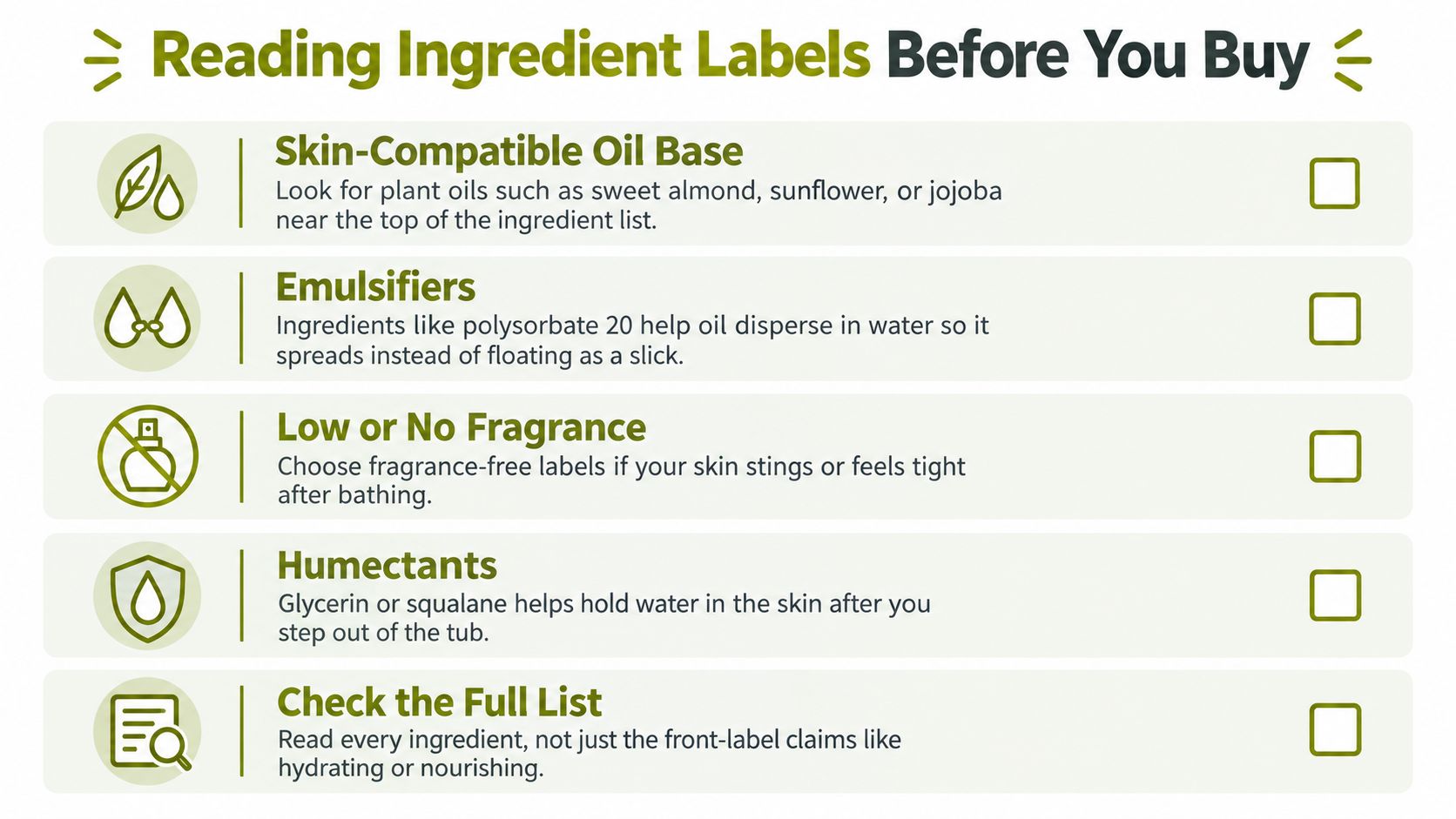
Ingredients are generally listed from higher to lower concentration, so the first few names shape how the product feels. If water and fragrance dominate a product sold as an oil, expect scent more than conditioning. If plant oils sit near the top, expect a richer film and a slipperier tub.
A One Minute Label Checklist
- Skin compatible oil base: Look for plant oils such as sweet almond, sunflower, or jojoba near the top. These form the conditioning part of the formula.
- Emulsifiers: Ingredients like polysorbate 20 help oil disperse through bath water instead of floating as one slick patch you have to chase around.
- Fragrance load: The words fragrance or parfum can represent many components under one listing. If scented washes already make you itchy, choose fragrance free instead of lightly scented.
- Humectants and emollients: Glycerin or squalane can help skin hold water after bathing when they're part of a leave on or rinse off formula.
- Stability clues: Oils can oxidize over time, especially in a warm, steamy bathroom. Clear storage guidance, sensible packaging, and a complete ingredient list are practical quality signals.
- Allergen awareness: Some ingredients, including lanolin, are known allergens for certain people. A short list isn't automatically safer if it contains something you personally react to.
A short list is easy to read, but it isn't automatically better. A well made emulsion may need an emulsifier and a preservative system to stay consistent and safe to use. What matters is whether each ingredient has a clear job and whether you understand the trade offs.
Check who the product is made for, too. A bath oil designed for adults may not be the right default for infant skin or for someone who's eczema prone without extra caution. Age guidance, patch test advice, and clear dosage instructions on the label are signs the maker expects you to use it carefully, not freely pour it in.
If you can't tell what the main oils are, how much to use, or whether the scent comes from a heavy fragrance load, put it back. A better label will answer those questions in under a minute.
Why Natural Does Not Always Mean Gentle
A botanical label can sound reassuring, but it does not predict how a bath formula will feel on dry or reactive skin. The label matters most when it shows how the oil disperses, how much fragrance it contains, and whether the product is made for use in bath water.
Controlled testing found substantial differences among bath and shower oils, showing that products in this category do not affect skin in the same way. That is a reason to judge the finished formula rather than assume that plant-derived ingredients are automatically gentle.
Pure kitchen oils are not designed to disperse in bath water. They may float, cling unevenly to skin or the tub, and leave a different feel from a product formulated for bathing. An emulsion combines oil with ingredients that help it mix through water, although the result still depends on the formula. In practice, a product's format can matter as much as where its oils come from.
Where Natural Formulas Can Still Bother Skin
Essential oils can be concentrated and fragrant. If they are added directly to bath water without being properly dispersed, droplets may contact skin unevenly. Vegetable oils can also feel uncomfortable on already inflamed skin, and heat, light, or prolonged storage can affect an oil's condition. If a bottle smells sharp or stale, discard it rather than using it up.
Botanical ingredients do not need to be avoided across the board. Assess the full formula: fragrance and essential-oil content, emulsifiers, preservatives, allergen information, and the intended user. Also consider the practical trade-off: a scented oil may make a bath more pleasant, but a fragrance-free formula is the simpler choice for skin that reacts easily.
Practical rule: Treat natural as a description of origin, not a promise of gentleness.
A Simple Patch Test
Before a full bath, apply a small amount of the product diluted as directed to an area such as your inner forearm. Wait and watch for redness, stinging, itching, or persistent tightness. If irritation develops, rinse the area and do not use the product in the bath.
If your skin is already reactive, start with an unscented or lightly scented option. A candle can add fragrance to the room without putting more scent in the bath water. Once you are soaking, removing fragrance from the water is not practical.
Dilution, Dosage and Safe Bath Habits
After filling the tub, a generous pour can leave oily residue on your skin and porcelain. The right amount depends on the specific formula and the bath water, so use the product label as your guide rather than estimating from another oil.
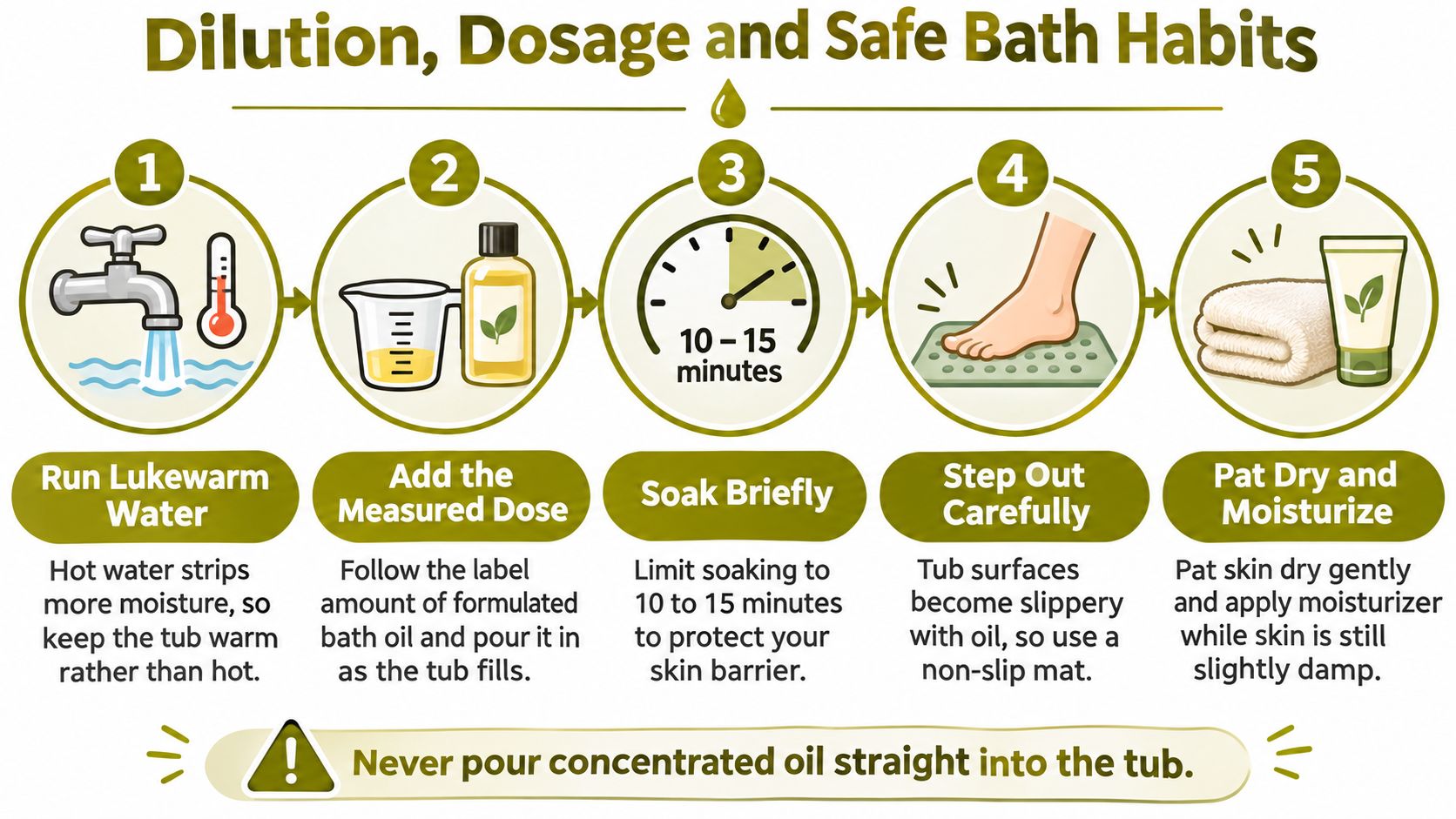
Start with the smallest amount printed on the label. Add it to the running water as directed, which helps disperse a formulated bath oil through the tub. Dosage instructions are specific to each product and its intended dilution in bath water, so don't transfer a measure from one bottle to another. If your skin feels coated afterward, reduce the amount next time, as long as the label allows. More oil can mean more residue, without making skin more comfortable.
A Safer Sequence From Faucet to Floor
- Run warm water: Keep it comfortable rather than hot, and place a non-slip mat before the tub fills.
- Measure the label dose: Add the product as the water runs, then swirl gently if the instructions recommend it.
- Soak briefly: Enter slowly while holding a stable surface. A longer soak does not make up for using too much oil.
- Rinse if directed: Some formulas are intended to stay in the bath; others call for a light rinse. Follow the bottle.
- Step out carefully: Pat skin gently, then wipe oily residue from the tub rim and floor and rinse the surface before someone else uses it.
Slip risk deserves attention. NHS prescribing guidance warns that bath and shower emollients coat the surface and can increase the risk of slipping and falling, particularly for children and older adults. It recommends non-slip mats, careful entry and exit, cleaning residue, and avoiding overuse. If the bathroom is shared, cleaning the tub is part of safe use.
This short demonstration shows the basic pour, swirl, and soak sequence.
Never put undiluted essential oils directly on skin or drop them straight into bath water, where they won't disperse evenly. For more on using essential oils safely on skin, start with proper dilution in a finished product. Bath oil does not replace a leave-on moisturizer. It can soften the bathing experience, while moisturizer is a separate step in caring for dry skin.
Building a Dry-Skin Bathing Routine
Timing does more for dry skin than adding a second product to the water. A short, warm bath followed quickly by moisturizer beats a long, hot soak followed by ten minutes of scrolling in a towel.
The American Academy of Dermatology recommends limiting baths and showers to 5 to 10 minutes and using warm rather than hot water, then gently patting skin instead of rubbing it. More specifically, applying a creamy, fragrance free moisturizer within 3 minutes of bathing can help, because retaining some water on the skin before moisturizing supports hydration and the protective barrier.
A Sample Evening Routine for Dry Winter Skin
Fill the tub with warm water and add your measured bath oil as it runs. Soak for about eight minutes, which is enough time to unwind without leaving skin feeling stripped. Step out onto a mat, pat dry with a soft towel, and leave skin slightly damp rather than bone dry.
At the sink, apply your fragrance free cream right away, paying extra attention to shins, forearms, elbows, and heels. Put on cotton pajamas rather than rough fabrics if your legs tend to feel itchy at night. Rinse and wipe the tub once you're dressed, while you still remember it's slippery.
Timing note: Keep the moisturizer within arm's reach of the tub, not in another room.
You don't need to run this routine nightly. Some people use bath oil once or twice a week as a longer ritual and shower briefly on other days. A consistent dry skin care routine you can repeat on busy evenings will help more than an elaborate Sunday routine you abandon by February.
Adjust one variable at a time. If skin feels coated, use less oil. If it feels tight, shorten the soak or lower the water temperature before you blame the product. The moisturizer step has the clearest routine guidance, so treat bath oil as the relaxing part and moisturizer as the essential finish.
Comparing Bath Oil Formats and Where ArtNaturals Fits
A bath oil label can tell you more than the product name: check whether the formula is designed to disperse in water, how much fragrance it contains, and whether its directions suit your bathing habits. Those details affect residue, scent exposure, and the chance of a slippery tub.
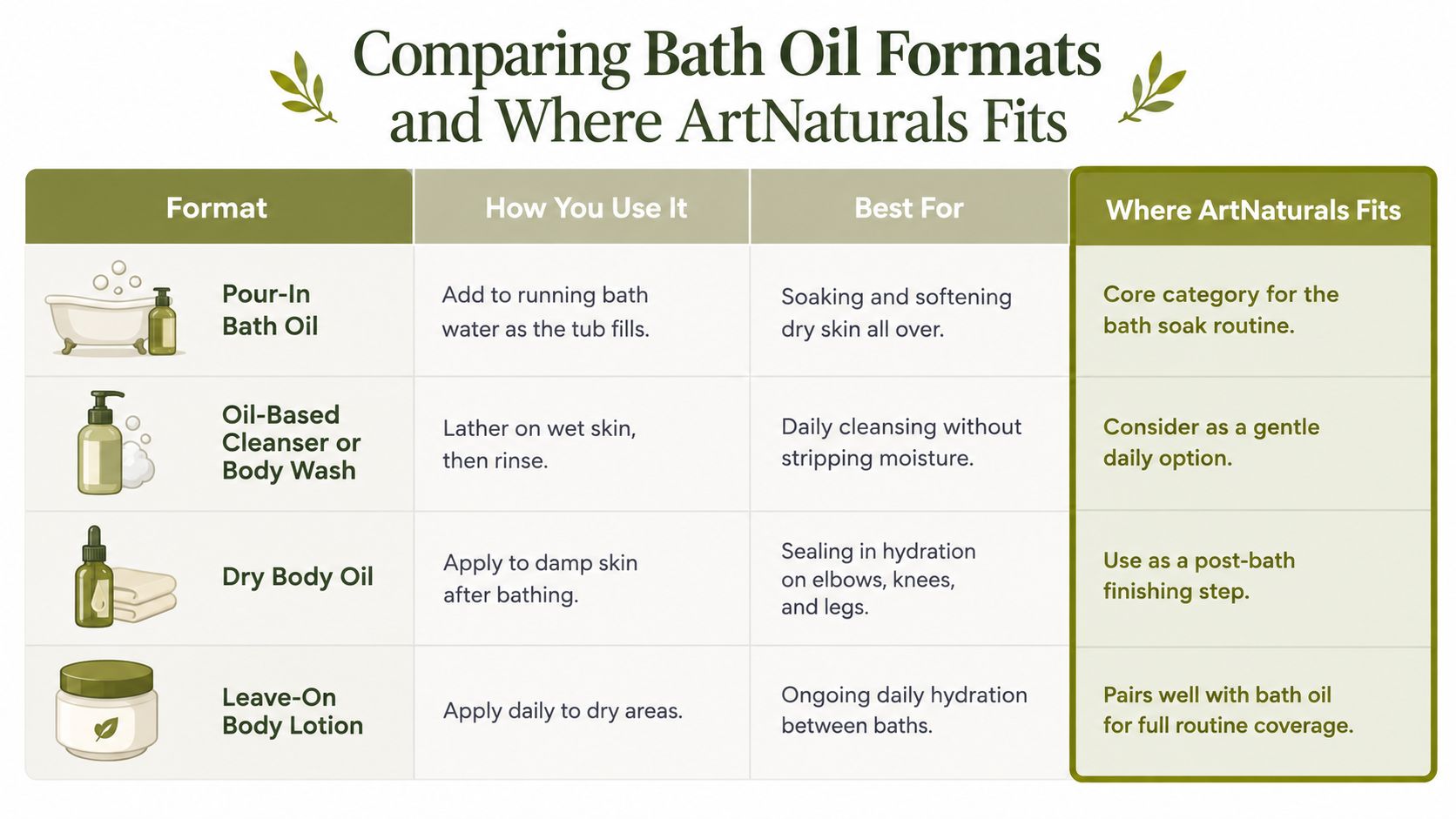
| Format | Best Suited For | Watch For |
|---|---|---|
| Pour in bath oil | A weekly soak and all over softening | Slip risk and tub residue |
| Oil based cleanser or body wash | Daily showers when foam feels stripping | Still usually needs moisturizer after |
| Dry body oil after bathing | Targeted areas like legs, elbows, and knees | Can feel greasy if applied to dry skin |
| Magnesium or botanical body spray | A light post bath ritual step | Not a substitute for cream on very dry areas |
Pour-in emollient additives have been studied in children with atopic dermatitis, not as a general treatment for everyday dry skin. In the 52-week BATHE trial of children aged 1 to 11, adding emollient bath additives to usual care did not significantly improve eczema symptoms compared with usual care alone. Those findings are specific to pediatric atopic dermatitis and do not establish how bath oils perform for adults or for ordinary dry skin. The BATHE trial summary
Placing ArtNaturals in That Picture
ArtNaturals is a U.S.-based brand with bath and body products made with plant oils and absolutes, as well as magnesium oil sprays and skincare. Its range includes products featuring jojoba oil and shea butter, placing some options in the pour-in or post-bath categories shown above. Check the specific product label rather than assuming all items have the same formula or use.
For any brand, read the full ingredient list and directions. Note the fragrance ingredients and where they appear in the list, then check whether the formula is intended to disperse in bath water or be applied directly to skin. A product marketed as an oil may be emulsified to mix with water, or it may leave a layer of oil on the surface. Follow its label, use the recommended amount, and take extra care stepping in and out of the tub.
If showers are your usual routine, an oil-based cleanser may be easier to use consistently than a bath product. A leave-on body oil can suit smaller areas, though its feel and spread may differ from an in-bath formula. Choose based on the full formula, fragrance level, instructions, and your tolerance for residue and slip, not just the product name or scent.
Your Next Step Toward Softer, Comfortable Skin
A warm bath can feel soothing, but the label and your routine determine whether the oil suits your skin. Choose a fragrance-free or lightly scented formula that fits the checklist, then patch test and follow its directions. Start with a measured amount in a brief, warm bath, and take care: oils can make the tub slippery.
Keep the rest of your routine steady while you assess the result. Pat your skin dry and apply moisturizer promptly. Repeat the same approach for two weeks, noting any changes in tightness, flaking, or comfort that evening and the next morning. Changing several habits at once makes it harder to tell what helped.
For lasting dryness, pair bathing with a suitable leave-on moisturizer. Read about choosing a body cream for dry skin, then browse the ArtNaturals bath oil range at artnaturals.com and compare its ingredient lists with your checklist. Persistent or worsening dryness is a reason to speak with a dermatologist or healthcare professional. For ordinary seasonal tightness, a measured soak followed by moisturizer is a practical place to start.