

Brown sugar isn't automatically a gentle exfoliant. The texture may feel softer than expected, but the experience depends on crystal size, oil content, pressure, timing, and the condition of your skin that day. A scrub that feels comfortable on sturdy areas such as the feet may feel too rough on freshly shaved legs or sensitive skin.
A brown sugar scrub can still be a pleasant part of a body-care ritual. Used thoughtfully, it gives skin a temporary smoother feel while oils and humectants make the mixture easier to spread. The key is to treat exfoliation strength as something you can adjust, not as a fixed benefit that every brown sugar formula delivers in the same way.
What a Brown Sugar Scrub Actually Does
After a warm shower, you scoop a little brown sugar scrub into your palm and massage it over your arms or legs. The grains feel textured at first, then the mixture becomes slick as the sugar meets water and begins to dissolve. When you rinse, your skin may feel polished and soft, but that sensation comes from two separate actions.
A brown sugar scrub is usually a blend of granulated brown sugar, a carrier oil, and optional additions such as honey or essential oils. The sugar crystals provide the physical exfoliation. As you move them across damp skin, they help loosen and lift some surface buildup, creating a smoother-looking, softer-feeling finish. The effect is cosmetic and temporary, not a treatment for a skin condition.
The oil has a different job. It gives the crystals slip, reduces drag, and leaves a conditioning feel after rinsing. Humectants can support the formula in another way. The brand fresh describes sugar as a natural humectant that helps prevent moisture loss, which helps explain why brown sugar scrubs are marketed for exfoliation and hydration in one step. Its brown sugar body polish also combines brown sugar crystals with apricot kernel oil, ginseng root extract, and camelina sativa seed oil, reflecting how the category has moved beyond a simple pantry mixture. fresh Brown Sugar Body Polish
The important distinction: exfoliation changes the feel of the skin's surface, while moisturizing helps add and retain comfort. A scrub can support both sensations, but it doesn't replace a body lotion or cream.
Modern formulas often add ingredients such as glycerin, sweet almond oil, jojoba oil, oat kernel extract, arnica extract, tocopherol, sunflower seed oil, and Dead Sea salt alongside sucrose. That combination shows how a basic DIY idea became a more engineered body-care format. The crystals do the polishing, while oils, botanical ingredients, and humectants shape the product's slip and after-feel.
That raises a practical question. If the sugar is the part doing the scrubbing, why can one formula feel mild while another feels surprisingly abrasive?
How Exfoliation Strength Changes
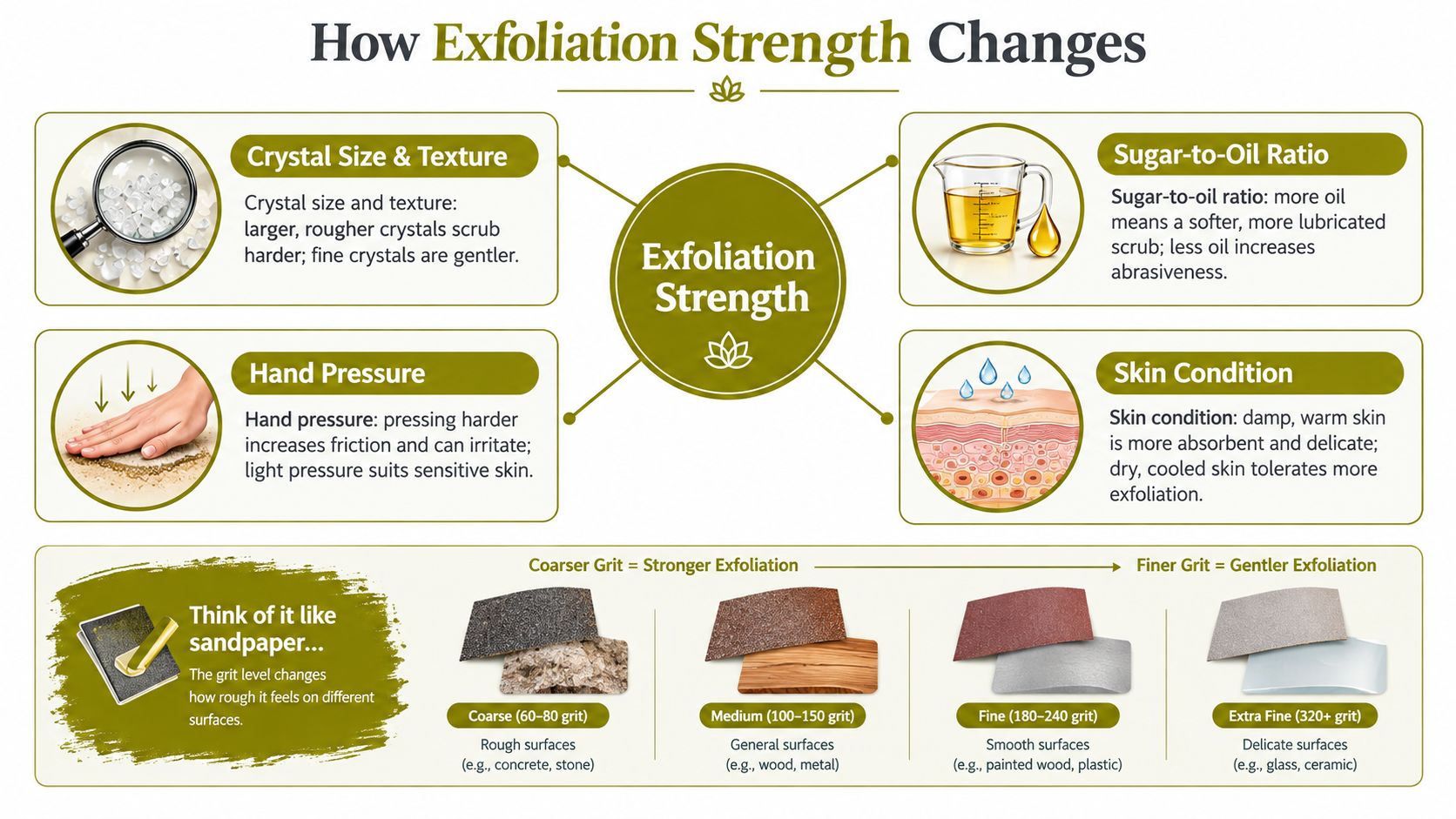
Exfoliation strength comes from several variables working together. Brown sugar is not automatically mild because it dissolves or feels familiar. A useful comparison is sandpaper on wood. Fine grit creates a softer polish, coarse grit removes material more aggressively, and pressing harder makes either one feel rougher.
Crystal size and texture
Brown sugar crystals are often irregular, and larger particles create more noticeable friction. One comparative dataset placed sugar crystals at about 250 to 400 micrometers and reported a 37% higher transepidermal water loss spike in Fitzpatrick I to II skin than with smoother jojoba beads. That finding comes from an ingredient comparison rather than a universal rule for every product, but it supports a cautious approach on sensitive or barrier-compromised skin. Sugar and jojoba bead grain-size comparison
Particle size gives you a practical way to choose a texture. Fine caster sugar under 300 micrometers is described as better suited to gentler facial scrubs, granulated sugar around 400 to 700 micrometers is positioned for body use, and coarse raw sugar above 700 micrometers is used for heavier body or foot scrubs. Sugar ingredient texture guide
Oil ratio and pressure
A mixture with more oil generally feels more lubricated because the crystals slide rather than catch. A drier mixture creates more drag, especially when you rub over skin with too little water. Formulators can also adjust strength by changing the proportion and size of the exfoliant. One sample scrub bar formula uses brown sugar at 10.0% and explains that more exfoliant increases strength, while smaller particles or a lower percentage makes the product gentler. Sugar scrub bar formulation guide
Your hands matter just as much. Light circular movements let the particles do limited work. Pressing hard increases friction, and it can make a coarse formula feel harsh even when the ingredients look simple.
Skin condition changes the equation
The same scrub won't behave identically on every area. Healthy, resilient skin may tolerate a brief body polish, while freshly shaved, sunburned, broken, or sensitized skin can react to the same crystals and pressure. Warm, damp skin may also feel more delicate than skin that has cooled and dried.
For a broader explanation of gentle manual exfoliation, you can read this guide to how to exfoliate your face naturally. The useful takeaway is simple: gentleness is a balance of crystal size, oil, pressure, contact time, and skin condition. Brown sugar can be part of a mild routine, but the ingredient alone doesn't guarantee an irritation-free result.
How to Use a Brown Sugar Scrub Safely
Start with clean hands and a clean container or scoop. Wet the area with lukewarm water, then take a small amount of scrub rather than covering the skin with a thick layer. Damp skin gives the mixture enough slip to move without unnecessary pulling.
Use light, controlled circles. On arms, legs, or the torso, keep contact brief, under thirty seconds for each body section. The face, neck, chest, and inner arms need a much lighter touch than the shins, knees, elbows, or feet. Don't press harder to chase a smoother feeling. More friction can leave skin uncomfortable rather than polished.
Rinse thoroughly with lukewarm water. Very hot water can make the after-shower experience feel drier, while aggressive towel rubbing adds another source of friction. Pat your skin dry, leaving a little moisture behind, and apply a fragrance-free moisturizer or a plain body oil within a few minutes.
Know when to stop
A scrub should feel textured, not painful. Stop and rinse if you notice:
- Persistent stinging: A brief sensation from an aromatic ingredient can still be a warning, especially if it continues after rinsing.
- Bright pink patches: Visible color change that lingers suggests the area needs a break.
- Pinpoint bleeding: This is a clear reason to stop using the scrub on that area.
- Tightness after rinsing: A stretched, uncomfortable feeling means the routine may be too abrasive or too frequent.
Skip exfoliation on freshly shaved, waxed, sunburned, or broken skin. Daily scrubbing is excessive, and sensitive areas may need much longer between applications. If you add essential oils for scent, review a careful essential oil dilution guide before mixing. Natural fragrance can still bother reactive skin.
Three Brown Sugar Scrub Recipes
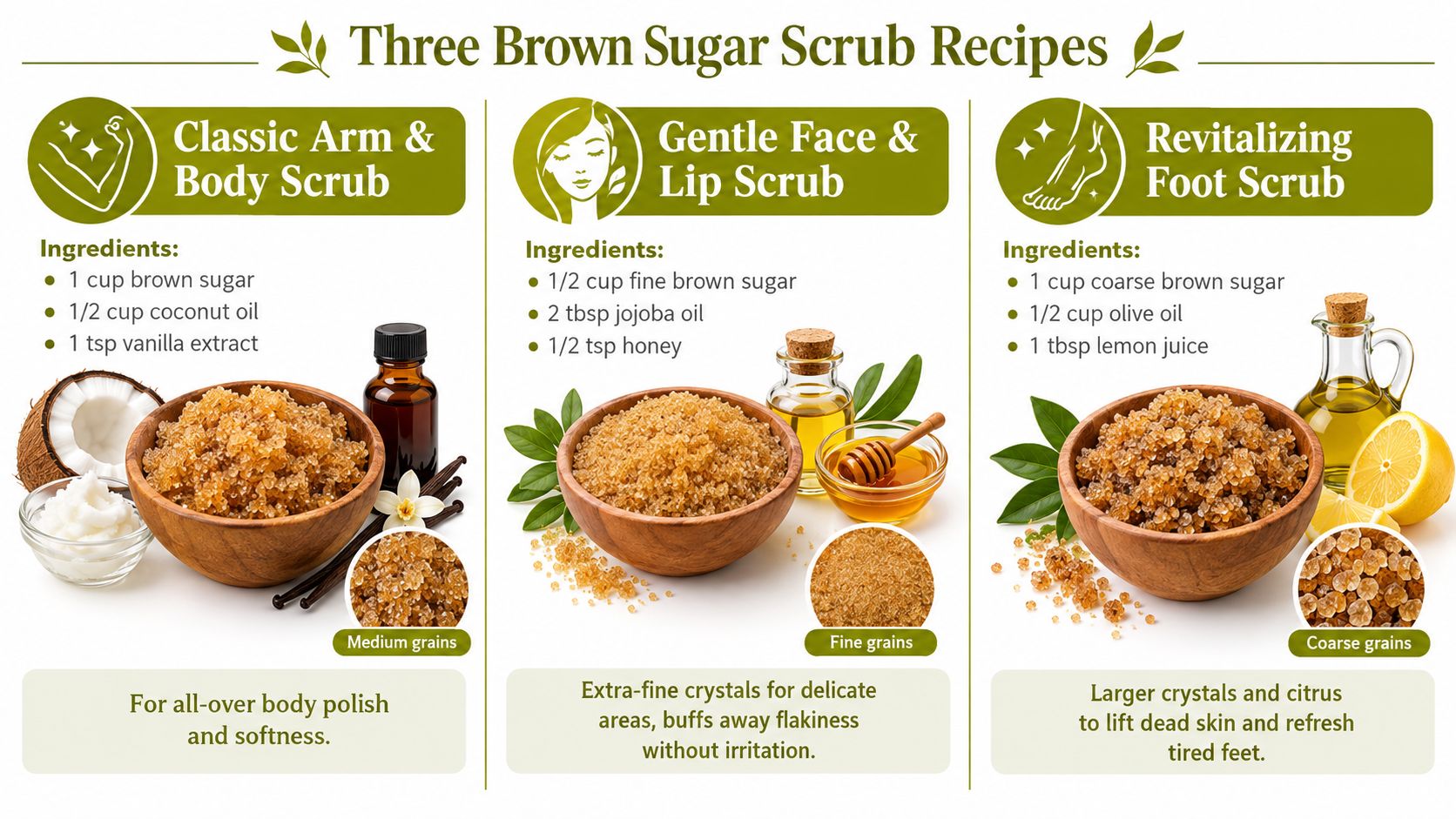
Homemade scrubs work best when you choose a formula for a specific area instead of using one mixture everywhere. Keep the process dry and simple. Combine the ingredients in a clean, dry bowl, transfer the finished scrub to a clean jar, and use a dry spoon or scoop each time.
Classic arm and leg polish
For arms and legs, mix:
- 1 cup brown sugar
- 1/2 cup light olive oil or sweet almond oil
Stir until the oil coats the sugar without turning the mixture runny. The 2:1 sugar-to-oil ratio creates a textured body scrub with enough slip for larger areas. Use a small amount on damp skin, then rinse well.
Fine facial-friendly blend
For a finer texture, use:
- 1/2 cup finely ground brown sugar
- 2 tablespoons jojoba oil
- 1/2 teaspoon honey
Mix the sugar and jojoba oil first, then fold in the honey. Fine particles are preferable for delicate areas because they create less pronounced friction than coarse crystals. Even this version should be used cautiously, with very light pressure and a short contact time, and not on irritated or broken skin.
Coarser coffee and brown sugar scrub
For feet or sturdy body areas, combine:
- 1 cup brown sugar
- 1/2 cup coconut oil
- 1/2 cup used coffee grounds
Stir slowly so the grounds distribute evenly. The coffee adds a coarser feel, so this blend suits feet better than the face. Avoid pressing hard over heels or dry patches. A thicker formula may feel more effective, but it can also create more drag if you don't use enough water.
All three recipes are preservative-free DIY mixtures. Keep water out of the jar, don't store a wet scoop inside it, and use each batch within one to two weeks. The recipe ratios above focus on teaching texture and handling. If you prefer a ready-made format with a more developed shower texture, explore this foaming brown sugar scrub as a commercial alternative.
Smart Ingredient Substitutions
A good substitution starts with the ingredient's function. Ask whether you're changing the abrasive particles, the lubricating base, or an optional sensory ingredient. That approach prevents a recipe from becoming a random collection of swaps with an unpredictable texture.
Change the abrasive component
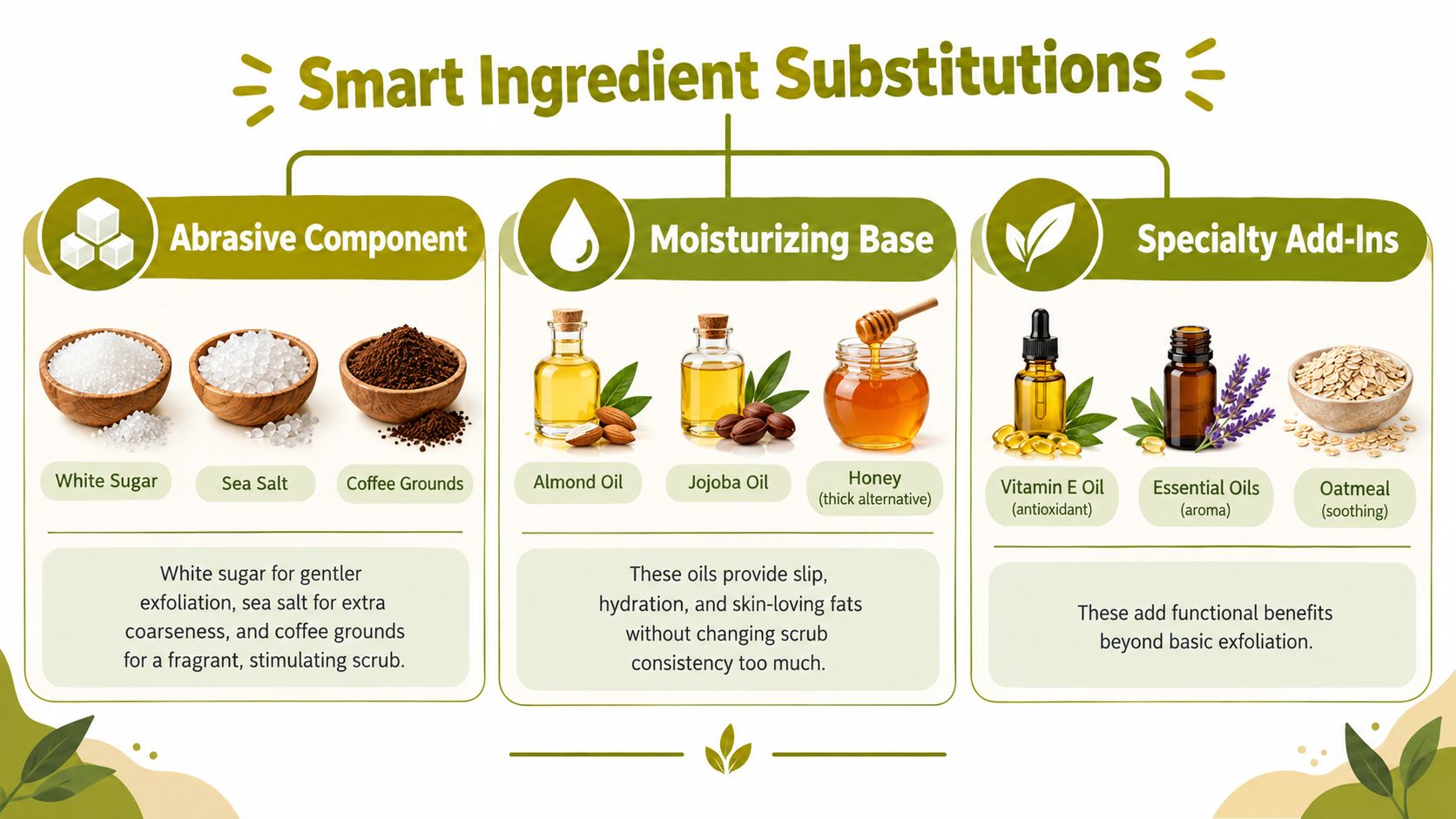
White sugar can replace brown sugar when you want a simpler, finer-feeling grain. Raw sugar tends to create a more substantial texture, so it fits body or foot use better than delicate areas. Finely ground oats can soften the feel of a formula, but they also change the scrub from a sugar-led polish into a more powdery mixture.
Particle size matters more than color. A pale sugar isn't automatically gentler, and a brown sugar formula isn't automatically rougher. Check how the grains feel between wet fingertips before applying the mixture broadly.
Adjust the carrier oil
Coconut oil gives a richer, more solid feel, especially when cool. Sweet almond oil spreads readily and feels smooth. Jojoba oil has a lighter, elegant slip, while olive oil creates a more substantial, oily finish. Skin can respond differently to each, so match the oil to the finish you enjoy and avoid using an ingredient that has bothered you before.
The base also controls how much the crystals drag. More lubrication generally makes application feel softer, while a thick, dry mixture increases friction. You can explore more ingredient ideas in this guide to natural ingredients for glowing skin, but keep the formula water-free if you're making it at home.
Add optional extras carefully
Honey gives the mixture a thicker, humectant feel. A small amount of vitamin E can support the formula's oil phase as an antioxidant, but it doesn't turn a DIY scrub into a preserved product. Essential oils add aroma, not a free pass for sensitive skin. Dilute them carefully, and leave them out if fragrance tends to cause discomfort.
Fresh ingredients, water-based additions, or wet tools can shorten the useful life of a homemade scrub. If you change the formula, keep the jar dry, label it with the mixing date, and use it promptly rather than assuming every oil-based recipe has the same storage life.
Common Scrub Mistakes to Avoid
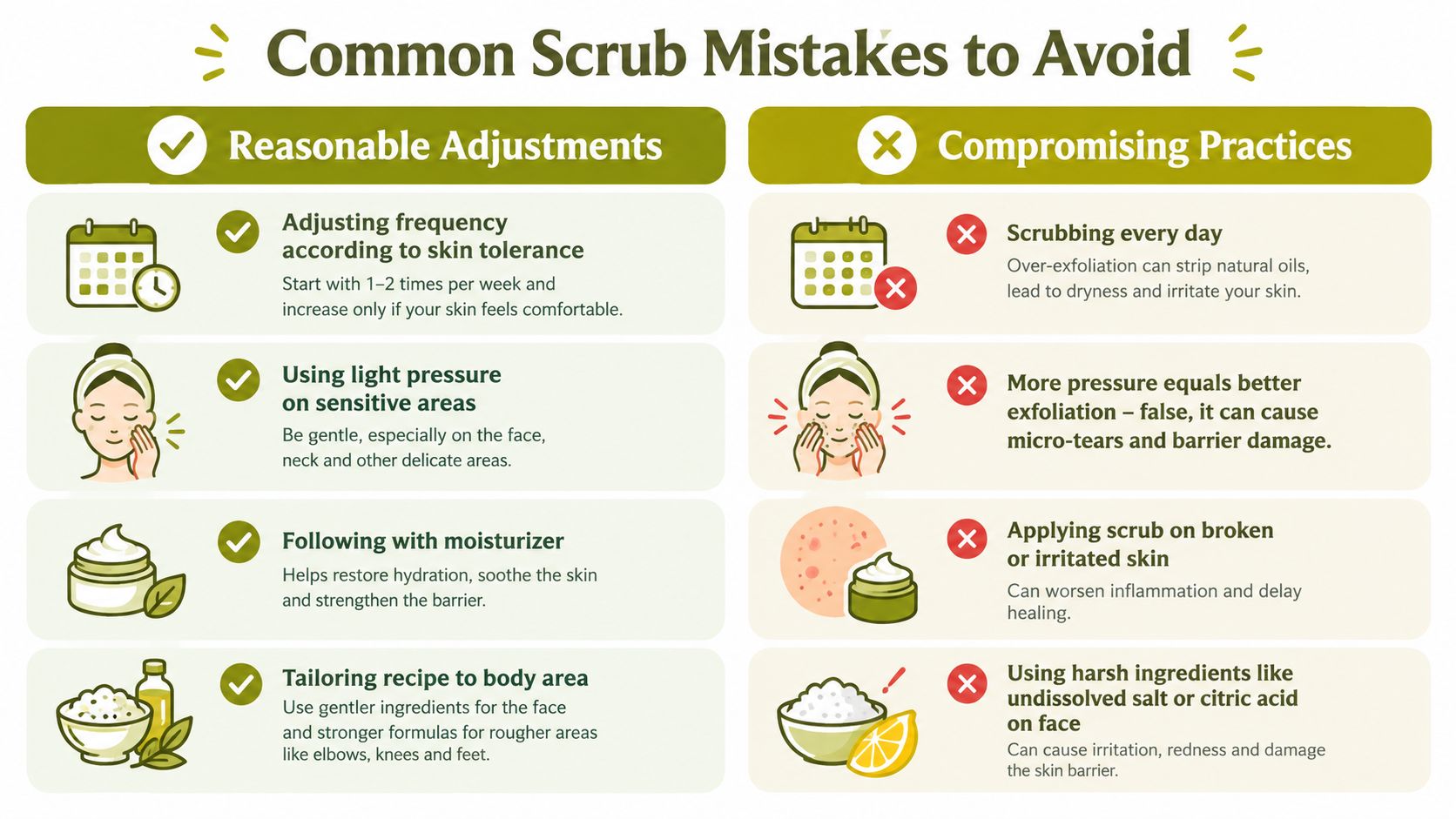
The most common mistake is believing that stronger sensation equals better exfoliation. Pressing down harder mainly increases friction and the chance of micro-irritation. A brief pass with light pressure is usually a more sensible starting point than trying to make the scrub feel intense.
Daily use creates another problem. Although some people enjoy frequent polishing, most skin needs recovery time between exfoliating sessions. A practical starting point is two to three times per week, adjusted downward when skin feels sensitive or uncomfortable.
Routine check: Count every exfoliating step, not just the sugar scrub. Retinoids, alpha hydroxy acids, loofahs, dry brushing, and other textured products can add to the total load.
DIY storage errors can also undermine a simple recipe:
- Wet hands in the jar: Water can change the formula and increase contamination risk.
- A scoop stored inside: A tool left in the product can carry water and residue back into the mixture.
- An extended shelf life: Don't keep a preservative-free batch beyond one to two weeks because it still looks normal.
- A mismatched body area: Coarse crystals or sharp additions may be unsuitable for the face.
- Exfoliating compromised skin: Broken, freshly shaved, waxed, sunburned, or irritated skin needs a pause.
Track how your skin responds after each use. Persistent redness, stinging, or tightness means you should stop and simplify the routine rather than adding more oil or scrubbing more gently over the same irritation.
How to Choose a Store-Bought Scrub
A commercial brown sugar scrub gives you a chance to evaluate more than the marketing name. Start with the ingredient list and look for sucrose, the cosmetic name commonly used for sugar. Its position can give you a rough sense of how central the abrasive is, although the list alone won't tell you exactly how the product feels on skin.
Next, identify the oils and butters. Sweet almond, jojoba, coconut, and olive oils create different finishes, while heavier butters can make a scrub feel denser and more protective during application. Tocopherol, or vitamin E, may appear as an antioxidant in the oil phase. Fragrance and essential oils deserve extra attention if your skin reacts easily to scented products.
Preservation and water exposure
A water-containing scrub needs a real preservative system. Essential oils may contribute scent, but they shouldn't be treated as a substitute for preservation. An anhydrous formula can be more straightforward to maintain, yet a jar still needs clean, dry hands because moisture introduced during use can alter the product's safety profile.
Packaging gives you useful clues. Wide-mouth jars make thick scrubs easy to scoop but expose the product during every opening. Tubes and pump tops can limit direct contact, while opaque packaging may help shield light-sensitive ingredients. No package removes the need to follow the label's storage and use instructions.
Label-reading rule: Choose a formulated product when you want preservation, added actives, or a texture that requires controlled manufacturing. Keep homemade versions simple, water-free, and small enough to use promptly.
For products sold in the European Union, labels must include an ingredient list using the Commission's common ingredient glossary under the cosmetics legislation. Nanomaterials must be identified with nano in brackets after the ingredient name. Cosmetic product labelling guidance
Build a Routine That Suits You
Start conservatively with one to two scrubs per week on non-consecutive days. Use a smaller amount, light pressure, short contact time, and lukewarm water. If your skin is sensitive, freshly shaved, treated with a retinoid, or exposed to strong sun, reduce frequency or wait until the area feels comfortable again.
Apply a bland moisturizer immediately after rinsing. Keep exfoliation separate from other potentially irritating steps, including strong acids, vigorous loofah use, and depilatory methods. Change one variable at a time, then track comfort, redness, stinging, and tightness for two weeks before deciding whether the formula or schedule needs adjustment.
A relaxing ritual can include more than the scrub itself. If you want to turn the routine into a broader DIY spa day for relaxation, keep the exfoliation gentle and let moisturizing, warm water, and unhurried care provide the restorative part of the experience.
The central principle is simple: match scrub strength to skin condition. Choose finer crystals and more slip for delicate areas, reserve coarse textures for sturdy body zones, protect water-free DIY storage, and choose a commercial formula when preservation or formulation precision matters.
ArtNaturals offers plant-focused skincare, body care, essential oils, and other everyday self-care products, including options for routines built around dryness, dullness, and sensitivity. Visit ArtNaturals to explore ingredient-led formulas and choose products that fit the way you want to care for your skin.