

You've washed your face, admired the clean feeling, and then noticed the same rough texture or tiny clogged-looking bumps in the mirror. A face wash with salicylic acid can make sense in that moment, but clear-looking pores don't require an aggressive routine. The most helpful approach is to understand the ingredient, choose a considerate formula, and protect the skin barrier while you use it.
Salicylic acid is often presented as an intense acne-focused active. In practice, a well-designed cleanser can fit into a gentle, plant-forward ritual, especially when you pay attention to concentration, pH, supporting ingredients, and how your skin responds.
Understanding How Salicylic Acid Supports Clear Skin
If your skin feels rough or looks congested despite regular cleansing, the ingredient's history offers useful context. A 2015 peer-reviewed review describes topical use of salicylic acid for more than 2,000 years, including Pliny's account of willow bark in the first century AD. The same record traces recognition of its dermatologic exfoliation properties to the 1860s. Today's salicylic-acid cleansers build on that willow-bark tradition, pairing oil-compatible exfoliation with a rinse-off format. Read the historical and scientific review of salicylic acid.

Why oil-loving chemistry matters
The defining quality is lipophilicity, meaning salicylic acid is drawn to oil. Skin oils gather around the pilosebaceous unit, the small structure linked to a pore and hair follicle. Since salicylic acid can work in this oil-rich setting, it may help loosen the blend of oil and shed skin cells associated with open and closed comedones.
Water beads off a waxy leaf because it cannot engage with the oily coating. An oil-compatible ingredient can move through that coating more easily. Salicylic acid follows this principle, which helps explain why a cleanser containing it may feel more targeted than a basic wash for skin that appears shiny or congested.
The goal is still a comfortable cleanse. A well-designed formula lifts daily residue while allowing brief contact with salicylic acid, then rinses away without leaving the skin tight. Plant-based soothing ingredients and a supportive cleanser base can make the experience gentler, especially for people who want pore care without a harsh, stripped finish.
Gentle perspective: A clean feeling isn't the same as a healthy feeling. Comfortable, flexible skin is a better sign than a dramatically stripped finish.
A product review can show how one cleanser balances texture care, supporting ingredients, and everyday use. For a practical example, browse the CeraVe SA Smoothing Cleanser review from Healtsy. Use it as a reference point, then assess any product by your skin's comfort and the complete ingredient list.
Identifying Your Skin Profile and Cleanser Needs
The right question isn't “Is salicylic acid good?” Ask instead, “What does my skin do during the day, and what kind of cleansing support does it need?” A face wash with salicylic acid tends to suit skin that becomes oily, feels congested, or develops a visibly uneven texture around the nose, forehead, chin, or jawline.
Match the cleanser to your daily pattern
Oily skin often benefits from an oil-compatible exfoliating ingredient because excess surface oil can make pores look more noticeable. Combination skin may need a more selective approach. You might use the cleanser across the oilier central areas while choosing a gentler wash when the cheeks feel dry or easily flushed.
Congestion-prone skin can also respond well to a cleansing formula that helps loosen pore buildup. A study described in a recent review included 30 acne patients and found that a 2% salicylic acid cleanser reduced comedones in 2 weeks. That result comes from a specific product and routine, so it shouldn't be treated as a promise for every cleanser or every person. Review the cleanser evidence and formulation discussion.
Dry or sensitive skin needs a slower, more observant routine. The salicylic acid percentage matters, but the cleanser base matters just as much. Look for a formula that includes humectants, replenishing emollients, or soothing plant extracts rather than relying on a stripped-back detergent system. A creamy or low-foam texture may feel more comfortable than a cleanser that leaves the cheeks taut.
Consider the whole cleansing experience
Notice what happens after rinsing. If your skin feels calm and supple, the formula may be a workable fit. If it feels hot, tight, itchy, or persistently uncomfortable, reduce use or pause and return to a basic gentle cleanser.
Plant-based cleansing traditions can offer useful context when you're considering supporting ingredients and wash textures. Hemp Well Ireland's guide to Castile soap is a helpful resource for understanding how plant oils influence cleansing feel. Castile soap isn't interchangeable with a salicylic-acid face wash, but the comparison encourages you to look beyond the active ingredient and consider the entire cleansing base.
For readers focused on visible congestion around the nose and chin, this blackhead-focused skincare guide can provide additional routine context. The most balanced choice is usually the formula that addresses oil without asking your barrier to tolerate unnecessary stress.
Navigating Concentrations and Formula pH Levels
A bottle's percentage tells you how much salicylic acid it contains, but it doesn't tell the whole story. OTC salicylic-acid face washes commonly appear at 0.5% and 2%, as shown by products listed in the DailyMed database. In the United States, OTC salicylic-acid face wash products are restricted to a maximum concentration of 2%, while the European Commission requires warning labeling above 2%. Review the market and regulatory overview.
A higher percentage isn't automatically a wiser everyday choice. A lower-strength cleanser may be a comfortable starting place for combination or sensitive skin, while a 2% formula may appeal to someone seeking more pronounced pore-focused exfoliation. The base, contact time, and frequency can change how the product feels just as much as the percentage.
Concentration and pH quick reference
| Concentration Level | Best Suited For | Ideal pH Range |
|---|---|---|
| 0.5% | Beginners, combination skin, or people prioritizing comfort | Roughly 4.0 to 5.5 |
| 2% | Oily or visibly congested skin that already tolerates exfoliating care | Roughly 4.0 to 5.5 |
The pH range in the table reflects a practical balance between activity and barrier compatibility. Salicylic acid is a weak acid, and lower-pH formulas generally leave more of it in a functionally active form. Expert cleanser guidance commonly places a workable range around 4.0 to 5.5, while other formulation discussions describe stronger activity around pH 3 to 4 and caution that products above roughly pH 5 may leave more of the ingredient ionized and less active. Read the pH-focused salicylic acid discussion.
Label-reading rule: Choose balance over the biggest number. A pH-balanced claim, a clear ingredient list, and a comfortable after-feel can tell you more than percentage alone.
If you want to compare exfoliating formats, a salicylic acid facial mask guide can help you think about the difference between a rinse-off cleanser and a product designed to remain on the skin. Don't treat them as interchangeable. Their contact time changes the routine's overall intensity.
Building a Mindful and Effective Cleansing Ritual
A face wash with salicylic acid works best when you treat it as a measured ritual rather than a vigorous scrub. The aim is to distribute the cleanser evenly, allow a short period of contact, rinse thoroughly, and replace comfort with hydration.

A calm cleansing sequence
- Wet your face with lukewarm water. Very hot water can leave skin feeling drier, while cold water may make it harder to spread the cleanser evenly.
- Use a small amount and massage lightly. Let your fingertips glide over the forehead, nose, cheeks, and chin. Avoid brushes, rough cloths, and scrubbing motions.
- Allow brief contact. A cleanser is rinsed off, so it doesn't need to sit for a long time. A gentle massage lasting around 30 to 60 seconds is reflected in the product-layering visual below, but your skin's comfort should guide you.
- Rinse completely and pat dry. Don't drag a towel across the face.
- Follow with hydration. Apply a hydrating serum, mist, or moisturizer while the skin still feels comfortable.
This sequence keeps the active ingredient in perspective. Contact time gives the formula an opportunity to work, but longer isn't always better. If your face feels tight after rinsing, shorten the massage, use the product less often, or choose a gentler base.
The guide to exfoliating your face naturally offers broader context for keeping exfoliation gentle, especially if you prefer plant-forward care and minimal friction.
Give your skin a quiet moment after cleansing. Notice whether the cheeks remain soft, whether the nose looks less shiny, and whether any redness settles quickly. Those observations are more useful than chasing an instantly polished sensation.
Here's a visual reminder of the order and pacing:
Ease into frequency
Begin every other day if you're new to salicylic acid or your skin tends to react to active products. If your skin stays comfortable, you can gradually consider more frequent use. Daily use may be reasonable for some formulas and skin profiles, but it isn't a requirement for a thoughtful routine.
Supporting Your Skin Through Adjustments and Purging
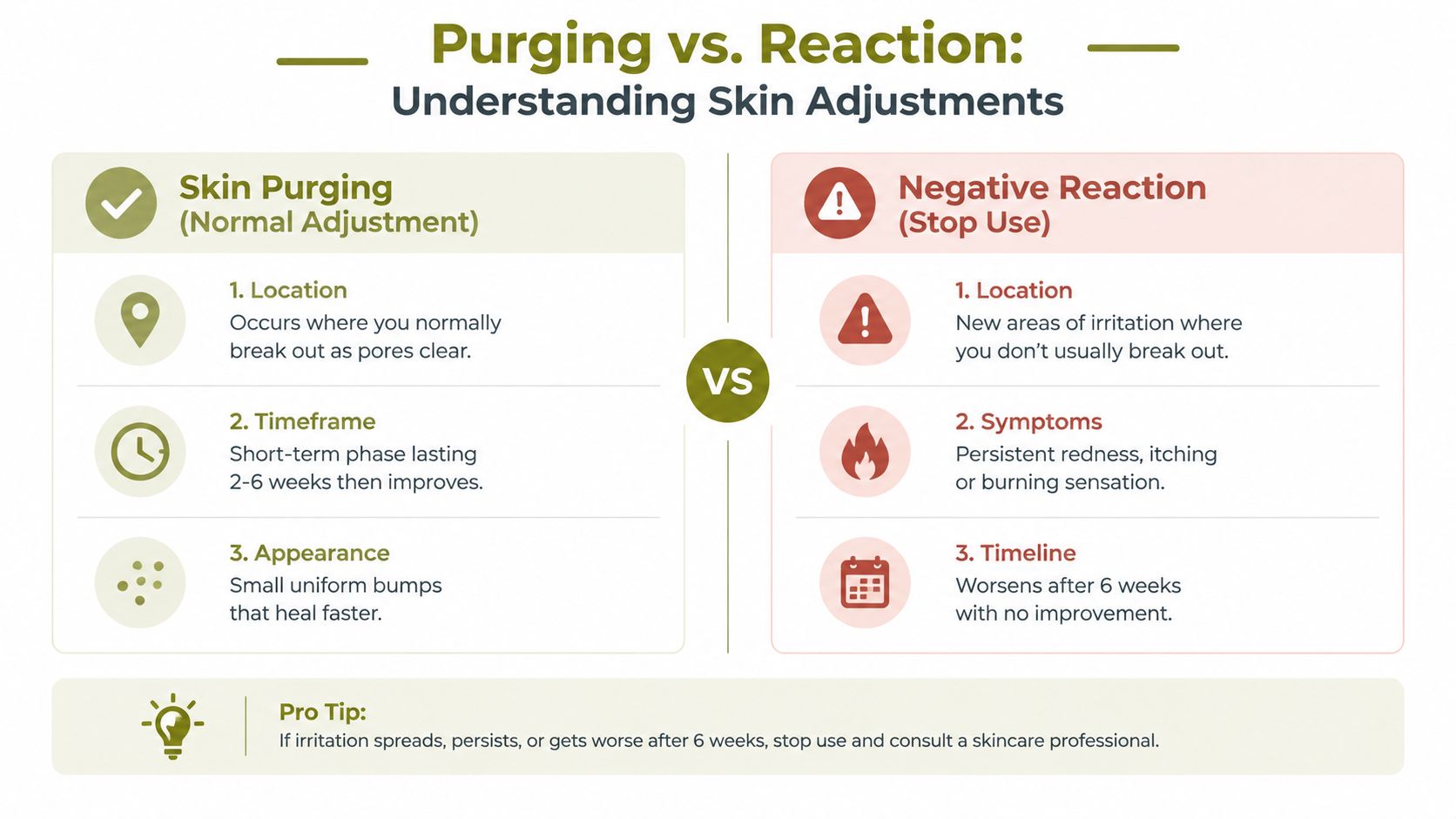
A new exfoliating cleanser can bring changes that feel confusing. Some people notice temporary small bumps in areas that already tend to look congested, while others experience dryness, redness, itching, or burning. These patterns don't mean the same thing, and responding well requires patience rather than pushing through every reaction.
Read the pattern, not just the presence of bumps
A purging phase is often described as a temporary adjustment in areas where you usually notice congestion. The visualization above presents a short-term phase lasting 2 to 6 weeks, along with small, uniform bumps that heal faster. Those details can help you observe a pattern, but they aren't a reason to ignore discomfort or continue indefinitely.
A negative reaction tends to feel different. New areas of irritation, persistent redness, itching, burning, or worsening after 6 weeks with no improvement are signals to stop using the product and return to a simpler routine. If symptoms feel severe or don't settle, seek individualized guidance from a qualified professional.
Give the barrier more support
While your skin adjusts, keep the rest of your routine quiet. A rich plant-based moisturizer can soften the feeling of dryness, a botanical mist can add a comforting layer, and a few drops of a suitable facial oil can help reduce that tight, exposed sensation. Choose one change at a time so you can tell what your skin enjoys.
Recent clinical data on a novel 2% salicylic acid cleanser found improvements in acne alongside reduced transepidermal water loss, dryness, and erythema, with no lipid barrier disruption and no reported irritation. That finding suggests formulation design can matter more than percentage alone, although one formula shouldn't stand in for every product. See the report on the 2% cleanser formula.
For a broader perspective on breakout-focused facial care, you can also explore clear-skin guidance from ProMD Health. Keep your own routine gentle and remember that a cleanser should support your skin, not become a test of endurance.
Harmonizing with Other Botanical and Active Ingredients
The most comfortable routine usually gives each product a clear role. A salicylic acid cleanser handles the washing step, while other products restore water, soften the skin, and help maintain a flexible finish. Layering should feel orderly, not crowded.
Pairings that support comfort
After rinsing, consider a hydrating ingredient such as hyaluronic acid or aloe. Hyaluronic acid helps create a cushion of hydration, while aloe can offer a fresh, soothing feel. Follow with a gentle, non-comedogenic moisturizer to hold that hydration in place.
Plant oils can also fit into a barrier-conscious ritual. Argan oil offers a nourishing finish, and rosehip oil can suit people who enjoy a lightweight botanical oil step. Start with a small amount, especially if your skin feels easily congested, and watch how it behaves over time.
A simple order looks like this:
- Cleanse: Use the salicylic acid face wash, massage gently for 30 to 60 seconds, and rinse.
- Hydrate: Apply aloe or hyaluronic acid while the skin still feels slightly fresh.
- Moisturize: Lock in comfort with a gentle, non-comedogenic moisturizer.
- Protect and alternate: Use sunscreen in the morning, and avoid layering strong actives such as retinol or glycolic acid in the same routine if your skin feels easily irritated.
Separate stronger combinations
Retinol and glycolic acid can each bring their own exfoliating or renewing effect. Using them alongside salicylic acid in one routine may overwhelm skin that's still adjusting. An alternate-day approach creates breathing room and makes it easier to identify which product is helping or causing discomfort.
Vitamin C can fit some routines, especially when the overall formula and skin response are comfortable, but keep your routine simple when starting. ArtNaturals offers a salicylic acid serum described for acne-prone and oily skin, with directions to apply it after cleansing and toning. If you use a salicylic acid cleanser and a leave-on salicylic product together, introduce the combination cautiously because leave-on contact adds another layer of active exposure.
Recent randomized clinical evidence found that a regimen combining a salicylic acid cleanser with leave-on salicylic acid improved acne severity, post-inflammatory hyperpigmentation, post-inflammatory erythema, and oiliness while remaining well tolerated and nondrying over 4 weeks. Read the regimen evidence on post-acne marks and redness. A cleanser alone shouldn't be expected to do everything, especially when discoloration and redness are part of the concern.
Your Clean Beauty Buying Checklist and Final Thoughts
A thoughtful face wash begins with a transparent label. You should be able to identify the salicylic acid concentration, cleansing agents, fragrance components, and the botanical ingredients included for sensory or skin-comfort reasons. “Natural” can mean different things across brands, so the ingredient list remains more useful than a front-label promise.
What to look for
- Clear active information: Check whether the product lists 0.5% or 2% salicylic acid, and consider whether that strength matches your skin profile.
- A supportive base: Look for humectants, emollients, aloe, glycerin, or other ingredients that help the cleanser feel less stripping.
- A sensible pH approach: A pH-balanced claim can signal that the formula considers both salicylic-acid activity and barrier comfort.
- Botanical clarity: Plant oils and extracts should be named clearly, so you can recognize familiar ingredients and avoid anything your skin dislikes.
- Fragrance awareness: If artificial fragrance tends to bother your skin, choose a fragrance-free formula or one with transparent aromatic ingredients.
- Packaging choices: Recyclable or biodegradable shipping materials and thoughtful packaging can support a lower-waste beauty ritual. ArtNaturals highlights recyclable, biodegradable shipping boxes as part of its sustainability approach.
- Routine compatibility: Make sure the cleanser won't force you to abandon the moisturizer, sunscreen, or calming products your skin already enjoys.
Clean beauty works best when it combines ingredient transparency with realistic skin care. A face wash with salicylic acid can support a smoother, less congested appearance, but a stronger formula isn't automatically more nurturing. The most useful product is one you can use consistently without tightness, burning, or a disrupted sense of comfort.
Let your routine become a small daily act of attention. Wash gently, moisturize generously, introduce active products gradually, and give your skin enough time to show you what it needs.
Explore ArtNaturals for plant-powered skincare, hyaluronic acid, facial oils, serums, masks, and other everyday self-care essentials that can complement a gentle pore-care routine. Choose products by ingredient and skin concern, then build a simple ritual that keeps cleansing, hydration, and barrier comfort in balance.