

You've just worked leave-in conditioner through soaking-wet curls, yet the water still beads on the surface and the product feels like it's sitting there in a thick film. A few hours later, your hair may feel coated, stiff, or strangely dry, even though you've applied plenty of moisture.
That frustrating pattern doesn't always mean you need a richer mask or more oil. For low porosity hair, timing, warmth, and product weight often matter more than quantity. The cuticle barrier makes absorption slower, so the most helpful routine starts by creating better conditions for water to enter, then uses lightweight products to retain it.
What Low Porosity Hair Actually Feels Like
Low porosity hair often reveals itself at the sink. You wet your curls, but droplets roll down the strands instead of disappearing quickly. Leave-in conditioner may spread across the outside of the hair, while the middle still feels thirsty. After rinsing, the hair can feel almost squeaky-clean, and a deep conditioner may seem to coat the surface without giving the softness you expected.
You might also notice that your hair takes a long time to dry. That can feel confusing because slow drying suggests plenty of water, while dry ends suggest the opposite. Low porosity strands can hold onto moisture once it gets inside, but getting water and conditioning ingredients past the outer layer can take more time and the right application conditions.
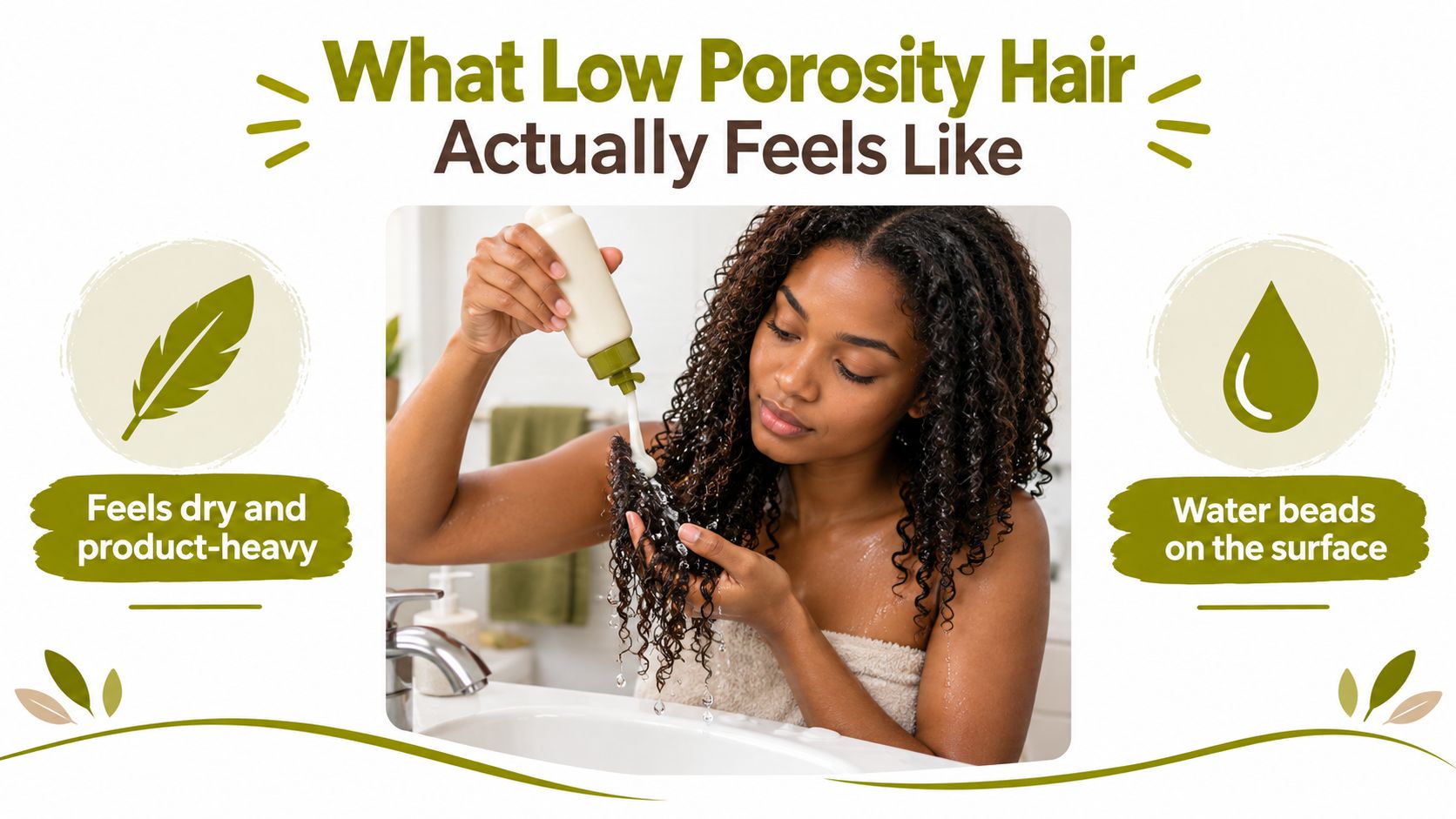
Signs your hair may be low porosity
- Water beads: Droplets remain visible on the hair rather than soaking in quickly.
- Products sit on top: Creams, oils, and masks can leave a coated or waxy feel.
- Buildup arrives quickly: Several layers may make the hair feel dull, heavy, or less receptive to water.
- Deep conditioning feels ineffective: A rich product may not seem to move beyond the surface.
- Drying takes time: The hair can stay wet for a long period after washing.
High porosity hair often behaves differently. Water may enter quickly, but the strand can also lose moisture rapidly, while low porosity hair tends to resist entry and may retain moisture longer once hydrated. These are behavior patterns, not a diagnosis or a ranking of hair types.
Low porosity hair isn't defective or difficult by nature. Its tightly arranged outer layer changes the way you need to deliver moisture. The answer is usually not piling on more product. It's helping water arrive first, under conditions that make absorption easier.
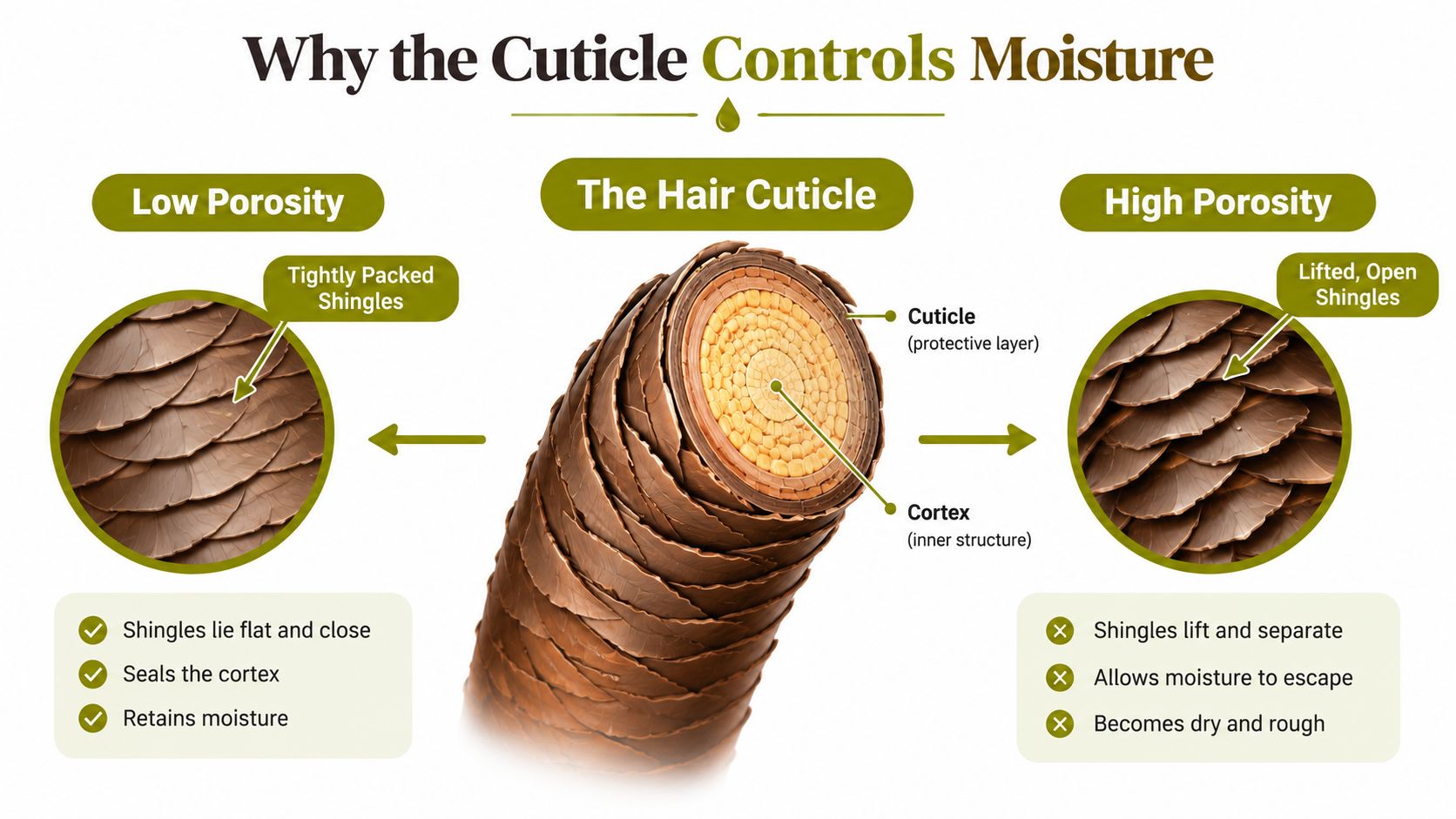
Why the Cuticle Controls Moisture
The cuticle is the outer layer of each hair strand. You can think of it as overlapping shingles on a roof. With low porosity hair, those shingles lie flat and sit closely together, creating a smooth barrier that resists water entry. Independent hair-science guidance describes the cuticle and its lipid layer as hydrophobic, which helps explain why moisture can bead instead of absorbing quickly (hair-fiber science and low-porosity moisture guidance).
This distinction matters: the strand may be capable of holding water, but penetration is the bottleneck. Human hair can absorb about 30% of its own weight in water in minutes, yet laboratory work indicates that cosmetic processing and products don't radically change the hair's underlying static and dynamic water-sorption behavior (water sorption performance of human hair). In everyday language, your routine needs to improve the conditions around absorption rather than force the hair to take in endless moisture.
Warmth creates a better entry point
Gentle warmth can temporarily encourage the cuticle to lift slightly. Warm water, steam, or a heated cap gives water and conditioning compounds more opportunity to move past the tightly aligned surface. Hair-fiber penetration research also supports the role of temperature, finding that heat can increase the penetration of conditioning compounds and that diffusion generally increases as temperature rises (cosmetic science research on conditioning-compound penetration).
That doesn't mean you should use very hot water or aggressive heat. The useful goal is gentle opening, not stripping or stressing the strand. A practical warm-water range often cited for low porosity care is about 90–105°F, with guidance to stay under 110°F (warm-water guidance for low porosity hair).
Raised cuticle edges can also contribute to tangling, while a coated surface can leave the ends feeling dry and brittle underneath. If residue is making water slide away, an occasional clarifying shampoo routine can provide a cleaner starting point without turning every wash into an intense reset.
Building a Wash Day Routine That Works
A good wash day gives moisture several short opportunities to enter instead of asking one heavy product to do everything. Work in sections, use comfortably warm water, and keep your hands gentle so you don't rough up the cuticle while trying to care for it.
Start with warmth and a clean surface
- Pre-poo lightly. Mist a water-based spray through the hair, cover it with a warm cap, and let it sit for 10 to 15 minutes. This preliminary warmth can soften the surface before cleansing without adding a dense oil layer.
- Cleanse the scalp. Use a gentle sulfate-free shampoo, concentrating your fingertips at the scalp and letting the lather move through the lengths as you rinse. Choose comfortably warm water rather than very cold water, so the hair is receptive before conditioner arrives.
- Remove residue when needed. If your hair feels waxy, dull, or unusually resistant to water, use a clarifying shampoo according to the product directions. Buildup can make even a well-formulated moisturizer remain on the outside.
Condition while the hair is receptive
Apply a hydrating conditioner or mask with good slip. Detangle with your fingers first, then use a wide-tooth comb if needed, beginning at the ends and moving upward. Keep the hair damp rather than dripping heavily, since excess water can dilute the conditioner and encourage it to slide away before it settles.
Add gentle steam from a hooded dryer, hair steamer, or warm towel for 15 to 20 minutes. Research on hair fibers supports heat-assisted penetration, while independent guidance also recommends steam, cleansing, conditioning, and leave-in application as a layered sequence (heat-assisted low porosity wash-day guidance).
Rinse with warm water, then finish with a cool rinse if that feels comfortable. Apply leave-in conditioner to damp hair, follow with a light oil or cream, and air-dry or diffuse on low heat. If the finished hair feels tight later, use a light water mist rather than immediately adding another thick layer.
This short demonstration shows how a heat-supported conditioning step can fit into a simple routine.
Choosing Humectants, Emollients, and Light Sealants
Low porosity hair benefits from knowing what each product category is doing. Humectants attract water, emollients smooth the strand, and sealants slow moisture loss. They aren't interchangeable, and using a sealant before adding water can leave you with a polished surface that still feels dry underneath.
Humectants such as glycerin, aloe vera, honey, panthenol, sodium PCA, propanediol, and hyaluronic acid help attract and hold water on the strand. They're especially useful in lightweight mists and leave-ins, though your climate and the rest of the formula still matter. Water should come first, followed by a product that supports hydration.
Emollients help soften and smooth without necessarily creating a dense barrier. Look for light oils such as squalane, grapeseed oil, or jojoba oil, along with formulas that provide slip without a waxy finish. Sealants then go last, often as a small amount of jojoba oil, grapeseed oil, or a thin layer of a light butter.
| Layer | What It Does | Best Examples | How to Apply |
|---|---|---|---|
| Humectant hydration | Draws and holds water near the strand | Glycerin, aloe vera, honey, panthenol, sodium PCA | Apply in a water-based mist or leave-in to damp hair |
| Emollient support | Smooths and softens the surface | Squalane, grapeseed oil, lightweight conditioning ingredients | Work a small amount through sections after hydration |
| Light sealing | Helps retain moisture already applied | Jojoba oil, grapeseed oil, a thin light butter | Press sparingly over hydrated ends |
Plant proteins can also appear in lightweight formulas, so read the ingredient list instead of choosing only by texture. If you're exploring how coconut oil fits into a routine, this resource on daily use of raw coconut oil offers additional context. Coconut oil isn't automatically unsuitable, but low porosity hair often responds better when any oil is introduced after water and used sparingly.
A leave-in conditioner can be the bridge between washing and styling. See this guide to leave-in conditioner application for a straightforward way to place that layer before a light sealant. Start with less than you think you need, allow the hair to settle, then add only if the strand still feels rough.
Refreshing Moisture Between Wash Days
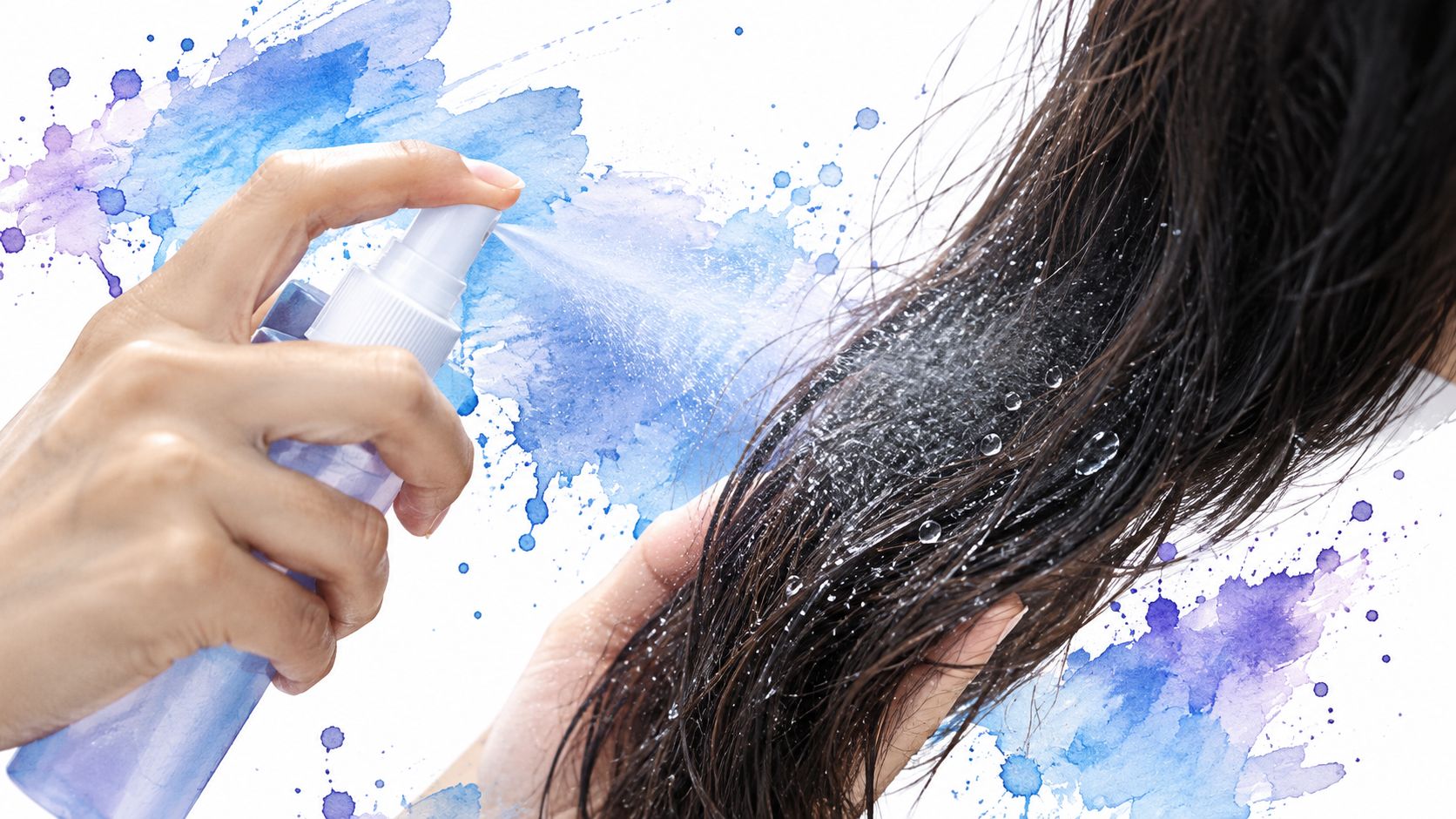
Midweek dryness doesn't always call for another full wash. First, check whether the hair feels dry, crunchy from styling product, or coated. If it feels stiff, use a spray bottle filled with warm water and mixed with a few drops of leave-in conditioner.
Mist lightly instead of soaking the entire head. Smooth the moisture through with your fingers or a wide-tooth comb, paying special attention to the ends. Cover the hair with a shower cap for five to ten minutes to trap warmth and give the water a short window to work through the cuticle.
After the hair feels softer, apply a pea-sized amount of a light water-based moisturizer. Warm one to two drops of jojoba or grapeseed oil between your palms, then press it over the ends and any areas that lose softness quickly. A tiny amount is usually easier to adjust than a large application that leaves the hair coated.
Skip heavy butters, waxy balms, and repeated silicone-heavy layers during refreshes if your hair is already prone to buildup. If you're deciding whether oil belongs before or after hydration, this guide on when to apply oil on hair can help you keep the sequence clear.
A full cleanse makes more sense after a sweaty workout, several styling layers, or a noticeably greasy and dull finish. Refreshing should restore flexibility, not postpone cleansing while residue continues to accumulate.
Common Mistakes That Keep Hair Dry
The most common mistake is treating oil as the first source of moisture. Oil can help seal a hydrated strand, but it doesn't replace water. Applied to dry hair, it may trap the existing dryness and make later water-based products harder to spread evenly.
Cold rinses can feel refreshing, but they don't create the warm, receptive conditions that low porosity hair often needs during conditioning. Use comfortably warm water while cleansing and conditioning, then choose a cool final rinse if you like the smoother finish.
Practical rule: Water first, lightweight conditioning second, oil last.
Small habits that create a large coating
- Starting with heavy oil: Replace an oil-first pre-poo with a light water-based spray and warmth.
- Using butter after butter: Choose one lightweight moisturizer instead of stacking rich creams, butters, and balms.
- Skipping clarification: If water begins rolling off more than usual, remove buildup before changing every product in the routine.
- Applying products to dripping hair: Squeeze out excess water so the leave-in can settle on damp strands rather than sliding away.
- Drying roughly with a towel: Use a microfiber towel or an old T-shirt, which glides more gently across the cuticle than rough towel fibers.
- Touching hair while it dries: Repeated handling can disturb the surface and encourage frizz, so shape the curls once and let them dry.
Heavy products can make low porosity hair feel drier despite the amount of product on it. Independent guidance favors lightweight, water-based formulas, periodic cleansing, and careful layering because excess residue can interfere with moisture sorption (low porosity product and buildup guidance).
Protective sleep habits also help. A loose style and a smooth pillowcase or hair covering can reduce friction while you sleep, so your next refresh starts with less tangling and fewer disturbed strands.
A Simple Weekly Plan to Start With
A manageable routine gives you enough consistency to notice patterns without changing everything at once. Treat the plan below as a starting rhythm, then adjust based on how quickly your hair develops residue, how your climate feels, and whether your strands are fine, dense, short, or long.
Your wash and refresh rhythm
- Early week: Leave the hair alone if it still feels flexible and comfortable. At night, use a loose protective style with a satin covering or smooth pillowcase.
- Midweek: If the strands feel dry, mist with warm water and a small amount of water-based leave-in. Give the hair a short covered rest, then press a tiny amount of light sealant over the ends.
- Later in the week: Use a warm-water co-wash if your scalp and hair need a gentle reset but don't need a full shampoo. Keep the conditioner light and rinse thoroughly.
- Weekend wash day: Use warm water, cleanse the scalp, apply a hydrating conditioner or mask, and add steam or gentle heat for 15 to 20 minutes. Finish with leave-in on damp hair and a light sealant.
- Every two to three weeks: Use a clarifying shampoo, or an apple cider vinegar rinse if it suits your established routine, when buildup is present. The correct frequency depends on how much product you use and how your hair responds, so don't clarify because the calendar says to.
A separate hard-water consideration may apply if your hair suddenly feels coated, dull, or resistant despite a consistent routine. Recent guidance discusses chelating as a monthly option in hard-water contexts, but your products and local water quality should guide that decision (recent hair-moisture and porosity research).
Keep this five-line checklist near your products:
- Warmth first: Use warm water, steam, or gentle heat before conditioning.
- Water-based products: Choose lightweight mists and leave-ins with humectants.
- Light sealants: Add a small amount of oil only after hydration.
- No heavy oils first: Don't coat dry or unhydrated strands before adding water.
- Patience between layers: Let each product settle before applying more.
Low porosity can also shift with treatment history, so evaluate how your hair behaves now rather than relying on a permanent label. The most useful question is simple: does your current routine help water enter without leaving a heavy film?
Explore ArtNaturals for haircare options such as lightweight leave-ins, conditioning masks, and oils that can fit into a water-first routine. Choose the formula that matches your hair's response, apply it sparingly after hydration, and build your wash day around warmth, patience, and clean layering.