

You finish shaving, rinse away the foam, and enjoy that clean, close feeling. A day or two later, your neck feels rough, small tender bumps appear, and every attempt to smooth them seems to make the irritation worse. Learning how to prevent ingrown beard hairs starts with changing the routine that creates the problem, not attacking the skin after it has reacted.
The most useful approach is gentle and consistent. Hair direction, blade pressure, shave frequency, skin hydration, and follicle care all matter more than a harsh scrub or a complicated collection of products. Curly or coarse facial hair can naturally bend back toward the skin, but repeated close shaving makes that cycle more likely.
Why Your Beard Feels Like a Minefield
You shave your neck before work, moving quickly because the beard looks uneven. The razor passes upward against the grain, then returns over the same patch when you notice a few missed hairs. The skin looks smooth immediately, but the cut hairs may curve back toward the surface as they grow, while the extra passes leave the surrounding skin irritated.
That pattern is common, and it doesn't mean your skin is failing you. Pseudofolliculitis barbae, often associated with frequent close shaving, is strongly connected to shaving mechanics rather than one unavoidable product problem. A 2019 review notes that its true incidence is unknown, while earlier U.S. Army reports found prevalence as high as 45% to 83% among Black recruits and soldiers and estimated that about 5 million Black Americans may have severe PFB. The NIH review explains the relationship between hair curvature, close shaving, and prevention.
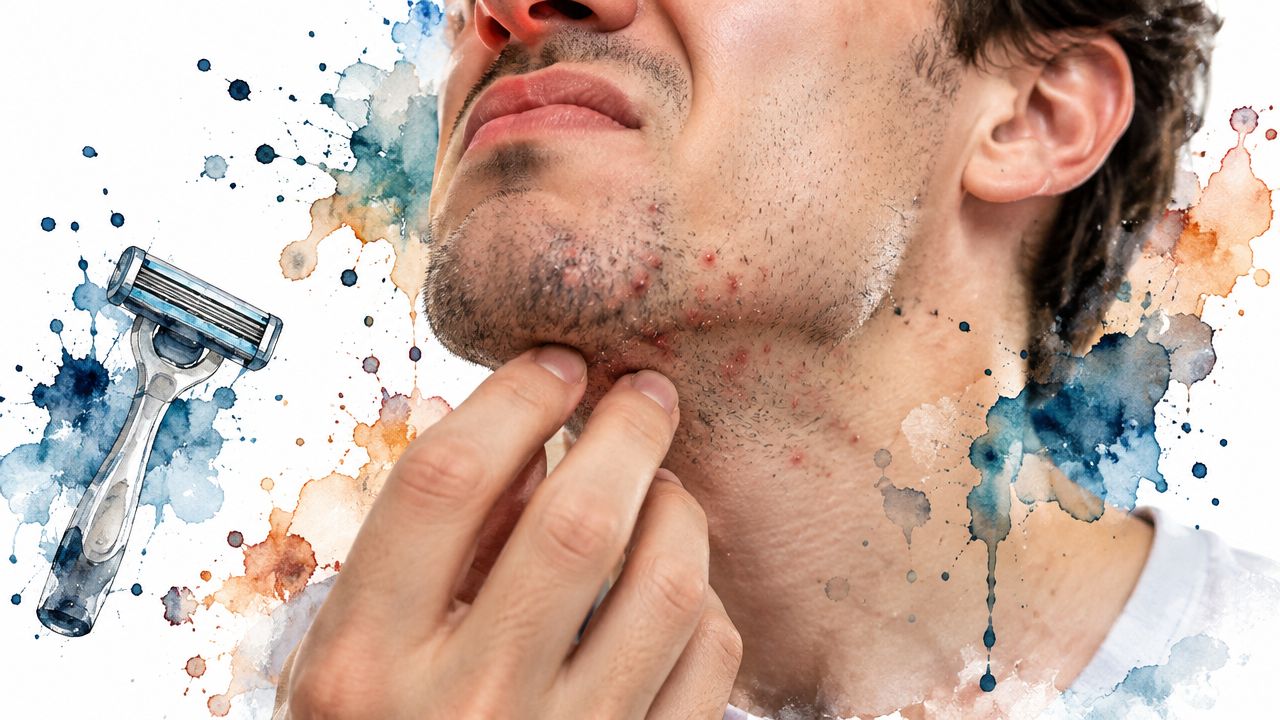
Prevention begins before the bump
A close shave can leave a sharp hair tip close enough to re-enter the skin. Stretching the neck, pressing hard, shaving against growth, and making repeated strokes all increase the chance of irritation. The more often those habits occur, the less opportunity the skin has to settle.
That doesn't mean you must abandon grooming altogether. It means choosing a finish that your skin can tolerate. A guarded electric trimmer, a single-blade razor, or a little visible stubble may look less ultra-smooth, but it can be a more comfortable trade-off for a beard-prone neck.
Practical rule: If your skin repeatedly reacts to a close shave, reduce closeness first. Changing the finish is often more useful than adding stronger aftercare.
A Gentler Shaving Routine for Smoother Results
A calmer shave begins with preparation. Dry hair resists the blade, while softened hair gives the razor a better path with less pressure. The routine below is designed to reduce friction, preserve the natural direction of growth, and limit the repeated passes that commonly leave the neck feeling raw.
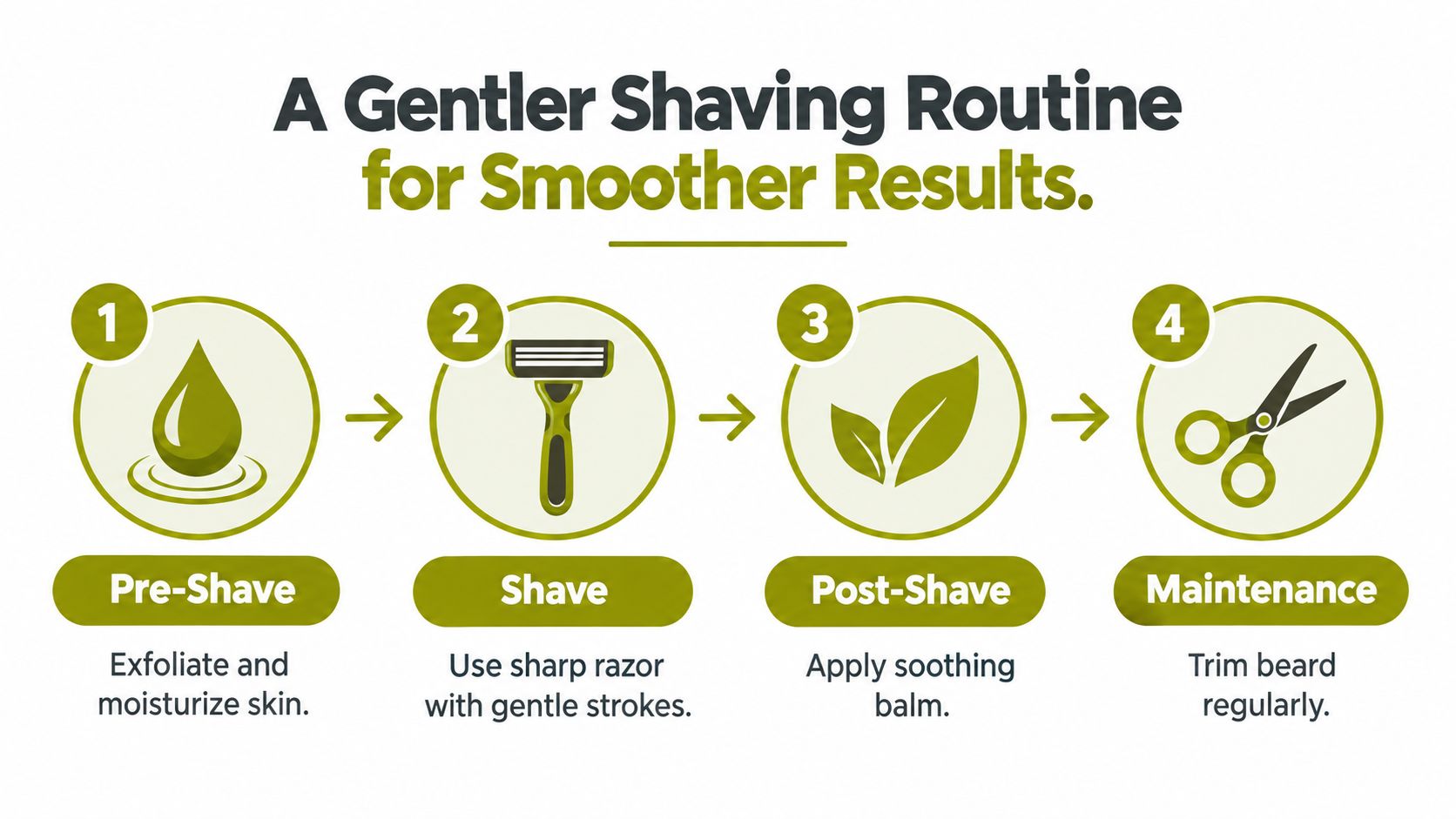
Prepare the beard and skin
- Soften first. Shave after a shower or place warm water over the beard area. Massage in a pre-shave gel, then apply a fragrance-free shaving cream. This helps soften the hair and gives the razor more slip.
- Map your growth pattern. Beard hair doesn't always grow in one uniform direction. Feel the stubble with your fingertips and identify the direction that feels smoothest. That direction is usually the grain.
- Keep the skin relaxed. Don't pull the neck taut. Stretching can expose more of the hair shaft, encouraging an exceptionally close cut that may curve back toward the skin.
Make fewer, lighter passes
- Shave with the grain. Use short, controlled strokes and light pressure. Rinse the blade often so hair and cream don't force you to press harder.
- Avoid chasing perfection. If a patch still feels slightly textured, resist repeated strokes. One additional gentle pass may be tolerable for some people, but repeatedly scraping the same area usually trades temporary smoothness for irritation.
- Consider a guarded trimmer. When a razor keeps triggering discomfort, use an electric clipper or guarded trimmer that leaves approximately 1 to 3 mm of stubble, a benchmark recommended in guidance for reducing hair penetration into the skin. The Clinical and Experimental Dermatology review discusses guarded clipping and reduced shaving frequency.
Rinse afterward, blot rather than rub, and apply a simple soothing moisturizer or balm. A beard-softening routine can also improve razor glide, so this guide on how to soften beard hair can help you prepare without relying on extra pressure.
For a visual walkthrough, watch the routine here:
Shave frequency deserves attention too. The American Academy of Family Physicians states that shaving cessation for at least 8 weeks is the best initial treatment after diagnosis, while shaving every 1 to 3 days can keep hair from growing long enough to penetrate the skin. Cleveland Clinic's ingrown-hair guidance outlines practical shaving adjustments. If stopping completely isn't realistic, reducing daily shaving to 2 to 3 times per week may reduce inflammatory lesions for some people, as described in the same dermatology review linked above.
The Role of Exfoliation and Moisturizing
Shaving technique gets most of the attention, but the skin surface also affects how easily a new hair emerges. A layer of dry, compacted dead skin can make the follicle opening less clear, while dehydrated skin is more likely to feel tight and reactive after the razor passes.
Exfoliation should be gentle, purposeful, and limited. Use a soft washcloth or a mild formula between shaving sessions, rather than scrubbing aggressively over freshly shaved skin. Some dermatology guidance recommends gentle exfoliation 1 to 2 times per week, and ingredients such as glycolic acid may help loosen dead skin cells after shaving. The Canadian Dermatology Association discusses exfoliation and ingrown-hair care.
Choose the right level of renewal
A mild alpha hydroxy acid, such as glycolic acid, can smooth surface buildup. If your skin stings, flakes, or becomes unusually red, reduce use or pause it. More exfoliation isn't automatically better, especially on the neck, where repeated shaving already creates friction.
For a clearer overview of technique and frequency, Category - Properly Exfoliating The Face offers useful context on keeping facial exfoliation measured rather than abrasive. A natural approach can still be active, but it should feel comfortable while you use it.
Moisture supports comfort
Apply a lightweight, fragrance-free moisturizer after cleansing and shaving. Look for humectants such as glycerin or hyaluronic acid, along with simple emollients that leave the skin flexible without a heavy, greasy film.
A beard oil can soften facial hair and reduce the dry, scratchy feeling that encourages touching. It won't correct an overly close shave, though, so treat it as a comfort step rather than a substitute for better technique. This guide to how to exfoliate your face naturally provides another way to keep the routine simple.
Common Mistakes That Lead to Ingrown Hairs
The most persistent problems usually come from small shortcuts. A fast shave against the grain may seem efficient, but it cuts hair closer and can leave a tip positioned to bend back toward the skin. Pulling the neck tight creates the same issue by changing how much of the hair shaft sits above the surface before cutting.
Dull blades create a different problem. They tug, drag, and often require extra strokes. Guidance from grooming and skin-care professionals recommends using a sharp, clean razor and replacing dull blades regularly because a worn edge can increase irritation. This blade-care guide explains why sharp, clean tools support a gentler shave.
Replace these habits
- Shaving against the grain: Start with the grain, even if the result isn't the closest possible finish.
- Repeating strokes: Rinse the area and reassess before making another pass.
- Pressing down: Let the razor's weight do the work instead of forcing it into the skin.
- Using a dirty tool: Clean and dry the razor after use so residue doesn't remain on the blade.
- Over-exfoliating: Avoid harsh scrubs and strong acids immediately after shaving.
- Tweezing beneath the surface: Don't dig for a hair you can't already see at the opening. Manipulation can prolong inflammation and encourage scarring.
The trade-off is straightforward. A perfectly smooth neck may last briefly, while a slightly less close trim can keep the skin calmer for longer. If your routine repeatedly produces roughness and bumps, chasing the closest finish is probably working against you.
Building a Sustainable Daily Grooming Habit
The best routine is the one you can repeat without dreading it. Start with a gentle cleanser and moisturizer each day, then reserve shaving for the days when you need a cleaner outline. On other days, use a guarded trimmer to maintain shape without repeatedly cutting the hair flush with the skin.
Think of your grooming schedule as a cycle rather than a daily test of smoothness. The AAFP review notes that stopping shaving for at least 8 weeks can be an important initial step after diagnosis, while a 2019 review reports that stopping shaving typically clears the condition over about 12 weeks. The NIH review provides the longer-term perspective on changing shaving habits.
A routine that stays realistic
Morning: Cleanse gently, apply moisturizer, and use beard oil only if the hair or skin feels dry. Keep the application light around the neck.
Shaving day: Warm the beard, apply cream, shave with growth, and stop before the skin feels scraped. Use a fresh, clean blade or a guarded clipper.
Between shaves: Leave the area alone rather than repeatedly checking for perfect smoothness. Gentle exfoliation 1 to 2 times weekly may help clear surface buildup when your skin tolerates it.
During flare-ups: Stop shaving the affected area for at least 4 weeks when possible. If grooming is unavoidable, preserve roughly 1 to 3 mm of length with a guarded trimmer, as recommended in guidance for ingrown beard hairs. The MSD Manual explains the role of guarded clipping and avoiding close shaving.
A practical ingrown hair prevention guide can be useful when you want to compare routine options. For facial-hair comfort, ArtNaturals' beard oil benefits guide offers ingredient-focused context without turning beard care into a complicated ritual.
What to Do When Bumps Appear
A bump doesn't mean you should reach for tweezers immediately. The common assumption is that exposing or removing the trapped hair as quickly as possible will solve the problem, but digging, squeezing, or repeated picking can injure the surrounding skin and prolong irritation.
Pause close shaving over the area. Wash gently, apply a warm compress for comfort, and let any visible hair loosen naturally. If the hair has clearly emerged at the surface, gentle release with sterile technique may be appropriate, but don't probe beneath the skin or force it out.
Keep the response calm
- Use warmth carefully: A clean, warm cloth can soften the area without the stress of hot water or aggressive rubbing.
- Avoid picking: Fingernails and unclean tools can introduce bacteria and create additional skin damage.
- Skip harsh formulas: Alcohol-heavy toners, strong fragrance, and abrasive scrubs can make sensitive skin feel worse.
- Protect the barrier: Apply a bland, fragrance-free moisturizer and leave the area undisturbed.
- Consider professional guidance: Persistent or worsening bumps deserve attention from a qualified healthcare professional, particularly if the area becomes increasingly painful, hot, swollen, or produces pus.
For recurring beard ingrowns, hair-reduction options may be worth discussing with a qualified professional. Clinical guidance describes laser treatment and electrolysis as longer-term hair-reduction strategies that can prevent recurrence, while depilatory creams may avoid the sharp cut tip created by shaving but can irritate some skin. These aren't universal solutions, so patch testing, professional advice, and realistic expectations matter.
The main lesson is patience. Prevention depends on reducing the habits that create re-entry, not punishing the skin with stronger products after every shave. A guarded trim, fewer passes, comfortable moisture, and consistent observation usually offer a more sustainable path than trying to force an instant fix.
ArtNaturals offers plant-oil-based skincare and men's grooming products, including beard and post-shave care designed to support a comfortable daily routine. Explore the collection at ArtNaturals and choose simple care that fits your beard, skin, and shaving habits.