

If you've ever wondered how to get the most out of your hyaluronic acid serum, the secret is surprisingly simple: apply just a pea-sized amount to damp skin. You’ll want to do this right after cleansing but before you reach for your moisturizer. This timing is key—it allows the serum to pull that wonderful moisture into your skin, creating a plump, hydrated canvas for everything that follows.
A Simple Guide to Deeply Hydrated Skin
So, you have a bottle of hyaluronic acid, a celebrated ingredient for achieving a dewy, fresh-faced look. Let's walk through how to make it a seamless, supportive part of your daily routine. Think of this serum as a moisture magnet for your skin; its purpose is to attract hydration and hold it there, leaving your face feeling supple and refreshed.
Adding it to your lineup is not a complicated process. It's just a small, mindful step that can elevate your entire skincare ritual and help you maintain a happy, healthy-looking complexion.
What Makes Hyaluronic Acid a Skincare Favorite
At its heart, hyaluronic acid is a humectant. It's a term that simply means the molecule is a natural magnet for water. It’s well-known for its ability to hold a remarkable amount of moisture, which is exactly why the beauty world loves it. When you pat on a serum, you're giving your skin a tool to lock in hydration.
Here’s why it’s a staple for so many people:
- Lightweight Feel: Unlike some thick, heavy creams, hyaluronic acid serums are usually feather-light and absorb nicely. This makes them a great fit for almost any skin type.
- Versatile Nature: It pairs well with other ingredients. It fits beautifully into both morning and evening routines and layers well with other products.
- Gentle Hydration: It delivers a dose of moisture without feeling greasy, helping your skin feel balanced and comfortable.
This dedication to simple hydration is why a quality hyaluronic acid collection can be a cornerstone of an effective skincare routine. If you're looking to build out your knowledge, you can also find additional insights into skin health to create a more holistic approach to your personal wellness.
Hyaluronic acid is not about fundamentally changing your skin. It's about giving it the deep hydration it needs to look and feel its best. It’s a simple act of replenishment that helps your skin’s natural radiance shine through.
Once you get the hang of how to use it, you'll see how effortlessly this hydration hero fits into your daily moments of self-care.
Your Daily Ritual for Applying Hyaluronic Acid
Achieving a beautifully hydrated look with hyaluronic acid isn’t about a complicated, time-consuming process. It's about the simple, mindful moments you build into your day. When you know how to use a hyaluronic acid serum correctly, you’re giving your skin the best opportunity to soak up its hydrating benefits.
This daily practice is your key to unlocking that signature plump, dewy appearance. It’s an easy addition that supports your skin’s moisture, leaving it feeling soft and refreshed.
Start With A Damp Canvas
If there’s one non-negotiable tip for using this serum, it’s this: always apply hyaluronic acid to damp skin.
Think of your serum as a tiny moisture magnet. It needs water to grab onto. Applying it to a completely dry face may cause the serum to pull moisture from the deeper layers of your skin, which is the opposite of what we want.
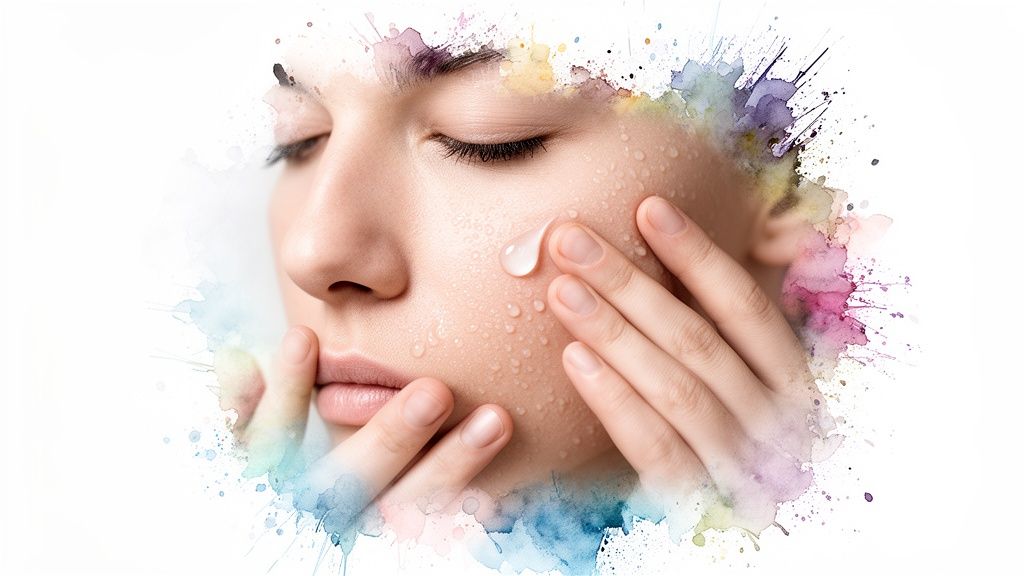
To create the perfect base, just wash your face as usual. Then, instead of rubbing it dry, gently pat your skin with a towel so it’s still slightly damp. You can also give your face a quick spritz with a facial mist. This layer of moisture gives the hyaluronic acid something to bind with, drawing that hydration into your skin.
Less Is Truly More
With serums, a little goes a surprisingly long way. You really only need a pea-sized amount to cover your entire face and neck. Applying more won’t necessarily boost the benefits; it may just waste product and can leave your skin feeling tacky.
Here's a simple, gentle way to apply it:
- Dispense one or two drops of serum onto your fingertips.
- Lightly dot the serum across your forehead, cheeks, chin, and neck.
- Instead of rubbing, use a soft, upward patting motion to press the serum into your skin until it’s absorbed.
This patting technique is gentle on your skin and helps with absorption without unnecessary stretching or pulling. Just give the serum a moment to sink in before you move on. If you're looking for a great place to start, our ArtNaturals Hyaluronic Acid Serum is a fantastic option for any routine.
Remember, the goal is to create a hydrated foundation for the rest of your routine. Applying your serum to damp skin is like watering a plant—it helps the roots (your skin) absorb nourishment more effectively.
When To Apply In Your Routine
Figuring out where hyaluronic acid fits in your routine is key. Because it's so lightweight and water-based, it should be one of the first products to touch your skin after cleansing. A good rule of thumb for skincare layering is to go from the thinnest consistency to the thickest.
A great routine looks something like this:
- Cleanser: Always start with a clean slate.
- Toner or Mist (Optional): This is a great way to ensure your skin is perfectly damp.
- Hyaluronic Acid Serum: Now is the time. Apply that pea-sized amount.
- Moisturizer: This is crucial. Always follow with a moisturizer to seal in all that hydration.
- Sunscreen (AM): In the morning, this is your non-negotiable final step.
Following this order helps ensure that the hyaluronic acid is locked into your skin by the moisturizer, keeping you feeling supple and hydrated all day (or night) long.
How to Layer Hyaluronic Acid with Other Ingredients
Think of your skincare routine as a team, with each product playing a specific role. For the team to work well, the products need to work together. The good news is that hyaluronic acid is a great team player—it gets along with most ingredients. Learning how to layer it correctly is the key to getting the most from your entire routine.

The general rule of layering is straightforward: go from thinnest to thickest consistency. Water-based serums go on before thicker oils or creams. This simple logic ensures that the lighter products can absorb into your skin instead of being blocked by a heavier layer.
Morning Pairings for a Bright Day
Your morning routine is about protecting and hydrating your skin for the day ahead. This is where hyaluronic acid truly shines.
-
With Vitamin C: This is a popular combination for bright-looking, protected skin. Many people apply Vitamin C serum first, right after cleansing, onto a dry face to let the antioxidant absorb without interference. After it has a moment to sink in, you can spritz your face with water or a hydrating toner and then immediately apply the hyaluronic acid serum. This locks in moisture and gives skin a dewy, plump finish.
-
With Niacinamide: Another fantastic pairing, especially for addressing skin texture and balance. Since both are usually water-based, the order is flexible. A good rule of thumb is to apply the one that targets your biggest concern first. If you’re focused on minimizing the appearance of pores and evening out your skin tone, you might put on Niacinamide first. Follow it up with hyaluronic acid for a surge of hydration.
You’re essentially creating a supportive environment for each ingredient to do its job. Hyaluronic acid acts as the ultimate hydrating prep step before you seal everything in with your moisturizer and SPF.
Evening Pairings for Gentle Renewal
At night, your skin goes into repair and renewal mode. Hyaluronic acid can play an amazing supporting role, especially when you’re using more "active" ingredients.
- With Retinol: Retinol is well-known for encouraging cell turnover, but it can sometimes be drying. This is where hyaluronic acid becomes its best friend. By applying HA first, you create a gentle, hydrating buffer. After cleansing, pat your hyaluronic acid serum onto damp skin. Once it’s fully absorbed, you can go in with your Retinol. This approach can help minimize potential irritation and keep your skin barrier happy.
This "buffering" method can be helpful, especially if you're new to Retinol. That extra layer of moisture can make the adjustment period feel smoother. If you want to take the guesswork out of building a routine, a curated kit like our ArtNaturals Serum Trio Set is a great place to start, giving you key players that are designed to work in harmony.
When you layer your products with a little intention, you’re doing more than just going through the motions. You’re building a personalized ritual that truly supports your skin from every angle.
Making Hyaluronic Acid Work for Your Skin Type
Everyone's skin is different, and your routine can be too. While hyaluronic acid is famously gentle and works well for most people, tweaking how you use it for your specific skin type can be a game-changer. The real secret is learning to listen to your skin and giving it what it's asking for.
This isn't just a skincare trend; it's a movement toward smarter, ingredient-focused routines. The global market for hyaluronic acid products is expected to reach USD 16.7 billion by 2030. That number tells a story: people want simple, effective ingredients that genuinely support their skin. You can explore the hyaluronic acid market trends on Grandviewresearch.com if you're curious.
For Dry or Thirsty Skin
If your skin often feels tight, flaky, or just plain thirsty, think of hyaluronic acid as its new best friend. For you, consistency is everything.
You might apply your serum both morning and night to keep your skin’s hydration levels feeling stable. But the most important part comes after you apply the serum. You must lock it in with a richer cream or a good face oil. This creates a seal that helps prevent all that lovely moisture from evaporating from your skin—a process sometimes called transepidermal water loss.
For Oily or Combination Skin
Adding moisture to oily skin might sound counterintuitive. However, oily skin is sometimes dehydrated skin that's overproducing oil to compensate.
Since hyaluronic acid serum is so lightweight and typically oil-free, it gives your skin the water it’s craving without any greasiness. Using it once or twice a day can help balance things out, reminding your skin it doesn't need to produce so much excess oil. Over time, you may notice a less shiny, more balanced complexion.
A Quick Self-Care Tip: Check in with your skin daily. Does it feel plump and happy? Or a little tight? Some days you might just need one application, and other days you might want a bit more. That intuitive approach is what great skincare is all about.
For Sensitive or Reactive Skin
When you have reactive skin, you become an expert at scanning ingredient lists. The good news is that hyaluronic acid is usually a safe bet, even for many sensitive complexions.
It’s a simple hydrator that helps soothe and support your skin’s moisture barrier. Of course, it’s always a good idea to patch-test a new product just to be safe. But for most people, a pure hyaluronic acid serum provides gentle hydration without drama, making it a perfect staple for a calm, happy routine.
Common Application Mistakes You Can Easily Avoid
Even with the best intentions, a few small slip-ups can stand between you and the results you’re after. When it comes to using hyaluronic acid serum, a couple of simple tweaks can make all the difference, helping your skin achieve that dewy, plump ideal. Let's walk through some common pitfalls and how to sidestep them for a more effective routine.
It’s no surprise this ingredient is so popular. The global market for these specific serums is projected to reach US$ 293.4 million in 2025, which shows how many people rely on a good hyaluronic acid formula. You can read more about the hyaluronic acid serum market growth on persistencemarketresearch.com.
Applying to Completely Dry Skin
This is, without a doubt, the number one mistake people make. Hyaluronic acid is a humectant, meaning it grabs moisture from its environment. If you put it on a bone-dry face, it has nowhere to pull moisture from but the deeper layers of your skin. This can backfire, leaving your skin feeling even tighter than before.
The fix is simple: always apply it to a damp canvas. After you cleanse, just pat your skin gently with a towel, leaving it slightly moist. A quick spritz of facial mist works perfectly, too. This gives the hyaluronic acid surface-level water to grab onto and pull into your skin—right where you want it.
Using Too Much Product
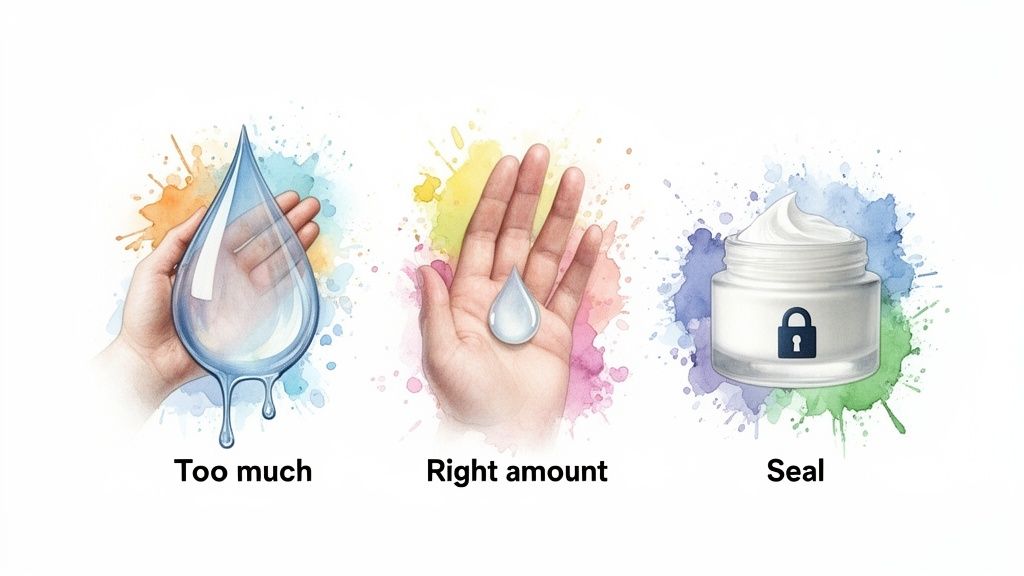
We get it. When a product feels this good, it’s tempting to use more. But with hyaluronic acid, more is not necessarily better. Overdoing it won’t boost the benefits; it will just waste your serum and can leave behind a sticky feeling.
All you really need is a pea-sized amount. That’s enough to cover your entire face and neck. Gently pat it into your skin, and you’ll get a smooth, comfortable finish without any residue.
Think of it like this: your skin can only absorb so much at once. A light, even layer is far more effective than an overly generous one. This mindful approach ensures your skin gets exactly what it needs without feeling overwhelmed.
Forgetting to Seal It In
This next step is just as critical, but it’s the one that’s most often forgotten. Because hyaluronic acid works by drawing moisture in, you need to apply something on top to keep it there. Without a final, more occlusive layer, all that wonderful hydration can evaporate back into the air, especially in dry environments.
So, after your serum has had a moment to absorb, always follow up with a good moisturizer. This acts as a sealant, locking in the serum’s hard work and keeping your skin feeling supple and hydrated for hours. It’s the finishing touch that makes all the difference.
Your Hyaluronic Acid Questions Answered
Even with a popular ingredient like hyaluronic acid, it’s completely normal to have a few questions. Let's walk through some of the most common ones so you can feel confident in your routine.
Can I Use Hyaluronic Acid Serum Every Day?
Yes, you absolutely can—and you may want to! Because it's so gentle, hyaluronic acid is perfect for both your morning and evening skincare rituals. Consistency is what helps you see the benefits, keeping your skin feeling hydrated and happy day after day.
Think of it like a daily drink of water for your face. It’s a simple, foundational step that helps your skin stay consistently plump, dewy, and perfectly prepped for whatever comes next.
How Long Until I Notice a Difference?
Here's the great part: you'll likely feel a difference almost immediately. One of the best things about hyaluronic acid is that initial rush of hydration. Right after your first use, you’ll probably notice your skin feels softer and has a lovely, dewy bounce to it.
For more lasting benefits—like a consistently supple texture and improved hydration levels—give it a few weeks of daily use. Great skincare is a journey, not a sprint, and radiant results often come with time and patience.
Why Does My Serum Feel Sticky?
If your serum feels a bit tacky on your skin, it’s almost always one of two things: you may have used a little too much, or your skin wasn't damp enough when you applied it.
First, try dialing back the amount. A single pea-sized amount is plenty for your entire face. Also, make sure your skin is genuinely damp before you apply it. This helps the serum glide on and absorb properly instead of just sitting on the surface. Letting it sink in for a moment before layering on your moisturizer usually solves any lingering stickiness.
A sticky feeling can just be your skin's way of telling you to tweak your technique. Using a smaller amount on damp skin helps the serum absorb beautifully, leaving nothing behind but a smooth, hydrated glow.
Is It Safe to Use Around My Eyes?
Yes, it generally is. In fact, it's wonderful for the delicate skin around the eyes. That extra dose of hydration can help the area look smoother and feel more refreshed.
Just use your ring finger to gently tap the serum along the orbital bone (the bone you can feel around your eye socket). The key is to be gentle and avoid getting it directly in your eyes.
This is also a good time to mention how topical products work differently from cosmetic procedures. Many people are curious about the differences between hyaluronic acid serums and dermal fillers, which explains how a daily serum provides surface hydration versus an injectable that adds volume from within.
It’s also fascinating to see how the demand for clean ingredients is shaping the industry. Bio-fermented hyaluronic acid, for example, is a market segment expected to reach USD 189.5 million by 2035. This growth reflects a collective move toward effective, plant-powered ingredients—something we're passionate about.