

You step out of the shower, pat your face dry, and notice that familiar tight feeling. Your skin looks dull, the cheeks feel rough, and the moisturizer you forgot on the counter suddenly seems very far away. If this happens often, a hyaluronic acid moisturizer for dry skin may help, but only when you understand what hyaluronic acid can and can't do.
Hyaluronic acid is a water-binding ingredient, not a complete barrier cream. It draws moisture toward the skin, while ingredients such as glycerin, ceramides, oils, and occlusives help keep that moisture from escaping. The most comfortable routine treats hydration as a team effort, adjusted for your skin and your environment.
Why Dry Skin Craves Extra Hydration
After cleansing, dry skin can feel pulled tight because its surface isn't holding water comfortably. The outer barrier acts like a protective wall, with lipids helping reduce water loss. When that barrier is short on supportive oils and lipids, moisture leaves more easily, and the surface may feel rough, flaky, or itchy.
That doesn't mean every tight sensation has the same cause. Dehydrated skin has a temporary water shortage. It may feel tight after washing, during travel, or in air-conditioned rooms, even if the skin produces oil. Dry skin, by contrast, usually describes a longer-term shortage of lipids and a weaker ability to keep moisture in. One person can experience both at the same time.
Water in, water kept
A splash of water can make the face feel refreshed for a moment, but it doesn't create lasting comfort by itself. A moisturizer needs to do more than leave a wet sensation on the surface. It should help attract water, soften the skin, and reduce the escape of that water afterward.
The dry skin care routine from ArtNaturals offers a useful reminder that gentle cleansing and consistent moisturizing belong together. The same principle applies to areas beyond the face. Readers looking for thoughtful expert tips for intimate dryness may also find it helpful to think in terms of gentle care, moisture support, and avoiding unnecessary irritation.
Practical rule: If your skin feels tight again soon after applying a lightweight hydrator, it may need a sealing layer rather than more water-based product.
Hyaluronic acid fits here. It supplies the water-attracting half of the routine, while the rest of the formula helps hold that hydration in place. The ingredient can make skin feel softer and more comfortable, but it works best as one part of a barrier-minded moisturizer.
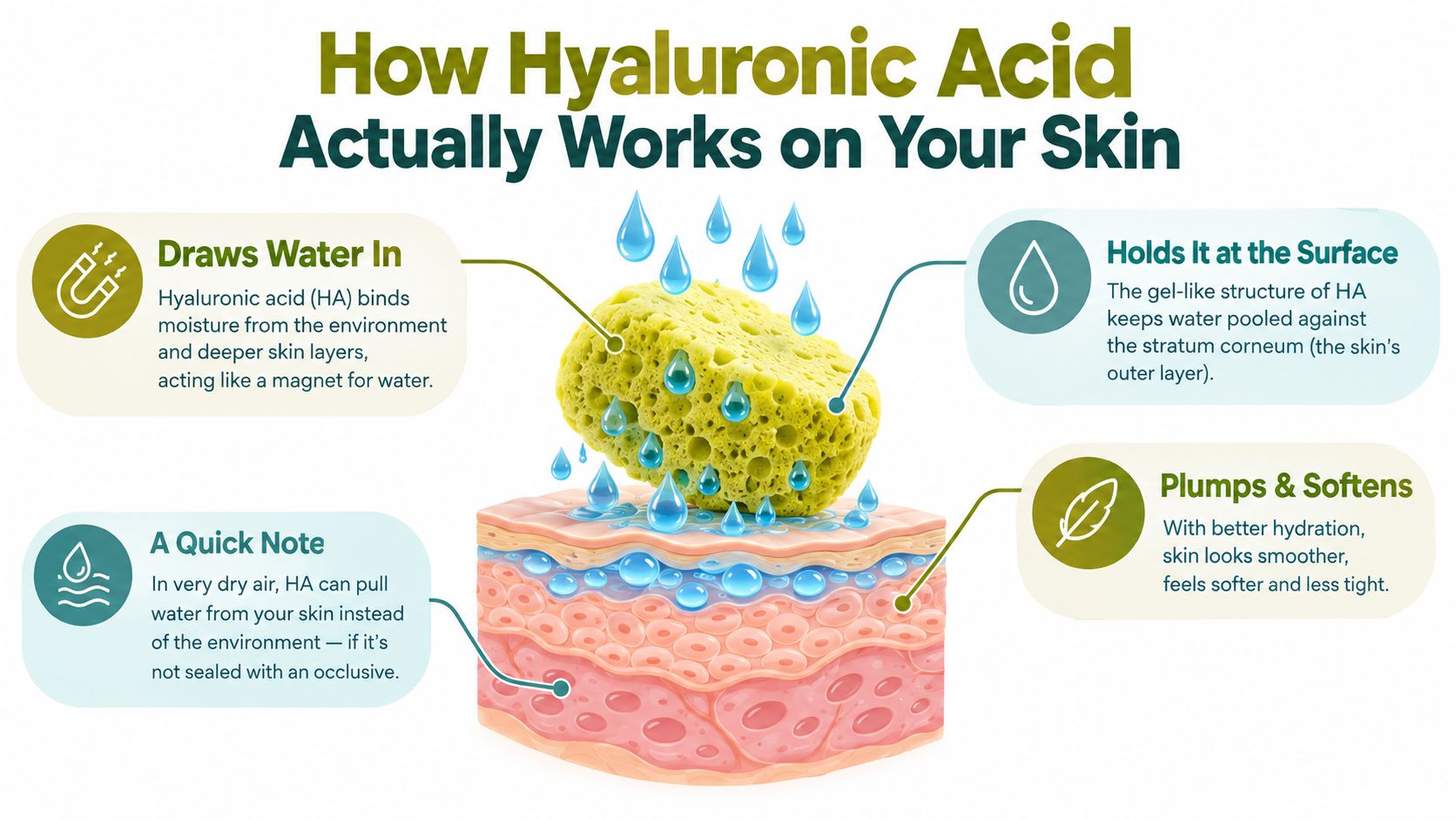
How Hyaluronic Acid Actually Works on Your Skin
Think of hyaluronic acid as a soft, thirsty sponge. When water is available, it binds that water and helps hold it near the skin's surface. The sponge doesn't create water, and it doesn't wrap the skin in an airtight coating. It helps keep moisture close.
In skincare language, hyaluronic acid is a humectant. Humectants attract and bind water. Emollients, such as squalane and fatty acids, smooth rough areas and make the surface feel supple. Occlusives, including dimethicone and petrolatum, form a more protective seal that slows water escape. A well-balanced moisturizer may use all three categories.
The damp-skin step
Apply HA while your skin is slightly damp, not dripping wet and not completely dry. That gives the ingredient accessible water to bind. Follow with a moisturizer so the water stays available instead of evaporating from the surface.
The ArtNaturals guide to hyaluronic acid serum is useful for understanding the distinction between a hydrating serum and a cream. A serum can add lightweight water support, while a moisturizer provides the richer mixture that helps preserve comfort.
Why the surrounding formula matters
Hyaluronic acid already exists naturally in the body, including the skin. Its topical role is still limited by the surrounding conditions. Cold air, indoor heating, low humidity, and harsh cleansing can make it harder for skin to retain moisture, so an HA product may feel much better when paired with lipids or an occlusive.
The ingredient also comes in different molecular sizes. That difference affects whether it mainly forms a surface film, supports hydration in upper layers, or creates a particular texture. A product label that says “hyaluronic acid” doesn't tell you the whole formulation story.
Low vs High Molecular Weight and Why It Matters
Not all hyaluronic acid behaves in the same way. High-molecular-weight HA consists of larger molecules that tend to remain nearer the surface, where they can create a flexible, cushiony film. Low-molecular-weight HA uses smaller molecules that can move farther into upper skin layers and support a different hydration feel.
A review of dry-skin data reported that a 0.1% 7 kDa HA lotion and a 0.1% 1800 kDa HA lotion both increased skin capacitance in older adults, while the 7 kDa version performed significantly better for hydration. The same review also describes high-molecular-weight HA as valuable because its surface film can help reduce transepidermal water loss. The review of molecular weight and topical HA supports a balanced approach rather than treating every form as interchangeable.
| Feature | High Molecular Weight (HMW) | Low Molecular Weight (LMW) |
|---|---|---|
| Typical feel | Cushioning and film-forming | Lighter, with a more layered hydration feel |
| Where it works | Closer to the surface | In upper skin layers |
| Main contribution | Surface comfort and support against water loss | Hydration support beyond the immediate surface |
| Possible concern | May feel more noticeable in a rich formula | Can occasionally feel tingly or reactive for sensitive skin |
| Useful dry-skin goal | Smoothness and reduced surface roughness | Additional hydration support |
What to look for on an ingredient list
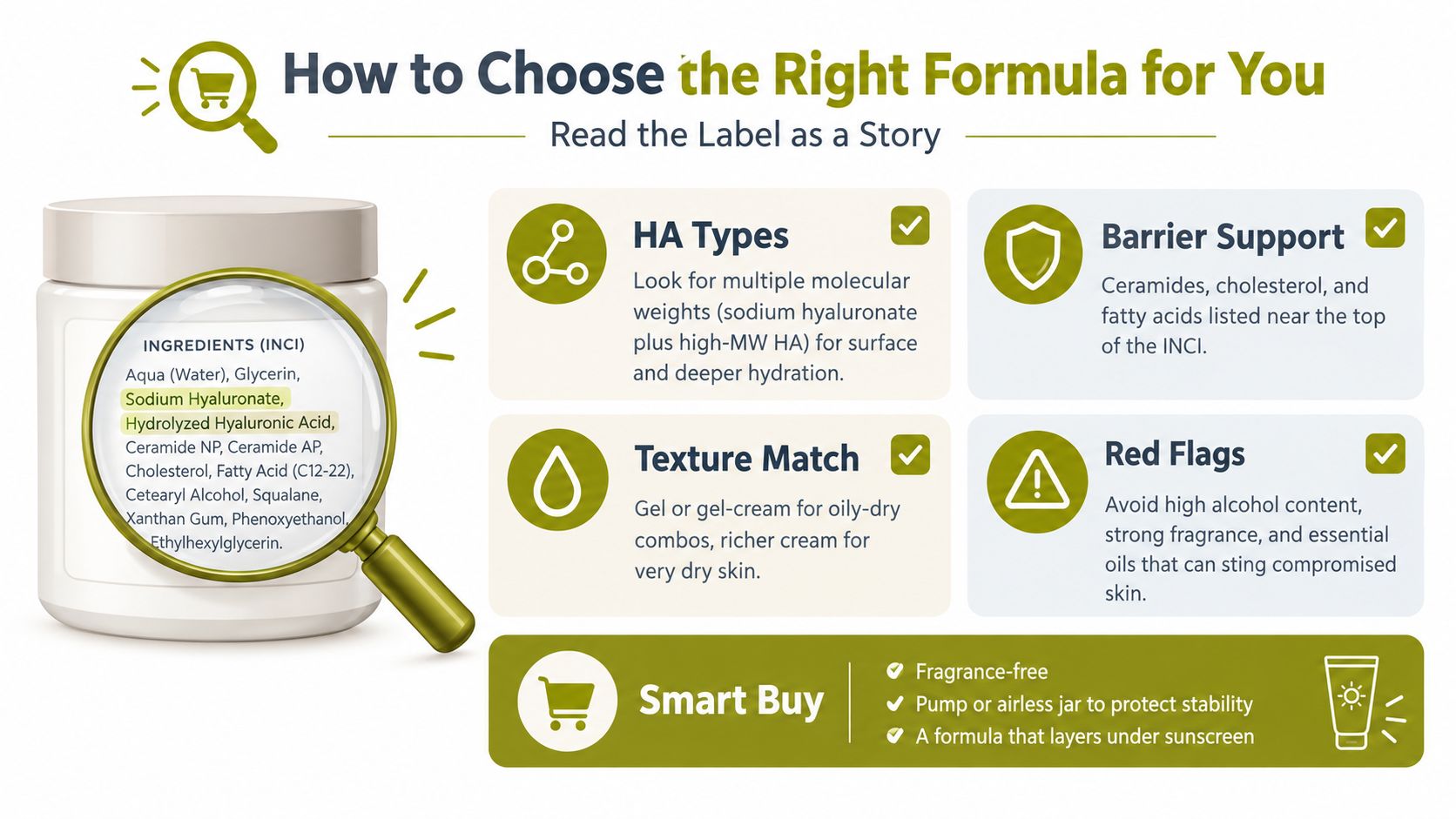
A thoughtful formula may combine several forms rather than relying on one. Scan for names such as sodium hyaluronate and hydrolyzed hyaluronic acid, while remembering that the full ingredient list matters more than a single highlighted term.
Molecular weight can be more informative than a large percentage printed on the front of a bottle. A formula with several HA forms plus glycerin, ceramides, or an emollient may offer a more complete experience than a highly marketed HA product without barrier support.
The practical goal is simple: surface softness today and better moisture support throughout the day. If a low-molecular-weight formula stings, choose a simpler product with a more comfortable texture and stronger supporting ingredients.
The Best Ingredient Partners for an HA Moisturizer
Hyaluronic acid works like one member of a small skincare team. It attracts water, but other ingredients help the skin feel smooth and prevent that water from disappearing too quickly.
Ceramides support the wall
Ceramides are lipid-like ingredients that help reinforce the outer barrier. Think of them as part of the mortar between surface cells. When a formula combines HA with ceramides, it addresses both sides of the problem, water attraction and barrier support.
A comparative study of six creams found that the formula containing glycerin and silicone oil produced the highest moisturization and the greatest reduction in transepidermal water loss. The HA-only cream ranked behind combinations that included silicone and glycerin, which supports the value of a multi-ingredient formula for dry skin. The comparative cream study provides the relevant formulation context.
Glycerin brings dependable support
Glycerin is another humectant. It helps draw water into the upper layers and pairs naturally with HA, giving the formula more than one way to support hydration. It's often a quiet ingredient on the label, but a valuable one for skin that feels thirsty soon after cleansing.
Squalane and fatty acids soften
Squalane and lightweight fatty acids are emollients. They smooth rough, flaky areas and add a soft, flexible feel without the dense sensation some people dislike in heavy creams. They don't replace HA, but they make the surface feel more comfortable after HA has supplied water support.
Occlusives finish the job
Dimethicone, petrolatum, shea butter, and facial oils can act as sealing ingredients. A richer cream or balm is especially useful on the cheeks, around the mouth, or anywhere that loses moisture quickly.
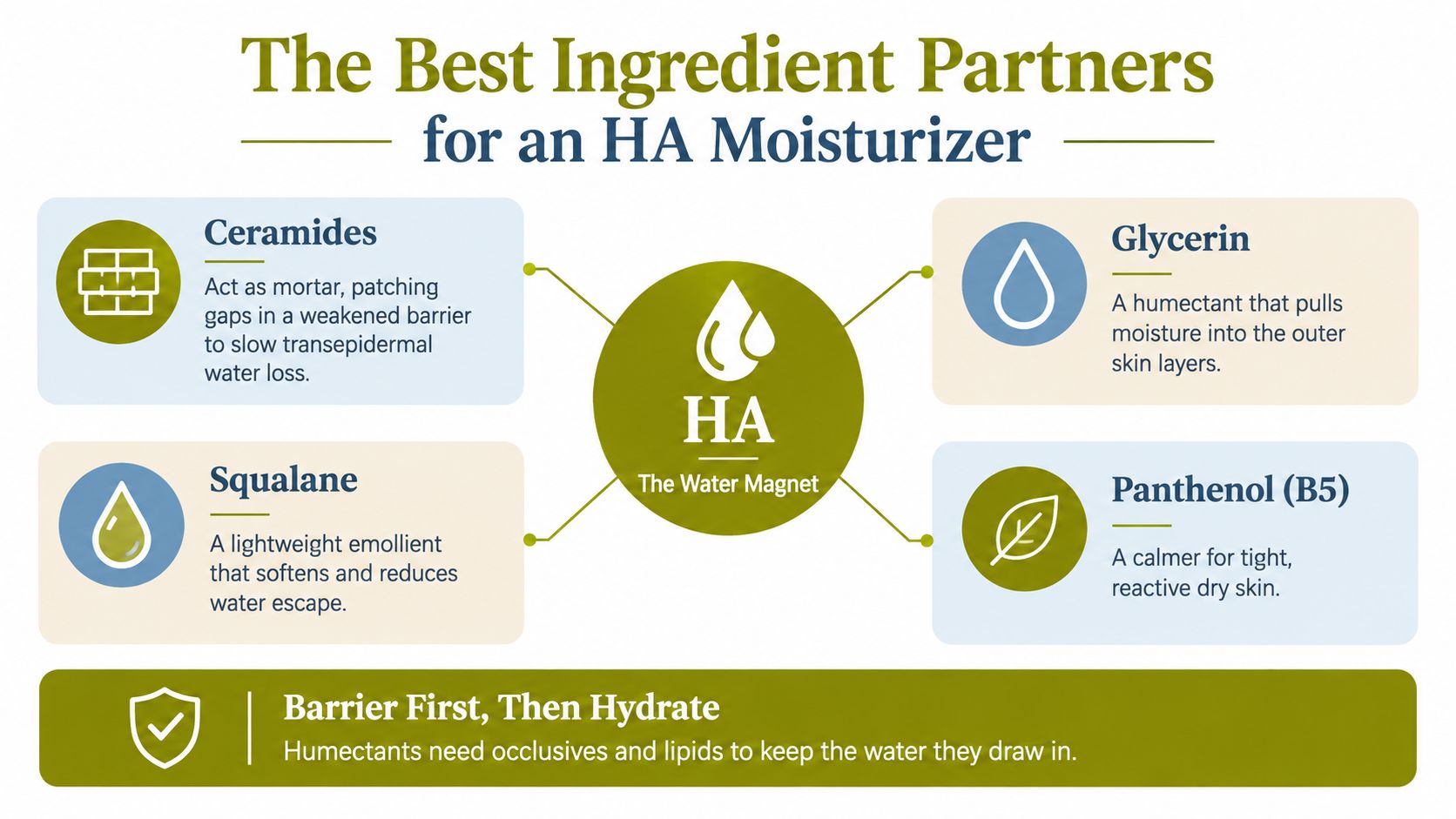
The ArtNaturals overview of niacinamide and hyaluronic acid also reflects a broader formulation principle: ingredients can complement one another when each has a distinct role. For genuinely dry skin, a blend of humectant, emollient, lipid, and occlusive support usually feels more complete than HA alone.
A Calm Step-by-Step Layering Ritual
A comfortable routine doesn't need many products. It needs a sensible order, a gentle touch, and enough flexibility for the weather around you.
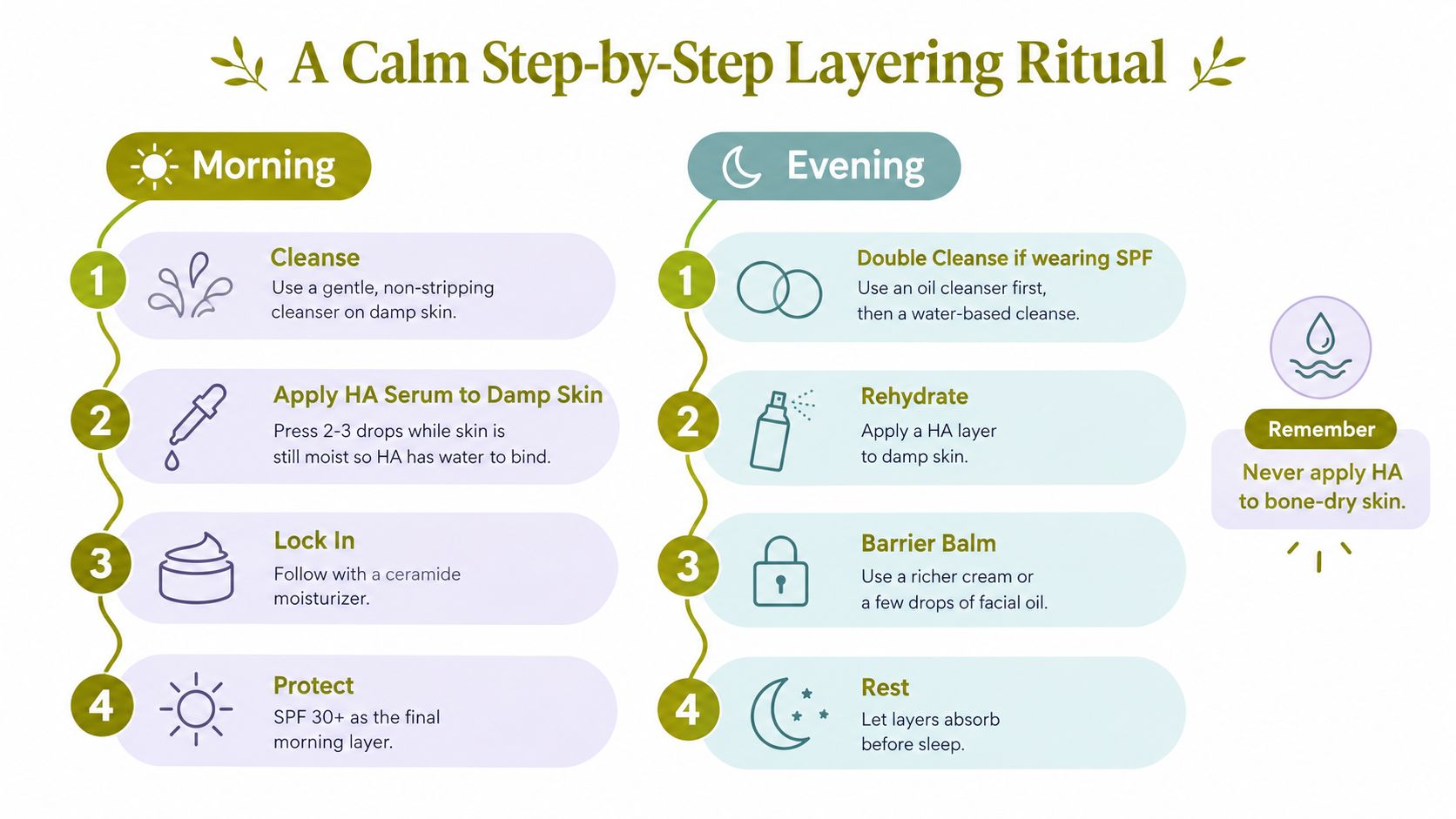
Morning
- Cleanse gently. Use a non-stripping cleanser and lukewarm water. If your skin isn't oily or sweaty when you wake, a water rinse may be enough for some routines.
- Leave skin slightly damp. Pat, rather than rub, and apply your HA product while a fine layer of moisture remains. This is the moment when the humectant has water available to bind.
- Seal with your moisturizer. Choose an HA moisturizer that also contains supporting ingredients such as glycerin, ceramides, squalane, or an occlusive. Press it over the face and extend the leftover product toward the neck if that area also feels dry.
- Finish with daytime protection. Apply sunscreen as the final morning skincare layer.
Evening
If you've worn sunscreen or makeup, remove it with a suitable first cleanse, then follow with a gentle water-based cleanser. Reapply HA to damp skin and cover it with a comfortable cream. On flaky areas, add a small amount of richer balm or facial oil rather than coating the entire face automatically.
Damp skin is the small adjustment that often makes a big difference. Apply HA before the water has fully evaporated, then seal it promptly.
Climate should guide texture. In dry indoor winter air, mist or lightly dampen the skin before application and consider a thicker night cream or occlusive balm. In humid summer weather, a lighter lotion may feel better, and you may not need a heavy sealing layer everywhere.
A routine should also be easy to repeat. If you keep changing products, it becomes difficult to tell which texture or ingredient suits you. Give a simple routine time to show whether your skin feels softer, less tight, and more comfortable through the day.
Concentration, Sensitivity, and Skin Type Cues
A higher HA percentage isn't automatically a better choice. Hyaluronic acid can be useful at modest levels, and the rest of the formula often determines whether the product feels calming, sticky, rich, or irritating.
Most over-the-counter creams, lotions, and serums contain less than 2% hyaluronic acid, and one consumer health source advises avoiding concentrations above 2% because they may increase irritation or dryness. Dermatology-focused guidance places expert recommendations in the 0.5% to 2% range. Healthline's guidance on using hyaluronic acid gives that practical label-reading context.
The Cosmetic Ingredient Review's 2022 safety assessment reports that sodium hyaluronate appeared in 601 formulations at concentrations up to 2%. The Cosmetic Ingredient Review assessment offers a useful reference point, but it doesn't mean every product should aim for the upper end.
| Concentration Range | What It Usually Means | Best Suited For |
|---|---|---|
| Below 0.5% | A lighter supporting amount within a broader formula | People who want subtle hydration and a simple texture |
| 0.5% to 2% | A commonly discussed range for topical use | Dry or dehydrated skin when the full formula is well balanced |
| Above 2% | May feel more concentrated and can raise the chance of dryness or irritation for some users | Usually not the first choice for sensitive skin |
Let your skin give feedback
Persistent tightness after application can mean the product needs richer support, or that you're applying it without enough water underneath. Stinging may signal sensitivity to the whole formula, especially if it also contains fragrance, strong actives, or a low-molecular-weight HA that your skin doesn't enjoy.
A sticky residue that never settles may indicate a heavy humectant blend or too many layers. Sudden congestion can also come from the cream's oils, waxes, or occlusives rather than HA itself. Patch test new products, and change one product at a time.
If you're comparing a skincare lotion with other moisture-focused self-care products, this explanation of soy wax lotion at Jackpot Candles shows why texture and intended use matter. A product designed for the body shouldn't automatically become your facial moisturizer.
For sensitive or reactive skin, comfort matters more than a prominent number. Choose a straightforward formula, use it on damp skin, and stop if burning or persistent irritation continues.
How to Choose the Right Formula for You
Read the ingredient list as a story. Start with what follows HA. Humectants such as glycerin help draw water toward the skin, while ceramides support the barrier. Emollients and occlusives, including squalane, shea butter, dimethicone, and facial oils, soften the surface and slow moisture loss. The balance matters more than a prominent HA claim.
Match the texture to your surroundings
A light gel-cream may suit combination skin that feels dry mainly on the cheeks. Very dry skin, heated rooms, and cold air can increase the need for a richer cream that leaves a flexible protective layer. In humid weather, that same texture may feel heavy. A lotion containing glycerin, HA, and barrier-supporting lipids may feel more comfortable.
Climate offers a useful rule of thumb. In damp conditions, HA and glycerin may provide enough water-attracting support in a lighter formula. In dry, windy, or heated environments, add backup from ceramides and a richer emollient or occlusive. HA can attract water, but its teammates help keep that comfort from disappearing too quickly.
Judge the product after it settles, not only during the first minute. Ask yourself:
- After two hours: Does the skin still feel comfortable, or has tightness returned?
- After six hours: Are the cheeks still soft, or do flakes and roughness reappear?
- Under sunscreen: Does the moisturizer spread smoothly without pilling?
- At night: Does it support comfort without feeling sticky on the pillow?
Notice what the label leaves out
A long list of denatured alcohols near the beginning may feel drying for some people. Strong fragrance and essential oils can also be uncomfortable when the barrier feels fragile. A formula that highlights HA but offers little glycerin, lipid, or sealing support may create a quick smooth sensation without lasting comfort.
Patch test new products for about two weeks before making a firm judgment, keeping the rest of your skincare steady. Observe softness, flaking, tightness, and comfort rather than relying on the first application.
ArtNaturals lists a Hyaluronic Face Moisturizer as an unscented daily cream with hyaluronic acid, along with a hyaluronic acid serum intended to help skin retain moisture on the face, neck, and chest. Assess these products by the same criteria as any other formula: texture, supporting ingredients, and how your skin feels later in the day.
ArtNaturals also offers hyaluronic acid skincare, serums, and other plant-focused beauty and wellness products. Visit ArtNaturals to explore its hyaluronic acid products and compare formulas with your skin's texture needs, climate, and preference for uncomplicated self-care.