

You wash your face, pat it dry, and feel that familiar tightness around your cheeks. The weather may be cold, the air-conditioning may be running, or your cleanser may leave your skin asking for more comfort. A thoughtful hyaluronic acid skin care routine can turn that moment into a gentle daily ritual, especially when you treat hydration as a whole process rather than a single serum step.
Hyaluronic acid is a naturally occurring moisture-binding substance and a powerful humectant. It can bind up to 1,000 times its weight in water when used in skincare formulations, which helps explain why it appears in serums, moisturizers, masks, and other everyday products (The Beauty Signal explains hyaluronic acid's water-binding role). The most comfortable results usually come from pairing that water-attracting step with a moisturizer, a supportive environment, and a little patience.
Welcoming Hyaluronic Acid Into Your Daily Ritual
A rushed morning can make skin feel like an afterthought. You cleanse between getting dressed and finding your keys, notice a dry patch near your nose, and reach for the lightest serum on the shelf. Hyaluronic acid fits naturally into that kind of routine because it doesn't ask you to perform an aggressive treatment. It offers a soft, replenishing pause.
Although the word “acid” can sound exfoliating, hyaluronic acid works differently from resurfacing acids. It acts as a humectant, attracting and holding water near the skin's surface. That moisture can help the complexion look fresher, smoother, and more supple without the sharp sensation associated with exfoliation.

The ingredient has also moved far beyond specialist settings. A historical timeline records its discovery in 1934, ophthalmic use in the 1950s and 1960s, orthopedic trials in the 1970s, FDA-approved ophthalmic viscosurgery in the 1980s, and cross-linked dermal fillers in the 1990s. Microbial fermentation in the 1990s helped make hyaluronic acid affordable for mass-market skincare (the clinical review includes this historical timeline). Today, it appears in cleansers, toners, serums, creams, and masks, making it easy to build a simple ritual around it.
A calming perspective: Hydration isn't a race toward a dramatic transformation. It's a small act of care that helps your skin feel more comfortable in the present moment.
If your routine includes occasional facials or other personalized support, learning about professional skincare treatments in Southern California can help you explore options beyond your home ritual. For everyday use, however, the central idea remains simple: bring in moisture, then help your skin hold onto it.
Mastering the Art of Layering for Deep Hydration
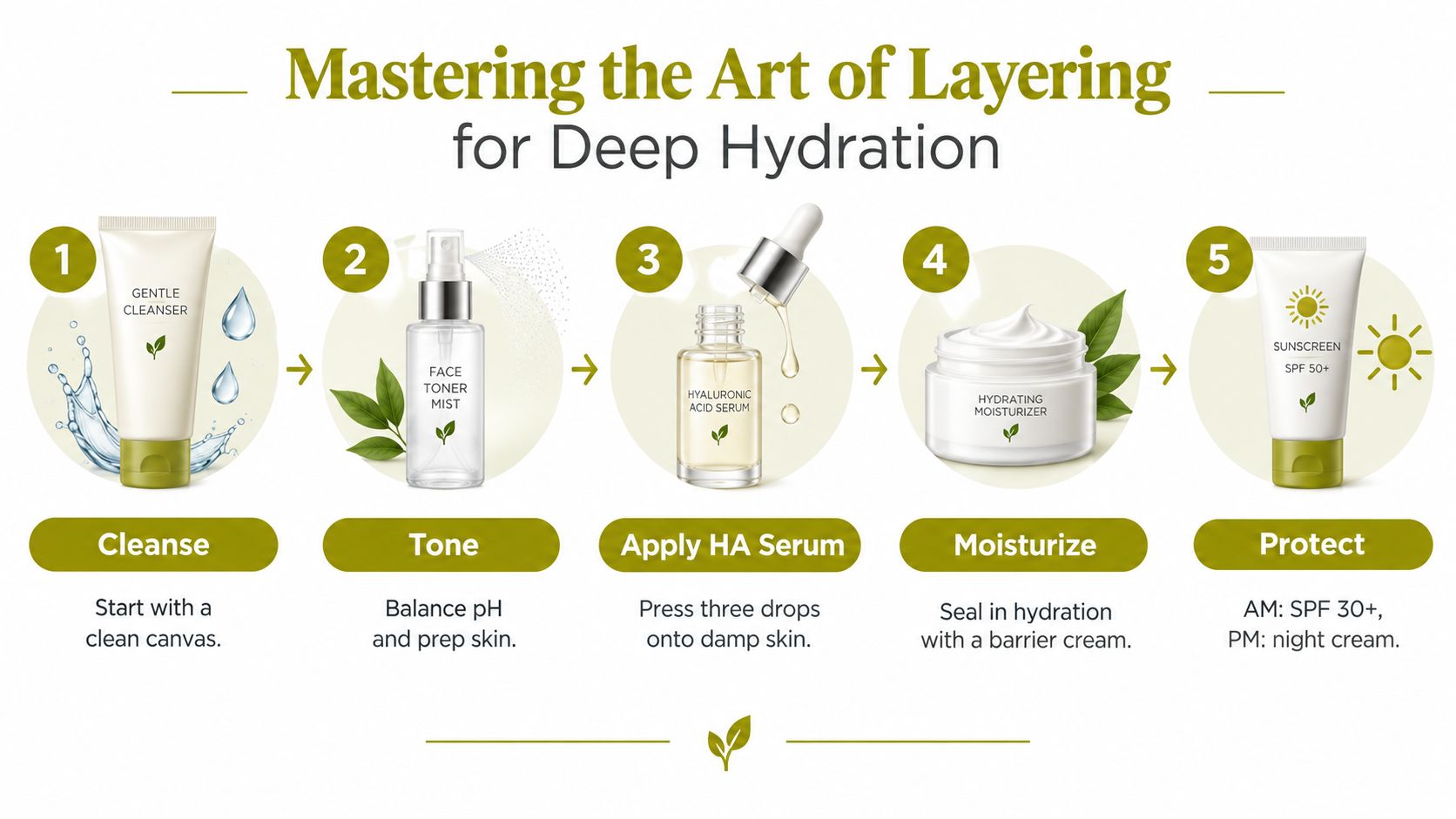
A hyaluronic acid serum works best when you give it water to work with and follow it with a layer that helps slow moisture loss. The familiar order is cleanse, hydrate, moisturize, and protect. Each step has a different purpose, and skipping the final layer can leave the ritual feeling incomplete.
A gentle morning sequence
Begin with a mild cleanser, or rinse if your skin feels comfortable with less cleansing in the morning. Leave a trace of moisture on the face rather than rubbing it completely dry. You can also press in a light mist of floral water, provided the product suits your skin and doesn't contain ingredients that leave you feeling irritated.
Apply a small amount of hyaluronic acid serum with clean fingertips. Instead of dragging the product across the face, press it over the cheeks, forehead, chin, and neck. A serum should generally come before richer products, which is consistent with this guide to layering skin care.
Follow promptly with a cream or gel moisturizer. This sealing step matters because hyaluronic acid attracts water, while a moisturizer can help reduce the amount of moisture that escapes from the surface. In the morning, finish with sunscreen as the last skincare step.
A restful evening sequence
At night, remove sunscreen and makeup gently, then cleanse without scrubbing. Apply the serum while the skin is still slightly damp, and use your moisturizer while the surface feels comfortable rather than tight. A nourishing formula with plant oils, shea butter, squalane, or other emollient ingredients may feel especially soothing when the air is dry.
For a more detailed explanation of damp-skin application and sealing, this Finding Favourites hydration guide offers a useful companion perspective. You don't need a complicated lineup. A calm, repeatable sequence often serves the skin better than constantly changing products.
Practical rule: If your face feels drier after the serum dries, use less serum, apply it to slightly damp skin, and add moisturizer sooner.
Customizing Your Moisture Ritual for Every Skin Type
Skin type can guide texture, but your current skin condition deserves equal attention. Oily skin can lack water, dry skin can still become congested, and combination skin may need different textures across different areas of the face. Use the serum as the adaptable middle step, then choose the finishing layer according to how your skin feels.
Dry and mature skin
Dry skin often prefers a richer cream after hyaluronic acid. Look for nourishing textures that include plant oils, shea butter, cocoa butter, ceramides, or other barrier-supportive ingredients. If your cheeks feel tight but your forehead doesn't, concentrate the richer layer on the drier areas rather than coating the entire face heavily.
Maturing skin may also appreciate a more comforting evening ritual. Press the serum in gently, then smooth a cream containing jojoba, argan, or squalane over the face. These oils don't replace water-based hydration, but they can complement it by adding softness and reducing the feeling of surface dryness.
Oily and combination skin
A lightweight gel cream can be a better match for oily skin than a thick balm. Choose a fluid serum and a breathable moisturizer, then observe whether your skin feels hydrated without a greasy finish. If shine gathers across the forehead and nose while the cheeks feel dry, use less product in the center of the face and a little more on the outer cheeks.
Combination skin benefits from a zone-based approach. Apply the same hydrating serum across the face, but vary the moisturizer by area. This keeps the routine uncomplicated while respecting the way different parts of your complexion behave.
Sensitive or easily overwhelmed skin
Keep the supporting formula simple. A fragrance-free serum with a short ingredient list may be easier to assess than a product combining many active ingredients. Patch testing a new product and introducing one change at a time can make it easier to identify what your skin likes.
For additional guidance on adapting hydration to a reactive complexion, explore this resource on hyaluronic acid for sensitive skin. The right routine should feel comfortable during application and afterward, not leave you chasing relief with more products.
Pairing Botanical Actives for a Balanced Glow
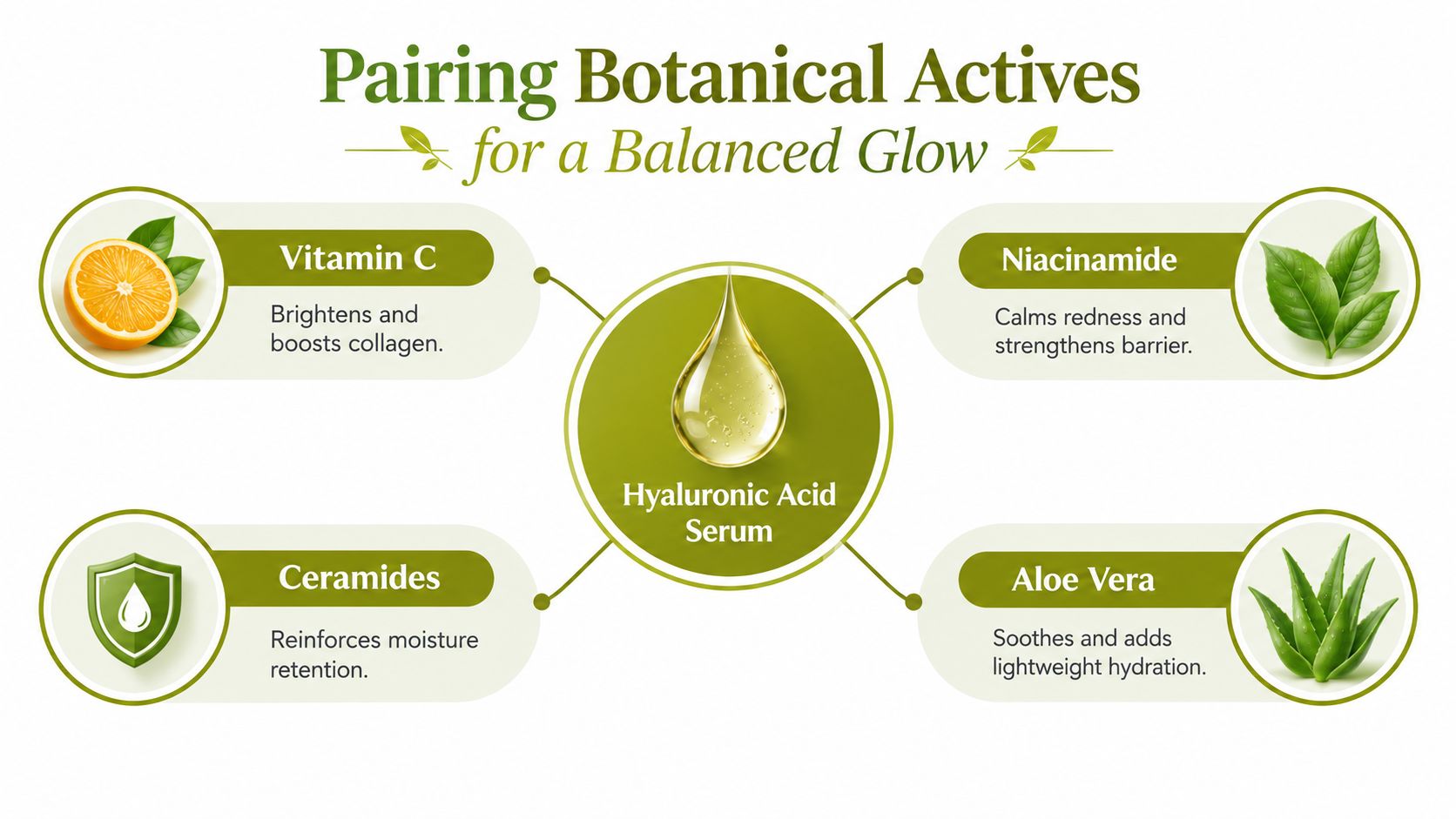
Hyaluronic acid doesn't need to be the only meaningful ingredient in your routine. It can provide a cushion of hydration alongside brightening, calming, and barrier-supportive formulas. The key is to introduce combinations gradually and keep the overall ritual gentle.
Morning combinations
Vitamin C is often chosen for a brighter-looking complexion, while hyaluronic acid adds water-based comfort. If you're using separate products, apply the thinner formula first and follow with the hydrating serum, moisturizer, and sunscreen. Some formulas already combine both ingredients, which can make the routine easier to follow.
Niacinamide can also sit comfortably beside hyaluronic acid. It's commonly used in routines focused on a calmer-looking, more even complexion, while hyaluronic acid helps prevent the routine from feeling stripped or overly dry. A practical overview of this pairing is available in this guide to niacinamide and hyaluronic acid.
Evening combinations
Ceramides, aloe vera, glycerin, and plant oils can make a useful evening support team. Ceramides help reinforce the moisture-retaining feel of a cream, aloe can bring a light soothing quality, and oils add a soft finishing layer. You don't need every ingredient in one night. Select the combination that matches your skin's needs and the texture you enjoy using.
Gentle plant exfoliants belong in a separate, considered rhythm rather than being added automatically to every evening. If your skin feels sensitive, tight, or unusually dry, simplify the routine and focus on hydration before adding more active steps.
Balanced glow principle: Pair one focused active with dependable hydration instead of turning every routine into a crowded skincare cocktail.
Troubleshooting Common Hydration Hurdles
A serum can feel comfortable in one room and tight in another. The familiar advice to apply hyaluronic acid to damp skin helps, yet humidity, barrier condition, and product texture also shape the result. In dry indoor air, a humectant has less moisture around it to draw toward the skin. A moisturizer placed over it helps keep the ritual supportive rather than leaving hydration exposed to evaporation.
After cleansing, smooth on the serum while the skin feels lightly hydrated, then follow with moisturizer. In winter, during air travel, or in strong air conditioning, choose a cream with a more protective texture. A small room humidifier can add comfort to the surrounding air, but it does not replace a finishing moisturizer. If your skin is oily, use a lighter gel cream. If it is dry or easily irritated, a richer layer may feel more balanced.
When the serum feels sticky
A tacky finish can come from using too much serum or combining textures that do not settle well together. Start with a smaller amount, pause briefly between layers, and press moisturizer gently over the surface instead of rubbing. Persistent pilling is a useful signal to simplify the routine and test products one at a time.
Mindful application can help here. Notice whether the skin feels soft, tight, warm, or coated before adding another layer. This small pause makes it easier to adjust for the room, the season, and your barrier's current needs.
When results seem slow
One application may create a quick feeling of softness, while lasting comfort depends on repeating a well-sealed routine. Individual results vary, so look for gradual changes in feel rather than an overnight transformation.
If your interest extends beyond facial care, information about ways to relieve vaginal dryness with HA addresses a separate area of personal wellness. For facial skincare, stop a new product if it causes persistent discomfort or a reaction, and seek qualified advice.
Embracing Consistency in Your Self-Care Journey
A sustainable routine can be remembered as four gentle movements: cleanse, hydrate, seal, and protect. In the morning, cleanse or rinse, apply hyaluronic acid to slightly damp skin, smooth on moisturizer, and finish with sunscreen. At night, cleanse, apply the serum, and seal it with a cream suited to your skin's current needs.
Use the routine twice daily if your skin enjoys it, but let comfort guide the pace. A dry complexion may prefer a richer finishing layer, while oily or combination skin may feel better with a lightweight gel cream. If you add vitamin C, niacinamide, ceramides, aloe, or a plant exfoliant, introduce changes thoughtfully instead of adjusting everything at once.
A 12-week randomized regimen-controlled study found that twice-daily use of a serum-and-cream combination supported sustained hydration and better maintenance of skin water content than using the products separately, with reduced TEWL over time (the regimen findings are reported in this study). The practical lesson is less about chasing a particular result and more about giving hydration a complete sequence, especially the sealing step.
Let your morning application become a quiet reset before the day begins. Let your evening routine signal that you're done rushing. Plant oils, gentle creams, and a well-chosen serum can turn basic skincare into a nourishing ritual that supports the way your skin looks and feels.
ArtNaturals offers plant-focused skincare options, including a hyaluronic acid serum alongside vitamin C and niacinamide serums, so you can build a simple hydration ritual around your skin's needs. Visit ArtNaturals to explore serums, oils, and complementary self-care products for your morning and evening routine.