

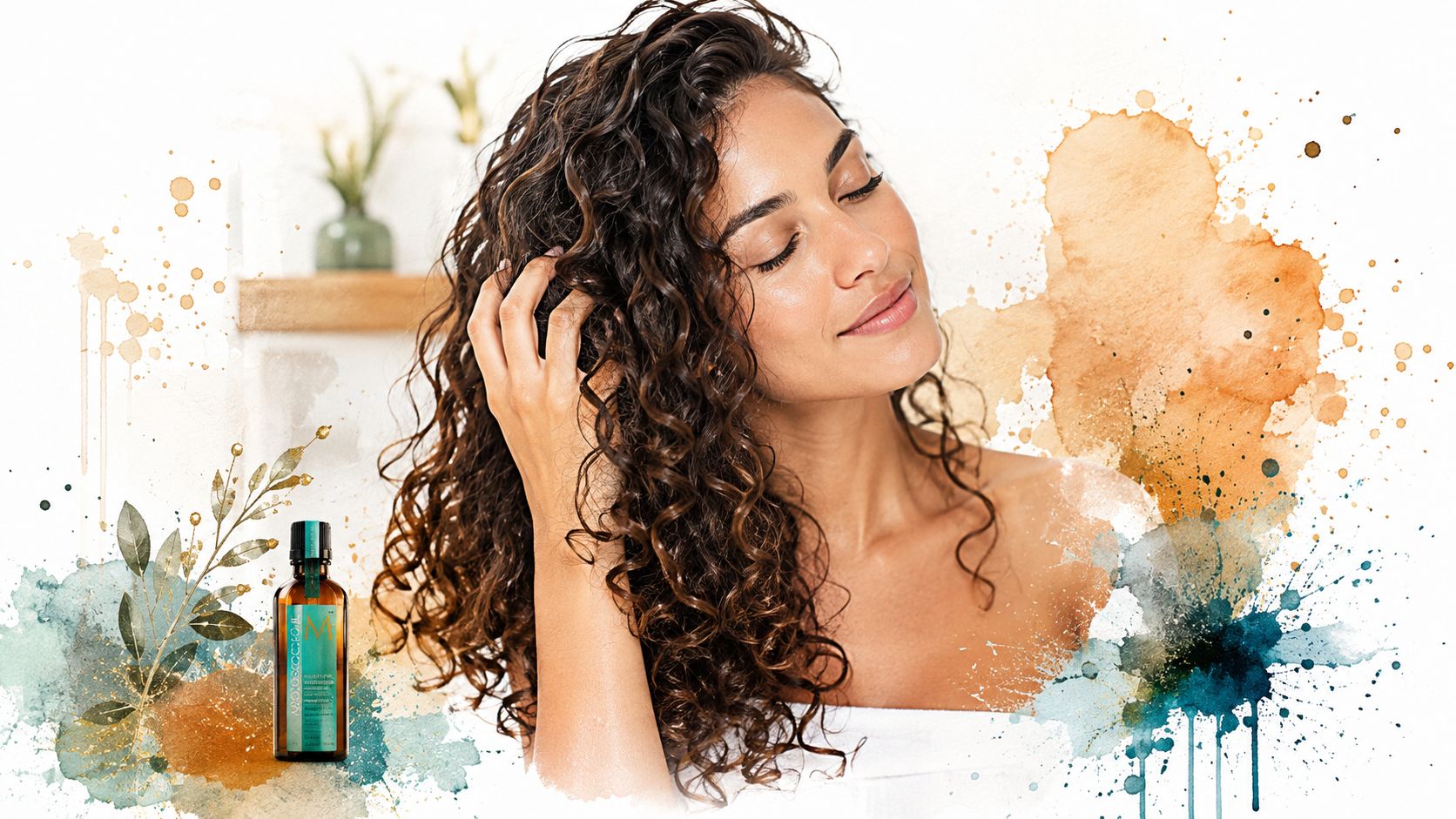
You know the feeling. Your curls look soft when they're wet, then they dry into frizz, flat spots, and a shape that doesn't quite match the effort you put in. That's where Moroccan oil for curly hair fits best, not as a cure-all, but as a quiet, plant-based ritual that helps curls look smoother, feel softer, and catch light more evenly.
Embracing a Calmer Approach to Curl Care
A lot of curly-haired routines become stressful because people chase a dramatic result from one product. The better path is gentler. Moroccan oil, especially argan-oil-based treatment, works well as part of a simple self-care rhythm because it adds slip, shine, and softness without asking you to overhaul everything else.
That calm approach also makes room for real-life texture. Some mornings your curls need moisture. Other days they need frizz control, and sometimes they just need a finishing touch before you leave the house. A good curl ritual meets the hair where it is, instead of forcing it into a rigid routine.
The brand story behind Moroccanoil helps explain why this category became so familiar. Moroccanoil traces its origin to 2007, when hairstylist Carmen Tal discovered argan oil in Israel and used it to address damaged hair, which helped introduce argan oil to mainstream Western hair care (luxehairguide.us). That timing mattered because curly and wavy hair was already a huge audience, and the market was ready for moisture-focused styling. The result was a product culture built around visible payoff, not just long-term promises.
If you like the idea of a polished, low-fuss finishing touch, a silk wrap can also support that softer routine, especially when you're protecting curls overnight. A useful example is this guide to a luxury hair care essential for brides, which shows how a simple cover-up can fit into a more intentional beauty ritual.
The Gentle Benefits of Moroccan Oil for Curls
Curly hair has its own logic. The bends and spirals create an uneven surface, so light reflects unevenly and the cuticle can look rougher than it really is. Moroccan oil helps smooth that surface, so curls look glossier and feel more controlled without turning stiff or coated.
Use it in the moments where curls usually need the most help. Before shampoo, it can give dry lengths a little slip and make cleansing feel less harsh. Mixed with a styler, it can soften hold without stripping away definition. Used at the end, it can seal down fuzz and help the style hold together through the day.
Why shine looks different on curls
Moroccanoil's flagship Treatment Original is built around argan oil, and the brand states that one application can increase hair shine by up to 118% based on an independent study (Moroccanoil Treatment Original). For curly hair, that matters because shine is often the first thing frizz steals. When the surface lies flatter, curls read as healthier and more defined.
That visual payoff is one reason oil can feel more useful than a heavy silicone gloss in some routines. It adds refinement while still leaving the hair soft and touchable. A balanced curl routine is less about forcing definition and more about reducing friction where the hair naturally rubs itself open.
Practical rule: use oil to support the curl pattern you already have, not to create a new one.
What softness actually changes
Softness is not only about comfort, it changes how you handle the hair. Softer strands tend to detangle more easily when wet, and that can make wash day calmer from start to finish. Holland & Barrett describes Moroccan oil as a conditioning oil that can soften hair, help control frizz, and make curls look more voluminous and healthy by helping detangle wet hair and reduce roughness (Holland & Barrett).
That is the kind of benefit curly hair responds to most consistently. You are not asking the oil to do everything. You are using it to lower friction, tame fuzziness, and help the finish look more intentional.
For a broader ingredient lens, discover essential oil hair benefits alongside this argan oil overview, which helps explain why argan oil became so central to modern curl care.
The nicest part is that the effect can stay subtle or become more noticeable depending on how you use it. A few drops can calm halo frizz. A more deliberate application can make the whole style look smoother, especially if the hair is dry or porous.
Finding Your Perfect Amount by Curl Type
The easiest way to get along with Moroccan oil is to start smaller than you think. Moroccanoil's own education materials repeatedly say to use only a small amount, often 1–2 pumps, from mid-length to ends, because too much product can weigh curls down and reduce definition (Moroccanoil brand education PDF). That advice matters even more for fine curls and softer waves.
A simple way to choose your starting point is to match the amount to how much your hair absorbs and how easily it gets flattened.
| Hair Type & Porosity | Suggested Starting Amount |
|---|---|
| Fine, low porosity | 1 pump, warmed between palms |
| Fine, high porosity | 1 pump plus a tiny extra on the driest ends |
| Medium, normal porosity | 1 to 2 pumps |
| Medium, high porosity | 2 pumps, applied in sections |
| Coarse, low porosity | 2 pumps, focused on mid-lengths and ends |
| Coarse, high porosity | 2 pumps, then adjust only if the ends still feel rough |
Start with the ends, not the roots
Roots usually don't need the same level of smoothing as the lengths. Applying oil at the scalp can quickly make curls look limp, especially if your hair is fine or your curl pattern is loose. Mid-lengths and ends are where roughness, tangling, and dryness tend to show up first, so that's where the first pass belongs.
Texture changes the feel
Fine curls often need the lightest touch because they show buildup quickly. Medium textures can usually tolerate a little more, especially if the hair is thirsty or exposed to frequent heat styling. Coarser textures can often handle a richer touch, but even then, the right amount is the one that softens, not coats.
Use this test: if the hair feels slick for long after application, you've likely used more than it needs.
Porosity changes the story too. High-porosity curls tend to drink product faster and may need a second tiny pass on the ends. Low-porosity curls usually do better when the oil is warmed first and distributed sparingly, since heavy application can sit on top instead of sinking in.
Three Core Moments to Apply Moroccan Oil
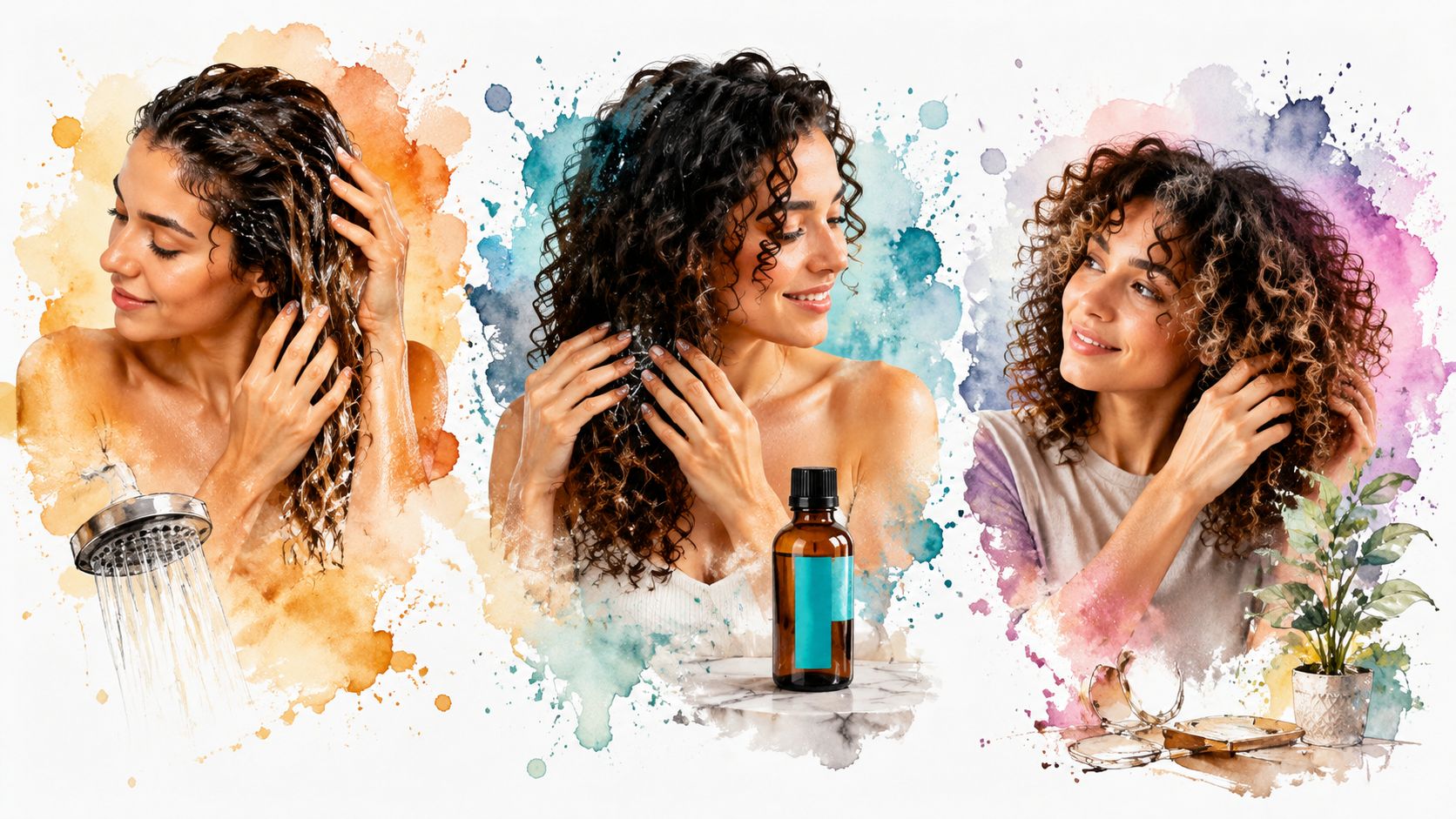
A better way to use oil is to match it to the part of the routine that needs support. Moroccan oil can help before shampoo, during styling, or as a finish, and each moment does a different job for curls.
As a gentle pre-shampoo treatment
Use this step on days when the hair feels dry, tangled, or tired from too much manipulation. Work a small amount through the lengths before cleansing, then give it a short pause while you finish the rest of wash day. The aim is simple, soften the surface so shampoo removes buildup without leaving the hair feeling overly stripped.
For curls that knot easily, this step can make the whole wash process feel less rough. It gives the strands a little cushion before water and cleanser start doing their work, which can make detangling more manageable. If you prefer a lighter routine, keep the treatment brief and focused only where the hair feels driest.
As a styling enhancer
Moroccan oil often works best on damp hair, applied section by section, then followed with a gentle scrunch to help curls settle into shape. A guide on how to time oil application in a hair routine also points to timing as a practical part of the process, and for many curl routines that means placing oil where the hair can use softness without losing lift. A small amount in a spray bottle with water can also help refresh second-day curls with a light mist, while a diffuser on low heat can support definition and keep frizz in check (Wholesalebotanics).
A product-led routine can still stay simple. Moroccanoil's Intense Curl Cream is a leave-in conditioner with no hold, while Curl Defining Cream adds soft hold, and Curl Control Mousse is made for lightweight hold and moisture sealing. Creams usually give more slip and softness, while mousse helps the shape last longer when the air feels humid or the style needs more support.
I reach for this moment most often after I've added a leave-in, because the oil then sits on top of a hydrated base instead of trying to do every job alone. Moroccanoil's own education sheet recommends combining 1–2 pumps of Treatment or Treatment Light with a generous amount of Curl Defining Cream and distributing it through towel-dried hair before diffusing or air-drying.
As a finishing sealant
This is the last pass, and it helps the style look polished without changing the whole shape. A tiny amount on dry or nearly dry curls can soften a cast, reduce fuzz, and bring back a little sheen. Keep this step light, because the goal is refinement, not restyling.
The finish also gives you room to adjust by curl type. Looser curls may only need the faintest touch on the outer layer, while tighter textures can sometimes benefit from a slightly more deliberate seal on the driest sections. Used well, this final moment keeps the ends calmer and the curl pattern clearer, especially after the hair has already been set.
Common Mistakes to Avoid with Hair Oils
The biggest mistake is treating oil like it can replace the rest of the routine. It can't. Curly hair usually needs moisture, slip, and some kind of structure, so oil by itself is rarely enough for lasting shape.
Don't let the scalp do all the work
Oil on the scalp can be too much for many curl patterns, especially if buildup is already a problem. The cleaner move is to focus on the lengths and ends unless a routine specifically calls for scalp massage with a tiny amount. That keeps the hair looking fresh while still giving the driest areas support.
Don't expect hold from oil
Moroccan oil can help with softness, frizz control, and shine, but it doesn't behave like a gel or mousse. That's why the shift toward system-based styling makes sense, with leave-in plus curl cream or mousse plus a minimal oil finish becoming the more reliable pattern for many curl routines (Lemon8 curl discussion).
If a style needs stronger shape in humidity, the oil should usually come after the hold product, not instead of it. That small ordering change can make the difference between defined curls and a style that puffs up early.
Don't use the same amount in every climate
Humidity changes how curls behave, and it changes how finishing oil feels too. In damp weather, a tiny amount may be enough, while in drier air the hair may welcome a little more smoothing. The trick is to read the hair after it dries, not judge the routine halfway through.
The right oil routine should make the hair feel easier to live with, not harder to refresh.
One more caution. If your curls are already coated from creams, mousses, and sprays, a heavy oil layer can make the whole style collapse. In that case, less oil often produces a cleaner, more visible result than more product.
Building Your Simple Moroccan Oil Curl Routine
A simple routine works because each curl type needs a different balance of moisture, softness, and finish. A lighter hand suits wavy hair, curly hair often responds well to a bit more structure, and coily hair usually benefits from oil in more than one step.
For wavy hair, keep Moroccan oil as a finishing accent after a lightweight leave-in or cream. That lets the wave stay airy while still getting shine and frizz control. Use a tiny amount, especially around the outer layer and ends, so the pattern does not get weighed down.
For curly hair, use it on damp hair after cleansing, then add a curl cream or mousse if you want more shape. That order works well for many routines because the oil softens the hair before styling and helps the curl pattern settle with less friction. If you are building around drier strands, ArtNaturals' guide to dry curly hair products is a useful way to compare layering ideas.
For coily hair, use it as a pre-shampoo softener, then again as a sealant after your leave-in or cream. That combination helps moisture stay in place and keeps the style from looking dry too quickly, especially when detangling needs extra glide. It also gives you a practical way to use the same oil at different moments without overloading the hair.
The benefit stays consistent across textures. Moroccan oil softens the hair, makes wet detangling easier, and reduces roughness so curls look fuller and healthier. The routine changes, but the goal does not. Use it where your hair needs slip, where it needs sealing, and where it needs a light finish.