

When your scalp feels tight, itchy, and just plain uncomfortable, turning to natural remedies for dry scalp can be a beautiful way to restore harmony. It's often about using simple, plant-based ingredients and being a little more mindful in your daily routine. With some gentle oils, soothing botanicals, and a bit of consistency, you can bring back that feeling of balance and comfort.
Understanding Why Your Scalp Feels Dry

Before you start exploring treatments, it's helpful to understand what might be happening. That familiar tight, itchy, or flaky feeling is often your scalp’s way of communicating that its natural moisture balance is off.
Think of your scalp as an extension of the skin on your face. Just like your face, it can feel dehydrated when it loses too much moisture. Pinpointing common influences is the first move toward creating a care routine that brings a sense of relief.
Common Influences on Scalp Comfort
Many everyday things can contribute to that dry feeling. Once you start noticing them, you can make small tweaks to your routine that make a big difference for your scalp's well-being.
Here are a few factors that might be at play:
- Seasonal Shifts: Ever notice your skin feels drier in winter? The same thing can happen to your scalp. The lower humidity in cold air and the dry heat of summer may sap moisture from your skin.
- Water Quality: If you live in an area with hard water, the high mineral concentrations can leave a film on your hair and scalp. This buildup may disrupt your scalp's natural moisture barrier, leading to a feeling of dryness.
- Hair Care Habits: How you wash your hair matters. Frequent washing, using water that’s very hot, or relying on shampoos with certain cleansing agents might strip away the protective natural oils that keep your scalp feeling hydrated.
A dry scalp is incredibly common, and more and more people are looking for gentle, effective solutions. This growing interest in natural alternatives is a huge trend, reflecting a shift toward kinder ingredients. You can see just how big this movement is in the global scalp treatment market analysis on OpenPR.com.
Getting to know these factors gives you the power to respond to what your body may need. It’s all about building a foundation for a nurturing routine that restores comfort, one step at a time.
Nourishing Your Scalp with Plant-Based Oils
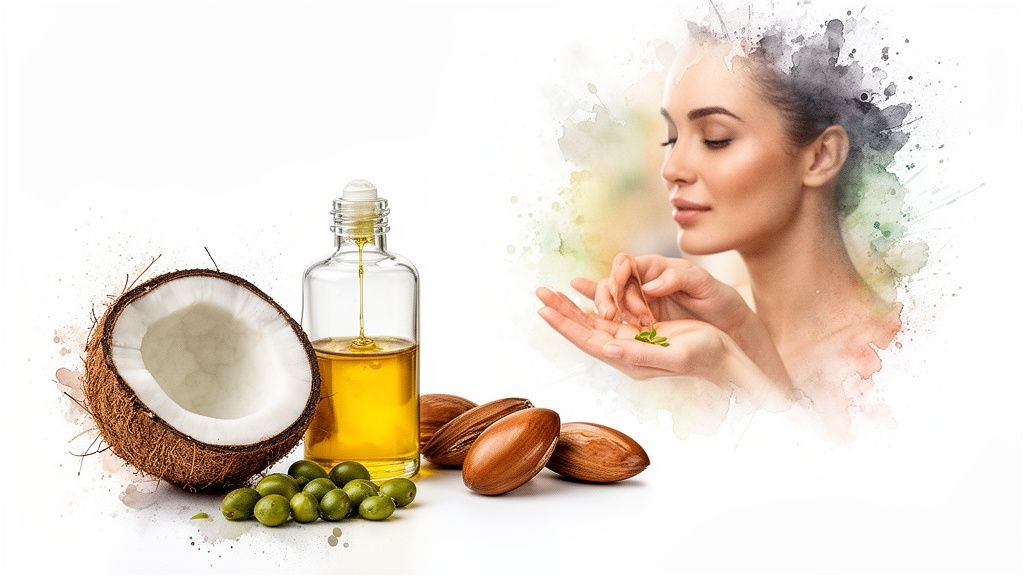
When your scalp feels tight, itchy, and thirsty, plant-based oils are one of the most time-honored ways to bring it back into balance. These botanical ingredients work by nourishing the skin, reinforcing its natural moisture barrier and bringing a welcome sense of calm.
Turning to oils doesn't have to be a big, complicated affair. A simple pre-shampoo treatment can transform your wash day from a chore into a restorative self-care ritual. This one small step helps lock in moisture before you even bring out the shampoo, leaving your scalp feeling soothed and happy.
Choosing Your Ideal Scalp Oil
Not all oils are the same, and the right one for you depends on what your scalp seems to be craving. Getting to know a few of the go-to options is the perfect starting point for creating your own personalized natural remedies for dry scalp.
Here's a quick rundown of some of the most beloved oils for scalp care:
- Coconut Oil: This is a rich moisturizer, wonderful for seriously dry-feeling scalps. Its emollient texture is ideal for a slow, intentional massage.
- Jojoba Oil: Jojoba is remarkable because its structure closely resembles our skin's natural sebum. It's wonderfully lightweight and absorbs quickly without ever feeling greasy.
- Argan Oil: Often called 'liquid gold,' argan oil is packed with nourishing compounds. It’s a luxurious, non-greasy choice that helps soften and soothe scalp skin beautifully.
To help you choose the right plant-based oil for your self-care routine, here’s a simple reference guide based on each one’s unique properties.
A Quick Guide to Scalp-Soothing Oils
| Oil | Texture | Best For |
|---|---|---|
| Coconut Oil | Rich & Creamy | Intense hydration for very dry scalps |
| Jojoba Oil | Lightweight & Silky | Balancing and absorbing quickly, similar to natural sebum |
| Argan Oil | Smooth & Non-Greasy | Soothing and softening without weighing hair down |
Each of these oils offers a slightly different experience, so feel free to experiment to see which one your scalp loves the most.
Creating a Simple Oil Treatment Ritual
This isn't just about applying oil; it's about creating a moment for yourself. A gentle scalp massage with warm oil is a sensory experience that can genuinely melt away stress.
Here’s how to do it:
- Warm the Oil: Gently warm a bit of your chosen oil. You can place the bottle in a bowl of warm water for a few minutes. Please, never microwave it.
- Apply with Intention: Part your hair into sections and use your fingertips—not your nails—to dab the warm oil directly onto your scalp.
- Massage Gently: Now for the best part. Using the pads of your fingers, massage your scalp in slow, circular motions for five to ten minutes. This feels incredible and also helps with absorption.
- Let it Rest: Give the oil at least 30 minutes to work its magic. For an extra dose of pampering, wrap your hair in a warm towel.
- Cleanse as Usual: Hop in the shower and follow up with your regular shampoo and conditioner. You might need a second shampoo rinse to remove all the oil, and that's totally normal.
This gentle massage is a perfect opportunity to slow down and reconnect with yourself. Focus on your breathing and the soothing sensation of the warm oil on your skin. It’s a simple act that nurtures both your scalp and your spirit.
Want to take it a step further? You can customize your treatment by adding a drop or two of essential oil to your carrier oil. Lavender and chamomile are fantastic for their calming aromas. You can find more inspiration in these DIY essential oil blends to match your mood.
Hydrating Your Scalp with Soothing Botanicals
While nourishing oils are fantastic for locking in moisture, sometimes what your scalp really craves is a direct hit of hydration. Think of it as a cool, refreshing drink for your skin. This is where botanical hydrators come in. They work differently than oils, delivering a light, water-based quench that can almost instantly relieve that tight, itchy feeling.
Adding these ingredients to your routine is a beautiful way to care for your scalp. It’s less about a deep, heavy conditioning and more about a gentle infusion of comfort. This approach helps create a balanced, supple environment, allowing your scalp to finally breathe a sigh of relief.
The Power of Plant-Based Humectants
Humectants are nature’s moisture magnets. They have an amazing ability to pull water—either from the air around you or from the deeper layers of your skin—and draw it to the surface. It’s what gives your skin that plump, truly hydrated feeling. When you're looking for natural remedies for dry scalp, a few plant-based humectants are absolute standouts.
- Aloe Vera: This plant is a legend for a reason. The clear gel inside its leaves is a powerhouse of moisture and feels incredibly cooling on an irritated scalp. It's one of the simplest and most effective ways to find a sense of immediate relief.
- Colloidal Oat: If you have sensitive skin, you might already be familiar with colloidal oatmeal. It’s finely ground oats that, when mixed with water, create a milky, comforting liquid. It’s brilliant for calming itchiness and helping restore the skin's barrier.
- Panthenol (Pro-Vitamin B5): This is a gentle yet effective humectant. Panthenol is known for its ability to penetrate the skin and deliver hydration where it’s needed most, leaving your scalp feeling soft and smooth.
It’s no surprise that people are turning to botanical actives like these for at-home scalp care. Many have found that consistently using products with ingredients like aloe and colloidal oat makes a real difference in their scalp’s comfort. In fact, if you look at current consumer hair care trends at yougov.com, you'll see just how popular these gentle, effective ingredients have become.
Creating a Refreshing Botanical Rinse
One of the easiest ways to bring these benefits into your routine is with a simple DIY rinse after you shampoo. This extra step only takes a few moments but can leave your scalp feeling remarkably calm and refreshed.
Here’s a simple recipe to get you started:
- Steep Your Botanicals: Brew a strong cup of chamomile or green tea and let it cool down completely. Both are well-loved for their gentle, calming properties.
- Add Your Hydrator: Stir in two tablespoons of pure aloe vera gel. Keep mixing until it’s fully dissolved into the tea.
- Apply After Cleansing: After you’ve shampooed and conditioned your hair, slowly pour the mixture over your entire scalp.
- Massage and Rest: Take a minute to gently massage the liquid in. You can either leave it in or, after 5–10 minutes, give it a final rinse with cool water.
I think of this soothing rinse as more than just a treatment—it’s a mindful pause. The cooling sensation is the perfect way to finish a shower, leaving you feeling centered and your scalp feeling happy.
This little ritual fits in perfectly with other natural approaches. For instance, using a hydrating rinse mid-week is a great way to refresh your scalp between deeper oil treatments. Many botanicals also pair beautifully with certain essential oils. Combining these methods helps create a truly nurturing routine that addresses all of your scalp’s needs.
Building Your Mindful Scalp Care Ritual
Lasting scalp wellness isn't about a single product; it's about creating a consistent, mindful routine. Think of it less like a rigid schedule and more like learning to listen to what your scalp is telling you. This is how you transform simple actions into moments of genuine self-care.
It all starts with embracing gentler habits. Small changes can have a surprisingly big impact—for instance, just switching from hot to lukewarm water when you wash your hair. Hot water can feel nice, but it's known for stripping away the natural oils that keep your scalp protected and balanced. Cooler water helps preserve that delicate barrier, so your scalp feels comfortable and calm, not tight and stressed.
To give you an idea of how simple this can be, here’s a look at the basic flow for hydrating your scalp.
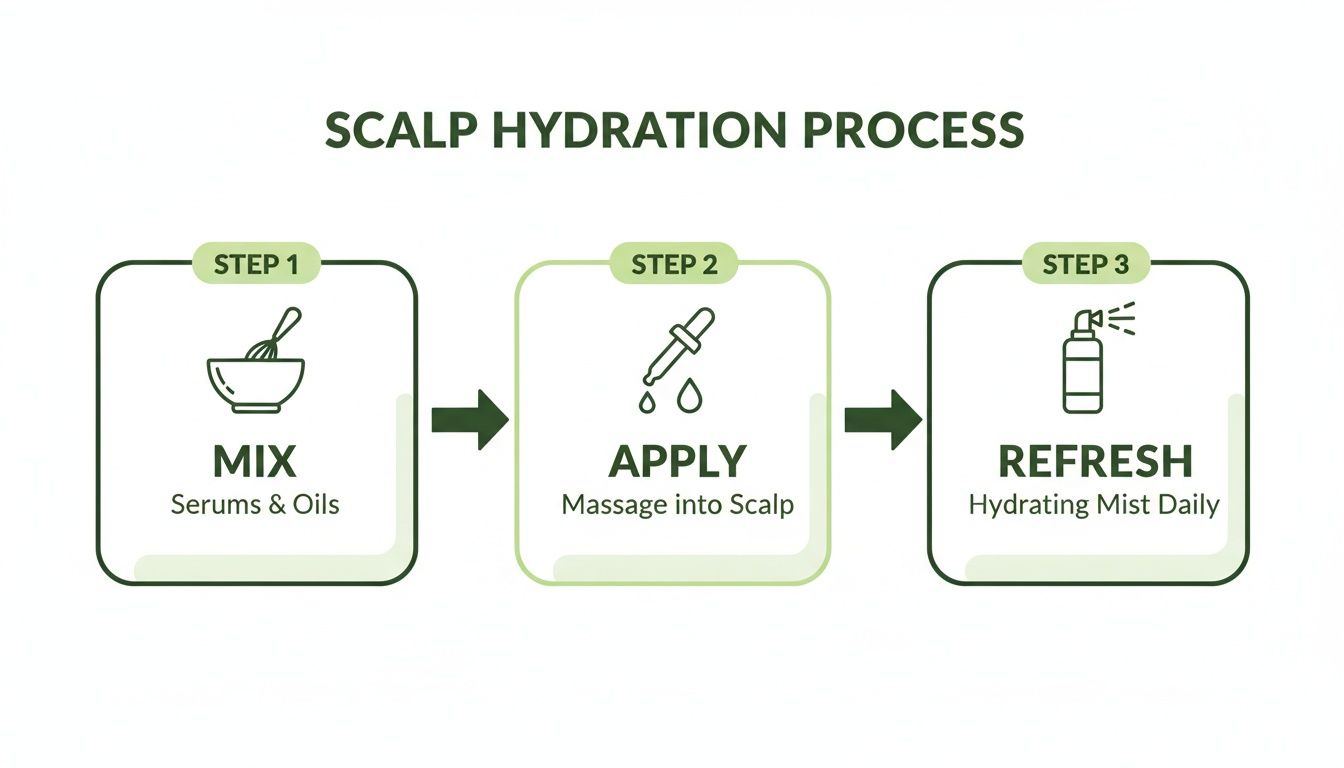
As you can see, it's really just about mixing, applying, and refreshing. Nothing complicated, just a few intentional steps.
Finding Your Weekly Rhythm
When it comes to scalp care, consistency beats intensity every time. Don't try to cram everything into one day. Instead, find a gentle rhythm that feels supportive and sustainable, not like another chore on your to-do list. Your perfect routine will naturally take shape as you discover what makes your scalp happiest.
Here’s a sample flow to get you started—feel free to tweak it to fit your own life:
- Mid-Week Refresh (Maybe a Wednesday): A little check-in can work wonders. Simply spritzing a DIY aloe and rosewater mist onto your roots gives you a quick hit of hydration, waking up your scalp and hair without needing a full wash.
- Deep Nourishment (A Relaxing Sunday): Set aside a bit more time on the weekend for something deeper. This is a great chance to indulge in a warm oil massage before you shampoo, letting all those nourishing ingredients really soak in and soothe your scalp.
Treat this as an ongoing conversation with your scalp. If it feels extra tight and dry after a windy day, that’s your cue to give it an extra spritz of your hydrating mist. The goal is to respond intuitively.
The Art of Pairing Remedies
You can elevate your routine by layering different natural remedies. When you combine ingredients with different properties, you can support both moisture and hydration at once, giving your scalp the comprehensive care it needs.
This is where you can get a little creative and find combinations that feel amazing. For example, you could start by applying a lightweight aloe vera gel directly to your scalp. The gel is a fantastic humectant, meaning it draws water in, while also giving you a lovely cooling sensation.
Let that sink in for a few minutes, and then follow up with a few drops of a nourishing oil like jojoba or argan. This second step acts as a sealant, locking in all the hydration from the aloe and creating a soft, protective barrier that keeps your scalp feeling supple for much longer. It’s an intuitive pairing that covers all the bases for a truly balanced, comfortable scalp.
Holistic Habits for a Happy Scalp
A healthy-feeling scalp is often a reflection of your overall well-being. While the natural remedies for dry scalp we’ve talked about are fantastic, achieving lasting comfort means looking at the bigger picture—nurturing your body from the inside out. It's about looking beyond the products on your bathroom shelf and into your daily habits.
This isn't about a massive overhaul. It's about weaving small, sustainable rituals into your life that feel good and contribute to a sense of balance. When you feel good, it often shows, starting right at the roots.
Nurturing from Within
At the end of the day, your scalp is skin. Just like the skin on your face, it needs proper hydration and nutrition to thrive. You can give it a major boost just by being mindful of what you're putting into your body.
- Hydration is Key: Start with the basics—drink plenty of water. When you're properly hydrated, your skin cells (scalp included) can hold onto moisture much more effectively.
- Eat Your Water: Add foods with high water content into your diet. Things like cucumber, berries, and melon are great for helping you stay hydrated from the inside.
- Embrace Healthy Fats: Don't be afraid of good fats! Foods like avocados, nuts, and seeds provide essential fatty acids that are the building blocks for healthy skin everywhere.
The Gentle Link Between Calm and Comfort
Ever notice how your skin seems to react when you're stressed? Your scalp is no different. Emotional stress can sometimes trigger physical reactions, and for many people, that means a tight, sensitive, and irritated-feeling scalp.
Carving out small moments of peace for yourself is one of the most powerful things you can do. It doesn't have to be complicated. It could be a quiet five-minute walk, a few deep breaths before jumping into your day, or just listening to a song you love. These little acts of mindfulness can have a ripple effect on your entire system.
Thinking about your scalp as part of your total skin health is a game-changer. Practices that benefit your skin overall, like understanding the infrared sauna skin benefits, contribute to that holistic sense of well-being.
Finally, don't forget to protect your scalp from the outside world. Just as you’d wear sunscreen on your face, wearing a hat on a sunny day or in harsh wind provides a simple, effective shield. It's just one more piece of the puzzle in a complete, 360-degree approach to self-care.
Common Questions About Natural Scalp Care
Diving into a natural routine for your dry scalp is bound to bring up a few questions. That's completely normal. Let's walk through some of the most common ones so you can feel confident creating a routine that works for you.
How Often Should I Use These Natural Remedies?
The best advice is to listen to your scalp. There's no one-size-fits-all schedule here.
For some, a deep, nourishing oil treatment is the perfect once-a-week reset. For others, a daily spritz of something light like an aloe vera mist is just right. It’s about finding what feels good.
The key is to start slow. Pick one remedy, try it out, and then pay close attention to how your scalp feels over the next few days. This isn't about following a rigid set of rules; it's about finding a rhythm that brings relief and comfort without overwhelming your skin.
Is It Okay to Combine Different Remedies?
Absolutely! In fact, layering or alternating remedies is a fantastic way to tailor your routine and support your scalp in different ways.
For example, you could apply a hydrating aloe vera gel to soothe thirsty skin and then lock in all that moisture with a few drops of jojoba oil. It’s a great pairing of hydration and nourishment.
Another strategy is to switch things up during the week. Maybe you do a deep oil massage on Sunday to prep for the week ahead, then use a gentle botanical rinse on Wednesday to keep things feeling fresh and calm. The only real rule is to introduce new ingredients one at a time so you can be sure what’s working.
This is your wellness journey. The goal is to build a routine that feels intuitive and restorative, not like another item on your to-do list. Trust your intuition and let comfort be your guide.
How Long Until I Feel a Difference?
Patience is a beautiful practice, especially when it comes to natural wellness. Some people feel instant relief, particularly from cooling ingredients like aloe. For others, the real benefits become apparent over several weeks of consistent care.
Natural ingredients work with your body, gently nudging things back into balance. Try to focus less on a specific outcome and more on the calming ritual itself. Before you know it, that consistent nourishment can add up to a much happier, more comfortable scalp.
When Should I Consider Professional Advice?
These natural approaches are wonderful for managing mild, occasional dryness and generally supporting a healthy-feeling scalp. Think of them as part of your everyday wellness toolkit.
However, if your dryness is persistent, feels like it's getting worse, or is causing you significant discomfort, it may be time to speak with a professional. A dermatologist or a certified trichologist can offer advice that's tailored specifically to you. Don't hesitate to seek their help when you need it.
At ArtNaturals, we believe in the power of plant-based ingredients to restore balance and comfort. Explore our collection of nourishing oils and gentle hair care to support your mindful scalp ritual.