

You're standing in front of the mirror with three serums in your hand, trying to figure out which one gets the spotlight first. One promises glow, one promises calm, and one promises fewer visible dry patches, but your routine still feels crowded. Niacinamide face serum earns attention because it's the kind of ingredient that can simplify that decision, not add to the noise.
For a lot of people, that matters more than the hype around any single trend. Niacinamide fits into a routine without asking you to rebuild everything around it, and that's why it has become a quiet staple in clean, everyday skincare. It's also one of those ingredients that makes more sense the longer you use it, especially when your skin wants balance more than drama.
Why Niacinamide Face Serum Deserves a Spot in Your Routine
The morning routine usually starts with good intentions and ends with too many choices. You want something for dullness, something for dryness, something for the uneven look around your cheeks, and maybe something that won't fight with the rest of your shelf. Niacinamide face serum is appealing because it tends to slide into that middle ground, supportive rather than aggressive.
It's the serum people reach for when they want one product that feels useful across several concerns. In skincare terms, that versatility is the point. In real life, it means you're less likely to feel like you need a separate product for every little frustration, especially if you prefer a calm, low-fuss routine.
A steady ingredient for busy routines
Niacinamide is often used as a daily support ingredient, not a spot fix. That makes it easy to pair with moisturizer, sunscreen, or other actives, depending on what your skin can handle. If your shelf already has a cleanser, a hydrating toner, and an eye cream, this is the kind of serum that can fit in without making the routine feel crowded.
Practical rule: choose the serum that helps your routine feel easier to repeat, not the one that sounds the most intense.
A helpful starting point is a guide to science of collagen in skincare from Dr. Connie Hiers, which can give you a wider view of how supportive ingredients are often discussed in skin care. If your skin runs reactive, a focused read like niacinamide for sensitive skin can also help you think through texture and tolerance before you add anything new.
That flexibility is part of why niacinamide shows up so often in modern clean beauty routines. It doesn't need to dominate the conversation to be useful. It just needs to be easy to keep using.
Understanding What Niacinamide Does for Your Skin
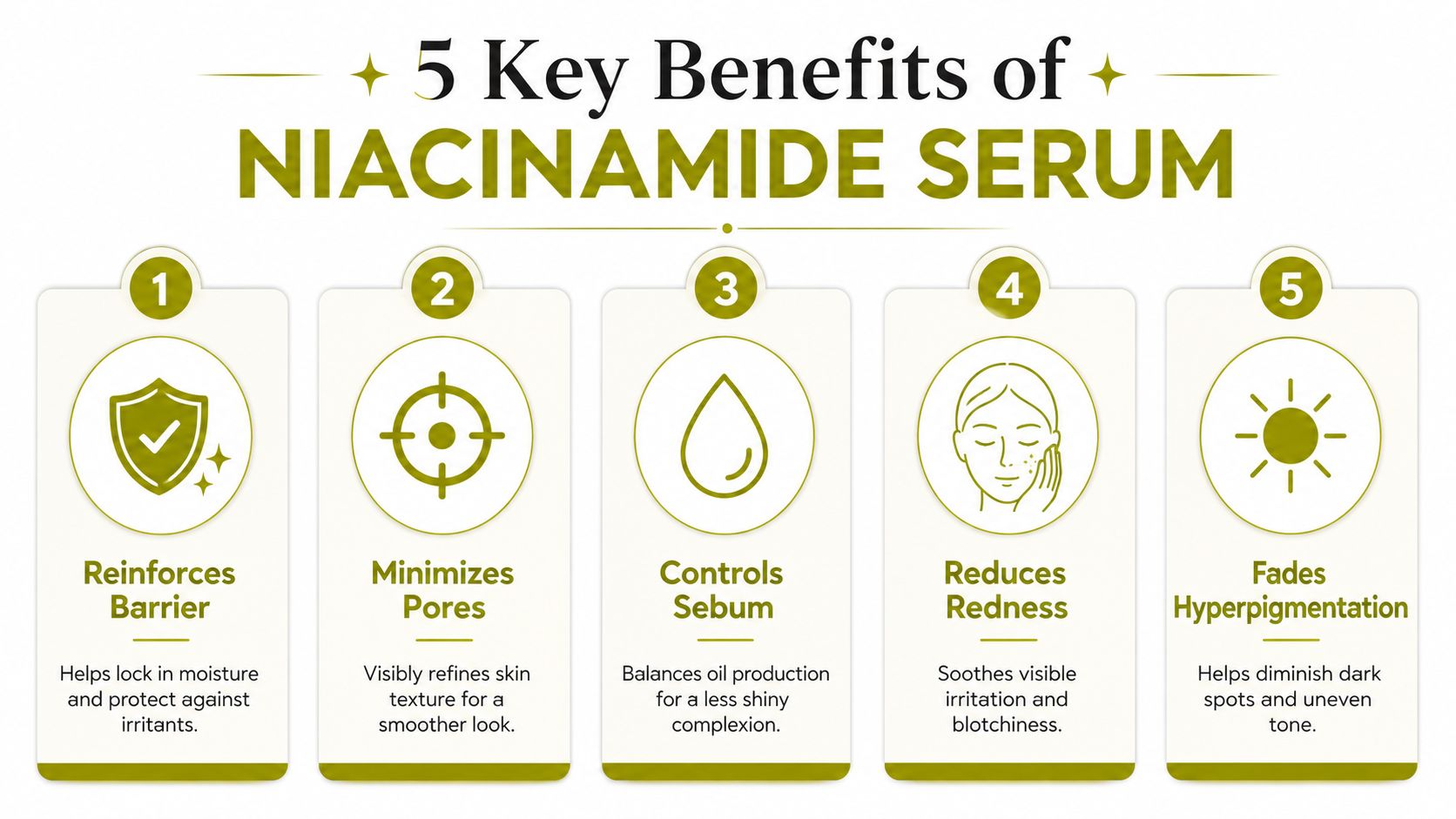
Niacinamide works like a steady support ingredient in a routine that already has a lot going on. As a water-soluble form of vitamin B3, it fits naturally into serums, where it can layer easily with other water-based steps instead of competing with them.
Its main job is to help the skin barrier do its work. A healthy barrier holds onto moisture and helps keep outside stressors from making skin feel more reactive, tight, or unpredictable. In everyday terms, that often shows up as skin that feels calmer and looks more even from one day to the next.
The barrier angle matters most
Review literature describes niacinamide as helping reduce transepidermal water loss, increase moisture in the outer skin layer, and stimulate ceramide synthesis, all of which are tied to a stronger barrier and better hydration (PubMed review). Cleveland Clinic also notes that niacinamide may help enhance the skin's lipid barrier, which is the part that helps lock moisture in and keep irritants out.
That is why niacinamide often acts like a stabilizing step instead of a flashy one. It can make sense if your skin feels thrown off by too many active ingredients, weather changes, or over-exfoliation. A steadier barrier usually shows up in how skin feels before it shows up in the mirror.
Why it works well in serum form
A serum is a practical format for niacinamide because it is lightweight and easy to place in a routine. It absorbs without adding the heaviness that can make a regimen feel sticky or crowded, which matters when you are already balancing cleanser, moisturizer, sunscreen, and possibly other actives.
For a broader view of how supportive ingredients are discussed in skin care, a close look at the science of collagen and skin support can be helpful. It gives context for why many clean-beauty routines focus on ingredients that support comfort and structure, not just short-term glow.
Niacinamide also helps when a routine needs to stay flexible. It can sit alongside hydrating steps in the morning or be added to an evening lineup that already includes exfoliating acids or a retinoid, as long as your skin tolerates the combination. If your skin tends to react easily, artnaturals' niacinamide for sensitive skin guide is a useful reference for thinking about texture and tolerance before adding another serum.
That flexibility is the reason niacinamide shows up so often in modern clean-beauty routines. It does not need to do all the talking to earn its place. It just needs to fit cleanly into the steps you can keep using.
The Key Benefits That Make Niacinamide a Skincare Staple
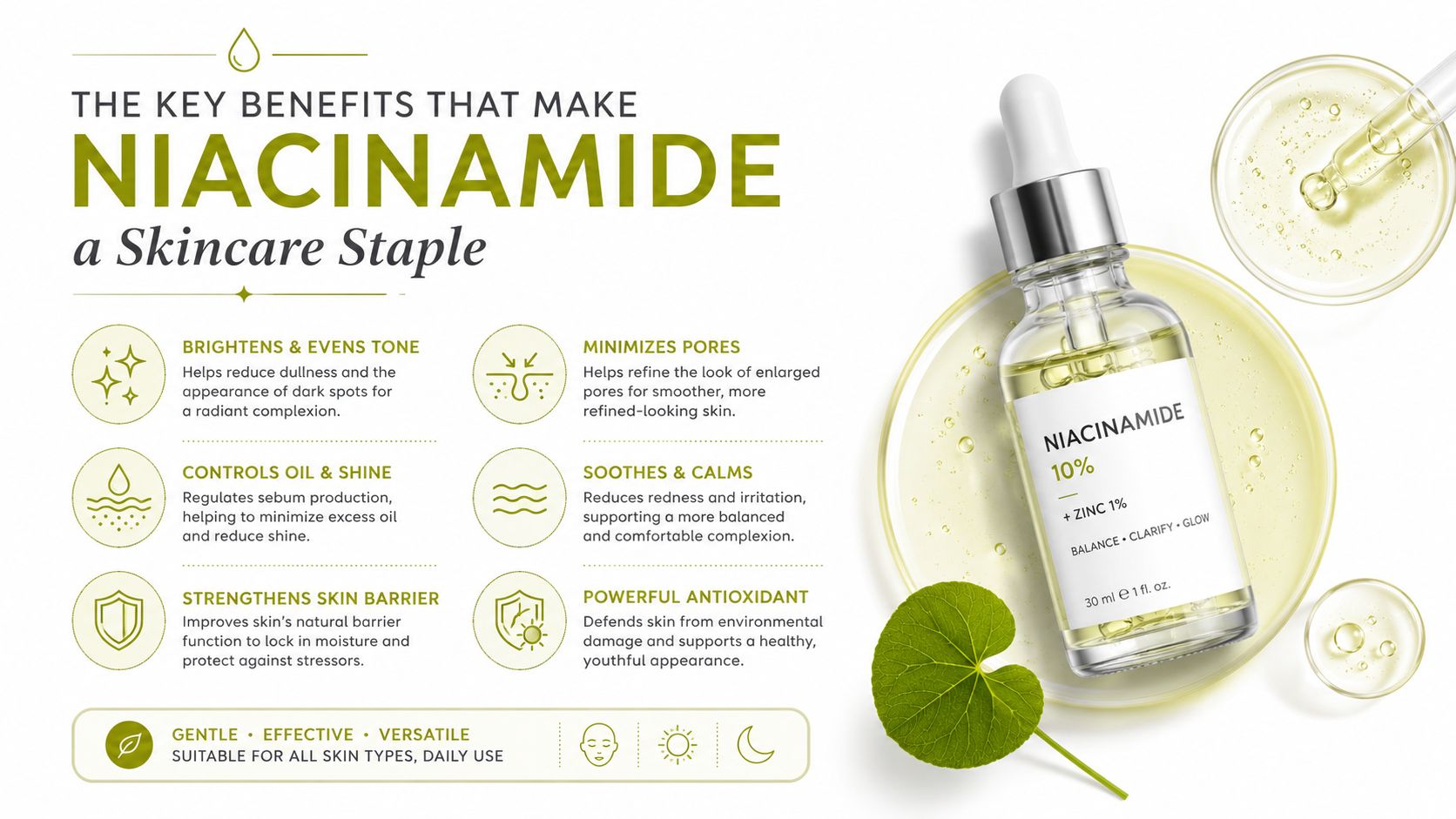
Niacinamide earns its place in a routine because it helps with the kinds of concerns people notice day to day. Skin that feels calmer, looks more even, and behaves more predictably is easier to work with, especially when your routine already includes cleanser, moisturizer, sunscreen, and maybe one or two stronger actives.
Hydration and barrier support
One of the biggest reasons people keep niacinamide in rotation is barrier support. Review literature says it can help with moisture retention and ceramide production, which can show up as skin that feels less tight and more comfortable during dry or reactive stretches. That matters even more if you use exfoliating acids, retinoids, or a foaming cleanser that leaves your face feeling a little stripped.
Tone and brightness
Niacinamide is also used for the look of uneven tone and hyperpigmentation. Review literature explains that topical nicotinamide has been linked with improvements in hyperpigmentation and skin aging, and it also notes a role in reducing melanosome transfer to keratinocytes, which helps explain why the ingredient is often associated with a brighter appearance (PMC review). In practice, that makes niacinamide a steady choice for routines that are trying to look more even without feeling overloaded.
Oil balance and texture
People with combination or oily skin often reach for niacinamide because it can help skin look less shiny without turning a routine harsh. That oil-balancing role is part of why it appears so often in lightweight serums instead of heavier creams. Used consistently, it can make a complexion look smoother and feel more comfortable under makeup or sunscreen.
For a broader view of how skin-forward routines are framed in wellness content, the Hemp Well Ireland radiant skin tips article is a useful read because it reflects the same lifestyle-first mindset around consistency, texture, and ease.
Skin care works best when the routine feels repeatable. If a serum makes your face feel calmer and your shelf feel simpler, that is a real benefit.
A short pilot study also reported increases in hydration and reductions in visible redness after one month of niacinamide serum use (PMC pilot study). That kind of feedback is often how niacinamide shows up in real routines, through comfort, balance, and a more even-looking surface rather than a dramatic overnight shift.
Finding the Right Niacinamide Concentration for Your Needs
A shelf that shows 2%, 4%, 5%, and 10% can make niacinamide feel more confusing than simple. A practical way to read those labels is to start with your skin's tolerance, then match the formula to the role you want it to play. Lower strengths are often easier to fit into a routine that already uses other actives, while higher strengths usually make more sense for experienced users who want a more targeted product and know their skin handles it well.
The technical guidance points in a similar direction. A review of cosmetic use notes that niacinamide is commonly formulated at 4% to 5%, and consumer guidance places a practical range around 2% to 5% (PMC review). Typology's formulary guidance also places niacinamide in a practical 1% to 10% range, with a stable pH 5 to 7.5 being important for formulation quality (Typology guidance).
A quick concentration guide
| Concentration | Best For | Skin Types |
|---|---|---|
| 2% | Daily support, sebum balance, barrier comfort | Sensitive, combination, beginners |
| 4% | Everyday use with more visible skin-care focus | Oily, acne-prone, normal |
| 5% | Brightening and anti-aging oriented routines | Most skin types, especially established users |
| 10% | Stronger tone-focused formulas, if well tolerated | Experienced users, less reactive skin |
The main point is straightforward. Higher isn't automatically better. A well-formulated 4% or 5% serum can fit more cleanly into a real routine than a stronger product that pills, stings, or makes the rest of your lineup harder to use. Formulation quality still matters just as much as the percentage, because niacinamide is typically most comfortable in a water-based system with a stable pH. For a closer look at how product order affects compatibility, the layering skincare guide from ArtNaturals is useful because it reinforces the idea that the routine around a serum shapes how well it behaves.
If you are still deciding, begin where your skin feels calmest. Sensitive or easily overwhelmed skin usually does better with a lower concentration, since it gives you room to build consistency without adding extra friction. Someone who already uses actives comfortably may prefer something closer to the middle of the range, especially if the serum has to sit alongside other steps in the same routine.
How to Layer Niacinamide Serum Into Your Daily Routine
Niacinamide usually fits best in the water-based middle of a routine. That means cleansing first, then applying lighter serums, then following with moisturizer and sunscreen during the day. If you already use a toner, niacinamide can sit after that step, as long as the toner isn't so active that it makes your skin feel overloaded.
The practical move is to use a small amount and keep the rhythm consistent. A few drops pressed into slightly damp skin is enough, and there's rarely a reason to layer it with long wait times unless another product in your routine needs a pause. If your skin is dry in winter, using it more consistently can make the routine feel more supportive, especially when your moisturizer alone doesn't seem like enough.
Morning, night, or both
Dermatology-oriented guidance says niacinamide can be used once or twice daily, usually after cleansing and before moisturizer, and it's especially useful for oily, combination, and acne-prone skin (DailyMed consumer info). That flexibility is one reason it works well in routines that change by season or skin mood.
If your routine already feels full, place niacinamide where it causes the least friction. Consistency matters more than precision down to the minute.
For people who want a broader routine-planning reference, layering skin care is a useful topic to revisit because the order of application can make a routine feel smoother and less pilled. The same is true with niacinamide. When it lands in the right place, it disappears into the routine instead of competing with it.
A simple pattern works well. Cleanse, apply niacinamide, then moisturize. In the morning, sunscreen follows. In the evening, richer creams or facial oils can come after, depending on what your skin likes best.
Pairing Niacinamide with Other Active Ingredients
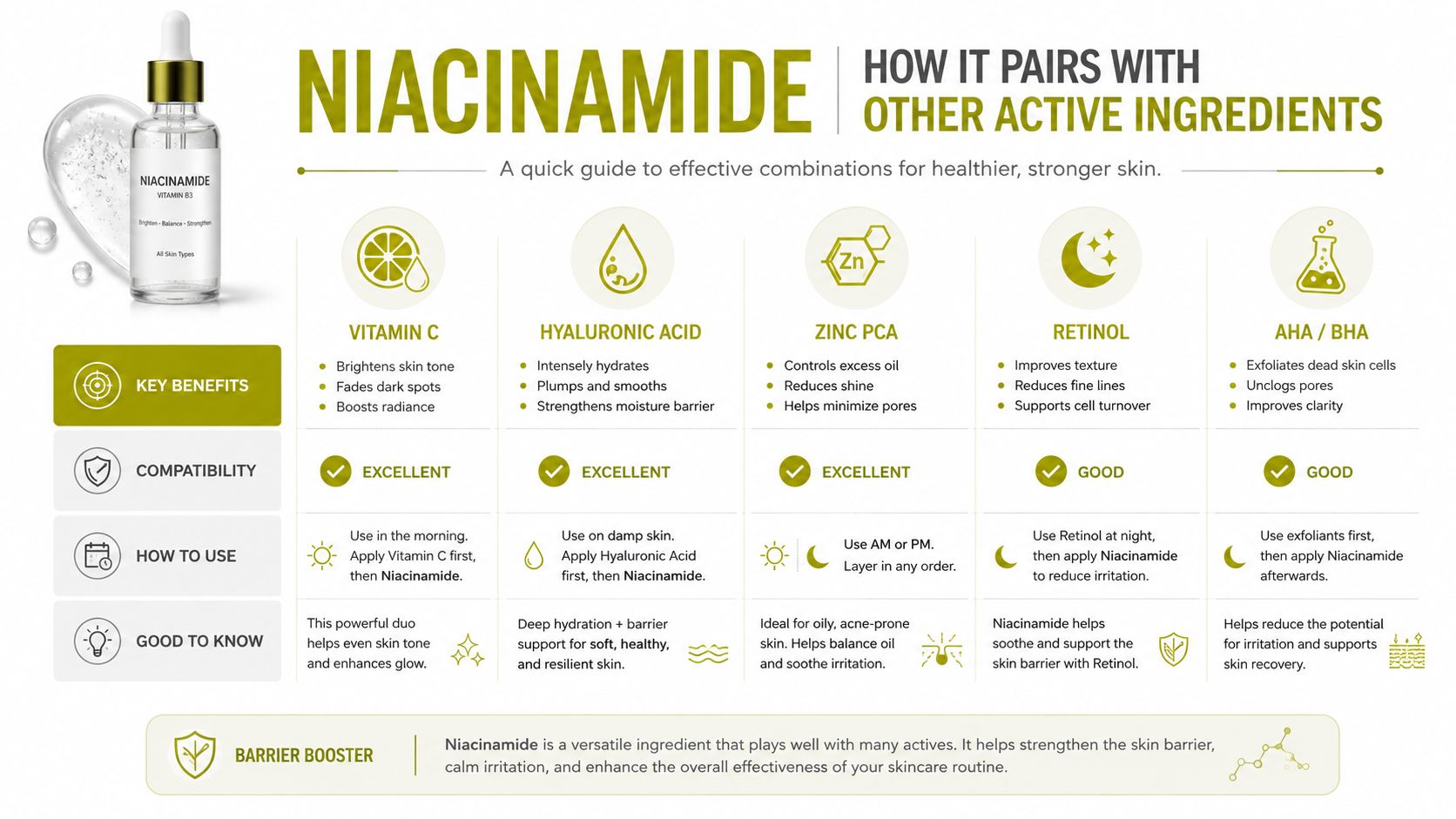
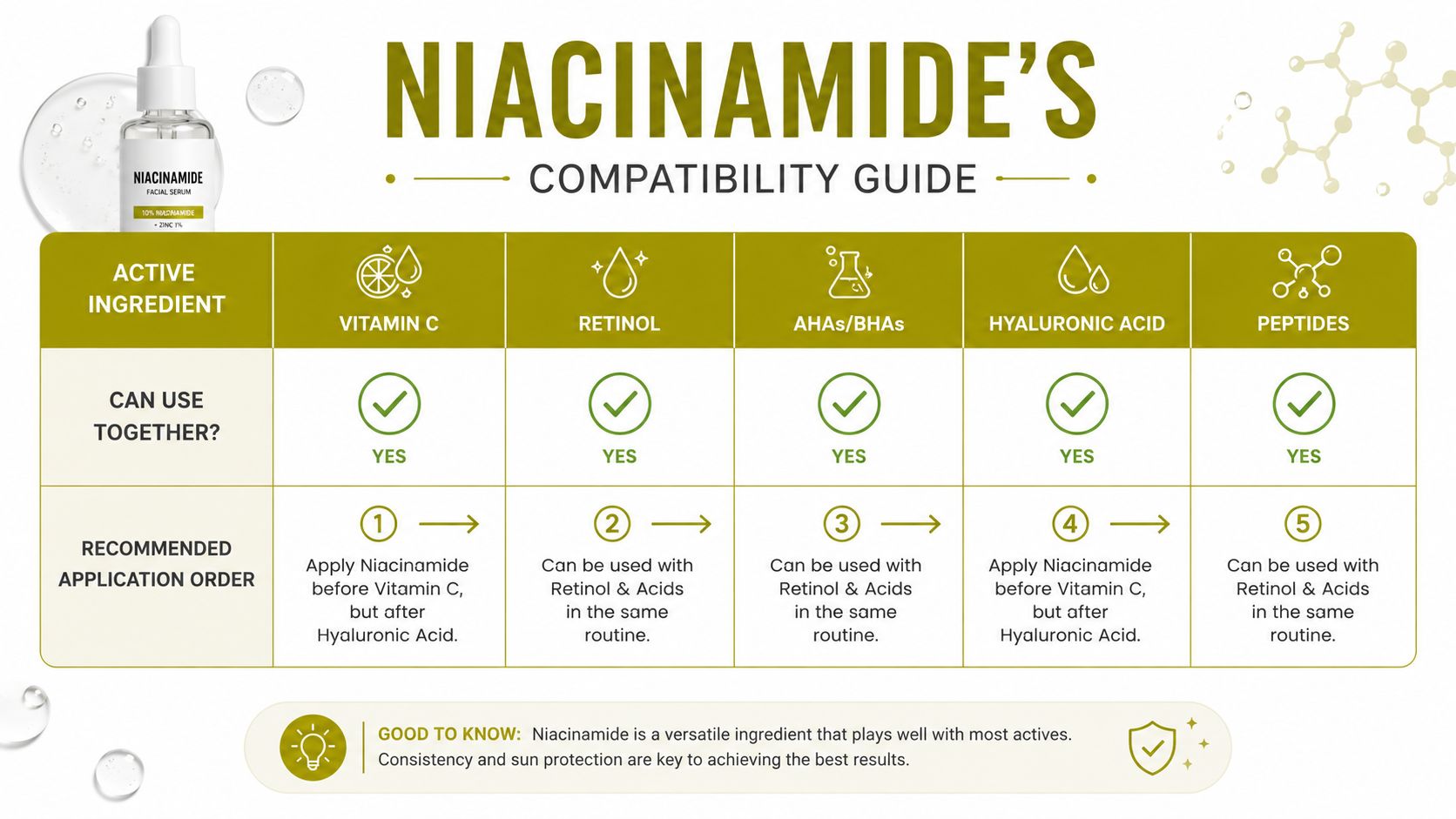
The biggest confusion around niacinamide usually sounds like this, can it go with vitamin C, retinol, or acids without causing trouble? The short answer is that routine design matters more than fear-based rules. Niacinamide can fit into the same overall skincare plan as many popular actives, but your skin's tolerance should shape how close together you use them.
Vitamin C and niacinamide
The old idea that niacinamide and vitamin C automatically cancel each other out has been overstated in routine culture. In modern skincare, they're often used in the same routine or separated by time for comfort and texture preference, not because they're a forbidden pair. If your skin is sensitive, you may prefer vitamin C in the morning and niacinamide later in the day, which keeps the routine calm.
For a fuller routine example, vitamin C and niacinamide together can be a helpful read when you're deciding whether to combine brightening steps or spread them out.
Retinol, acids, and hydration helpers
Niacinamide is also a common companion for hyaluronic acid, since both fit naturally into hydration-focused routines. That pairing often feels especially comfortable because one helps hold water at the surface while the other supports the skin barrier. If you use retinol or AHAs and BHAs, niacinamide can be a buffering step in the broader routine, particularly when you're trying to keep skin from feeling overworked.
A useful practical lens is this, pair by goal, not by trend. If you want more hydration, niacinamide plus hyaluronic acid makes sense. If you're using stronger actives, niacinamide may work better as the steadying layer around them rather than the ingredient you stack aggressively on top of everything else.
The best pairing is the one your skin can tolerate three nights a week and still enjoy next month.
Routine habits matter more than ingredient folklore. If pilling or stinging shows up, separate the steps, simplify the formula, or reduce how often you use the stronger product. Niacinamide is versatile, but your skin doesn't need versatility at the expense of comfort.
What to Look for When Choosing Your Niacinamide Serum
Start with the formula, because that tells you how the serum will fit into the rest of your routine. A good niacinamide serum should feel clear in its purpose, with a sensible concentration, a water-based texture, and supportive ingredients such as hyaluronic acid, ceramides, or gentle botanical extracts if your skin prefers a little extra cushioning. Formulation details matter too, since niacinamide is generally most comfortable in a pH 5 to 7.5 range, and that kind of balance can affect how the serum sits on skin and how easily it works with the other steps you already use.
Packaging can shape the experience as much as the ingredient list. Airless pumps and opaque bottles usually protect a formula better than jars that sit open to air and light, which is one reason they are often a better fit for skincare you plan to use regularly. If a brand explains its ingredient sourcing, texture, and intended skin type in plain language, that usually gives you a clearer read than a page full of buzzwords.
For shoppers comparing texture, actives, and routine fit, the best anti-ageing serum UK guide can be a useful example of how to assess serums by formulation rather than marketing language alone.
Routine fit matters just as much as the bottle. Niacinamide works best when it can sit comfortably between your other steps, whether that means following a cleanser and toner, going before a richer cream, or being paired carefully with stronger actives you already know your skin tolerates. That is why many people do better with a serum that feels easy to place into a morning or evening lineup, instead of one that forces them to rearrange everything else.
One straightforward option in the marketplace is the ArtNaturals Niacinamide Face Serum, which pairs niacinamide with ingredients such as hyaluronic acid, vitamin B3, saffron, and sunflower oil. If you prefer a plant-powered routine with a simple structure, that kind of formula can be easy to slot into daily use without making the rest of your lineup more complicated.
A calm routine often comes from choosing fewer, better-matched steps. Start with a niacinamide serum that suits your skin's comfort level and the products you already use, then give it time to settle into your morning or evening rhythm before adding anything else.