

You know the moment. You're standing at the sink, one hand on a cleanser, the other reaching for a serum, and you want something that feels clean, thoughtful, and easy to trust. A plant based vitamin C serum fits that mood because it brings brightening-focused ingredients into a routine that still feels gentle and intentional.
The tricky part is that “natural” doesn't automatically mean “well made.” With vitamin C, the way a formula is built matters just as much as where the ingredient comes from, and that's why plant-based serums deserve a closer look.
Why Plant Based Vitamin C Serums Are Transforming Skincare Routines
A morning routine often comes down to a simple choice. You want a product that feels light under moisturizer and sunscreen, and you also want it to do something visible for dullness, rough texture, or skin that looks tired. A plant based vitamin C serum fits that role because it places a familiar skincare active into a more values-driven, plant-forward format.
Human skin already contains measurable vitamin C. A 2017 review reported epidermal levels at 6–64 mg/100 g wet weight and dermal levels at 3–13 mg/100 g wet weight, which helps explain why topical delivery has remained important in skincare The Roles of Vitamin C in Skin Health. The same review also summarized a U.S. NHANES analysis of 7,277 participants, and 7.1% of people age 6 and older were vitamin C deficient using a serum cutoff of <11.4 μmol/L. That does not turn skincare into nutrition, but it does show that vitamin C has a real biological role behind the bottle.
A good plant-based serum builds on that role without making the routine feel complicated. It can sit in the same step many people already use for treatment products, then pair easily with sunscreen, moisturizer, and the rest of a clean-beauty shelf. It works a little like a well-planned recipe. The ingredient source matters, but the formula has to hold together for the final result to make sense on skin.
Practical rule: if a serum feels hard to fit into your routine, you probably will not use it consistently, and consistency matters more than chasing a trend.
Formulation science is the reason this category keeps growing. Natural origin can be appealing, but stability, delivery, and the choice of vitamin C form all shape how well a serum performs. For readers who like a broader self-care lens, stem cell therapy at Longevity Medical Institute is one example of how people often look for layered approaches to appearance-focused care, yet daily skincare still starts with the basics done well. A plant-based vitamin C formula stands out because it offers a simple, repeatable step that feels aligned with both skin goals and ingredient values.
Understanding Active Vitamin C Forms in Plant Based Serums
A plant based vitamin C serum can look simple on the shelf, yet the ingredient list often tells a more detailed story. The label may name pure ascorbic acid, a gentler derivative, or a blend that uses botanical carriers to make the formula easier to live with on skin. The difference matters because vitamin C is less like one single ingredient and more like a family of options, each with a different pace, feel, and stability profile.
Potent does not always mean comfortable
Ascorbic acid is the most direct form of vitamin C, but it also asks the formula to do more work. It usually needs a pH below 3.5 to remain in solution, which helps explain why some people feel tingling or irritation when they use it Typology on vitamin C and stable derivatives. That sensation is not always a sign that a product is wrong for you, but it does mean the serum must balance strength with skin comfort and stability.
Stable derivatives follow a gentler route. Forms such as sodium ascorbyl phosphate and ascorbyl glucoside are typically formulated at higher, more skin-friendly pH ranges and are less prone to oxidation Typology on vitamin C and stable derivatives. Many plant-forward serums choose these forms because they can sit more comfortably beside botanical ingredients without the sharper feel some users associate with pure ascorbic acid. The comparison in this infographic on pure ascorbic acid and gentle plant-derived vitamin C shows how those differences often appear in real-world formulas.

How to choose the form that fits your skin
A useful way to shop is to ask one clear question. Do you want a more immediate, active-feeling formula, or do you want a gentler texture that is easier to use every day?
For reactive skin, a derivative-based formula often feels more approachable because the serum is less likely to sting. For people who like a more traditional vitamin C experience, ascorbic acid can still be the right fit if the rest of the formula is balanced and the skin can handle the pH. That is why label reading matters. The active ingredient is only one part of the story, just as a recipe is shaped by both the main ingredient and the way it is prepared. For a broader example of how ingredient choices are discussed in clean beauty, see ArtNaturals' guide to natural ingredients for glowing skin.
Simple takeaway: the best vitamin C form is the one you'll keep using, because daily use beats occasional enthusiasm.
If you are comparing options and want context for why people look for brightening support in the first place, the professional pigmentation treatment overview is a useful reference. In everyday skincare, the form of vitamin C is the main decision point, not just the marketing language on the front of the bottle.
Botanical Carriers and Antioxidant Partners That Boost Results
A well-made plant based vitamin C serum usually works like a small support team rather than a single-star ingredient. Vitamin C may lead the formula, but the carrier oils, hydrators, and antioxidant partners often decide whether the serum feels smooth on skin or awkward to apply.
One ingredient list can reveal that balance clearly. A botanically positioned serum may include sodium ascorbyl phosphate, vitamin E, ferulic acid, coconut oil, jojoba seed oil, and hyaluronic acid Magna vegan vitamin C serum ingredient list. That kind of blend shows a simple formulation idea, vitamin C handles the brightening role, while the surrounding ingredients help the formula behave well on skin.
Why the support ingredients matter
Vitamin E and ferulic acid are often included because they add antioxidant support and help protect the formula from oxidative stress Formulabotanica on vitamin C serum formulation. Vitamin C itself is sensitive to light, air, heat, and high water activity, so a formula needs practical protection, not just a pleasing ingredient story. That is why packaging, texture, and viscosity matter so much. A serum in stable packaging is like a letter sealed in a strong envelope, while an unprotected formula can degrade before it has time to do its job.
Botanical carriers shape the feel too. Jojoba oil adds slip, while aloe-based ingredients can make the routine feel softer and more comfortable. Some formulas also use fruit-derived sources such as Kakadu plum, rosehip, amla, camu camu, and acerola, which gives shoppers a more clearly plant-forward story Glimmer Goddess organic vitamin C serum description. For a broader look at how plant ingredients are discussed in skincare, natural ingredients for glowing skin shows how glow often comes from several ingredients working together, not a single dramatic claim.
A gentle cleanser can also set the stage. Pairing a serum routine with an organic green tea face wash can help keep the first step simple, so the serum has a clean surface to spread across.
Reading the formula as a whole
If a serum looks elegant but has no stabilizing support, the promise on the label can outrun the product in the bottle. If it has antioxidant partners, botanical oils, and thoughtful packaging, the formula has a better chance of staying fresh and feeling pleasant over time.
A serum should feel like a system, not a solo act. When the support ingredients are chosen well, the active ingredient can do its job without making the routine feel harsh.
That is the main reason plant-based formulas can be so appealing. They do not just chase vitamin C, they build a setting where vitamin C has a better chance to stay useful and feel easy to wear.
How to Layer and Use Your Plant Based Vitamin C Serum Safely
The easiest routine is the one you can repeat without overthinking it. A plant based vitamin C serum usually fits right after cleansing and before moisturizer, then sunscreen in the morning. If your skin likes a simple rhythm, that order keeps the treatment step in the center without crowding it.
For morning use, it pairs naturally with SPF. If your skin is sensitive, evening use can feel calmer, especially while you're learning how the formula behaves on your face. The goal isn't to force a schedule, it's to find the time of day when your skin stays comfortable.
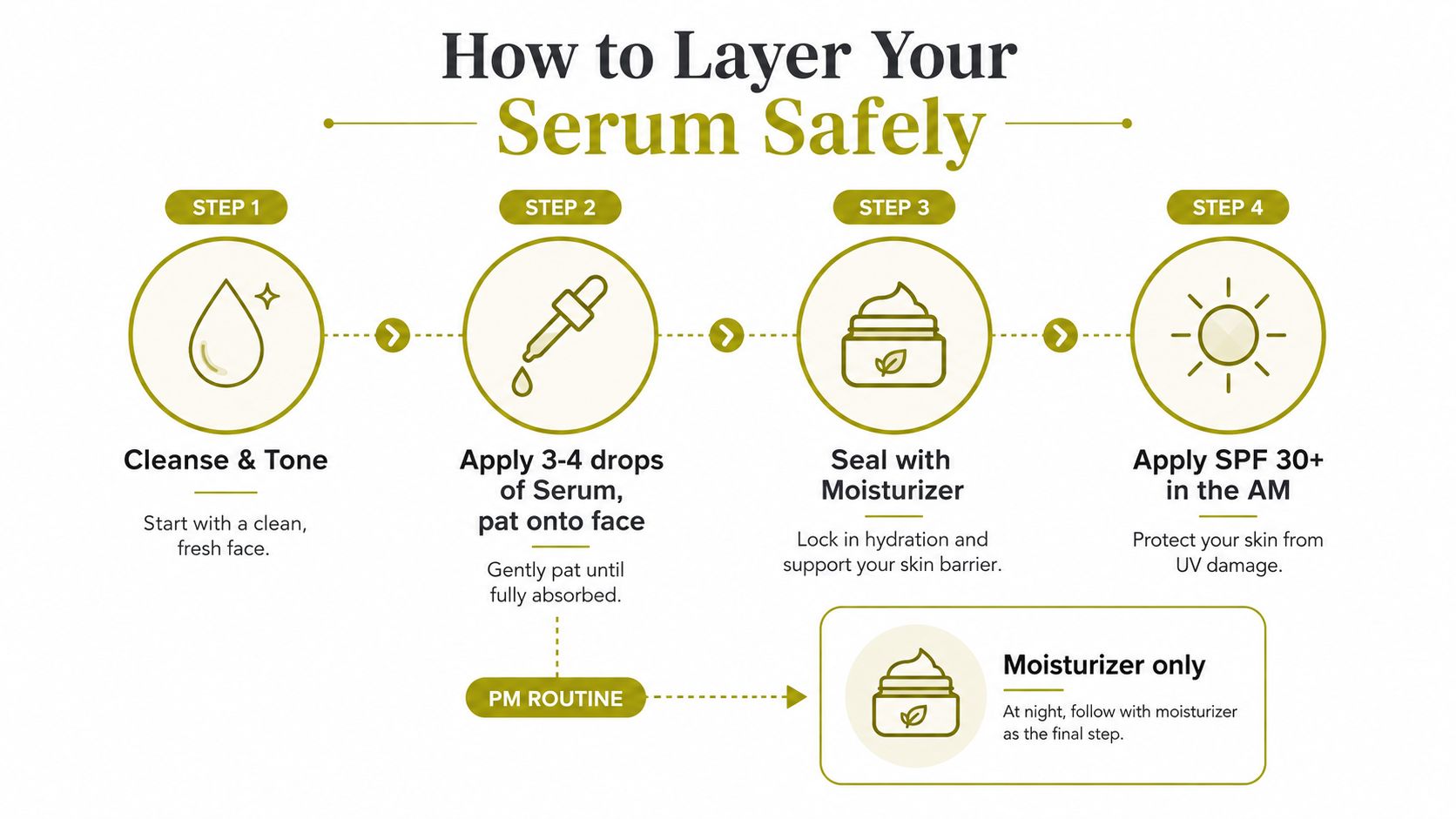
A simple order that keeps things steady
A practical routine usually looks like this.
- Cleanse and tone: Start with clean skin so the serum can spread evenly.
- Apply 3 to 4 drops: Pat the serum onto the face instead of rubbing hard.
- Seal with moisturizer: This helps the routine feel comfortable and reduces the sense of dryness.
- Finish with SPF 30+ in the morning: Sunscreen belongs on top of your daytime routine.
That order also helps you avoid the most common mistake, piling on too many active steps at once. If you already use exfoliating acids or retinoids, space them out when your skin feels sensitive.
How to patch test without making it complicated
Patch testing doesn't need drama. Try a small amount on a discreet area, wait, and look for a simple reaction pattern over the next day or two. If the skin feels calm, move it into your usual routine. If it feels hot, tight, or unusually flushed, scale back.
For an extra walkthrough, the embedded video below can be a helpful visual reference for application habits and layering pace.
The internal guide on layering skin care is useful if you want to place a serum into a fuller routine without overloading your face. The biggest mistake is treating vitamin C like a race. A calm, consistent routine usually feels better and makes the product easier to stick with.
Common Myths About Natural Vitamin C Serums Debunked
A natural label can sound reassuring, yet it does not tell you how a serum will perform. A plant-derived vitamin C serum still depends on formulation science, because the ingredient has to be protected, delivered, and kept usable on skin. The source matters, but the structure of the formula matters just as much.
Another common myth is that any change in color means the serum has failed. Freshness does matter, because vitamin C is sensitive to light, air, heat, and high water activity, but that is only part of the story Formulabotanica on vitamin C serum formulation. Packaging, derivative choice, texture, and pH all shape how long the formula stays steady and how well it fits into a routine. Dark glass, airless packaging, controlled viscosity, and careful pH management help the serum hold up better over time.
What people often misunderstand
- Natural doesn't mean weak: A plant-based formula can still be built around stable vitamin C forms that perform consistently.
- Orange color doesn't tell the whole story: Color can shift for different reasons, while real freshness depends on how well the formula is protected.
- Higher strength isn't always better: Skin comfort and stability matter alongside the active level.
- Botanical extras aren't just decoration: Oils and antioxidants can support how the formula feels and how well it holds together.
Another myth says that only pure ascorbic acid counts as “real” vitamin C. Modern skincare uses more than one path, and stable derivatives can be a smart option for people who want a smoother application and a gentler daily habit Typology on vitamin C and stable derivatives. A derivative is not a downgrade, it is often a different delivery route, like choosing a slower-release capsule instead of a fast burst.
A clean label can still hide thoughtful chemistry. The formula decides whether the clean label has staying power.
If a serum seems impressive only on the first use, that deserves a pause. Better formulas stay consistent, wear comfortably, and fit real routines instead of asking your skin to do the work. That is the difference between marketing that sounds good and product design that supports the ingredient.
Your Ingredient and Label Reading Checklist
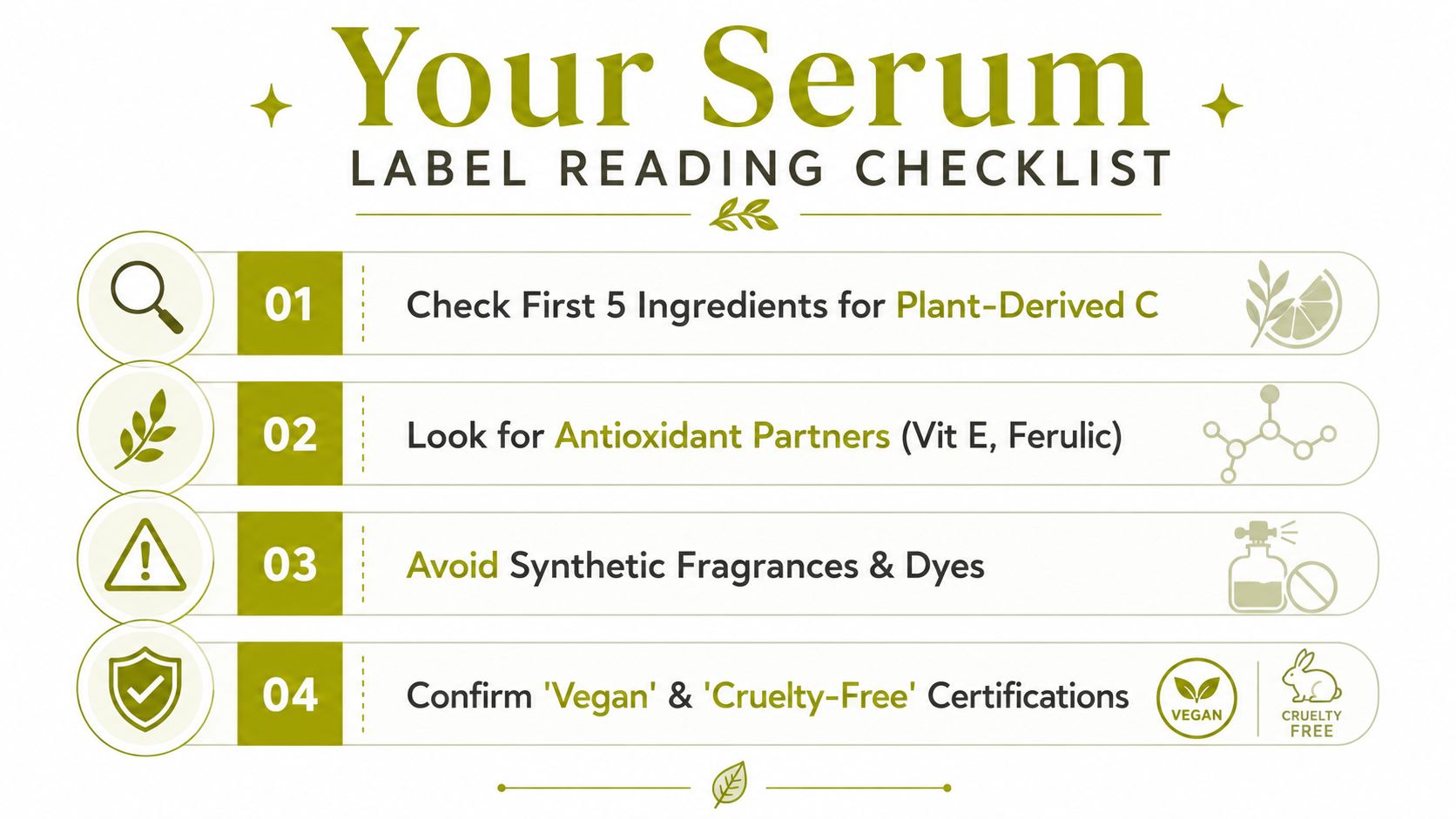
A crowded label can still be easy to read once you know where to look. Start with the first five ingredients, because they usually show whether the serum is built around a real plant-derived vitamin C system or dressed up with botanical language. From there, check for supporting ingredients that help the formula feel balanced instead of single-note.
What to look for first
- Check the first ingredients: Look for a named vitamin C form, not just broad “plant extract” wording.
- Look for antioxidant partners: Vitamin E and ferulic acid often show that the formula was built with stability in mind, as noted earlier.
- Notice the botanical carriers: Ingredients like jojoba oil, aloe, or fruit-derived extracts can help the serum feel easier to use.
- Watch the packaging: Dark or air-reduced packaging gives the formula a better chance to stay fresh, because light and air can wear down delicate ingredients over time. Formulation guidance from Formulabotanica on vitamin C serum formulation points to this kind of protection as part of keeping vitamin C serums stable.
Red flags that deserve a pause
Vague sourcing claims can hide a weak formula. So can a long list of fragrance-heavy extras that do not support the serum's main job.
Read the label for plain ingredient language, not glossy wording that avoids specifics. If a brand names the derivative, explains the botanical base, and shows how the formula is protected, that usually signals more care than a label built around hype. A plant-based serum can sound natural and still be poorly assembled, so the label has to show the chemistry, not just the marketing.
A label does not need to be complicated to be good. It needs to be readable, stable, and honest about what is inside the bottle. A routine-friendly example is the ArtNaturals Vitamin C Serum 1 oz, which fits the same kind of straightforward label reading shoppers can use when they compare plant-powered options.
How ArtNaturals Delivers Plant Powered Vitamin C Skincare
ArtNaturals keeps the conversation grounded in everyday use, which matters in a category that can get overly technical. Its Vitamin C Serum 1 oz brings the plant-powered idea into a routine-friendly format, and the brand's broader clean-care approach makes the product easy to understand in the context of a simple daily shelf.
The formulation story is what stands out here. A plant-based vitamin C serum works best when it respects both the active ingredient and the skin around it, so pairing vitamin C with hydrating and botanical support is a practical choice, not a decorative one. That approach lines up with the ingredient logic covered above, where stability, feel, and compatibility all matter together.
ArtNaturals also fits the self-care mindset that many shoppers want from this category. People aren't just looking for a brightening product, they're looking for a serum that feels approachable, easy to layer, and compatible with a broader routine.
If you like plant-forward skincare that keeps the science readable and the routine simple, ArtNaturals gives you a clear place to start. Explore the brand's skincare collection at ArtNaturals and choose the products that fit the way you care for your skin each day.