

When it comes to natural beauty, few ingredients are as talked-about as rosemary oil for hair growth. This fragrant botanical is loved for its potential to support a healthy scalp and encourage the look of fuller, more vibrant hair when used as part of a consistent self-care practice.
Your Introduction to Rosemary Oil for Hair Wellness

If you're looking for natural ways to nurture your hair from the roots up, you’ve probably heard the buzz around rosemary oil. While it feels like a new trend, its popularity is built on a long history of use in wellness rituals passed down through generations.
Using rosemary oil is more than just a hair treatment; it's a mindful act of self-care. It’s an invitation to slow down, connect with your body, and build a routine that feels both intentional and calming. This isn’t about a quick fix, but about a steady practice that supports your hair’s wellness over time.
A Ritual Rooted in Tradition
For centuries, rosemary has been a staple in gardens and traditional apothecaries. Its invigorating, earthy aroma is instantly recognizable and often linked with clarity and refreshment.
This rich history adds meaning to its modern-day use. A simple scalp massage becomes a connection to a timeless tradition of plant-based wellness, transforming a routine task into a cherished part of your day.
Embracing a Holistic Approach to Hair Health
Think of rosemary oil as one key piece of your larger hair wellness puzzle. A holistic view acknowledges that the health and appearance of our hair are influenced by many different factors.
Your hair care routine is a personal journey of discovery. It’s about finding what nourishes you—from the ingredients you choose to the daily habits you cultivate—to support your overall well-being.
As you start your journey with rosemary oil, you might also want to explore other strategies to prevent hair loss naturally. A balanced approach often works best. This can include:
- Mindful Nutrition: Eating a diet rich in the vitamins and minerals that support strong hair.
- Gentle Handling: Avoiding harsh chemical treatments and tight hairstyles that pull on the follicles.
- Stress Management: Adding practices like meditation or yoga to help maintain overall balance.
By adopting this well-rounded view, your rosemary oil ritual can become a cornerstone of a bigger commitment to self-care, helping you nurture your hair from the inside out.
Understanding How Rosemary Oil Supports Scalp Health

When we think about getting vibrant, beautiful hair, it’s easy to focus on the strands themselves. But the real foundation for healthy-looking hair starts at the source: the scalp.
Nurturing this delicate environment is a key part of any mindful hair care ritual. This is where rosemary oil comes in.
Adding rosemary oil for hair growth to your routine is all about creating a supportive setting for your hair follicles. It helps cultivate a balanced and happy scalp, which is essential for encouraging the appearance of stronger, fuller hair over time.
The Refreshing Power of Natural Components
So what makes rosemary oil so special? It's all about its unique natural composition. The fragrant oil is brimming with compounds that have earned it a solid reputation in hair care.
At its heart are a few key players, most notably 1,8-cineole and carnosic acid. While the names might sound a bit technical, their roles are pretty straightforward.
These natural components give the oil its well-known antioxidant properties. Antioxidants help protect the scalp from everyday environmental stressors, like pollution, which can throw its health off balance. A calm scalp is simply better prepared to support flourishing hair.
Plus, these same compounds are what create that invigorating, tingling sensation you feel during a scalp massage. It's not just pleasant—it’s a sign you're giving your scalp the focused attention it deserves.
Fostering a Balanced Scalp Environment
A healthy scalp is a clean, calm, and well-nourished one. Rosemary oil helps maintain this delicate balance, creating an environment where hair can look its best.
If you deal with occasional itchiness from product buildup or other factors, a gentle massage with diluted rosemary oil can feel wonderfully soothing and help your scalp feel fresh again.
Think of your scalp as a garden. For flowers to bloom beautifully, the soil must be healthy and well-tended. Similarly, for your hair to appear vibrant, your scalp needs consistent, gentle care.
Over time, this consistent care helps maintain a clean foundation, free from the gunk that can weigh hair down. It's a simple way to support your hair’s natural vitality right from the root.
The Connection to Circulation
One of the most celebrated aspects of using rosemary oil is its connection to blood flow. When you gently massage the oil into your scalp, the physical act of massage itself is a fantastic way to stimulate the area.
This stimulation helps bring a fresh supply of oxygen and nutrients to the hair follicles, which is fundamental for their well-being. A well-nourished follicle is better equipped to support the hair growth cycle, contributing to the appearance of thicker, more resilient hair.
This support for scalp microcirculation is one of the most widely discussed reasons for its popularity in hair care. You can explore further insights on this topic here.
How to Safely Prepare Your Own Rosemary Hair Oil
Making your own rosemary hair oil is a great way to personalize your routine. But before you start, there’s one golden rule for using essential oils: never apply them directly to your scalp. Pure rosemary oil is powerful and can cause irritation if it’s not diluted first.
The secret is to mix a few drops of rosemary essential oil with a nourishing carrier oil. This simple step creates a gentle, effective blend that’s ready for a scalp massage, giving you all the benefits without overwhelming your skin.
Choosing the Perfect Carrier Oil
A carrier oil does exactly what its name suggests—it “carries” the essential oil safely to your skin. Each one has its own texture and benefits, so you can pick the one that best suits your hair.
Here’s a quick look at a few popular options:
- Jojoba Oil: A fantastic all-rounder. Its structure is surprisingly similar to the natural oils our scalp produces, so it absorbs easily and helps balance oiliness without feeling heavy.
- Argan Oil: Often called “liquid gold,” argan oil is packed with antioxidants. It’s incredibly nourishing for dry, brittle hair and adds a beautiful, healthy-looking shine.
- Coconut Oil (Fractionated): While solid coconut oil can be too heavy for some, the fractionated version stays liquid and feels much lighter. It’s a great choice for deep moisture that won’t weigh down finer hair types.
Finding the right match might take a little experimenting. If you have an oily scalp, you’ll probably prefer a lightweight oil like jojoba. If your hair is on the drier side, the richness of argan oil might be just what you need.
Choosing Your Ideal Carrier Oil
To help you find the best base for your rosemary oil blend, here’s a simple comparison of popular carrier oils.
| Carrier Oil | Best For Hair Type | Key Benefit |
|---|---|---|
| Jojoba Oil | Oily, Normal | Balances scalp sebum |
| Argan Oil | Dry, Brittle, Frizzy | Deeply moisturizes and adds shine |
| Coconut Oil | All types, especially dry | Lightweight hydration |
| Castor Oil | Thinning, Weak | Nourishing and strengthening feel |
| Olive Oil | Thick, Dry, Damaged | Richly conditions and softens |
Ultimately, the best carrier oil is the one that feels right for your hair and scalp. Don't be afraid to try a couple to see what works.
Your Simple Dilution Guide
Once you’ve picked your carrier oil, it’s time to mix. You don’t need complicated formulas—a simple ratio is all it takes. For scalp application, a safe and effective dilution is around 1–2%.
A good rule of thumb is to mix 3 to 6 drops of pure rosemary essential oil with one tablespoon (15 ml) of your carrier oil. This creates a gentle blend perfect for a relaxing scalp massage.
Always mix the oils together well in a small bowl before you use them. This makes sure the rosemary oil is spread out evenly for a consistent application every time.
If your skin is on the sensitive side, it’s a good idea to start with a lower concentration—maybe just 2–3 drops per tablespoon. You can also do a quick patch test on your inner arm 24 hours beforehand to make sure your skin is happy with the blend.
Preparing and Storing Your Blend
You can either mix a small batch right before you use it or make a larger amount to have on hand.
If you make a bigger batch, store it in a dark glass bottle (like an amber or cobalt blue one). This protects the oils from sunlight, which can break them down over time. Keep it in a cool, dark place, and your homemade hair oil will be ready whenever you are.
For those who love getting creative, you can find more great ideas by exploring different DIY recipes. It’s a fun way to continue your journey into natural self-care.
Simple and Effective Ways to Apply Rosemary Oil
Once you have your diluted rosemary hair oil ready, it's time for the application—a simple, calming ritual. There are a few gentle ways to work this into your routine, each offering a nice moment of self-care while nourishing your scalp.
The key is finding the method that fits your lifestyle so you can stay consistent. Whether you prefer a quick boost in the shower or a more dedicated treatment on a quiet evening, there's an approach that will feel right for you.
Proper dilution is the most important first step, combining the pure essential oil with a carrier oil to create a blend that's safe for your scalp.
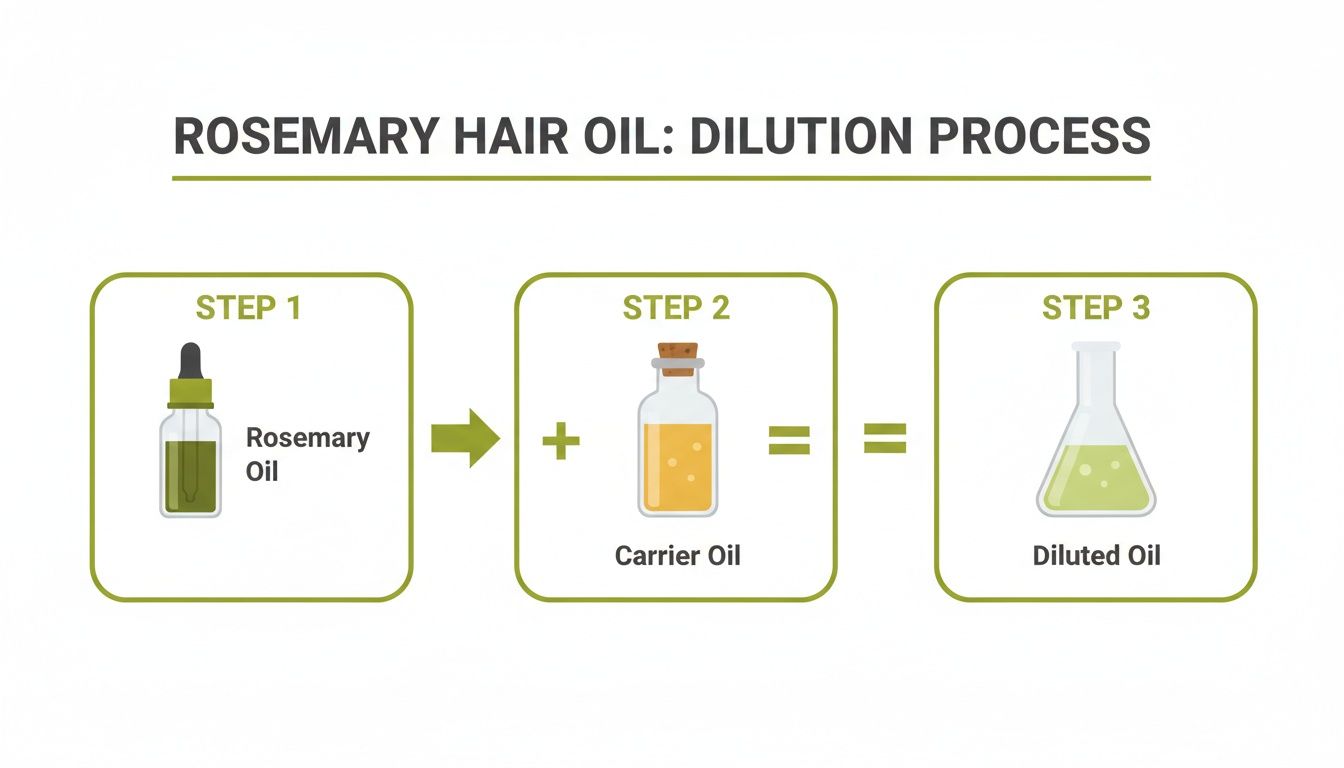
This visual just reinforces that any application starts with a gentle, properly diluted blend.
The Mindful Scalp Massage
A scalp massage is probably the most popular way to use rosemary oil. It’s a direct, intentional practice that lets you focus on nurturing your scalp right where it matters most—the roots. This method helps distribute the oil evenly and turns the application into a relaxing, sensory experience.
To start, part your hair into a few sections to get easy access to your scalp. Use your fingertips to apply a few drops of your diluted oil directly to the skin along the parts.
Then, using the pads of your fingers (not your nails), gently massage your entire scalp with slow, circular motions. The goal is to create a soothing sensation, not to scrub hard. Aim to massage for about 5 to 10 minutes, giving yourself a moment to unwind.
Create a Nourishing Pre-Shampoo Treatment
If you like a deeper conditioning feel, a pre-shampoo treatment is a fantastic option. This approach gives the oil more time to sit and nourish the scalp and hair before you wash it out.
Just follow the same scalp massage steps, but feel free to apply a little more of the oil blend. After you finish the massage, you can even work any leftover oil through the lengths and ends of your hair for some extra softness.
Let the oil sit for at least 30 minutes before you shampoo. For a more intensive treatment, you can wrap your hair in a warm towel or a shower cap. This creates a gentle warmth that helps the oils feel even more nourishing.
When you're ready, just wash and condition your hair as you normally would. You might find that you need to shampoo twice to get everything out, which is perfectly fine. Many people find doing this 2-3 times per week is the perfect rhythm. If you're looking for a convenient, pre-blended option, a ready-to-use rosemary and castor oil scalp treatment can simplify this step.
Elevate Your Current Hair Products
For those with busy schedules, you can get the benefits of rosemary oil by simply enhancing the products you already love. It's a great way to add it to your routine without adding an extra step.
Here are a few easy ways to do it:
- Boost Your Shampoo: Before washing your hair, put your usual amount of shampoo into your palm. Add 2-3 drops of pure rosemary essential oil, mix it together, and then lather up.
- Enrich Your Conditioner: You can do the same thing with your conditioner. Just add a couple of drops of rosemary oil to bring that invigorating feel right into your shower.
This method is super straightforward and ensures you're giving your scalp consistent attention with every wash. It’s a perfect example of how small, simple habits can support your long-term hair goals. Just remember to mix the oil with the product in your hand each time, not directly in the bottle, to keep the product's original formula intact.
Patience and Consistency Are Everything
When you start a new self-care practice, it's easy to get excited and want immediate results. But with something like rosemary oil for hair growth, your two best friends will be patience and consistency.
Natural approaches work with your body's own rhythms, which means you won't see changes overnight. It often takes a few months of dedicated use to notice a difference in your hair's appearance.
Think of it less as a quick fix and more as a long-term commitment to your scalp's health. By nurturing the source, you’re building a strong foundation for healthier-looking hair for years to come.
Setting Realistic Timelines
It’s completely normal to feel eager for results, but your hair's growth cycle is a slow and steady process. Just like tending a garden, you won't see a flower bloom the day after you plant the seed. It needs time, care, and the right environment.
Most people who consistently use rosemary oil start to see subtle improvements in their hair's texture and overall look after about three to six months. Before that, the changes are often too gradual to spot with the naked eye.
Remembering this helps frame your journey as a marathon, not a sprint. You can read more about these findings on hair wellness.
Staying Motivated on Your Journey
Consistency is truly the most important piece of the puzzle. Applying your rosemary oil blend a few times a week, every single week, is what creates a supportive environment for your scalp. A hit-or-miss approach just won’t deliver the same benefits.
To help you stay on track, try a few of these simple tips:
- Integrate It Into Your Routine: Tie your rosemary oil application to a habit you already have. Maybe you apply it every Sunday night while you watch a movie or on the mornings you plan to wash your hair.
- Track Your Progress with Photos: Snap a quick photo of your hair and scalp in the same lighting when you start. Then, take another one each month. This is a great way to see subtle progress that you might otherwise miss day-to-day.
- Focus on the Ritual: Instead of focusing only on the outcome, try to enjoy the process itself. That five-minute scalp massage can be a really calming moment of self-care, and the oil's earthy aroma is wonderfully grounding.
The goal is to build a sustainable habit that feels like a treat, not a chore. When you actually look forward to your hair care moments, staying consistent becomes almost effortless. This mindful approach transforms your routine into a rewarding practice for both your hair and your overall well-being.
Common Questions About Using Rosemary Oil for Hair
When you're trying something new in your hair care routine, it's normal to have a few questions. Adding rosemary oil to your ritual is a personal journey, and feeling confident in what you're doing makes it that much better. Here are some of the most common questions we get, with simple, straightforward answers to guide you.
Think of this as your practical go-to for all things rosemary oil. Our goal is to give you clear advice so you can build a routine that feels just right for you and your hair.
How Often Should I Use Rosemary Oil On My Hair
With natural hair care, consistency beats intensity every time. For most people, using a rosemary oil blend two to three times per week is the perfect rhythm. This gives your scalp the nourishment it needs without feeling weighed down or greasy.
You can apply it as a pre-shampoo treatment for at least 30 minutes, or even leave it in overnight if your hair responds well to it. The most important part is to listen to your hair and scalp and find a schedule you can stick with.
Can I Leave Rosemary Oil In My Hair Overnight
Yes, and it's actually a great way to give your scalp a more intensive treatment. Leaving a properly diluted rosemary oil blend in overnight gives the oils more time to absorb and work their magic while you sleep.
Just massage the oil into your scalp as you normally would, then cover your hair with a silk cap or protect your pillow with a towel. In the morning, simply wash your hair as usual. If your hair is on the finer side or your scalp gets oily easily, you might prefer a shorter 30-60 minute treatment instead.
Self-Care Tip: Turn your overnight treatment into a wind-down ritual. Put on some calming music, light a candle, and really focus on the feeling of the scalp massage. It's a perfect way to relax before bed.
What Are Potential Side Effects Of Using Rosemary Oil
When used correctly, rosemary oil is very gentle. The most common issue is slight skin irritation, which usually only happens if the essential oil hasn't been diluted enough in a carrier oil.
To keep your experience safe and pleasant, just follow these simple tips:
- Always Dilute: Never put pure rosemary essential oil directly on your scalp. Always mix a few drops with a carrier oil like jojoba, argan, or coconut oil first.
- Do a Patch Test: Before you apply it all over, test a small amount of your diluted oil on a discreet patch of skin, like behind your ear. Wait 24 hours to make sure no irritation pops up.
- Avoid Sensitive Areas: Be careful not to get the oil in your eyes. If you do, just rinse them well with cool water.
These small steps make all the difference. For more details on getting your blend just right, you can find important information on our Rosemary Castor Hair Growth Oil.
How Long Does It Take To See A Difference
Patience is a must for any natural wellness practice. The hair growth cycle is slow and steady, so it’s best to think in terms of months, not weeks.
With consistent use, many people start to notice a real difference in their hair's texture, shine, and overall health after about three to six months. It's important to see this as a long-term scalp health ritual, not a quick fix. Taking a picture when you start and another each month is a great way to track your progress and stay motivated.
At ArtNaturals, we believe in the simple power of botanicals to elevate your self-care. Our Rosemary & Castor Hair Growth Oil is thoughtfully formulated to make your hair wellness journey easy, beautiful, and effective.
Discover the ArtNaturals Rosemary & Castor Hair Growth Oil today!
Article created using Outrank