

Vitamin C serum goes before moisturizer, on clean skin, so it can absorb fully before richer layers are applied on top. For an L-ascorbic acid formula, leave it on bare or lightly hydrated skin for about 60–90 seconds before moisturizing.
You're standing at the bathroom sink with a freshly washed face, a vitamin C dropper in one hand, and moisturizer in the other. The products are both familiar, but the order still feels strangely easy to get wrong.
The simple answer is consistent: apply vitamin C serum first, then moisturizer. The serum is the lightweight, active step that needs direct contact with your skin, while moisturizer follows to add comfort and create a soft protective layer over everything underneath.
That basic order works in most routines, whether your skin is oily, dry, combination, or sensitive, and whether you use vitamin C in the morning or evening. The details become easier once you understand the texture and pH logic behind the routine, rather than trying to memorize a long list of product rules.
The Quick Answer at the Bathroom Mirror
At the bathroom sink, the order is straightforward: cleanse, apply vitamin C serum, pause briefly, then moisturize. Pat your face until it is damp rather than dripping, and spread the serum gently with clean fingertips. This gives the lightweight active layer direct contact with your skin before a richer product follows.
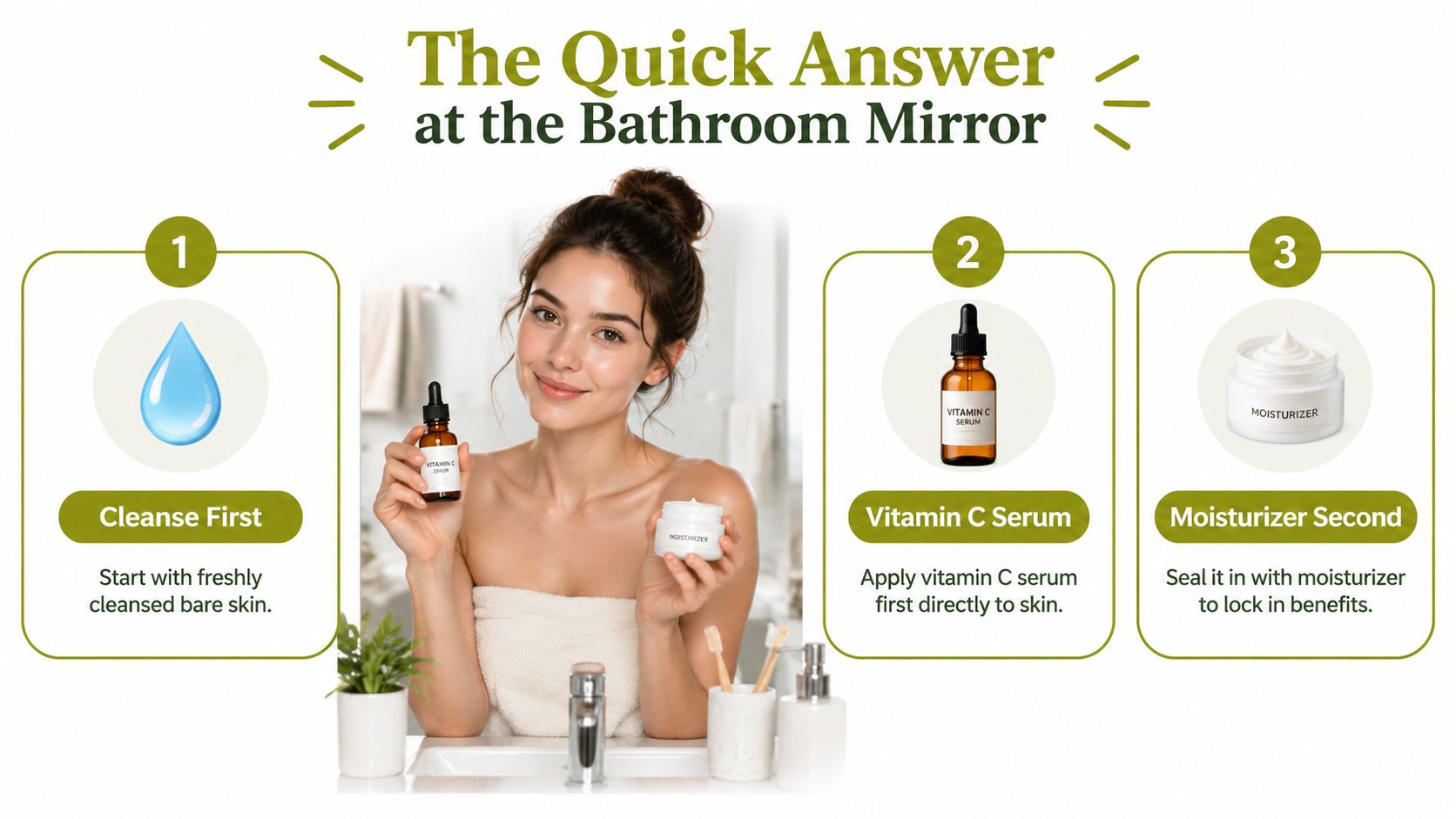
“Before moisturizer” does not require the serum to vanish or feel completely dry. It means the serum settles on clean skin first. Moisturizer then acts like a comfortable outer layer, helping the routine feel less exposed without changing the basic order. The distinction between these product roles is also explained in this guide to the difference between serum and moisturizer.
A simple order to remember
- Cleanse first. Remove residue such as sunscreen, makeup, and daily buildup.
- Apply vitamin C serum. Use a small amount and spread it evenly, without aggressive rubbing.
- Pause briefly. About 60–90 seconds is a practical interval for an L-ascorbic acid serum.
- Moisturize second. Smooth your usual lotion, cream, or balm over the serum once it has had a moment to settle.
- Finish with sunscreen in the morning. Sunscreen forms the final morning layer.
This sequence also works in the evening. At night, moisturizer can be the final step, or you can use a comfortable night cream that suits your skin. The underlying rule is easier to adapt when you read the routine from texture to texture: thinner treatment layers first, richer layers afterward.
Why Order Matters in Skincare Layering
Skincare layering works best when you move from lightest texture to richest texture. Watery products and thin serums generally need direct contact with the skin, while creams and oils sit closer to the surface and help reduce moisture loss.
A useful analogy is painting. You wouldn't put a thick coat of varnish on the canvas before trying to apply a thin watercolor wash. The heavier layer changes how the lighter layer spreads and settles. Skincare follows a similar rhythm, although each formula has its own instructions.
Vitamin C serum is usually designed as a targeted, lightweight step. Moisturizer has a different job. It provides hydration and forms a more substantial layer that helps keep the routine comfortable. Applying moisturizer first can leave the serum sitting on top of that film instead of contacting the skin as directly.
Texture gives you a practical shortcut
You don't need to identify every ingredient in every bottle to make a sensible decision. Look at how the products feel:
- Watery essences and serums usually go early in the routine.
- Gel serums and light lotions follow other watery steps.
- Cream moisturizers come after lighter products.
- Face oils and balms often finish the skincare portion because they form a more substantial surface layer.
- Sunscreen goes last in the morning.
This isn't a rigid law for every product. Some formulas are deliberately designed to be applied over moisturizer to improve comfort, especially when someone is easing into an active. Still, for a standard vitamin C serum, serum first is the clearest starting point.
Practical rule: If one product feels watery and the other feels creamy, apply the watery product first unless the product label specifically says otherwise.
The underlying logic is also useful beyond vitamin C. When you're evaluating a new serum, ask whether it needs direct skin contact, whether it has a watery texture, and whether a richer product might slow its spread. For broader skin-focused education, you can also browse dermatology at LMI as a general resource.
How pH Shapes Vitamin C Performance
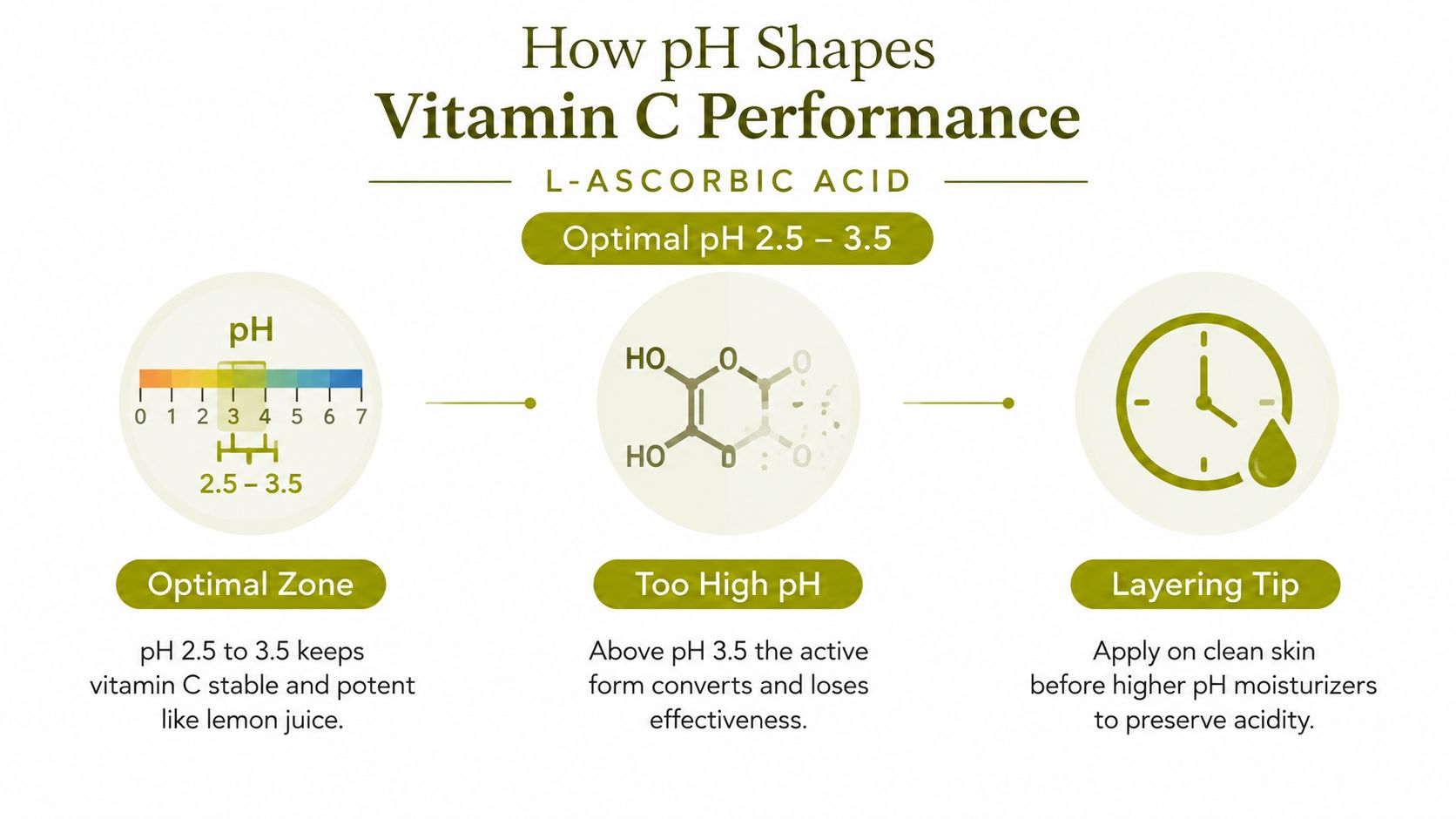
The order matters for more than texture. It also matters because L-ascorbic acid, the most studied form of topical vitamin C, performs best in an acidic environment.
Formulation guidance commonly places its useful low-pH range below pH 3.5, with many layering guides describing an ideal environment around pH 2.5–3.5. A formulation overview explains that penetration is favored below pH 3.5 and that higher pH conditions can reduce stability, as outlined in this vitamin C serum formulation guide.
pH is a way of describing how acidic or alkaline an environment is. You don't need to test your bathroom shelf to use the idea. The practical lesson is that an acidic vitamin C serum is formulated to begin its work in a particular environment, and placing moisturizer underneath can alter the surface it meets.
Think of pH as the setting
A gentle analogy is soil and seeds. A seed needs a suitable environment before it can begin to grow. The seed isn't necessarily defective when it struggles in the wrong soil, but the conditions aren't supporting the process.
L-ascorbic acid also depends on suitable conditions. A moisturizer applied first may leave a richer film and introduce a different surface environment. Applying the serum to clean skin gives its low-pH formula the clearest path before you add a higher-pH or more emollient layer.
Some technical guidance suggests allowing 10–20 minutes after a low-pH active so the skin surface can move back toward its usual range of about pH 4.5–5.5, as described in this skincare pH layering explanation. In everyday routines, that long pause isn't always necessary for everyone. A shorter 60–90-second wait is a practical approach specifically recommended for L-ascorbic acid layering in this application guide.
For readers exploring the ingredient itself, this explanation of L-ascorbic acid powder for skin offers additional context. The key routine remains simple: vitamin C first, moisturizer after.
Your Morning Routine with Vitamin C Serum
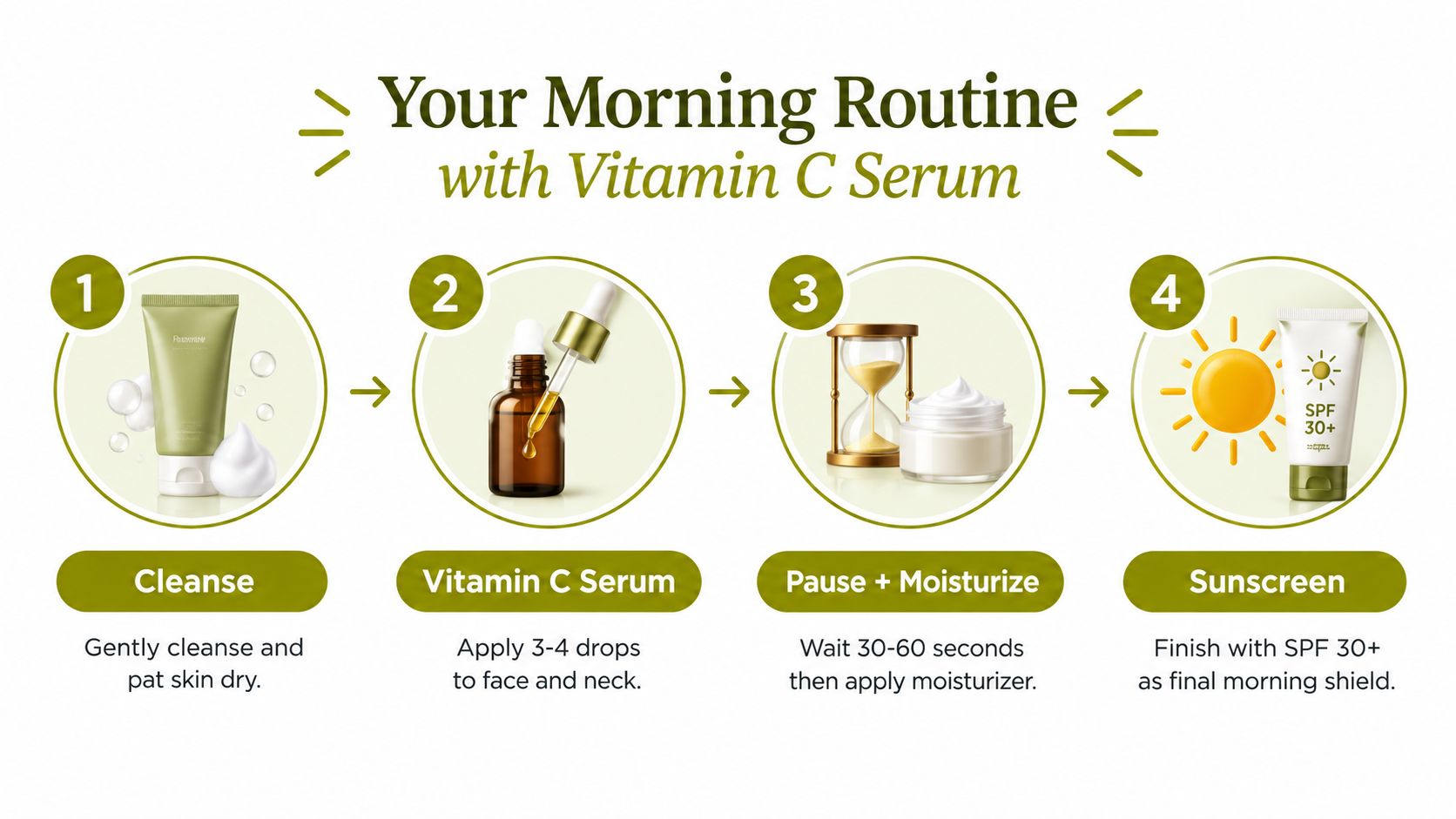
At the bathroom sink, the order is straightforward: cleanse, apply vitamin C, moisturize, then finish with sunscreen. Morning suits vitamin C because the antioxidant layer sits beneath daytime sun protection. Dermatologist guidance commonly places vitamin C after cleansing and toning, followed by moisturizer and sunscreen. Some formulas may be used twice daily, but the product label and your skin's comfort should guide frequency.
Follow the sink-to-sunscreen sequence
- Cleanse gently. Rinse thoroughly and pat your skin dry. It should feel clean, not tight.
- Use toner if it belongs in your routine. Let it settle before applying serum, especially if the skin is still very wet.
- Apply vitamin C serum. Use the amount stated on the product label, spreading it evenly over your face and neck.
- Give the serum about 60–90 seconds. Wait until the surface feels settled rather than wet or slippery. This short pause lets the thinner, low-pH layer sit directly on clean skin before richer textures follow.
- Apply moisturizer. Choose a formula that feels comfortable without leaving an overly heavy coating.
- Finish with sunscreen. Sunscreen is the final morning layer.
The suggested visual routine shows 3–4 drops and a final SPF labeled SPF 30+. Those details are examples from the visual, not universal instructions, so follow the directions for your own formula.
For a visual walkthrough, watch the video after reading the sequence. The steps and timing cues will be easier to connect.
A hot shower can leave skin warm and more reactive. Give it a moment before applying an active. After exfoliation, or whenever your skin feels sensitized, skip vitamin C and keep the morning routine gentle with moisturizer and sunscreen.
Your Evening Routine and When to Skip It
Evening skincare can feel quieter and more restorative than a morning routine. You remove the day's products, cleanse without overworking the skin, and choose only the active steps your skin can comfortably handle.
Some people reserve vitamin C for the morning and use the evening for other ingredients, such as retinol or peptide-focused products. Others prefer vitamin C twice daily. Both approaches can fit a personal routine if the skin remains comfortable and the product label supports that frequency.
If vitamin C stays in your evening plan
Use the same basic order:
Cleanser, toner if desired, vitamin C serum, moisturizer, then night cream if needed.
Allow the serum to settle before applying the richer layer. At night, there isn't a sunscreen step afterward, but moisturizer still follows vitamin C because the texture and low-pH logic haven't changed.
When a simpler night is wiser
Skip the serum when your skin feels irritated, after exfoliation, or when you're already using a stronger active that makes the routine feel crowded. Burning, persistent stinging, unusual tightness, or increasing redness are useful signals to simplify rather than push through.
A retinol night can be a retinol night. You don't need to add every active at once to create a thoughtful routine. Alternating active nights often makes it easier to understand what your skin enjoys and what it doesn't.
Pairing Vitamin C with Other Actives
Vitamin C doesn't need to be isolated from every other ingredient. The more useful question is whether the pairing supports comfort, whether the products have compatible textures, and whether using them at separate times creates a calmer routine.
The table below offers a simple starting point. Product formulas vary, so check the directions for the specific serum, cream, or treatment you own.
Vitamin C and common actives
| Active ingredient | Compatibility | Best timing |
|---|---|---|
| Niacinamide | Often compatible in the same routine when the formulas are designed for comfortable layering. | Apply the thinner product first, then moisturizer. |
| Hyaluronic acid | A hydrating pairing that can make the routine feel more cushioned. | Use after vitamin C if the hyaluronic acid serum is more viscous, then moisturize. |
| Retinol | Both are active steps, so combining them can feel too demanding for some routines. | Use vitamin C in the morning and retinol in the evening, or alternate nights. |
| AHAs and BHAs | Layering several acidic products can increase the chance of discomfort. | Separate them by time of day or alternate use. |
| Benzoyl peroxide | A classic pairing concern because benzoyl peroxide may interfere with vitamin C. | Use benzoyl peroxide at a different time of day from vitamin C. |
| Vitamin E and ferulic acid | These ingredients are often combined in vitamin C formulas to create a complementary antioxidant blend. | Follow the serum's instructions and apply the finished formula before moisturizer. |
Specifically about niacinamide, this guide to vitamin C and niacinamide together can help you think through the pairing without turning your routine into a chemistry project.
The easiest way to avoid confusion is to keep the morning focused. Cleanse, use vitamin C, add any compatible hydrating serum, moisturize, and finish with sunscreen. Save retinol, exfoliating acids, or benzoyl peroxide for a separate routine when appropriate.
The Layering Order at a Glance
The useful rule is a texture check, not a fixed step number. Products that feel watery usually spread first, while richer layers sit closer to the end and reduce moisture loss.
Morning decision points
- Hydrating essence: Place it after cleansing and before vitamin C when it is thin and water-like. If it leaves a tacky or rich film, let it settle, then judge whether vitamin C still spreads evenly.
- Treatment serum: Apply vitamin C before another treatment serum when the second product is thicker. If both have similar textures, use the product whose label gives a specific order, or keep vitamin C closest to freshly cleansed skin.
- Moisturizer: Apply it after the serums. It works like a soft cover over the lighter layers, adding comfort without becoming the surface vitamin C must cross.
- Sunscreen: Keep it last in the morning, after moisturizer, so the protective film remains on top.
These choices explain why vitamin C is usually placed before moisturizer without making every routine follow an identical count. Texture, formula instructions, and skin comfort can change the exact position.
Evening decision points
Night routines offer more flexibility. A hydrating essence can precede an active serum, while a richer treatment or facial oil generally belongs after moisturizer. Vitamin C does not need to remain in the evening routine if another active already fills that role.
Mirror reminder: Follow the path from lightest texture to richest layer. Put vitamin C before moisturizer, then finish the morning with sunscreen.
The structure stays useful even when the products change. It gives you a way to arrange new layers by how they feel and what they are meant to do, rather than memorizing a numbered sequence.
Common Mistakes and How to Fix Them
You apply moisturizer first because your skin feels dry, then remember the vitamin C serum. Don't panic. The serum hasn't become useless, but you've placed a richer layer underneath it, which may reduce direct contact. The next morning, reverse the order and apply vitamin C to clean skin before moisturizer.
Another common scene happens when two serums are open and you mix vitamin C directly with niacinamide or retinol in your palm. That makes it harder to control how much of each product reaches the skin and can create unnecessary uncertainty about irritation. Apply products separately, using the thinnest texture first, unless the manufacturer has intentionally formulated them together.
Small changes that improve the routine
- Right after a hot shower: Warm, damp skin can feel more reactive, especially with an acidic active. Pat dry, let your skin settle briefly, and skip vitamin C if the surface feels uncomfortable.
- No sunscreen afterward: Morning vitamin C doesn't replace sunscreen. Add sunscreen as the final step rather than treating the serum as daytime protection by itself.
- Too much, too soon: Starting with a strong-feeling formula every day can make it difficult to tell whether the product suits you. Begin according to the label and reduce frequency if your skin becomes uncomfortable.
- Layering after exfoliation: Applying vitamin C immediately after an exfoliating step can make the routine feel more intense. Use moisturizer and sunscreen alone on a sensitized morning.
- Choosing a richer cream: If you're comparing textures for dry or mature-feeling skin, an anti aging moisturizing cream guide can help you think about where a heavier layer belongs after serum.
ArtNaturals offers vitamin C serums, including a Vitamin C Face Serum and an Anti-Aging Vitamin C + Jojoba Face Serum, for readers looking to build this type of serum-first routine. The most reliable habit is still the simplest one: cleanse, apply vitamin C, pause, moisturize, and finish with sunscreen in the morning.
ArtNaturals offers skincare options built around ingredients such as vitamin C, niacinamide, and hyaluronic acid, making it easier to choose a routine that fits your layering preferences. Visit ArtNaturals to explore vitamin-rich serums and complementary self-care products for your next bathroom-mirror routine.