

You're standing in front of the bathroom shelf with a familiar dilemma: your cleanser removes oil, but leaves your face tight, while the richer formulas feel heavy. African black soap can look like a beautifully simple answer, especially if you're trying to build a more plant-based routine. Its appeal is real, but the most useful way to understand African black soap benefits is to look beyond “deep cleansing” and consider its ingredients, alkaline nature, texture, and the needs of your own skin.
This traditional cleanser can support a fresh-feeling face, body, or scalp when used thoughtfully. It can also feel too drying if you treat a raw bar like an everyday facial scrub. The ritual matters as much as the ingredient.
The Heritage and Appeal of African Black Soap
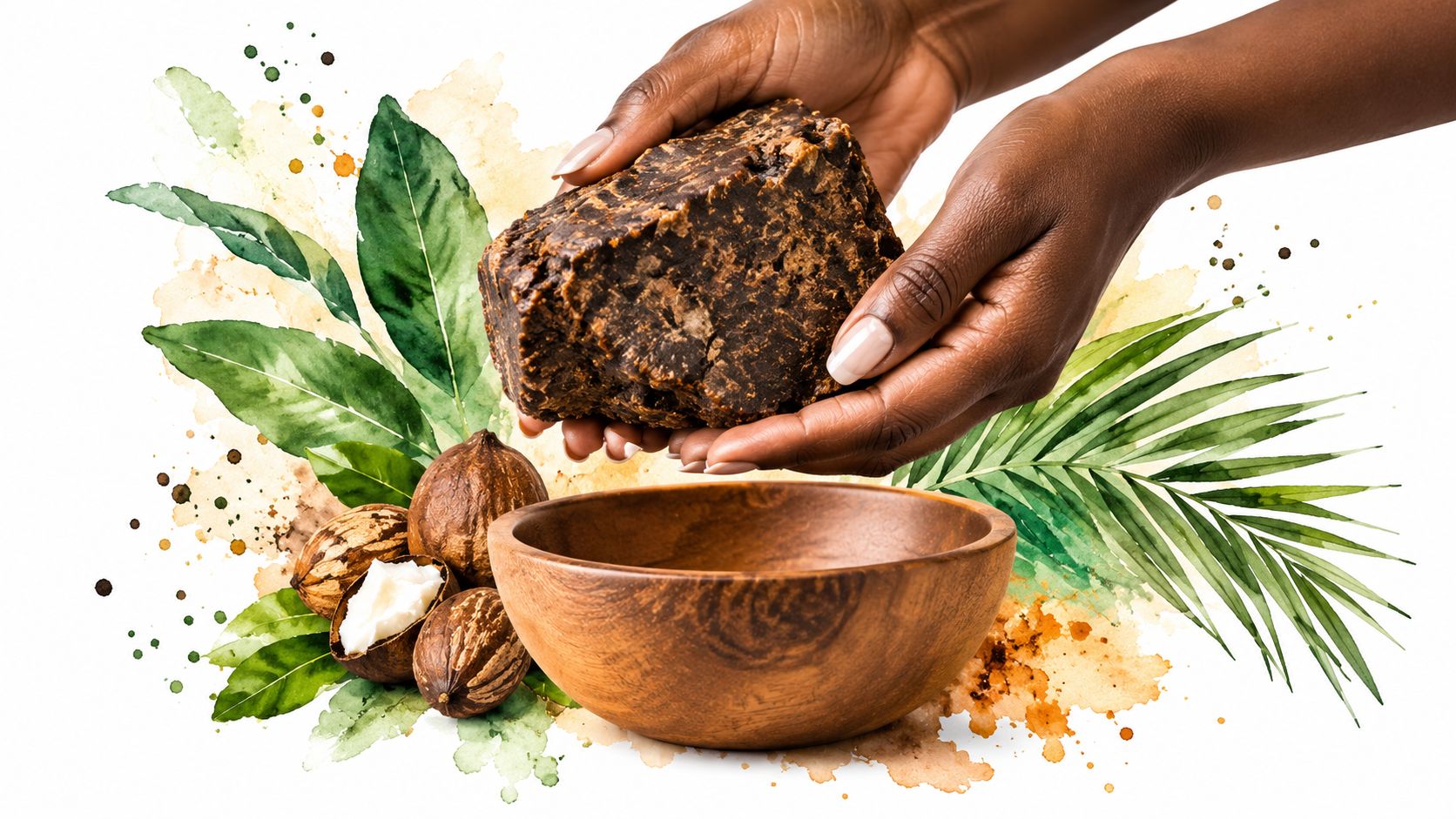
A person seeking a simpler beauty ritual might begin with a raw, uneven bar rather than a polished, heavily fragranced cleanser. The bar may be soft at the edges, earthy in scent, and dark brown rather than perfectly black. Those details reflect the traditional character of African black soap, not necessarily a flaw in the product.
African black soap has deep historical roots in West Africa, with Yoruba communities in southwestern Nigeria widely cited as an origin point. Traditional recipes use plant ash, oils, butters, and locally sourced materials. Broader historical accounts trace the use of shea butter in African black soap production back to at least the 14th century, according to a review of shea butter's history and applications in peer-reviewed research on shea butter.
A traditional cleanser with modern appeal
The soap's dark color comes from plant materials that are dried and burned into ash. Oils and butters then turn that alkaline ash into a cleansing bar through saponification. Because recipes differ between makers and regions, raw bars often have varied color, grain, softness, and scent.
That variation is part of the ingredient's appeal for people drawn to small-batch botanical care. African black soap feels connected to a tangible process: plant materials become ash, ash works with oils, and the resulting soap becomes part of a daily washing ritual.
For shoppers who care about more mindful sourcing and lower-waste habits, broader sustainable beauty practices can provide useful context. Still, “natural” should never be treated as a guarantee of gentleness. A traditional ingredient deserves respect for both its heritage and its limitations.
Modern pharmacy and dermatology literature describes African black soap as having antimicrobial and skin-conditioning effects that may be relevant to oily skin, uneven tone, irritation, and acne-prone routines. A review also describes activity against common skin organisms, including some Staphylococcal and Streptococcal species, while a comparative study reported significant antibacterial activity against several tested bacteria associated with skin infections, as discussed in dermatology literature on African black soap.
A grounded view: African black soap is a traditional cleanser with useful botanical qualities, not a universal solution for every complexion.
Decoding the Traditional Botanical Ingredients
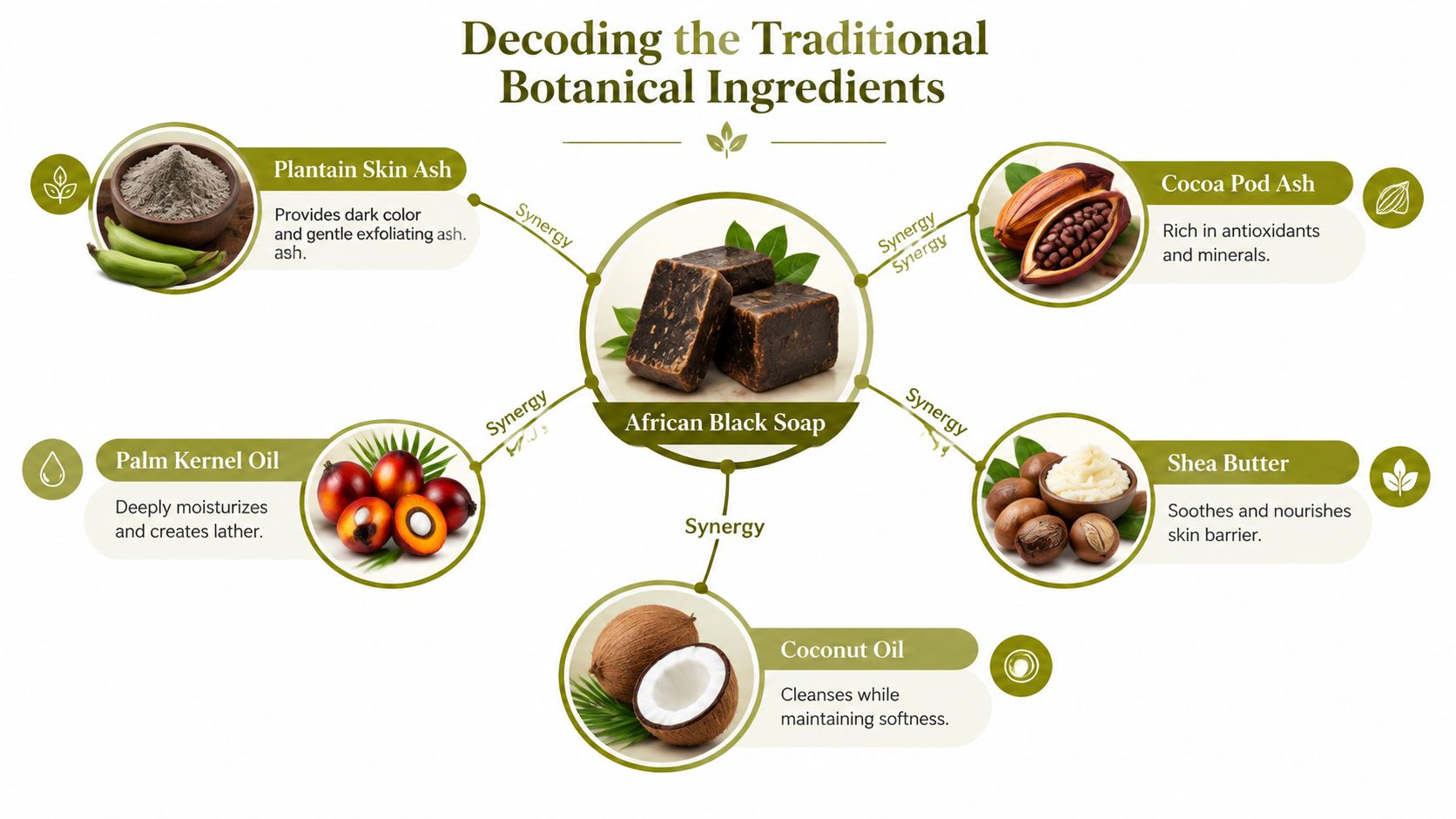
African black soap isn't one fixed formula. The core method usually combines plant ash, water, oils, and butters, but the exact recipe depends on regional practice and the maker. Common documented ingredients include plantain skin ash, cocoa pod ash, palm leaves, shea butter, palm oil, palm kernel oil, and coconut oil, as described in this ingredient guide to how African black soap is made.
Ash creates the cleansing base
Plantain skins, cocoa pods, and palm leaves can be dried and roasted to produce ash. That ash supplies the alkalinity needed for saponification, the process that transforms oils and fats into soap. It also contributes to the bar's signature color, irregular texture, and earthy character.
Plantain skin ash and cocoa pod ash aren't interchangeable in every recipe. Their mineral composition can vary, which helps explain why one bar may feel smoother while another feels more textured. When you see claims about “natural exfoliation,” the practical source is often the ash and the bar's physical texture, not a standardized exfoliating ingredient.
The soap's cleansing strength comes from the chemistry created when alkaline ash meets oils. This is why raw black soap can lift surface oil and buildup efficiently, while also feeling more intense than a creamy, low-foam cleanser.
Oils and butters shape the experience
Shea butter adds a rich, conditioning quality to the formula. Palm kernel oil and coconut oil help create cleansing action and lather, while palm oil may contribute body and firmness. The final feel depends on the balance of these materials, how thoroughly the soap is processed, and how much moisture remains in the finished bar.
Some regional formulations include honey, aloe vera, lime, camwood, or oatmeal, showing why ingredient labels matter. A bar containing additional botanicals may feel different from a very plain ash-and-oil recipe. A useful guide to natural ingredients for glowing skin can also help you compare the roles of plant oils, butters, and botanical additions across a broader routine.
Read the label before trusting the color: A dark bar tells you very little by itself. The ingredient list, texture, scent, and maker's transparency offer more useful clues.
No two raw bars need to look exactly alike. Variation isn't automatically evidence of quality, but uniformity isn't proof of authenticity either. Treat the formula as a complete blend rather than assigning one guaranteed result to a single ingredient.
How It Supports Different Skin and Hair Types
African black soap makes the most sense when you match its cleansing strength to your skin's actual experience. Someone with an oily forehead and a resilient body complexion may appreciate how quickly it removes sweat, sunscreen residue, and surface oil. Someone with dry cheeks may find the same bar leaves too much tightness.
Face and body use
For oily or combination skin, a brief lather can create a clean canvas without requiring a rough scrub. The soap's antimicrobial activity may also help reduce surface microbial colonization linked with acne-prone skin. A 2024 comparative evaluation found no microbial colonies on tested soap samples and antimicrobial efficacy against all organisms tested except one Pseudomonas aeruginosa case, as reported in the comparative evaluation of African black soap.
That finding doesn't answer every acne question. Independent coverage describes the evidence base as limited and largely focused on antimicrobial and phytochemical properties rather than rigorous clinical trials. A dermatology survey found 94% of 100 clinic patients reported being “very satisfied” or “somewhat satisfied” overall, but only a small share used the soap specifically for acne, according to Cleveland Clinic's overview of African black soap. Satisfaction can tell you how people experience a product, but it can't establish that the soap works better than a gentle cleanser for acne.
For the body, the bar can suit areas that feel sweaty, oily, or exposed to environmental residue. If your skin is dry, reactive, or eczema-prone, keep contact brief and consider using the soap only on selected areas rather than treating the entire body with the same intensity.
Hair and scalp routines
On hair, African black soap can function as an occasional clarifying wash. A small amount of lather may refresh roots and remove product buildup before conditioning. Because alkaline soap can leave the hair fiber feeling rough or dry, follow with a suitable conditioner and avoid making it the only cleanser in your hair routine.
A scalp that feels coated may respond differently from a scalp that already feels tight. Use the first wash as an observation exercise: notice whether your roots feel lighter and your lengths remain comfortable, or whether the hair becomes coarse and difficult to detangle.
People who want professional guidance can also explore the services list for Sydney clients from Bonna Beauty, especially when they prefer an in-person assessment of their skincare needs.
Understanding the pH and Barrier Considerations
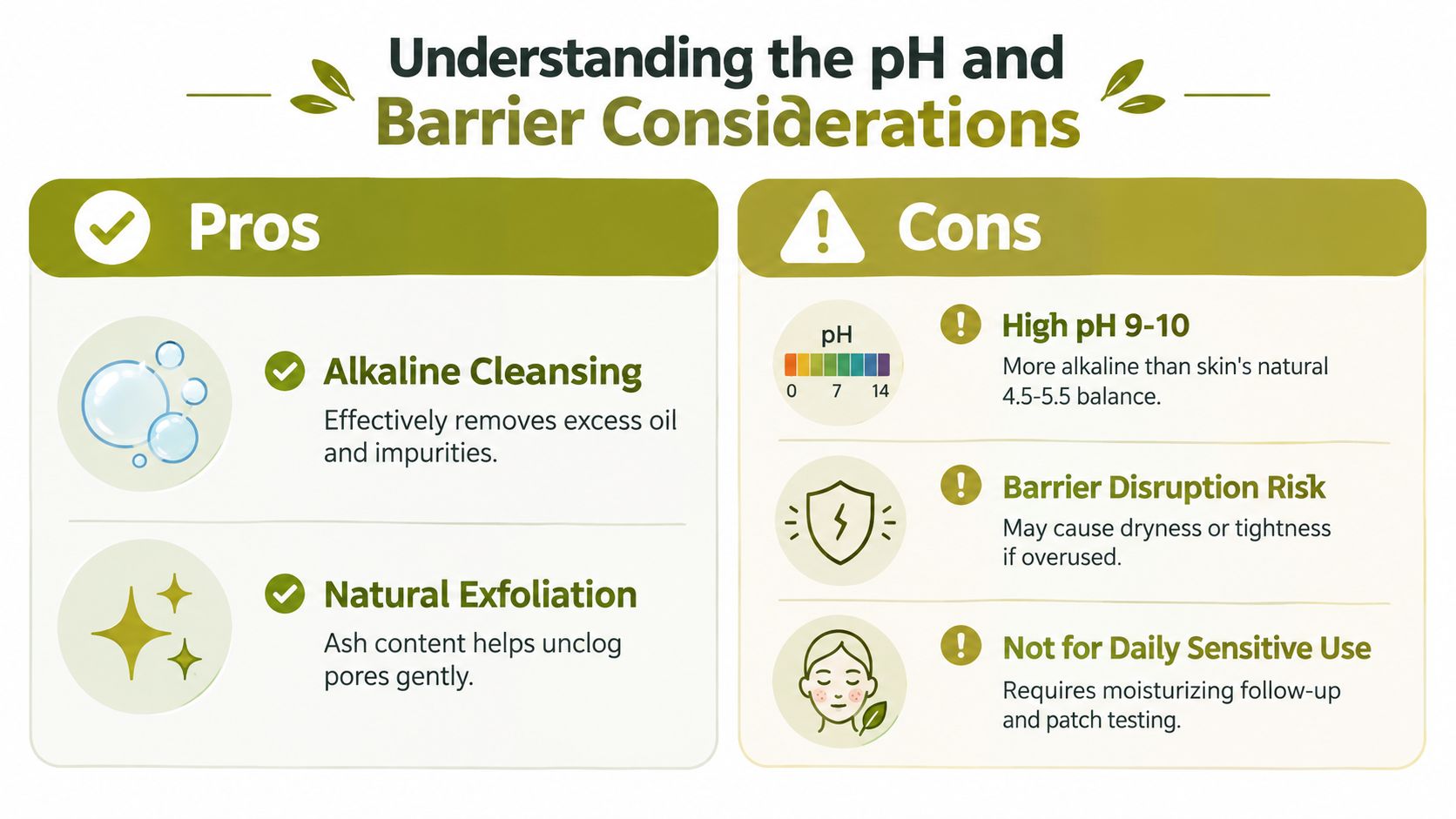
“Natural” doesn't automatically mean gentle. African black soap is a true soap, and technical formulation data show that tested batches are typically alkaline, with published pH values around 8.7 to 9.1 in one study, 8.90 to 9.58 in another, and 8.45 to 9.62 in additional batches, according to published technical data on African black soap formulation.
Skin normally maintains a more acidic surface environment. The contrast matters because alkaline cleansers can swell the outer skin layer and remove surface lipids. That chemistry helps explain the bar's strong cleansing feel, but it also explains why frequent use may leave sensitive or compromised skin feeling tight, rough, or dry.
What the barrier data suggests
The 2024 evaluation mentioned earlier measured post-wash skin pH between 4.95 and 5.76, a range close to the acid mantle range associated with barrier function. The same evaluation found increased transepidermal water loss in 87.5% of subjects and lower sebum in 62.5%, showing that a cleanser can have measurable antimicrobial effects while still creating a risk of barrier disruption when contact is too long or use is too frequent. These findings appear in the study of cleansing effects and skin measurements.
For daily self-care, that means you should judge the product by your skin's response, not by the word “botanical.” A brief wash followed by moisturizer is very different from leaving a concentrated lather on the face or rubbing a raw piece across delicate areas.
Barrier-first practice: Clean skin should feel comfortable and flexible after rinsing, not persistently squeaky, tight, or hot.
Follow cleansing with a hydrating toner, facial oil, or rich moisturizer while the skin is still slightly damp. If your barrier already feels irritated, a practical guide to repairing damaged skin can offer broader self-care context. For more sensitive routines, review natural skincare for sensitive skin before adding another active or exfoliating product.
Mindful Preparation and Daily Usage Rituals
Raw African black soap behaves differently from a hard, smooth commercial bar. It can soften quickly in standing water, crumble at the edges, and develop a harmless white ash film when moisture sits on the surface. Preparing a small portion keeps the main block drier and makes it easier to control how much contact your skin receives.
Prepare a manageable portion
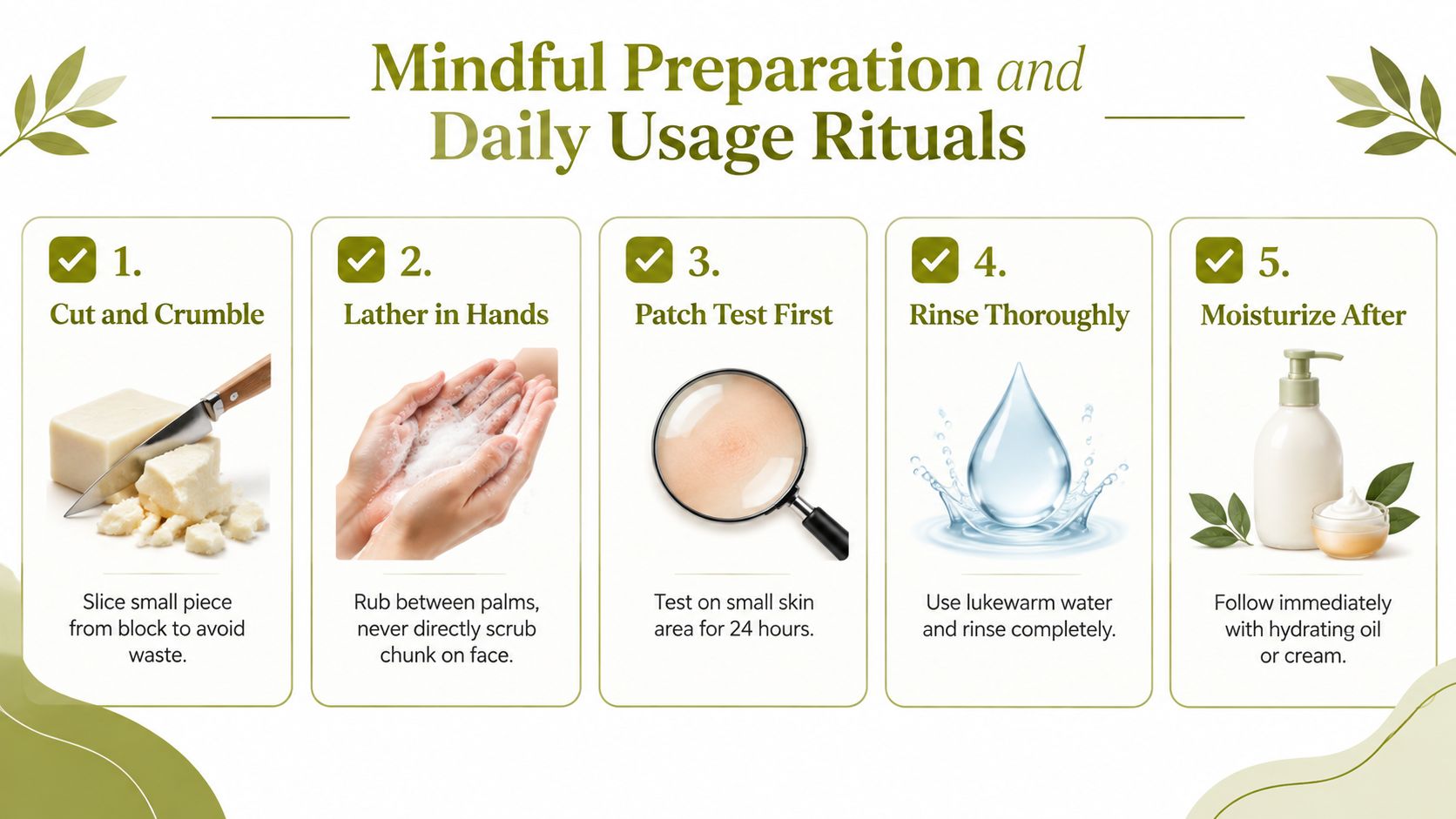
- Cut and crumble: Slice or break off a small piece instead of carrying the whole block into the shower. This reduces waste and helps you keep the unused soap away from splashing water.
- Create lather in your hands: Wet the piece and rub it between your palms, or work it into a soft cloth. Don't drag the raw bar directly across your face, because its uneven texture can create unnecessary physical irritation.
- Patch test first: Apply a small amount of lather to an inconspicuous area and observe your skin before using it broadly. Dermatology guidance recommends patch testing and stopping if redness, itching, peeling, or excessive dryness develops, as explained in this African black soap safety guide.
- Rinse thoroughly: Use lukewarm water and remove all visible lather. Pay attention to the hairline, jaw, neck, and folds where residue can remain.
- Moisturize after washing: Apply a hydrating oil, cream, or body butter soon after rinsing. This step helps reduce the uncomfortable dry feeling that can follow an alkaline cleanser.
Store it with airflow
Use a draining soap dish rather than a flat tray that holds water. Keep the bar away from a direct shower stream, and allow the surface to dry between uses. The soap's glycerin and oil content make it prone to softening when exposed to moisture, so thoughtful storage protects both its texture and lifespan.
Choosing Between Raw Bars and Liquid Formulations
Raw and liquid black soap can both fit into a botanical routine, but they solve different practical problems. A raw bar offers a direct connection to the traditional format, while a liquid product may be easier to portion, travel with, or use at a sink.
Liquid formulations can also include added humectants, preservatives, fragrance, or pH-adjusting ingredients. Those additions aren't automatically undesirable, but they change the product from a simple raw soap into a more complex formula. Read the full label if your clean beauty preferences exclude particular additives.
| Feature | Traditional Raw Bar | Commercial Liquid Version |
|---|---|---|
| Formula | Usually built around plant ash, oils, and butters, with regional variation | May include water, preservatives, added hydrators, fragrance, or pH-adjusting ingredients |
| Texture | Soft, uneven, and sometimes crumbly | Smooth and ready to dispense |
| Routine fit | Suits people who enjoy a hands-on, low-packaging ritual | Suits bathrooms, travel, and quick measured use |
| Storage | Needs drainage and protection from standing water | Needs a clean, secure container and careful label reading |
| Consistency | Can vary from batch to batch | Often offers a more uniform application |
| Ingredient transparency | Lets you see and feel the traditional format, but requires careful sourcing | Makes the complete ingredient list especially important |
| Skin feel | May feel strongly cleansing because of its alkaline soap base | Depends on dilution, added ingredients, and the finished formula |
The raw bar may be the better fit for someone who values traditional preparation and doesn't mind cutting small portions. A liquid version may be more comfortable for someone who wants controlled dispensing and a predictable texture.
Neither format deserves an automatic “gentle” label. Your choice should reflect your skin sensitivity, storage setup, ingredient standards, and willingness to adjust the routine if dryness appears.
Building a Balanced Natural Beauty Routine
African black soap works best as one cleansing step, not as an entire skincare philosophy. Pair it with a simple follow-up that restores comfort: rosewater toner, a few drops of argan or rosehip oil, or a rich shea butter body cream. For hair, a conditioner or nourishing mask can soften the feel after an occasional clarifying wash.
Your skin may tolerate the soap differently in dry weather, humid weather, or during periods of sensitivity. Use less contact time when your face feels tight, reserve the bar for body areas when needed, and pause if redness, itching, peeling, or persistent dryness appears.
A slower routine gives you clearer feedback. Rather than adding several new products at once, introduce the soap on its own, observe the result, and build around what leaves your skin comfortable. Resources such as skincare with Pep Tea can offer additional inspiration for plant-focused routines without turning every botanical ingredient into an essential step.
The most honest African black soap benefits are practical: a traditional plant-based cleanser, noticeable removal of surface oil and buildup, a distinctive sensory ritual, and antimicrobial activity that may suit some routines. Its alkaline chemistry and batch variation deserve equal attention. When you respect both sides, the soap becomes a mindful tool rather than an exaggerated promise.
ArtNaturals offers plant-based skincare, haircare, bath and body products, and an African Black Soap Bar formulated with ingredients including olive oil, coconut oil, shea butter, and charcoal. Visit ArtNaturals to explore a simple cleansing option alongside oils, serums, conditioners, and moisturizers for a more balanced everyday self-care ritual.