

If you’re navigating redness, tightness, or the feeling that your skin is just unhappy, you’re not alone. Understanding natural skincare for sensitive skin can feel complex, but it often comes down to one simple practice: listening to what your skin needs. It's about shifting from frustration to a gentle, plant-inspired routine that feels like a sigh of relief.
What's Happening With Your Sensitive Skin?
When your skin flares up, it’s not a flaw—it’s a signal. It can be helpful to think of sensitive skin less as a permanent "type" and more as a temporary "state." Your skin is simply communicating that its protective barrier is a little stressed and could use some support.
This natural shield is your first line of defense against the outside world. When it’s weakened, it can let irritants in and moisture out, leading to reactivity.
The cause isn't always obvious. It could be a specific ingredient, a change in the weather, or even things like stress and diet. Your skin is often a reflection of your overall well-being.
Pinpointing Common Triggers
The first step to calming your skin is becoming a bit of a detective. When you start noticing patterns, you can make more mindful choices about what you put on your skin and how you care for it.
Keep an eye out for these common culprits:
- Harsh Ingredients: Synthetic fragrances, sulfates (which make cleansers very foamy), and certain alcohols can strip away your skin's natural oils, leaving it feeling exposed and irritated.
- Environmental Stress: A blast of cold wind, a hot, humid day, or too much sun can easily disrupt your skin's balance.
- Over-Exfoliation: While we all love a smooth, fresh feeling, scrubbing too hard or using strong exfoliants too often can do more harm than good by compromising that precious skin barrier.
The goal isn't just to react when your skin is upset, but to create a routine that proactively keeps it calm and comfortable. A gentle, plant-based approach gives your skin the nourishment it needs to feel strong and balanced every day.
Choosing natural skincare for sensitive skin is about working with your body, not against it. You're offering it simple, soothing care so it can find its own equilibrium, turning your daily routine into a kind and supportive ritual.
The Best Natural Ingredients to Soothe and Nurture
When you have sensitive skin, choosing the right skincare feels less like a purchase and more like a peace treaty. Going natural means you’re picking ingredients that work in harmony with your skin. It's about turning to the gentle, time-tested power of botanicals to calm, nourish, and protect your complexion.
This isn’t just a niche trend—it’s a major shift in how we approach skincare. People everywhere are searching for kinder, more thoughtful ways to care for their skin.
This diagram breaks down what it means to have sensitive skin—from the triggers that set it off to the calm, protected state we're all aiming for.
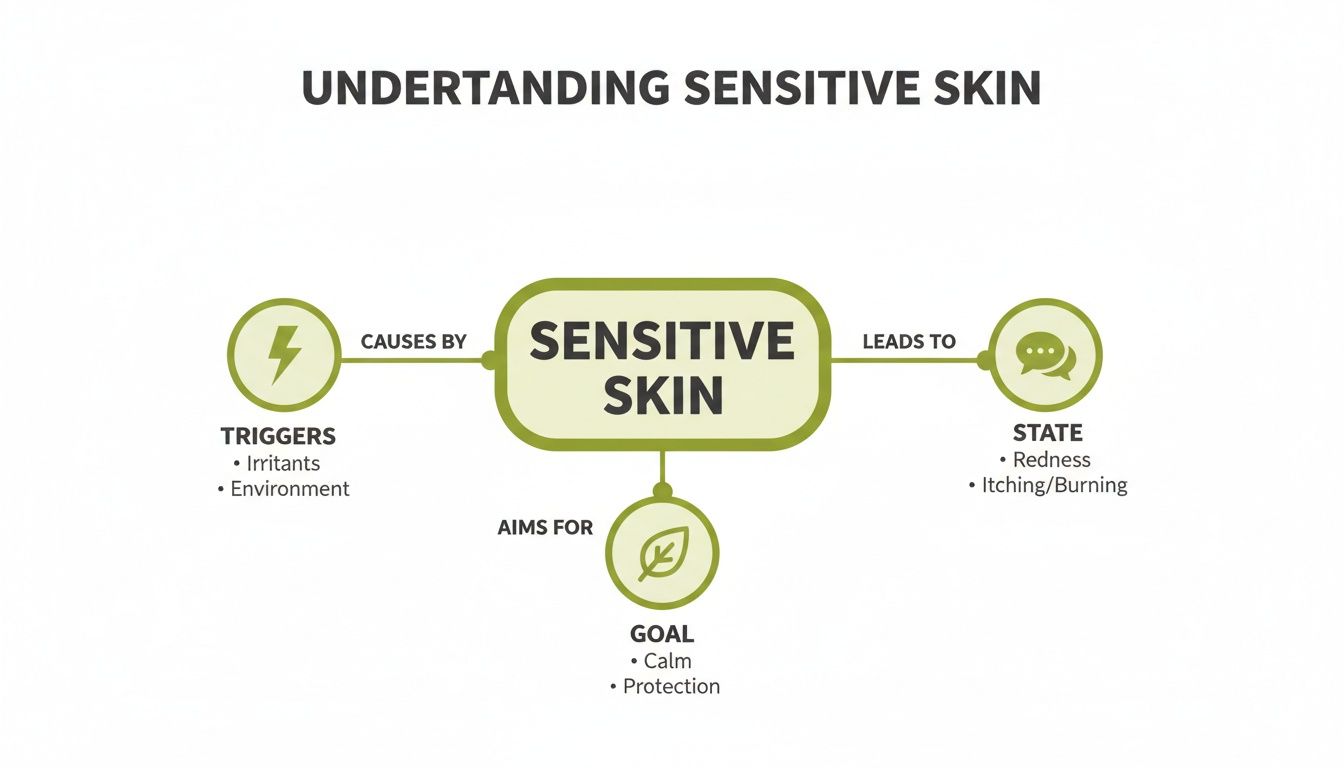
Understanding these basics is the first step in picking products that will truly help, not hinder.
Gentle Ingredients Versus Potential Irritants to Avoid
Navigating ingredient labels can sometimes feel overwhelming. The key is to know which ingredients are your allies and which ones are common troublemakers. This table breaks it down simply.
| Choose These Soothing Ingredients | Common Irritants to Avoid |
|---|---|
| Aloe Vera: The ultimate hydrator and skin-soother. | Alcohol (SD/Denatured): Can be extremely drying and strip the skin. |
| Chamomile: Known for its calming qualities. | Fragrance/Parfum: A common source of sensitivity and irritation. |
| Oat Extract: Acts like a protective blanket to comfort the skin. | Sulfates (SLS/SLES): Harsh detergents that can disrupt the skin barrier. |
| Jojoba Oil: Mimics skin’s natural oils to moisturize beautifully. | Essential Oils (in high concentration): Potent botanicals that can be irritating for some. |
| Shea Butter: A rich emollient that locks in moisture. | Harsh Exfoliants: Physical scrubs with large, jagged particles. |
Keeping this list in mind can help you make kinder choices for your skin right at the shelf.
Your Skin’s Plant-Powered Allies
You don't need a degree in botany to find effective natural ingredients. A few tried-and-true botanicals show up again and again for one reason: they work beautifully. Getting familiar with them is the first step toward building a routine your skin will love.
Here are a few standouts to look for on any label:
- Chamomile: Think of how a warm cup of chamomile tea calms your nerves. It can have a similar soothing effect on your skin, helping to ease the appearance of redness and irritation.
- Aloe Vera: This is like giving your face a long, cool drink of water. Aloe is a master of gentle hydration and feels incredibly refreshing on stressed-out skin.
- Oat Extract: If your skin feels tight or itchy, oat is a wonderful friend. It acts like a soft, comforting hug, leaving your skin feeling supple and peaceful.
Nourishing Oils and Butters
Beyond herbal extracts, certain plant-based oils and butters are uniquely suited for sensitive skin. Their molecular structure is often very similar to the natural lipids in our own skin barrier, which means they are generally well-received.
Take Jojoba Oil, for example. It’s so similar to your skin's own sebum that it can moisturize and balance your skin without feeling heavy or clogging pores.
Then there’s Shea Butter, a rich, creamy emollient loaded with nutrients. It forms a soft, breathable barrier that seals in moisture and protects your skin from the elements, making it a hero for dry, reactive patches. By focusing on these kinds of ingredients, you can find a wealth of natural ingredients for glowing skin that are also wonderfully suited for sensitive types.
Learning to spot these gentle powerhouses is like learning to speak your skin’s language. Once you do, you can finally give it the kind, effective care it’s been asking for.
How to Build Your Gentle Skincare Routine
When you have sensitive skin, building a routine isn't about collecting a dozen products. It’s about creating a simple, predictable ritual that brings your skin back to a place of comfort and balance. A "less is more" philosophy is often the kindest approach.
Instead of overwhelming your skin, let's focus on four essential pillars: Cleanse, Hydrate, Treat, and Protect. This simple framework gives your skin everything it needs without the fluff, turning your daily care into a restorative moment rather than a chore. The goal is consistency—building a supportive foundation that helps your skin feel calm day in and day out.

Step 1: Cleanse Gently
This first step sets the tone for everything that follows. For sensitive skin, cleansing should feel like a gentle reset, never a harsh scrub. Your goal is simply to wash away the day's impurities without stripping away the natural oils that form your skin's protective barrier.
Very foamy, squeaky-clean cleansers can sometimes be a problem. They may disrupt that delicate barrier, leaving your skin feeling tight, exposed, and vulnerable to irritation.
Instead, reach for milky, cream, or even oil-based formulas. These types of cleansers are fantastic because they dissolve makeup and grime while adding a touch of soft hydration back into the skin. A creamy cleanser comforts your skin as it cleans. Always use lukewarm water and gently pat your skin dry with a soft towel.
Step 2: Hydrate and Soothe
Once your skin is clean, it's primed and ready to soak up moisture. Hydration is non-negotiable for sensitive complexions because a well-hydrated skin barrier is a strong barrier—and a strong barrier is far less reactive. This step is all about replenishing the water your skin naturally loses.
Look for lightweight moisturizers and serums that deliver a big drink of water without feeling heavy or greasy. Ingredients like hyaluronic acid are superstars here; they act like tiny sponges, attracting and holding onto moisture to plump the skin from within. For a deeper dive into this amazing ingredient, check out our guide on how to use hyaluronic acid serum.
A good hydration step will:
- Support the Skin Barrier: A hydrated barrier is your best defense against environmental triggers.
- Reduce Tightness: It helps with that uncomfortable, taut feeling that so often comes with sensitivity.
- Promote a Calm Appearance: Well-hydrated skin just looks and feels less red and irritated.
Step 3: Treat with Nourishing Formulas
The "treat" step is your chance to give your skin extra TLC, tailored to its needs. This doesn't have to be complicated or involve aggressive ingredients. For sensitive skin, this is all about providing calming, restorative goodness.
Nourishing facial oils and soothing serums are perfect for this. A high-quality facial oil can lock in moisture from your previous step while delivering beneficial fatty acids to support long-term skin health. A serum packed with soothing botanicals can also work wonders to ease redness and promote a more even, comfortable tone.
A truly supportive routine is one that nurtures your skin’s natural barrier while addressing your core needs—and nothing more. The focus should always be on restoring balance and promoting comfort.
When you're choosing a treatment product, simplicity is your best friend. A short ingredient list with recognizable, plant-based names is usually a great sign that the formula will be both gentle and supportive.
Step 4: Protect Your Skin Daily
This is the final—and arguably most crucial—step in any morning routine. Sun exposure can be a major trigger for sensitive skin, leading to more redness and reactivity. Protecting your skin every single day is essential for keeping it healthy and calm.
Mineral-based sunscreens are usually a great bet for sensitive complexions. They work by sitting on top of the skin and creating a physical shield that reflects UV rays. Look for formulas with zinc oxide or titanium dioxide as the active ingredients.
These physical sunscreens are less likely to cause irritation. Modern mineral formulas have come a long way and can blend into the skin without leaving a chalky, white cast. This final step shields your delicate skin, allowing it to stay balanced and happy all day long.
For those dealing with specific conditions like eczema, which often goes hand-in-hand with sensitivity, understanding targeted care is key. You can find more specific advice in resources that cover gentle steps for treating baby eczema. By personalizing your routine around these four core pillars, you're giving your skin the consistent, nurturing care it needs to thrive.
How to Introduce New Products Without Irritation
For anyone with sensitive skin, trying a new product can feel like a roll of the dice. It’s normal to feel hopeful but also a little worried about a potential reaction. Introducing new skincare doesn't have to be a gamble. With a slow, mindful approach, you can explore new options confidently.
The trick is to give your skin time to adjust and to create a clear way to see how it’s responding. This is especially important as more of us reach for plant-based skincare. There is a growing desire for clean, recognizable ingredients. In fact, a large percentage of consumers are actively seeking them out to avoid the common irritants often found in other formulas. You can read more about this shift toward clean ingredients on Fact.MR.
The Golden Rule of One at a Time
Before you do anything else, commit to this simple but powerful rule: introduce only one new product at a time. It’s tempting to do a complete routine overhaul, but that’s an easy way to cause confusion and irritation.
If you add a new cleanser, serum, and moisturizer all at once and your skin reacts, how will you know which one was the culprit? By introducing products one by one, you give yourself a clear line of sight. Wait at least a week, maybe two, before adding anything else new. That gives your skin plenty of time to tell you how it really feels about the latest addition.
Mastering the Patch Test
The patch test is your best friend when trying new skincare safely. It's a simple trial run to check for a reaction before you apply something all over your face. Think of it as a quiet conversation between the product and a small, out-of-the-way patch of your skin.
Here’s how to do it right:
- Choose a Discreet Spot: Pick a place where a reaction won't be front and center. Good options include the side of your neck, just behind your ear, or the inside of your wrist or elbow.
- Apply a Small Amount: You just need a tiny dab, enough to cover a coin-sized area.
- Wait and Observe: Leave the product on for at least 24 hours. If you can, avoid washing that specific spot. Of course, if you feel any immediate burning or itching, wash it off right away.
- Check for Reactions: After a day, take a close look at the area. Are you seeing any redness, itching, swelling, or little bumps?
If the patch test area looks calm and happy, you can feel much more confident about using the product on your face. If you see any signs of a reaction, you know to steer clear.
This simple step takes the guesswork out of building a routine. It turns the process from something anxiety-inducing into an empowered, informed choice. By taking these small, mindful steps, you can build a skincare routine based on trust, one gentle product at a time.
Lifestyle Rituals for Calm and Happy Skin
Great skincare is more than just the products you put on it—it’s a reflection of your overall well-being. While a solid, natural skincare routine is your foundation, real magic happens when you support it from the inside out. Embracing a few simple lifestyle rituals can make a world of difference, turning basic self-care into a practice that truly nurtures your sensitive skin.

This holistic view is part of a larger movement. People are connecting to the powerful link between inner balance and outer glow. Many are now choosing gentler options, looking for routines that put wellness first.
Nourish Your Skin from Within
What you eat is just as important as the creams you apply. Think of it as feeding your skin from the inside. A balanced diet full of antioxidants helps support your skin's natural defenses, giving it the nutrients it needs to thrive.
Even small changes can lead to noticeable improvements over time.
- Antioxidant Power: Load up on berries, leafy greens, and other colorful veggies. They're packed with vitamins that help protect your skin.
- Embrace Healthy Fats: Avocados, nuts, and seeds are full of essential fatty acids that keep your skin barrier strong and supple.
- Stay Hydrated: This one’s a classic for a reason. Drinking plenty of water keeps your skin plump and hydrated, which is non-negotiable for a sensitive complexion.
The Connection Between Stress and Skin
Ever notice a blemish right before a big deadline? That’s no coincidence. Stress can be a trigger for sensitive skin, so finding ways to unwind is one of the most powerful things you can do for your complexion.
Creating small pockets of peace in your day isn't an indulgence—it's a necessary ritual for maintaining balance. When you soothe your mind, you often soothe your skin in the process.
Learning a few simple strategies to cope with anxiety can have a direct, positive impact on your skin's appearance. By managing your stress levels, you’re helping to create a more peaceful complexion.
Try adding a few of these calming practices into your day:
- A warm, soothing bath.
- Gentle movement, like a short walk or some light stretching.
- Just a few minutes of quiet meditation or deep breathing.
- Aromatherapy with calming scents like lavender.
These simple acts help lower stress hormones, giving your skin a much-needed break to recover.
The Restorative Power of Sleep
Sleep is your skin's dedicated repair shift. While you’re resting, your skin is busy regenerating and healing. This makes getting enough quality sleep one of the most effective wellness rituals there is.
Try to get seven to nine hours of quality sleep each night. This gives your skin the full window it needs to complete its natural renewal cycle. To make the most of it, create a relaxing bedtime routine. This could mean putting your phone away an hour before bed, enjoying a cup of herbal tea, or applying a soothing moisturizer.
Applying a gentle, hydrating product before bed can boost this overnight repair process. For example, our Aloe Vera Gel Set is perfect for calming the skin as you sleep, helping you wake up looking refreshed. By weaving these small habits into your life, you're not just caring for your skin—you’re nurturing your whole self.
Your Questions on Natural Skincare Answered
Diving into natural skincare, especially when you have sensitive skin, can feel like you're learning a new language. It’s natural to have questions, and asking them is a great sign that you're being thoughtful about what you put on your body. Here are answers to some of the most common questions we hear to help you feel more confident.
Think of this as our little chat to clear up any confusion and help you on the path toward a calm, happy complexion.
How Long Does Skin Take to Adjust to a New Natural Product?
This is a big one. Patience is probably the hardest part of any skincare routine, but it's essential when introducing something new. While it's tempting to expect an overnight change, most skin needs time to get acquainted with a new formula. Generally, you’ll want to give any new product at least two to four weeks to see how your skin really feels about it.
Sometimes, you might hear about a "purging" or adjustment period, which can look like minor, temporary fluctuations as your skin finds its new balance. However, this should be mild. If you feel any significant irritation, burning, or see angry red patches, that's not purging—it's your skin telling you the product isn't a good match. It’s best to stop using it.
Are Facial Oils Suitable for Sensitive Skin That Is Also Prone to Breakouts?
This is a great question. The idea of putting oil on oily, breakout-prone skin can sound counterintuitive, but the answer is yes—as long as you pick the right one. Not all oils are the same. Some are heavy and sit on the skin, while others are incredibly lightweight and balancing.
The key term you're looking for is non-comedogenic, which simply means "unlikely to clog your pores."
- Jojoba Oil: This is an MVP for combination and sensitive skin. Its structure is so similar to your skin's natural sebum that it can actually help balance your skin's own oil production.
- Rosehip Oil: A brilliant, lightweight oil known for helping to restore the skin. It sinks in beautifully without leaving a greasy film.
- Grapeseed Oil: This one is super light and has some natural astringent properties, making it a great choice if you lean toward the oilier side.
A few drops of the right facial oil can calm the appearance of redness and support your skin's protective barrier, which often leads to fewer breakouts in the long run.
How Can I Safely Use Essential Oils in My Routine?
Ah, essential oils. They smell incredible and offer amazing benefits, but they are potent. For sensitive skin, they demand respect. Using them the wrong way is one of the fastest routes to an irritation flare-up.
The golden rule for essential oils in skincare is simple: never apply them directly to your skin. They are highly concentrated and should always be diluted in a carrier oil (like jojoba, sweet almond, or coconut oil).
For your face, a safe dilution is incredibly low—think 0.5% to 1%. That works out to about 1-2 drops of essential oil for every two teaspoons of carrier oil.
When you're buying a product that already contains essential oils:
- Check the Ingredient List: For a sensitive skin formula, you want to see essential oils listed near the very end.
- Stick to the Soothers: Look for gentle giants like lavender, chamomile, and frankincense, which are all famous for their skin-calming abilities.
- Always, Always Patch Test: Before you go all-in with a new product containing essential oils, do a quick patch test to make sure your skin gives it the green light.
Following these simple rules means you can enjoy the wonderful benefits of these plant extracts without upsetting your delicate skin. It’s all about making smart, thoughtful choices that honor what your skin needs.
At ArtNaturals, we're all about harnessing the gentle power of plants to nurture your skin. Our serums, oils, and cleansers are all crafted to support your journey to a calm, glowing complexion.
Explore our skincare collections and build your gentle routine today.