

You're standing in front of the bathroom mirror with a beard that feels rough in some places, itchy in others, and difficult to shape. You've heard that beard oil might help, but you're not sure whether to apply it before washing, after combing, or only when your facial hair looks dry.
The confusion usually comes from treating beard care as one product problem. A comfortable, manageable beard depends on a few simple habits: cleansing, conditioning, shaping, and caring for the skin underneath. Beard oil for men is one useful tool within that routine, not a replacement for every other step.
Why Beard Care Feels Harder Than It Should
Consider someone growing a beard for the first time. During the early stage, the hair feels prickly, the skin underneath feels unfamiliar, and every new product seems to promise a different result. One person recommends oil, another suggests balm, and someone else says to wash less often. The result is often a crowded bathroom shelf and no clear routine.
The problem usually isn't a lack of effort. It's that different products solve different problems. Oil can improve softness and glide, while a balm can help with shape. A wash removes buildup, and a comb distributes product while helping the beard sit neatly. When one product is expected to fix dryness, hold, cleansing, itch, and growth all at once, disappointment follows.
Practical rule: Choose a product based on the job you need it to do, not on the size of the promise on the label.
Start with the basics
A straightforward routine usually includes:
- Cleansing: Remove sweat, dirt, excess product, and trapped debris without leaving the hair feeling stripped.
- Conditioning: Add softness and lubrication when the beard feels coarse or dry.
- Shaping: Use a comb, brush, balm, or trim to guide the beard into the form you want.
- Protecting the skin: Pay attention to the area beneath the beard, especially after washing or trimming.
Beard oil fits mainly into the conditioning and skin-comfort part of this list. It can make coarse hair feel more flexible and help reduce the dry, tight sensation that sometimes appears beneath a growing beard. It won't replace washing, trimming, or patience.
The practice itself has a long history. Accounts trace the use of plant oils on facial hair back to ancient Mesopotamia, Egypt, and Greece, while Alexander Rowland's Macassar Oil became one of the early mass-market men's hair oils in late eighteenth-century London. Some histories date its trademark registration to 1888, showing how oil-based grooming moved from traditional care into an organized consumer category over time, as described in this history of beard oil and beard care.
What Beard Oil Actually Is and How It Works
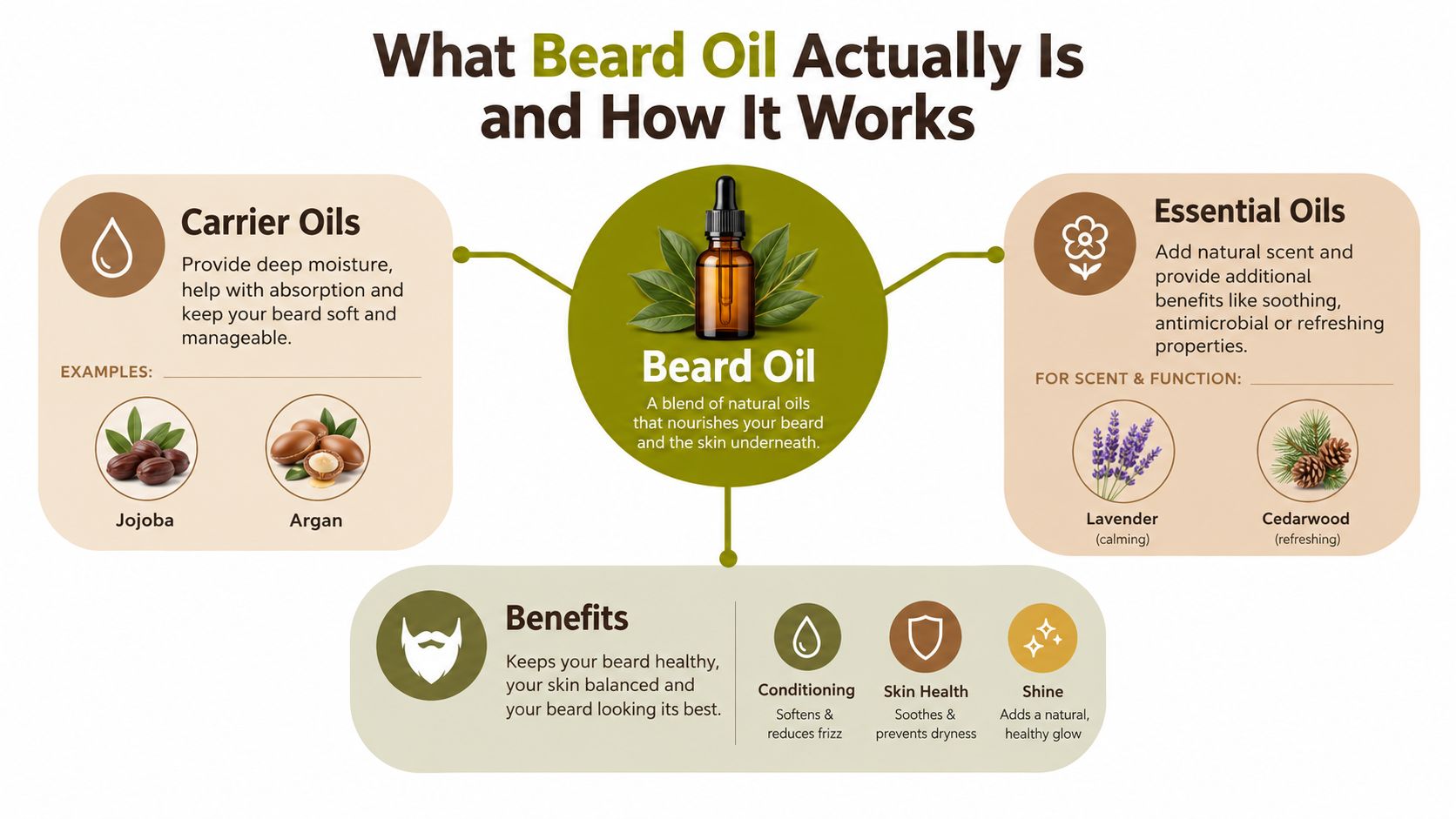
Beard oil is a leave-on blend made to condition facial hair and the skin beneath it. Most formulas center on carrier oils, such as jojoba or argan oil, with optional fragrance ingredients and small amounts of supporting ingredients such as vitamin E. The texture is usually lighter than a balm or cream, so it can spread through the beard without adding firm hold.
Washing can reduce the surface lipids around the beard area. That loss of lubrication may leave the hair feeling dry, brittle, or wiry. A carrier-oil formula helps restore slip, reduce friction between hairs, and make the beard easier to comb. It improves the feel and appearance of existing hair rather than acting as a proven treatment for new growth, a distinction also explained in this guide to how beard oil works.
What happens after application
The process is simple:
- The oil spreads across the hair. This helps rough strands slide past one another instead of catching and pulling during combing.
- The beard feels softer. Lubricated hair tends to feel less wiry and may look more polished.
- The skin receives a light conditioning layer. Working the product down toward the roots helps prevent the routine from focusing only on the visible hair.
- The beard gains a subtle finish. Depending on the formula and amount used, the result may range from natural-looking to noticeably glossy.
Most beard oils come in a small bottle, often with a dropper or pour opening. Scent varies widely, from nearly fragrance-free blends to products built around essential oils or added parfum. Start with a small amount. You can add more, but removing excess oil usually means washing or waiting for it to absorb.
Key Ingredients to Look For and Be Mindful Of
The ingredient list tells you more about how a beard oil will feel than the front label does. Two products may both promise softness, yet one may feel light and dry while another leaves a heavier coating. Reading the first several ingredients gives you a practical sense of the formula's base.
Carrier oils do most of the conditioning
Jojoba and argan oils are common examples of lightweight carrier oils. Sweet almond and coconut oils may also appear in beard-care blends, although the final feel depends on the whole formula and your skin. These oils provide the glide that helps fingers, brushes, and combs move through facial hair.
A simple recipe example from Healthline's beard oil guide combines 1/2 ounce of jojoba oil, 1/2 ounce of argan oil, and three drops of vitamin E oil. That example illustrates the basic structure of an oil-led formula, though a homemade blend still requires careful storage, clean tools, and attention to personal sensitivity.
Scent and supporting ingredients
Essential oils may contribute fragrance and a distinct sensory character. They should be used thoughtfully and in a properly diluted formula, particularly when the product will remain on the face. Vitamin E may appear in a small supporting role, while other formulas use additional ingredients intended to support texture, stability, or skin comfort.
Fragrance deserves its own check. An ingredient list may include fragrance or parfum alongside plant oils, as shown by this beard oil ingredient listing. If your skin reacts easily, a simpler, lower-scent formula may be easier to evaluate.
| Ingredient Type | Examples | What It Does | What to Watch For |
|---|---|---|---|
| Carrier oils | Jojoba, argan, sweet almond, coconut | Add slip, softness, and a conditioned feel | A texture that feels too heavy or greasy for your skin |
| Essential oils | Scent-focused botanical oils | Add fragrance and character to the formula | Strong scent, poorly tolerated ingredients, or undiluted use |
| Supporting ingredients | Vitamin E and other formula-supporting ingredients | May support texture, stability, or comfort | Long lists that make it difficult to identify potential irritants |
| Fragrance | Fragrance, parfum, scented botanical blends | Creates the product's aroma | Sensitivity to scent or a formula with an overly intense finish |
Be cautious with any formula that leaves your face tight, stings after application, or creates a persistently greasy film. Ingredient quality and personal tolerance matter more than a premium-looking bottle or a higher price.
Matching Beard Oil to Your Beard Type and Concerns
The right oil depends on both the beard and the skin beneath it. A short beard may need only a trace of product, while a long, coarse beard can benefit from more lubrication through the middle and ends. Skin that feels comfortable with a scented formula may respond differently from skin that prefers a minimal ingredient list.
Use the table as a starting point, then adjust based on how your beard feels several hours after application.
| Concern | Beard Type | Suggested Oil Weight | Look For | Avoid If Sensitive |
|---|---|---|---|---|
| Rough stubble | Short or early growth | Very light | Jojoba-led blends and a low-shine finish | Heavy fragrance and a greasy residue |
| Dry ends | Medium or longer beard | Light to medium | Argan or blended carrier oils with good slip | Applying a large amount at the roots |
| Coarse texture | Long, dense, or wiry hair | Medium | A richer blend that spreads through the full length | A formula that feels waxy when you need softness |
| Itchy-feeling skin | Any length | Light and easy to distribute | A simple formula that can reach the skin beneath the beard | Strong scent or ingredients that sting |
| Dull appearance | Medium or long beard | Light to medium | Oils that add a controlled, natural-looking sheen | Excess product that creates visible greasiness |
| Sensitive skin | Any length | Light, minimal | Shorter ingredient lists and little or no added fragrance | Fragrance, parfum, or ingredients you already know your skin dislikes |
Match the product to the problem
Patchy growth doesn't automatically mean you need a heavier oil. Oil can make existing hair lie more neatly, which may improve the overall appearance, but it won't fill areas where hair isn't growing. In that situation, focus on grooming the shape, keeping the surrounding skin comfortable, and setting realistic expectations.
For a longer beard, work product from the skin outward so the ends don't receive all the conditioning. For short stubble, place a small amount between your palms and lightly press it over the beard area rather than saturating the hair.
Patch-test a new blend on a small area first, especially when it contains fragrance or essential oils. Seasonal changes can also affect the amount you need. Dry air may call for more conditioning, while humid conditions may make a lighter application feel more comfortable.
Beard Oil, Balm, Cream, and Wash Compared
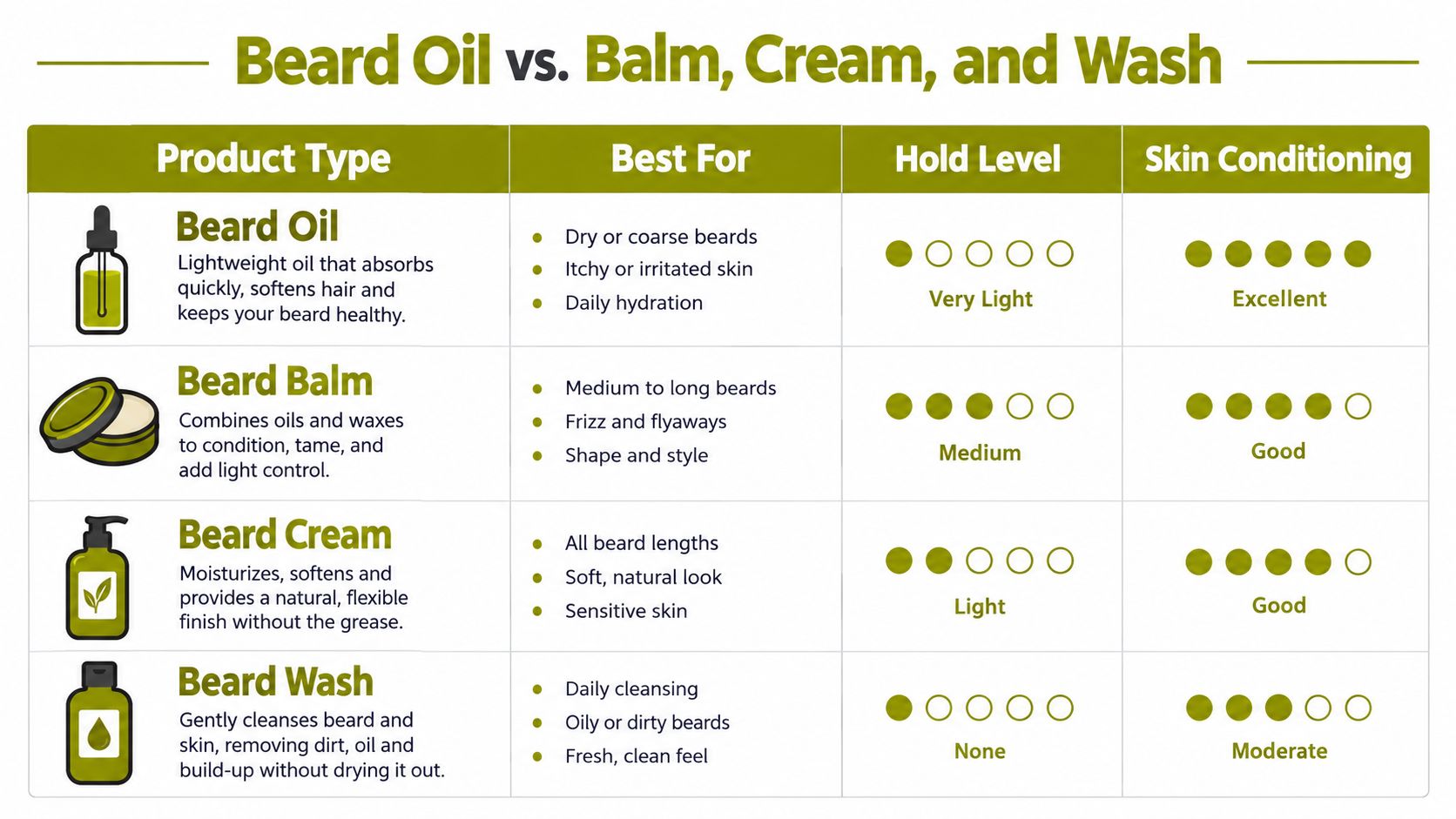
Beard products become easier to choose when you compare their jobs instead of their marketing language. Oil conditions and adds slip. Balm offers some hold. Cream provides a softer, more substantial layer. Wash cleans the beard. None of these formats has to do every job.
Choose by function
- Beard oil: A good fit when your priorities are softness, skin conditioning, easier combing, and a modest amount of shine.
- Beard balm: More useful when your beard needs shape, direction, or light control. Balm generally sits more heavily than oil because it includes ingredients that help provide hold.
- Beard cream: A practical option for longer or curlier beards that need extra slip and a softer, more substantial feel.
- Beard wash: Designed to remove sweat, dirt, and product buildup. It belongs at the cleansing stage, not as a leave-on conditioner.
Apply oil to a clean, slightly damp beard rather than layering it over accumulated sweat or styling product. If you use both oil and balm, oil usually comes first, followed by a small amount of balm once the oil has spread through the hair.
Readers who are wondering about growth products should keep the distinction clear. A resource such as this beard growth timeline with minoxidil addresses a different question from everyday conditioning, so it shouldn't be used as evidence that ordinary beard oil increases growth.
You probably don't need every format. A short beard may need wash and a small amount of oil, while a longer beard may benefit from wash, oil, and balm. Add cream when your texture and length call for more softness, not because a larger collection automatically creates a better routine.
A Simple Beard Oil Routine You Can Stick To
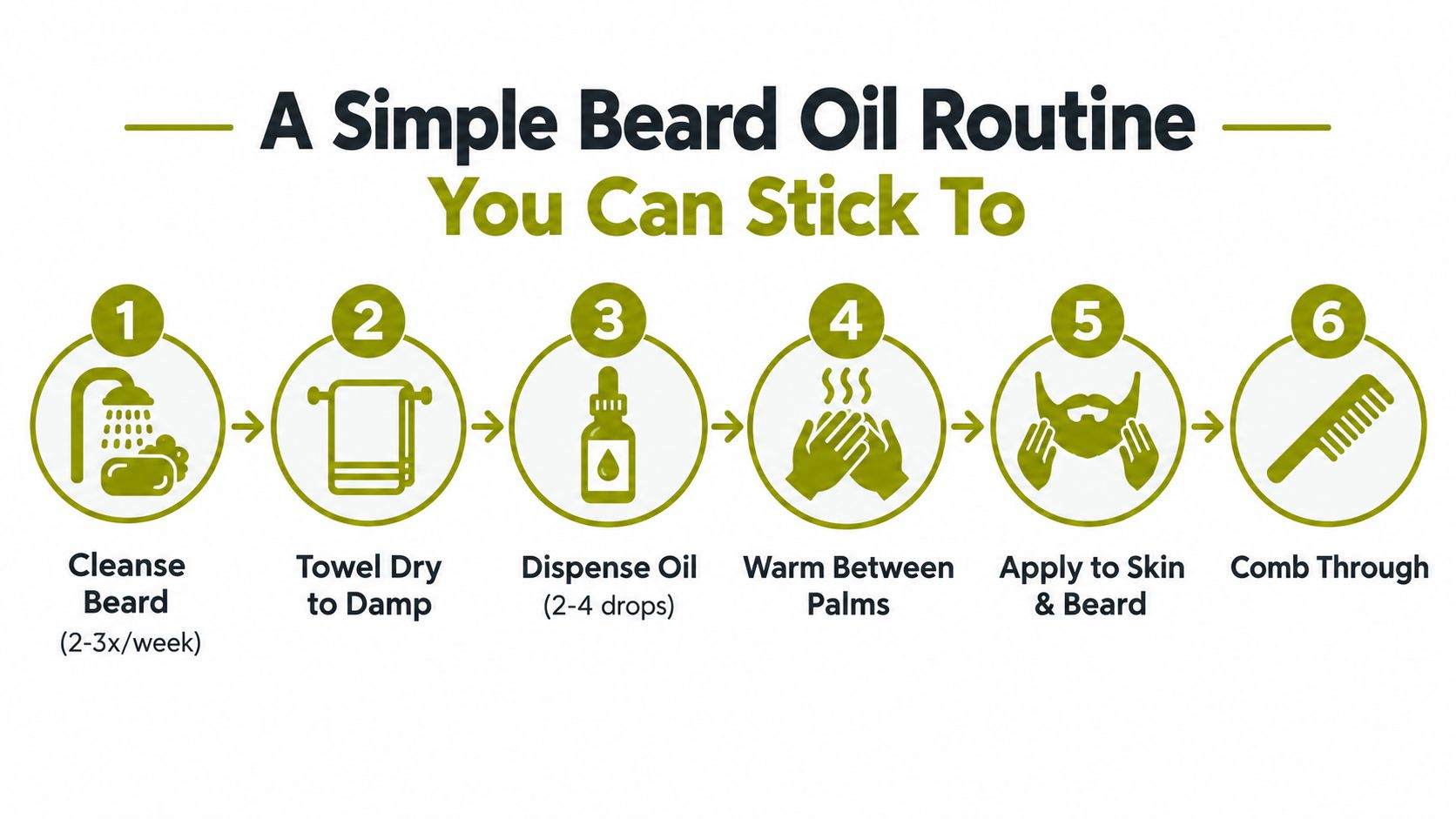
A good routine should work on a rushed morning, after a workout, and during travel. The basic timing is straightforward: cleanse first, towel-dry until the beard is slightly damp, then apply the oil. Healthline's instructions for applying beard oil also suggest beginning every other day and adjusting according to dryness and beard length.
Follow these steps
- Cleanse the beard. Wash a few times per week, or adjust when sweat and buildup make the beard feel unclean.
- Towel-dry to damp. Avoid rubbing aggressively. Damp hair and skin help the product spread without requiring as much oil.
- Dispense a small amount. Begin with a few drops. Short stubble needs less than a long beard.
- Warm it between your palms. This distributes the oil across your hands before it reaches one concentrated patch.
- Work from the skin to the tips. Use your fingertips to reach the skin, then smooth the remaining product through the length.
- Comb through. A beard comb or boar-bristle brush can help distribute the oil and guide the shape.
Morning application works well if you want a neater appearance during the day. Evening use can suit people who prefer a slower routine, especially after washing. If you plan to use balm, apply it after the oil has been spread through the beard.
For a more detailed guide to making rough facial hair feel more manageable, see this resource on how to soften beard hair.
The following video offers a visual demonstration of application:
Keep the bottle closed and away from direct heat and bright sunlight. For travel, use a secure container and apply less if the climate is humid. In dry conditions, you may need to apply the product more consistently, but let the beard's feel guide you rather than following a fixed amount.
Common Mistakes and Misconceptions to Skip
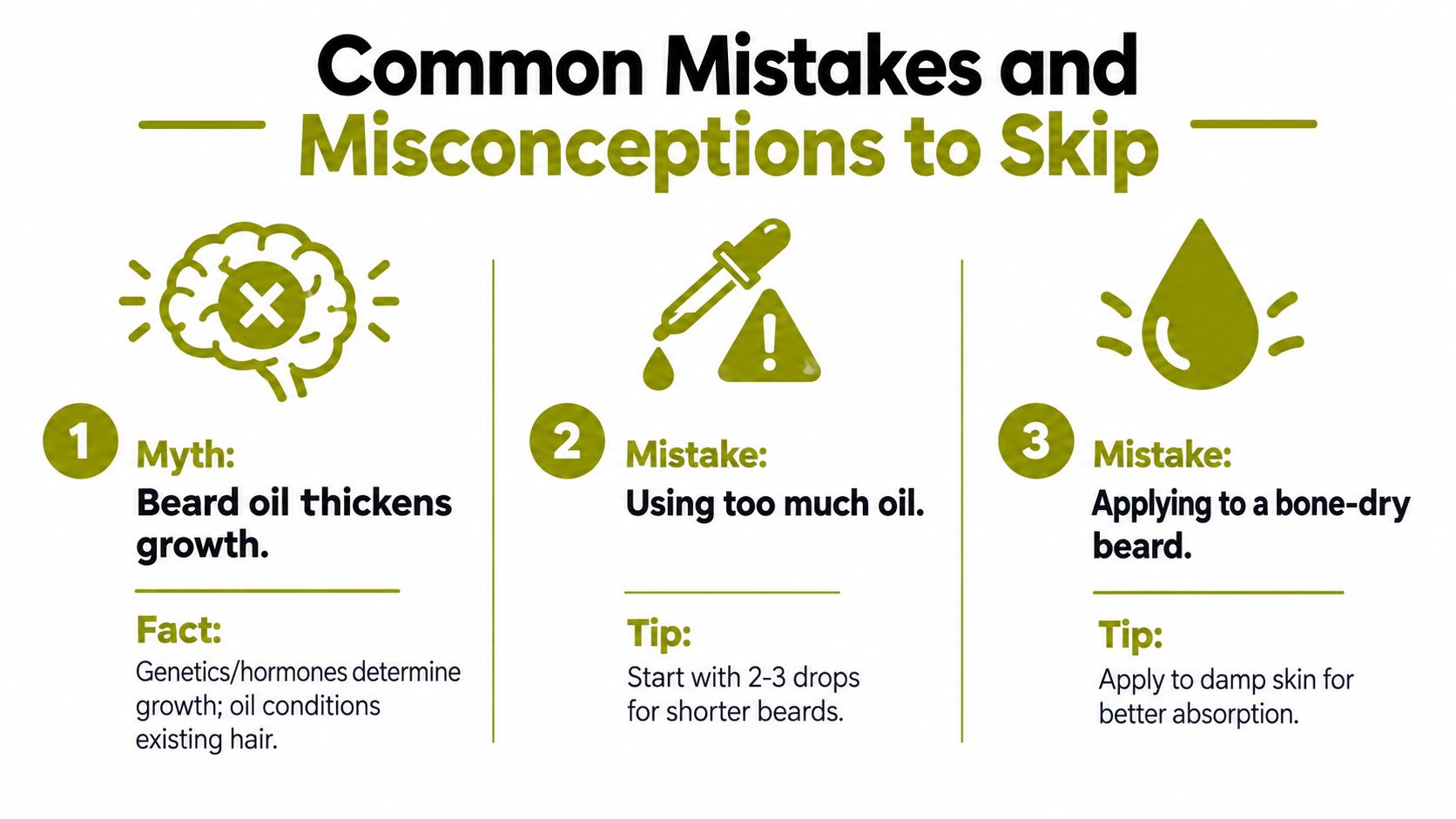
The most persistent misunderstanding is that beard oil makes facial hair grow faster or thicker. Current consumer coverage describes oil as a leave-on moisturizer and grooming aid, not a proven beard-growth treatment, and notes that finished-product clinical trials for growth outcomes are limited. The category remains popular, with one market report stating that beard oil held 35.7% of beard-care product share in 2025, while another projects 32.0% of the U.S. beard-care market in 2026, but category popularity doesn't establish a growth effect. These figures and the distinction between conditioning and growth are discussed in this explanation of whether beard oil actually works.
Use enough, not as much as possible
More oil doesn't mean more care. Over-application can leave the beard greasy, transfer onto clothing, and make the skin feel congested. Start small, distribute it thoroughly, and add only when the hair still feels dry.
Skipping the skin underneath is another common error. Rubbing oil only across the visible surface may leave the roots and skin untouched, which defeats part of the product's purpose. At the same time, oil isn't a substitute for cleansing, brushing, trimming, or choosing a suitable styling product.
Price also isn't a reliable shortcut to quality. A modest formula with carrier oils your skin tolerates may suit you better than an expensive blend with an intense fragrance or a heavy finish. Read the label, introduce one new product at a time, and stop using any formula that causes persistent discomfort.
Trimming and shaving can create their own grooming concerns. If you regularly remove or shape facial hair, this guide on how to prevent razor bumps for smooth skin offers context for post-shave care. For beard-specific guidance around trapped hairs, see how to prevent ingrown beard hairs.
Bringing It All Into Your Everyday Routine
A manageable routine might begin with a morning cleanse when the beard feels sweaty or coated with yesterday's product. Towel-dry until damp, smooth in a small amount of oil, and comb from the roots toward the ends. If your beard needs shaping, add a little balm after the oil rather than using more oil to force the hair into place.
In the evening, a quick brush-through can remove loose debris and redistribute the product already present in the hair. A deeper conditioning step can fit into a weekly routine if your beard is long, coarse, or exposed to dry air. Keep that step separate from everyday application so you can tell which products actually improve the feel of your beard.
Build a kit around your needs
Your shelf might include:
- A beard wash for cleansing without relying on styling products to remove buildup.
- A beard oil for softness, shine, and conditioning around the skin and hair.
- A beard balm when direction and light hold matter.
- A comb or brush for distribution and shape.
- A gift set when you're starting from scratch or refreshing several basics at once.
The wider men's grooming category has expanded substantially, and industry reporting places its value in the tens to hundreds of billions of dollars globally. One report values the market at USD 298.9 billion in 2025 and projects USD 506.7 billion by 2033, while another reports approximately USD 74.8 billion in 2021 and a projection of nearly USD 115 billion by 2028, as covered by CNN's reporting on the men's grooming industry. Those market figures explain why shoppers now see more formats, but they don't mean every format belongs in your routine.
Choose based on beard length, skin comfort, climate, and the finish you prefer. Consistency matters more than perfection. A few sensible habits, repeated often enough to become automatic, can make a decent beard feel much easier to live with.
Explore ArtNaturals for beard oils, washes, balms, and curated grooming sets that can help you assemble a simple facial-hair routine. Choose the formats that match your beard's texture and your skin's comfort, then start with a small amount and adjust as you learn what works for you.