

What makes a beard grooming kit complete: the number of products in the box, or how well those products fit your beard, skin, and daily life? A large bundle can still leave you without the right trimmer, brush, or travel format. The best beard grooming kit for men is less about collecting every possible item and more about building a routine you'll use.
Beard care has become part of everyday self-care, with cleansing, softening, conditioning, and oiling products at the center of demand. The right kit can turn a rushed morning into a simple ritual that keeps facial hair comfortable, tidy, and easier to style.
Understanding the Modern Beard Grooming Routine
What should a modern beard routine do beyond keeping facial hair trimmed? It should make daily care comfortable, practical, and easy to maintain, whether you are at home or travelling. A basic razor and general face cleanser may handle shaving, but they do not always address the texture of beard hair or the skin beneath it.
Mintel reported that 41% of U.S. men who used shaving products didn't shave daily in 2015, while 22% agreed facial hair was fashionable and 27% used a professional service such as a barber for shaving. The same research found that 20% of men aged 18 to 34 were already using pre-shave preparation products, including oils or creams, to soften beards. Mintel's research on changing shaving habits shows how beard care became part of regular personal care rather than an occasional styling task.

The growing market includes compact starter sets and routines built around specific habits. One 2026 industry estimate valued the global beard care products market at USD 1.23 billion in 2025, projecting USD 1.94 billion by 2031 and a 7.89% CAGR from 2026 to 2031. In that estimate, beard oil held 35.70% of the market in 2025, while online retail represented 35.67% of sales. The market estimate from Ken Research helps explain why these routines are increasingly available in bundled, easy-to-order formats.
The definition of a complete kit is also changing. A fixed collection of products may work at home, but a lighter refillable case can suit commuting, travel, and lower-waste habits. In 2026, completeness means covering the routine without creating unnecessary items to carry or replace.
A useful kit should support three outcomes:
- Cleanliness: Remove buildup without making the beard feel stripped.
- Comfort: Condition the hair and skin beneath it with suitable products.
- Control: Shape, detangle, and maintain the style with precision tools.
The best setup feels manageable and repeatable, like a small daily system rather than another obligation.
Essential Tools and Ingredients in a Quality Kit
A reliable kit usually combines cleansing, nourishment, and shaping. Each category solves a different part of the routine, so adding more products doesn't automatically create a better result.
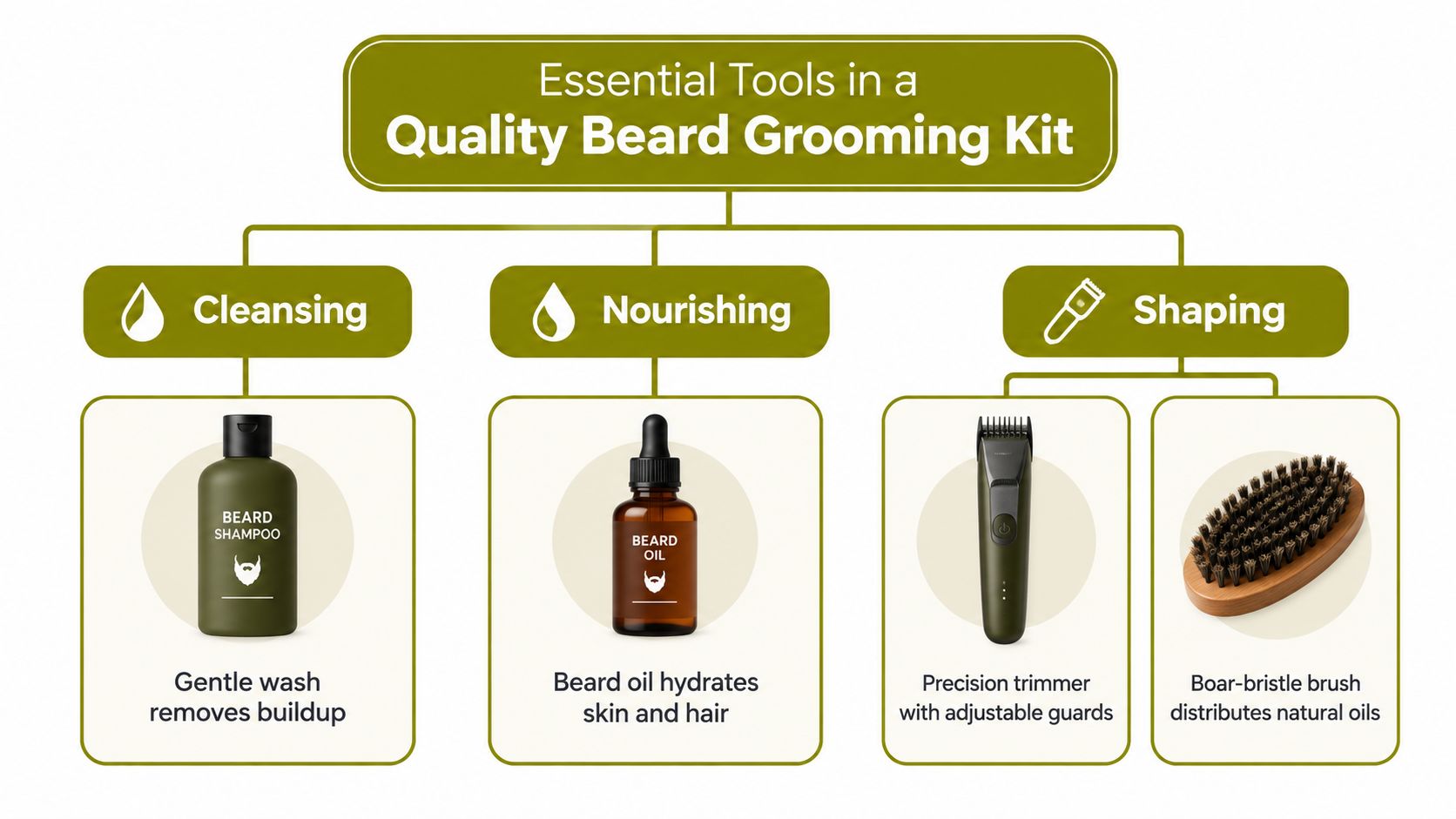
Start with a gentle cleansing step
Beard shampoo is made for the texture and density of facial hair. Use it to remove sweat, styling residue, and everyday buildup while keeping the routine comfortable. A conditioner can add softness and make longer hair easier to comb.
Choose formulas with a clear ingredient list. Plant oils and absolutes can add a nourishing element to a routine, but fragrance strength matters too. If scented products feel distracting or drying, a simpler formula may suit you better.
Use oil for moisture and distribution
Beard oil is generally applied in a few drops. A shorter beard needs less product, while longer facial hair may need more. Massage it from the roots through the ends and work it down to the skin underneath, then comb lightly for even coverage. This guide to beard oil benefits offers additional context on how oil fits into a grooming routine.
Oil isn't a substitute for washing. It works best after cleansing, when you want to soften the beard and make styling easier. Beard balm can follow when you need more control, especially around the moustache, cheeks, or flyaway hairs.
Choose tools that match the job
A precision beard trimmer with adjustable guards gives you control over length and uniformity. Practical guidance commonly maps stubble to roughly 3 to 6 mm, a short-neat beard to about 10 to 13 mm, and fuller styles to 16 mm or more. The Tools Trunk's beginner guide explains why starting with the longest guard and trimming gradually helps reduce accidental overcutting.
A boar-bristle brush distributes natural oils from the skin through the facial hair. Firmer bristles can move through longer or coarser beards, while softer bristles are often more comfortable for finer hair or sensitive skin. Bass Brushes' beard brush information describes how bristle stiffness affects penetration, detangling, and oil distribution.
For a compact personal-care setup, the same packing principles used to build a toiletry kit for camping can help. Select only the tools you use, protect liquids from leaks, and keep the kit easy to reach.
Matching Your Kit to Your Beard Type and Skin
Could your beard kit be smaller and more useful? The right setup depends on the length, density, and texture you maintain most often, as well as how your skin responds to grooming products. A travel-friendly kit should support that routine rather than add items that stay unused.
| Beard profile | Useful tools | Product direction |
|---|---|---|
| Short stubble | Precision trimmer, detail attachment, soft brush | Lightweight wash and a small amount of oil |
| Short-neat beard | Adjustable trimmer, comb, medium brush | Oil for softness, balm for limited control |
| Fuller beard | Long guards, sturdy brush, wide-tooth comb, scissors | Wash, conditioner, oil, and balm as needed |
| Sensitive skin | Soft brush, clean trimmer, simple comb | Mild, low-fragrance products with fewer unnecessary ingredients |
Stubble rewards accuracy over a large collection. Adjustable guards help keep the length even, while a gentle wash cleans the skin beneath the hair. Heavy balm may add little if the beard lies close to the face and already stays in place.
Longer beards need tools that reach through the hair instead of skimming its surface. A firmer boar-bristle brush can move through dense growth and carry natural oils from the roots toward the tips. A wide-tooth comb can follow it, separating strands with less pulling than a fine comb.
Match the brush to density, not prestige. A highly priced brush is not automatically suitable. Bristles that are too soft may struggle with a dense beard, while bristles that are too firm can feel uncomfortable on easily irritated skin.
Skin sensitivity should shape the product list too. Choose clear ingredient lists, and consider low-fragrance or fragrance-free formulas if strong scent feels uncomfortable. Plant oils can suit a natural routine, but skin responses vary. Introduce one new product at a time and use a modest amount so you can identify what works.
A 2025 to 2026 trend report identifies stubble between 1 and 7 mm as a dominant low-maintenance style, supporting compact kits built around precise trimming rather than a broad product bundle. Philips' beginner beard-care guidance helps connect product choices with a specific beard stage. For travel, choose a few dependable tools that cover your actual routine, with refillable or lower-waste formats where available. A complete kit is the one that fits your beard, skin, and bag.
Building a Simple Daily Grooming Routine
A good routine should fit into the part of the day when you already wash and get ready. You don't need every item at every session. Cleansing, light conditioning, and brushing form the everyday base, while trimming is a maintenance step rather than something to force daily.
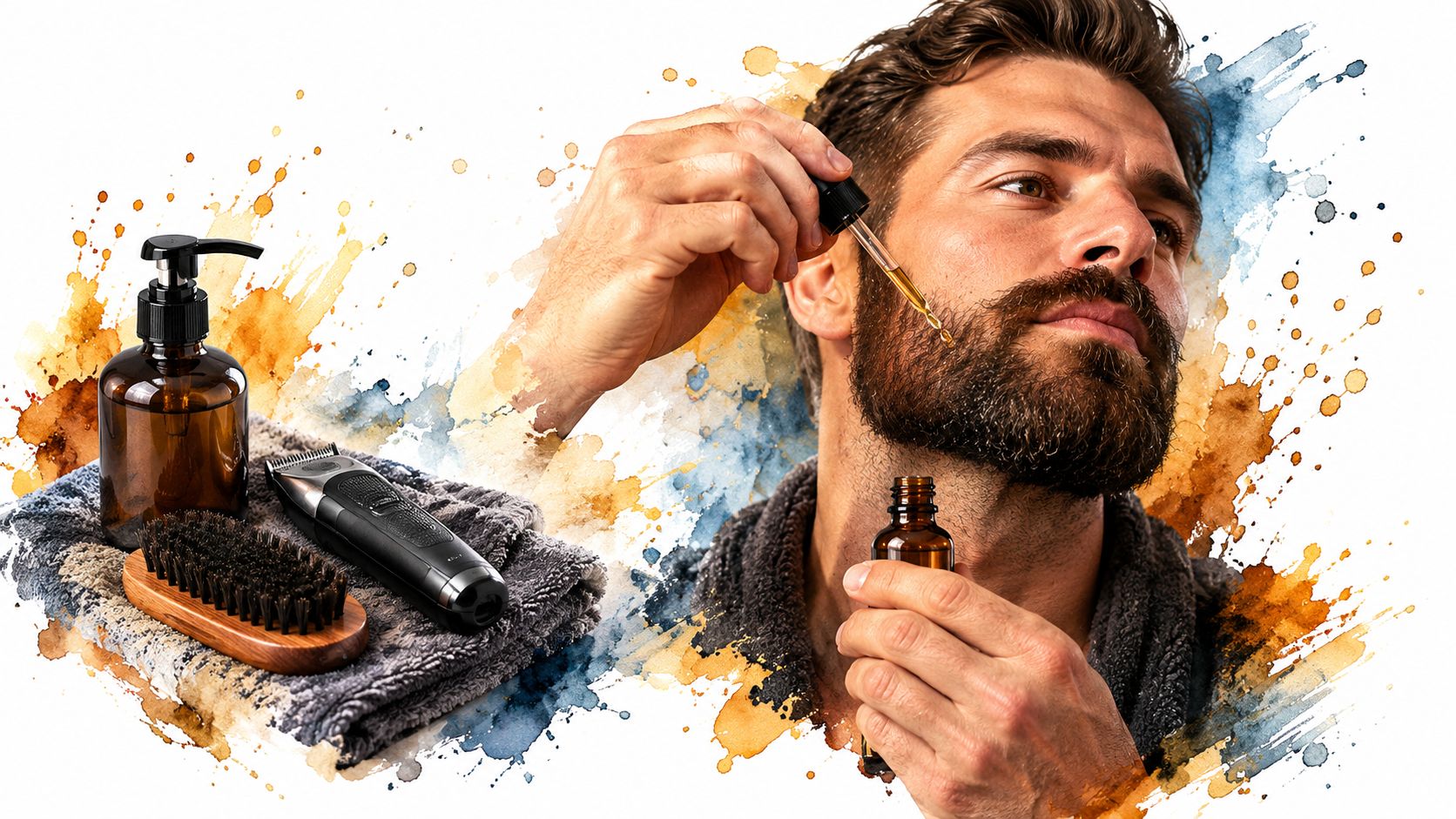
Use a gentle sequence
- Wash: Clean the beard with a dedicated beard wash, then rinse thoroughly. Avoid rough scrubbing, which can leave the hair feeling dry and tangled.
- Dry carefully: Pat with a towel instead of rubbing aggressively. Leave the beard slightly damp if you're applying a small amount of oil.
- Apply oil: Start with a few drops. Use less for short growth and add only if the beard still feels dry. Massage through the roots, skin underneath, and ends.
- Distribute: Comb through gently, then brush in the direction of growth. This spreads product and helps settle stray hairs.
- Shape: Use the trimmer with a longer guard first. Reduce the setting only when you're sure the length is right, then define the cheek, neckline, and moustache edges.
The application technique matters more than pouring on extra product. This guide on how to soften beard hair focuses on consistent care, gentle handling, and conditioning rather than relying on a single product.
Trim on a schedule that matches your style, not someone else's routine. Close stubble may need frequent edge maintenance, while a fuller beard may benefit more from occasional shaping and regular brushing. Clean the trimmer and brush after use so old hair and product don't collect between sessions.
A kit can also become part of a slower evening ritual. Apply balm only where you need control, check the neckline in good lighting, and put each tool back in the same place. Simple storage removes friction, which makes the habit easier to maintain.
The Rise of Sustainable and Travel-Friendly Kits
A complete kit no longer has to mean a bulky box filled with single-purpose items. Many shoppers now want a routine that works at home, in a gym bag, or during a short trip, while also reducing unnecessary packaging and duplicate products.
One recent estimate found that nearly 43% of beard grooming travel kits include natural or organic claims, 36% feature eco-friendly packaging, and 31% offer travel-size, multi-use formulations. The Global Growth Insights estimate on beard grooming travel kits points to a category that is adapting to portability and sustainability.
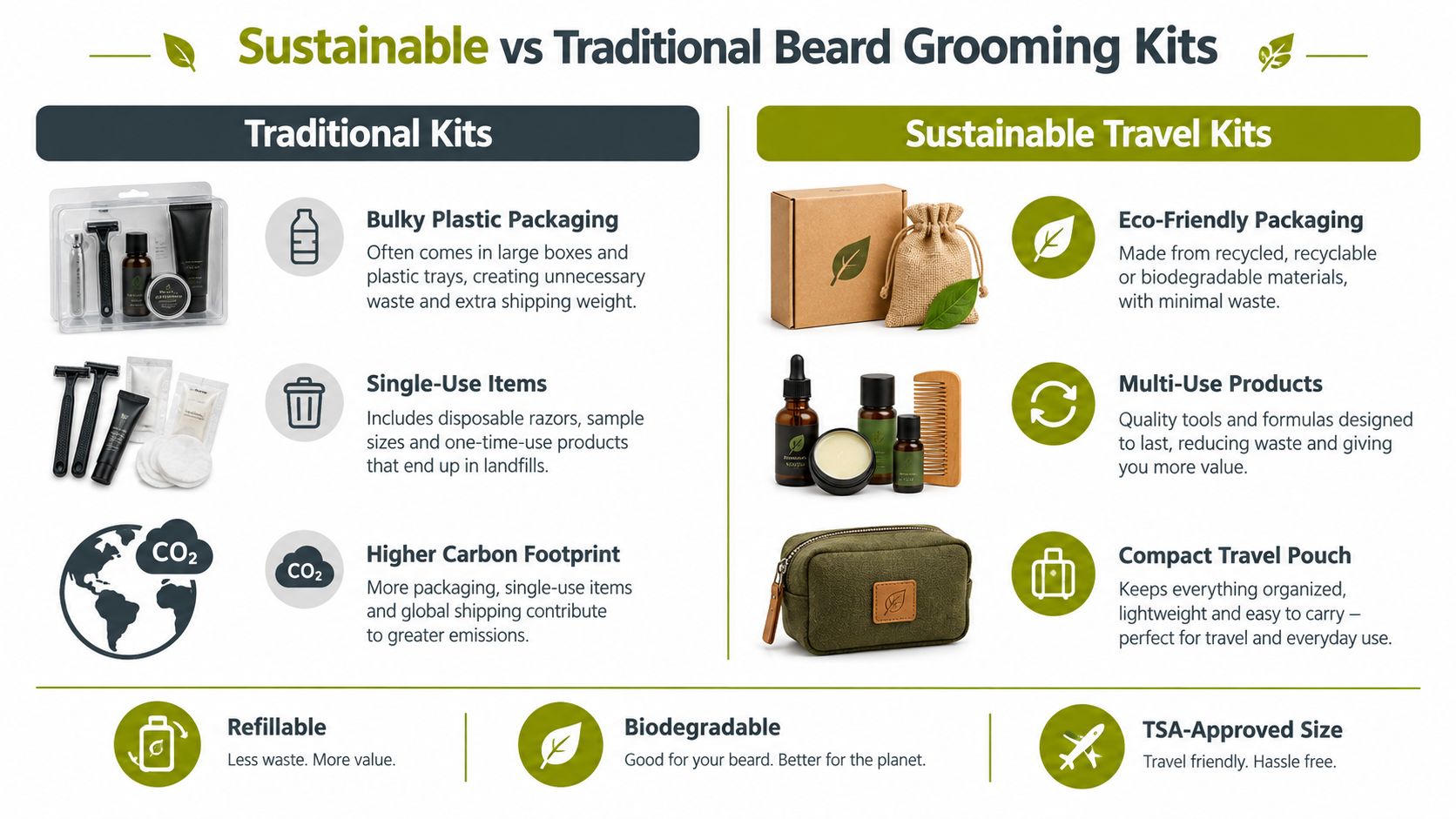
Pick the format that fits your life
A home routine can include a full-size wash, conditioner, oil, balm, brush, comb, scissors, and trimmer. This format makes sense if you maintain a fuller beard and prefer keeping everything in one bathroom location.
A travel kit should be lighter. Choose a compact brush or comb, a small oil, a multi-use wash, and a trimmer that can handle basic shaping. If you travel with liquids, check the rules that apply to your route and container sizes before packing.
A hybrid kit balances both. Keep durable tools at home and use refillable or smaller containers for products you carry regularly. A compact men's travel companion toiletry bag can keep grooming items separated from clothing and make the routine easier to repeat away from home.
Sustainability should be assessed through use, not just a label. A refillable container is more useful when you refill it. A multi-use product can reduce clutter if its formula suits both beard and skin, while biodegradable or recyclable packaging helps only when local disposal options support it.
Buy for repetition. The most responsible kit is the one you'll use consistently, maintain properly, and replace thoughtfully rather than abandon in a drawer.
Look for sturdy tools, minimal outer packaging, refill options, and formulas that serve a clear purpose. A smaller kit with a dependable trimmer, suitable brush, and versatile products may be more practical than a large set with items you rarely touch.
Common Grooming Mistakes to Avoid
A bigger bundle doesn't automatically create a better beard. Many grooming problems come from mismatched tools and excessive product, not from a lack of items.
Mistake one, choosing the wrong brush
Firm bristles can help with dense facial hair, but they may feel too scratchy on sensitive skin or fine beards. Very soft bristles may feel pleasant yet fail to reach through longer growth. Choose stiffness according to density and comfort, then brush gently from the roots toward the ends.
Mistake two, using too much oil
More oil won't necessarily create more softness. Excess can make the beard look heavy and leave residue on collars, pillowcases, or hands. Start with a few drops, spread them across your palms, and add only when the hair still needs more conditioning.
Mistake three, ignoring the skin beneath
Beard hair can hide the area that needs attention most. Work oil down to the roots and skin, but don't use heavy layers to compensate for an inconsistent wash. A dedicated cleanser and gentle drying technique provide a cleaner foundation for the rest of the routine.
Mistake four, trimming directly to the shortest guard
Starting too short can remove more hair than intended, especially when the beard is wet or unevenly combed. Begin with the longest guard, check the result, and reduce gradually. Use the flat comb face against the skin to improve consistency around the cheeks and neckline.
Mistake five, treating every irritation as a reason to add another product
Adding multiple balms, oils, and fragrances at once makes it difficult to know what feels comfortable. Keep the routine simple and introduce changes one at a time. For readers working on a closer shave routine, this guide to preventing ingrown beard hairs provides additional grooming context without turning the routine into a long list of steps.
Final Thoughts on Choosing Your Perfect Kit
The best beard grooming kit for men should reflect your beard length, skin sensitivity, lifestyle, and willingness to maintain a routine. A short stubble style may need little more than a precise adjustable trimmer, a gentle wash, and a light oil. A fuller beard may benefit from a brush with enough stiffness to reach the roots, a wide-tooth comb, conditioner, oil, and balm.
Price matters, but the number of items matters less than the usefulness of each one. A kit earns its place when the trimmer gives you control, the brush matches your beard density, the cleanser feels comfortable, and the products are easy to store and use. Transparent ingredients and practical packaging can matter just as much as the appearance of the box.
Market demand supports this move toward complete routines. One 2026 estimate projected beard shampoo and conditioner to grow at an 8.25% CAGR, while natural and organic offerings were forecast to rise at an 8.96% CAGR. Ken Research's beard care market overview places those trends alongside continued demand for oil, conditioning, and online purchasing.
Use a simple filter before buying:
- Routine fit: Will you use most of the items regularly?
- Beard fit: Can the brush, comb, and guard lengths handle your current style?
- Skin fit: Are the formulas and fragrance level comfortable for you?
- Lifestyle fit: Can the kit move easily between your bathroom, gym bag, and travel luggage?
- Value fit: Are you paying for useful tools rather than duplicate products?
A thoughtful kit turns maintenance into a repeatable act of self-care. Choose the smallest set that meets your needs, then build gradually as your beard and routine change.
ArtNaturals offers plant-based men's grooming options, including beard oil, beard balm, beard wash, beard conditioner, and a set with a boar-bristle brush and handmade pear wood comb. Visit ArtNaturals to explore beard-care products and build a simple routine around your beard type and everyday lifestyle.