

If you're exploring the best oils for hair growth, you’re in the right place. Nature gives us gentle ways to support our hair’s natural vitality, and oils like Rosemary, Castor, and Jojoba are well-loved for creating a healthy scalp—which is the foundation for beautiful hair.
A Natural Path to Nurturing Your Hair
Welcome to the world of natural oils. Think of them as a simple, grounding way to elevate your daily hair care ritual. This guide is a friendly introduction to bringing these botanical wonders into your wellness routine, with a focus on how plant-based oils can support the appearance of healthier, fuller-looking hair.
Forget complicated routines. Our goal is to create a calming, enjoyable self-care experience that nourishes your hair and scalp from root to tip.
Understanding Your Hair's Foundation
Great hair always starts with a healthy scalp. Just like a garden needs good soil to flourish, your scalp needs balance and nourishment to support strong strands. Things like product buildup, dryness, and everyday stress can disrupt this delicate environment.
For anyone experiencing changes in their hair, understanding the causes of female hair loss can be a helpful starting point. Recognizing these factors is a powerful first step toward creating a hair care routine that truly supports you.
By incorporating oils, you are mindfully tending to your scalp’s needs, creating an optimal setting for your hair to thrive. It’s a practice rooted in consistency and gentle care.
What to Expect from This Guide
This journey is all about building a mindful connection with your hair. We'll walk you through the simple, grounding process of choosing and using different oils to fit your unique needs. Our goal is to empower you with the knowledge to make hair oiling a cherished part of your routine.
How Oils Support a Healthy Hair Environment
Let’s explore how certain oils can work beautifully for your hair and scalp. Think of your scalp as the soil in a garden—for anything to grow well, that soil needs to be balanced and cared for. In the same way, the right oils help create a nurturing environment for your hair.
The main role of these oils is to deliver essential moisture to the scalp, which helps soothe and balance dryness. A hydrated scalp is a happy scalp, and it's truly the foundation for healthy-looking hair. When applied, these oils also coat the hair strands, acting as a gentle shield.
Reinforcing Your Hair's Natural Strength
Everyday things like brushing, heat styling, and environmental exposure can leave hair feeling brittle. By coating the hair shaft, oils help reinforce each strand, reducing the appearance of breakage and split ends. This protective layer also locks in moisture, which is key for keeping hair flexible and shiny.
When your hair holds onto its natural hydration, it looks smoother and feels much softer. This is often one of the first benefits you’ll notice when you add a hair oil to your routine.
Think of it this way: a well-oiled wooden chair is less likely to crack than one left out in the sun. Similarly, moisturized hair is better equipped to handle daily life.
Delivering Nourishing Elements
Beyond simple moisture, many plant-based oils are full of elements like fatty acids and vitamins. These components help nourish the scalp and hair follicles, creating a supportive environment from the start.
By focusing on scalp health first, you're nurturing your hair at its source. This approach supports your hair’s natural strength, resilience, and beautiful shine. Keeping this in mind will help you pick the perfect oil for your needs as we explore some of the best options.
Discovering Your Perfect Carrier Oil
Carrier oils are the foundation of any hair oiling practice. Think of them as the gentle helpers that deliver goodness to your scalp and strands. Each oil has its own unique feel and set of benefits, so it's easy to find one that fits your hair's needs.
They're called "carriers" because they help dilute and safely "carry" more potent essential oils to your skin. But they are incredibly beneficial all on their own. Let's walk through some of the most popular options to help you find the right fit for your routine.
This simple infographic breaks down the three core ways oils work to support healthy hair: by moisturizing, reinforcing, and nourishing each strand.
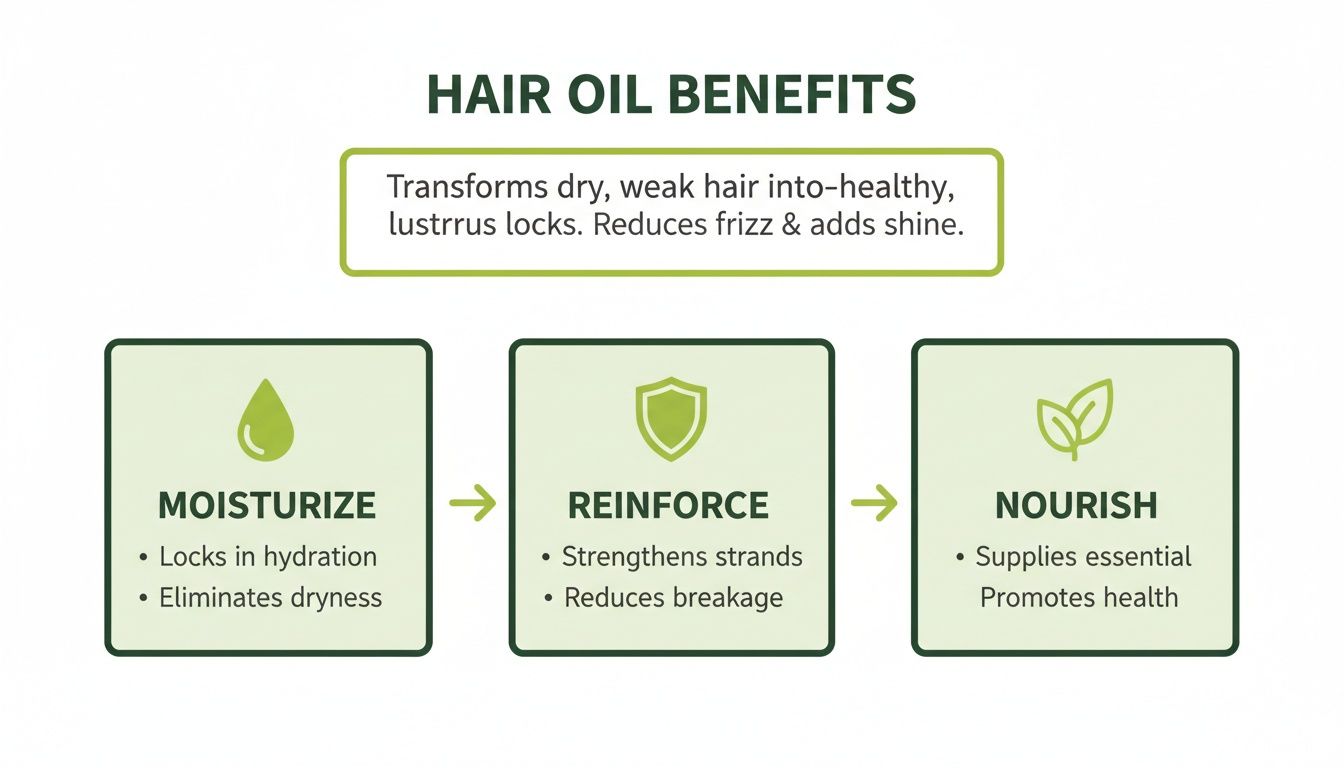
A good oil creates a balanced environment where your hair can thrive, from root to tip.
Coconut Oil: A Deeply Moisturizing Classic
Coconut oil is a true classic in haircare, loved for its intense conditioning properties. It has a heavier texture, making it a fantastic choice for anyone with dry, thick, or coarse hair that needs a deep dose of hydration. It’s known for its ability to penetrate the hair shaft to lock in moisture, leaving your hair feeling softer and looking shinier.
The interest in natural hair solutions is growing, and ingredients like coconut oil are a big reason why. This timeless oil helps reduce protein loss, which in turn fortifies hair against breakage and daily stress.
Jojoba Oil: The Scalp Balancer
Jojoba oil is quite special. Its structure is incredibly similar to the natural oil (sebum) our own scalps produce. This means it’s lightweight, absorbs easily, and won’t weigh down finer hair types.
If you have an oily-prone scalp or fine hair, Jojoba is a wonderful choice. It moisturizes without feeling heavy, helping your scalp feel clean, balanced, and refreshed.
Argan Oil: The Liquid Gold
Often called "liquid gold," Argan oil is a luxurious, medium-weight oil famous for its ability to smooth hair and boost shine. It’s packed with nourishing goodness, making it perfect for taming frizz and adding a silky finish to hair that feels a bit dull or unruly.
Argan oil strikes a great balance—it’s hydrating enough for dry ends but not so heavy that it weighs most hair types down. It’s a true multi-tasker.
Castor Oil: The Rich Fortifier
Castor oil is well-known for one thing: its incredibly thick, rich texture. A little goes a very long way. This density makes it a popular choice for targeted scalp massages, as it coats the hair strands to help seal in moisture and reinforce them from root to tip.
Because it's so heavy, many people like to mix it with a lighter oil, like Jojoba or almond oil, to make it easier to work with. This makes it a great team player in a personalized hair blend. You can find plenty of great options by exploring a full range of natural carrier oils to create your perfect custom treatment.
Carrier Oils for Hair At a Glance
Feeling a little overwhelmed by the options? Don't be. This quick comparison chart is designed to help you zero in on the perfect carrier oil for your hair's unique needs.
| Oil Type | Best Suited For | Key Benefit | Texture |
|---|---|---|---|
| Coconut | Dry, thick, or coarse hair | Deep moisture and protein loss reduction | Heavy |
| Jojoba | Oily scalps and fine hair | Balances sebum, feels lightweight | Lightweight |
| Argan | Frizzy, dull, or unruly hair | Adds shine, smooths, and tames flyaways | Medium |
| Castor | All hair types, targeted massage | Reinforces strands and supports scalp health | Very Heavy |
Ultimately, the best oil is the one that your hair responds to. Don't be afraid to experiment with different oils or even create your own blends to find what makes your hair look and feel its best.
Elevating Your Ritual with Essential Oils
While carrier oils lay the nourishing foundation for your hair care, essential oils are what turn a simple routine into a true self-care ritual. They’re highly concentrated plant essences, and just a few drops are all you need to infuse your base oil with targeted benefits.
Unlike the carrier oils they’re mixed with, essential oils are incredibly potent and must always be diluted before you put them on your skin or scalp. Think of them like the vibrant spices in a recipe—a tiny amount makes a huge impact. Adding them to a carrier oil is a beautiful way to personalize your blend and create a spa-like sensory experience at home.
Rosemary Oil for a Healthy Scalp Environment
Rosemary oil is easily one of the most celebrated botanicals in hair care. It’s known for creating a refreshed, balanced scalp environment that feels clean and healthy.
Its invigorating, herbaceous aroma is wonderful for awakening the senses, making it a perfect addition to a morning or pre-shampoo treatment. When you massage it into the scalp, it gives a gentle warming sensation that feels both cleansing and stimulating. This botanical is a top contender for anyone looking to support their hair's natural vitality.
Peppermint Oil for an Invigorating Sensation
If you’re looking for a refreshing boost, peppermint oil is for you. It delivers a distinctively cool, tingling feeling that instantly revitalizes the scalp.
Its crisp, minty scent feels incredibly clarifying, helping to cut through buildup and leave your scalp feeling exceptionally clean. A few drops mixed into jojoba or coconut oil creates a stimulating scalp massage that awakens your senses and promotes a wonderful feeling of freshness. It’s particularly lovely after a long day or a tough workout.
For a deeper dive into specific aromatic options, check out this comprehensive guide to the best essential oils for hair growth and their unique uses.
Tea Tree Oil for a Clarifying Touch
Tea Tree oil is famous for its powerful clarifying properties. It has a fresh, clean aroma that immediately signals its purifying potential.
When your scalp feels congested or unbalanced from product buildup, adding a little tea tree oil to your carrier base can help restore a sense of calm and cleanliness.
This oil is excellent for maintaining a balanced scalp, which is the foundation for healthy-looking hair. A clean, clear scalp environment allows your hair follicles to thrive.
By incorporating these potent essences, you can elevate a simple oil application into a mindful, restorative moment. You can learn even more about how to use these botanicals by checking out our guide on essential oils for hair growth.
How to Create Your Hair Oiling Ritual
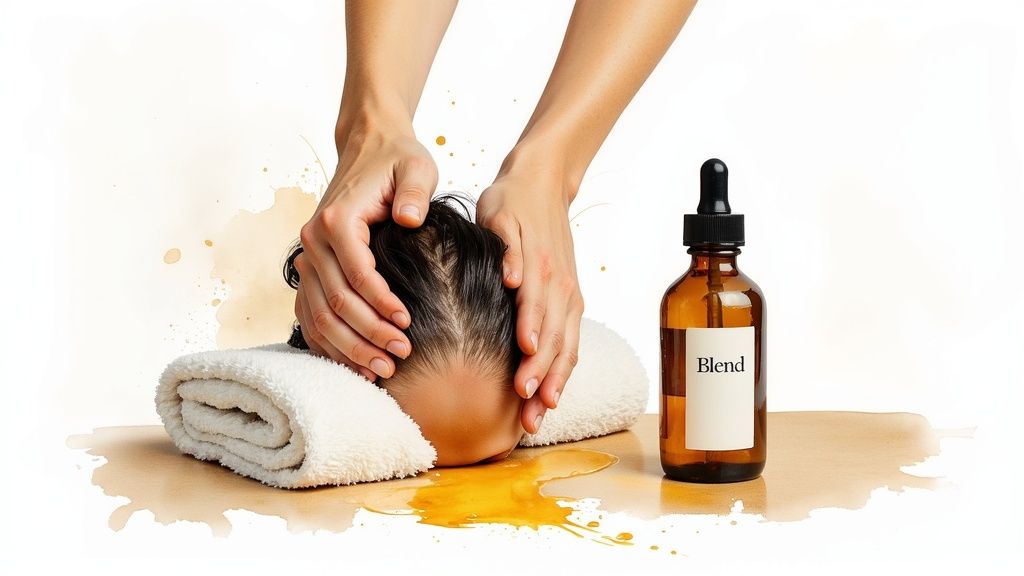
This is where you turn knowledge into a beautiful self-care practice. Creating a hair oiling ritual isn't about following strict rules; it's about finding a rhythm that feels nurturing for you and your hair.
Think of it as a quiet moment to connect with yourself and give your hair the gentle attention it deserves. The process is simple and easy to adapt, making it a relaxing experience instead of another chore.
Preparing Your Personalized Blend
First, choose your oils. Based on your hair's needs, you can pick a single carrier oil or create a custom blend that feels just right.
- For Fine or Oily-Prone Hair: A light base like Jojoba oil works beautifully without feeling heavy.
- For Dry or Coarse Hair: Richer oils like Coconut or Argan can deliver the deep moisture your strands are craving.
- For a Targeted Scalp Massage: Consider adding a small amount of Castor oil to any blend.
Once you have your carrier oil, you can add 2-3 drops of an essential oil like Rosemary or Peppermint for an aromatic boost. For a spa-like touch, gently warm the oil by placing its container in a bowl of warm water for a few minutes.
The Art of Application and Massage
With your blend ready, it's time for the ritual. A mindful application turns this simple task into a meditative practice. Find a comfortable, quiet space where you can relax.
- Perform a Patch Test: Before your first full application, always dab a small amount of the oil blend on your inner arm to make sure your skin is happy with it.
- Section Your Hair: Part your dry hair into manageable sections. This helps you apply the oil directly to the scalp without oversaturating the hair.
- Apply to the Scalp: Using your fingertips or a dropper, apply the warm oil directly to your scalp along the part lines.
- Massage Gently: Use the pads of your fingertips to gently massage your entire scalp in slow, circular motions for 5-10 minutes. This feels wonderful and helps distribute the oil. To learn more about specific botanicals, check out our guide to using rosemary oil for hair growth.
- Work Through the Ends: After your scalp massage, work any remaining oil through the lengths and ends of your hair, focusing on dry areas.
Let the oil sit for at least 30 minutes or even overnight for a deeper treatment. You can wrap your hair in a warm towel to help it absorb. When you're ready, simply wash it out with your favorite shampoo.
Common Questions About Using Hair Oils
As you start exploring hair oils, it's normal for a few questions to pop up. The goal is to find a personalized routine that feels right for you and your hair. Here are some of the most common queries to help you feel confident as you get started.
How Often Should I Oil My Hair?
This really depends on your hair’s texture and needs. There’s no one-size-fits-all answer, so the best approach is to listen to your hair.
If you have drier or thicker hair, a nourishing treatment 2-3 times per week can feel incredibly restorative. For those with finer or oilier hair, once a week is often enough to maintain balance. Start with a weekly ritual, see how your hair and scalp respond, and adjust from there to find your perfect rhythm.
Can I Mix Different Oils Together?
Absolutely! Blending oils is a great way to customize your treatment and combine the benefits of different botanicals into one powerhouse formula.
The standard approach is to start with a generous amount of a carrier oil, like Jojoba or Coconut, as your base. Then, just add a few drops of a more potent essential oil, such as Rosemary or Peppermint. For example, you could mix two tablespoons of warm Argan oil with 3-4 drops of Lavender essential oil for a wonderfully calming scalp massage.
Always do a small patch test on your skin before applying a new blend to your entire scalp. This simple step helps make sure your skin is happy with the combination.
When Will I See a Difference?
Patience and consistency are the two most important parts of any natural wellness routine. While you might notice softer, shinier hair right after the first use, supporting long-term hair health is a more gradual journey.
Hair grows in cycles, and it takes time to create an environment where it can truly thrive. It’s best to enjoy hair oiling as a relaxing self-care ritual rather than focusing only on the outcome. By consistently nurturing your scalp and hair over several months, you’re building a healthy foundation that supports your hair's full potential.
Will Oiling My Hair Make It Greasy?
This is a common concern, but it’s easy to avoid with the right oil and technique. The trick is to choose an oil that’s a good match for your hair type.
- For Fine or Oily Hair: Lighter oils like Jojoba or Grapeseed are great because they absorb quickly.
- Application Is Key: Focus the oil on your scalp and ends, not the mid-lengths of your hair.
- Start Small: You can always add more if needed, so begin with just a small amount.
- Wash Thoroughly: Make sure you shampoo well—maybe even twice—to gently wash away any residue.
Ready to build your perfect hair oiling ritual? Explore the pure, plant-based collection at ArtNaturals and find the ideal carrier and essential oils to support your hair's natural vitality. Discover your blend at https://artnaturals.com.
Article created using Outrank