

Welcome to the world of aromatherapy, where carrier oils for essential oils are the unsung heroes of your self-care rituals. Think of a potent essential oil like a concentrated tea bag; the carrier oil is the warm water that allows it to safely steep into your skin, delivering its beautiful botanical essence. This simple act of dilution is what creates gentle, supportive, and truly lovely aromatherapy experiences.
Understanding the Role of Carrier Oils
Essential oils are highly concentrated plant extracts. Applying them directly to your skin can be overwhelming, which is where carrier oils come in. These are gentle, plant-based oils, usually pressed from the fatty parts of a plant like its nuts, seeds, or fruits. They act as a neutral base to dilute essential oils before topical application.
The name "carrier" perfectly describes what they do—they carry the essential oil onto the skin. This allows it to spread over a larger area and absorb more evenly. But this step isn't just about proper application; it's an opportunity to create personalized blends that feel wonderful and support your body's needs.
More Than Just a Base
Beyond simply diluting, carrier oils bring their own unique nourishing qualities to a blend. They’re rich in fatty acids and vitamins that moisturize, soften, and help support your skin’s natural barrier.
By selecting the right carrier oil, you can customize a blend for your specific wellness goals. You might be looking for deep hydration, a lightweight feel for your face, or a gentle touch for sensitive skin. This partnership between the carrier and essential oil elevates a simple application into a truly holistic self-care practice.
The global appreciation for this partnership is growing. The market for carrier oils in aromatherapy was valued at USD 1.76 billion and is projected to reach USD 4.2 billion by 2033. This surge reflects a shift toward natural wellness, with more people turning to plant-based options for their daily routines. You can discover more insights about the carrier oil market trends on Data Insights Market.
Ultimately, using carrier oils for essential oils helps create an experience that is gentler, more enjoyable, and more aligned with a mindful self-care routine. It lets you unlock the full potential of your essential oils while pampering your skin with the nurturing touch of nature.
Meet the Most Popular Carrier Oils
Think of the world of carrier oils as a collection of supportive friends. Each one has its own unique personality, texture, and set of benefits ready to elevate your self-care rituals. Getting to know the most popular options is the perfect first step toward creating blends that feel made just for you.
You'll quickly notice that some oils are light and absorb in a flash, while others are richer, offering that luxurious glide perfect for a long, soothing massage. Understanding these key differences will empower you to choose with confidence, whether you're whipping up a facial serum or a nourishing body oil.
Jojoba Oil
Jojoba oil is a true fan favorite and a staple in many natural beauty routines. What makes it so special? Its structure is remarkably similar to the sebum your own skin produces. This unique quality means it feels incredibly balanced and familiar to your skin.
Because it absorbs so beautifully without leaving a heavy residue, jojoba is a wonderful choice for facial blends. It also has a very faint, slightly nutty aroma that won’t overpower your essential oils, making it a nearly perfect, versatile base for almost any creation.
Sweet Almond Oil
If you’re looking for an oil that feels deeply nourishing and comforting, sweet almond oil is a fantastic go-to. It's a bit richer than jojoba but still sinks in at a comfortable pace, leaving your skin feeling wonderfully soft and supple.
This oil is particularly beloved for massage. Its smooth, gentle glide allows for effortless application, making it the perfect partner for unwinding after a long day. It’s a classic choice for all-over body care for good reason.
A Quick Look at Popular Carrier Oils
To make choosing a little easier, here’s a quick comparison of some of the most common carrier oils. Think of this as your cheat sheet for finding the perfect match for your next blend.
| Carrier Oil | Absorption Speed | Aroma | Best For |
|---|---|---|---|
| Jojoba Oil | Fast | Very mild, slightly nutty | Facial serums and daily moisturizers, especially for balanced or combination skin. |
| Sweet Almond Oil | Medium | Faintly sweet and nutty | Body moisturizers and massage oils, offering a smooth, nourishing feel. |
| Fractionated Coconut Oil | Medium | Odorless | Versatile body and massage blends, since it is non-staining and has a long shelf life. |
| Grapeseed Oil | Very Fast | Nearly odorless | Lightweight facial oils, especially for skin that prefers a non-greasy finish. |
Each of these oils brings something unique to the table, so feel free to experiment to find what your skin loves most.
Fractionated Coconut Oil
Fractionated coconut oil is the reliable workhorse of the carrier oil world. Unlike the solid coconut oil you might have in your kitchen, this version has had certain fatty acids removed, so it stays liquid at room temperature. It's also completely odorless and colorless, making it a perfect neutral canvas for your essential oils to shine.
It feels light on the skin and boasts an impressively long shelf life, so you can count on it to stay fresh in your collection. Its non-greasy feel and non-staining properties make it an excellent choice for rollerball recipes and everyday body moisturizing.
Grapeseed Oil
For anyone who loves a barely-there feel, grapeseed oil is the answer. It is exceptionally lightweight and has what many describe as a "dry" finish—meaning it absorbs almost instantly with no oily sensation left behind.
This silky, thin consistency makes it a favorite for facial applications, especially if you want a moisturizer that sinks in completely before you start your day. Its subtle, clean aroma also makes it a wonderful partner for more delicate floral or citrus essential oils. Getting to know these popular oils is the real foundation for creating beautiful, personalized aromatherapy experiences right at home.
How to Choose an Oil for Your Skin Type
Think of your skin as having its own unique personality. It has specific likes and dislikes, and choosing the right carrier oil is like finding its perfect companion. This isn't about a one-size-fits-all product; it's about getting in tune with your skin and picking an oil that works with it, not against it.
The goal is to find a base that does more than just dilute your favorite essential oils. The right carrier oil should make your skin feel incredible all on its own, whether it’s feeling parched and in need of moisture or just needs something light to feel balanced.
Finding Your Perfect Match
Start by simply paying attention. How does your skin feel throughout the day? If it often feels tight, flaky, or thirsty, a richer oil like avocado can feel like a wonderfully comforting blanket of hydration.
On the other hand, if you're experiencing a combination of an oily T-zone and dry cheeks, you'll want an oil that helps restore a sense of harmony. This is where jojoba oil really shines. Its structure is famously similar to our skin's own sebum, making it feel lightweight and quick to absorb. For many, exploring organic Jojoba Oil is the perfect first step into creating custom facial blends.
And for those with sensitive skin, a gentle, soothing oil can be a welcome addition. Sweet almond oil is a fantastic choice here, loved for its mild, nourishing touch that helps calm and comfort.
This handy flowchart can help you narrow down the best carrier oils for your face or for a massage.
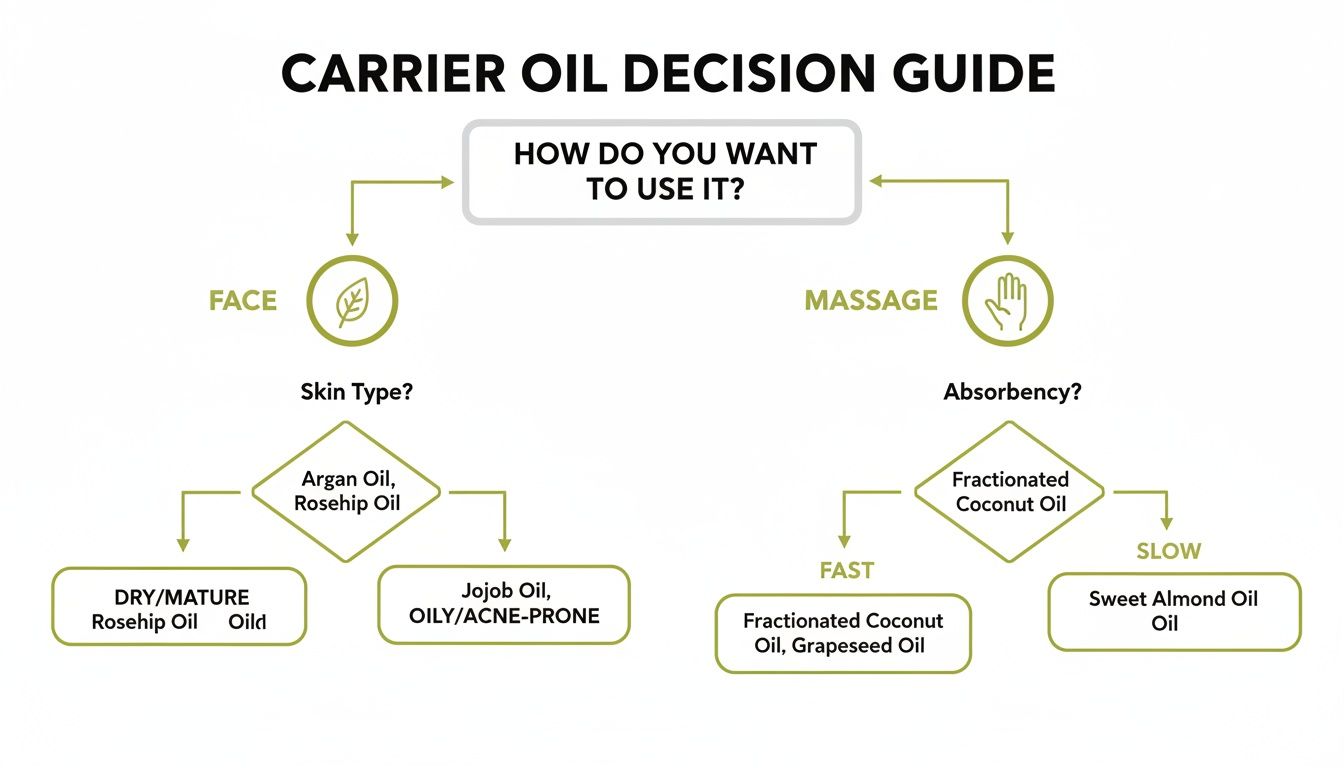
As you can see, considering whether you're using the oil for your face or body is a great way to start zeroing in on your ideal match.
Understanding the Comedogenic Scale
As you explore the world of carrier oils for essential oils, you might encounter the term comedogenic scale. It sounds technical, but it’s just a simple guide that rates oils from 0 to 5 based on their likelihood to clog pores.
An oil rated 0 is considered non-comedogenic, meaning it is not known to clog pores. An oil with a 5 rating has a much higher likelihood of doing so.
This scale isn't a hard-and-fast rule, but it’s a useful starting point, especially if you have breakout-prone skin. Here’s a quick look at how the numbers stack up:
- 0-1 Rating: Generally suitable for most skin types. Think Grapeseed Oil and Hemp Seed Oil.
- 2-3 Rating: Work well for many people, but it’s always smart to do a patch test first. Jojoba and Sweet Almond Oil are in this range.
- 4-5 Rating: These are typically richer and may be better suited for the body than the face. Coconut oil is a famous example.
At the end of the day, finding the right carrier oil is a personal journey of discovery. Listen to your skin, have fun experimenting with different options, and you’ll soon find the perfect oils to elevate your self-care routine.
Using Carrier Oils for Hair and Massage
The benefits of carrier oils for essential oils don’t stop at your face. These nourishing oils are incredible for hair care and can turn a simple massage into a deeply restorative ritual. Weaving them into your routine is one of the easiest ways to bring a bit of spa-like luxury into your home.
When it comes to your hair, a good carrier oil can be a game-changer. They work by coating the hair shaft, smoothing down the cuticle to seal in moisture, tame flyaways, and add a look of vitality. Just a few drops can leave your hair feeling softer and looking healthier.
Nourishing Oils for Your Hair
Different oils offer different benefits, so you can pick one that’s just right for what your hair needs. Whether you want a light finishing gloss or a deep conditioning treatment, there's an oil for that.
- Argan Oil: It’s a favorite for hair for a reason. Argan oil is wonderfully lightweight, so it won’t weigh your hair down, but it’s still effective for taming frizz and adding a gorgeous, non-greasy shine.
- Castor Oil: This is your go-to for a more intensive treatment. Its thick, rich consistency is perfect for a stimulating scalp massage or a weekly deep conditioner to support strong, healthy-looking hair. To dive deeper, check out our guide on the best oils for hair growth.
- Fractionated Coconut Oil: If you have finer hair, this is a fantastic choice. It delivers moisture without the heaviness of regular coconut oil, leaving your hair soft and hydrated.
Creating a Soothing Massage Experience
Carrier oils are the foundation of any good massage. Their main job is to reduce friction, allowing hands to glide effortlessly over the skin for a smooth and relaxing experience. But they do so much more—they also deeply moisturize, leaving skin feeling soft and supple long after the massage is over.
Want a simple trick to make your massage feel even more luxurious? Warm the oil first. Just place the bottle in a bowl of warm water for a few minutes. That little bit of warmth can make a huge difference in helping your muscles unwind.
For massage, think about the texture you prefer and how quickly you want the oil to absorb.
- Sweet Almond Oil: A classic for a reason. Sweet almond oil strikes that perfect balance of providing plenty of slip for a long massage while still absorbing nicely, so you aren't left feeling greasy.
- Jojoba Oil: This one sinks into the skin much faster. It's ideal for a lighter massage or for applying right after a shower when you want that moisture to lock in quickly.
By choosing the right carrier oils for essential oils, you can create customized hair treatments and blissful massage moments, all from the comfort of home.
A Simple Guide to Safe Dilution and Blending
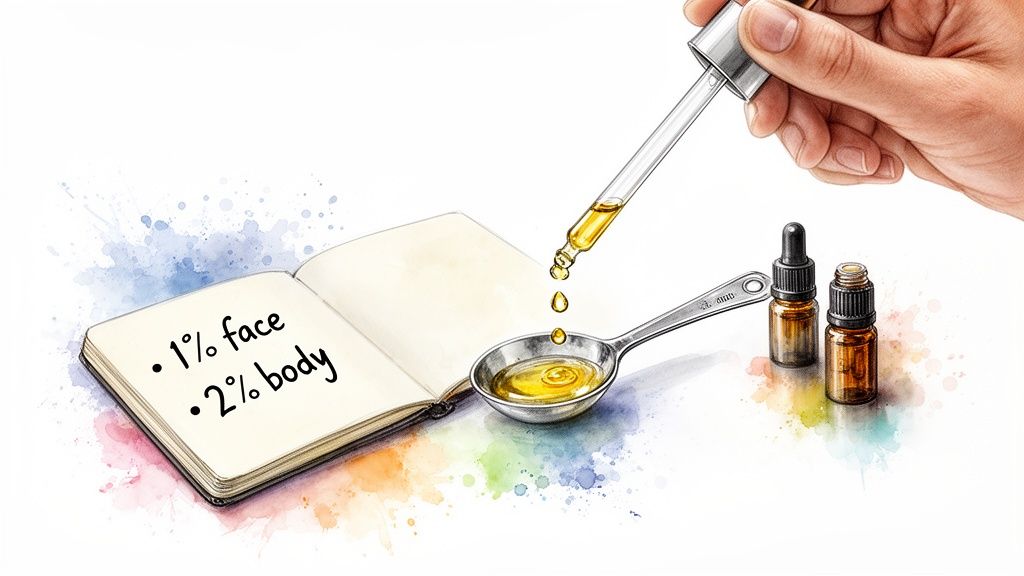
Diving into the world of essential oil blends should be a creative and joyful part of your self-care routine. The key to blending safely and effectively is understanding dilution. It’s simply the process of mixing a tiny amount of a potent essential oil into a larger amount of a neutral carrier oil.
This step is fundamental for enjoying aromatherapy safely. Think of it like adding a splash of strong fruit concentrate to a big glass of water—a little bit provides all the flavor, but the water makes it enjoyable and gentle. The same principle applies when using carrier oils for essential oils.
Common Dilution Ratios
For most everyday uses, you only need to remember a few simple guidelines. These ratios are a great starting point, helping ensure your blends are gentle enough for your skin while still delivering their aromatic benefits.
- 1% Dilution: This is your go-to for anything you put on your face or if you have particularly sensitive skin. It’s all about being gentle.
- 2-3% Dilution: This is a fantastic all-purpose ratio for daily body care. Think body oils, massage blends, or scented lotions.
Those percentages might sound technical, but they break down into simple drop counts. A good rule of thumb to remember is that there are about 20 drops in 1 milliliter (ml) of essential oil.
To whip up a quick 1% blend, just add 6 drops of your essential oil to 1 ounce (30 ml) of your chosen carrier oil. For a 2% blend, you'd simply double it to 12 drops. It really is that easy.
Simple Essential Oil Dilution Chart
To make things even more straightforward, here’s a chart you can save or bookmark. Use this as a quick reference, and you'll always feel confident when mixing your own custom blends.
| Carrier Oil Amount | 1% Dilution (For Face/Sensitive Skin) | 2% Dilution (For Daily Body Use) | 3% Dilution (For Specific Areas) |
|---|---|---|---|
| 1 Teaspoon (5 ml) | 1 drop | 2 drops | 3 drops |
| 1 Tablespoon (15 ml) | 3 drops | 6 drops | 9 drops |
| 1 Ounce (30 ml) | 6 drops | 12 drops | 18 drops |
| 2 Ounces (60 ml) | 12 drops | 24 drops | 36 drops |
With this chart handy, you can mix and match with peace of mind, knowing your creations are both effective and skin-safe.
Simple Blend Ideas to Get You Started
Now for the fun part—putting it all into practice. It's often helpful to start with simple, single-oil blends to get a feel for how the process works and how your skin responds.
For a deeply calming evening ritual, try mixing 12 drops of Lavender essential oil into 1 ounce of Sweet Almond Oil. It makes for a wonderfully soothing body moisturizer after a bath.
Or, for a gentle morning facial oil, just add 3 drops of Frankincense essential oil to 1 tablespoon of Jojoba Oil.
These simple recipes are the perfect starting point. Once you get the hang of it, you can begin combining different essential oils to create your own signature scents and wellness blends.
How to Store and Care for Your Oils
So, you’ve picked out some beautiful, nourishing oils. Now, how do you keep them that way? Proper storage is incredibly simple, but it’s the secret to making sure your oils stay fresh and effective for as long as possible.
Think of your carrier oils like high-quality olive oil in your kitchen. You wouldn't leave it sitting on a sunny windowsill, right? Heat, light, and air are the three biggest factors that can cause natural oils to break down and lose their wonderful properties.
The best spot for your collection is a cool, dark place. A cabinet, a pantry, or even a drawer in your bedroom will do the trick. Just keep them away from direct sunlight and the fluctuating heat of a steamy bathroom. This one small step goes a long way in protecting the delicate fatty acids that your skin and hair love so much.
Keeping Your Oils Fresh
Here's another simple but crucial habit: always screw the cap on tightly after each use. When oil is exposed to oxygen, it begins to oxidize. That’s just another way of saying it’s starting to go off, which can change its scent and reduce its benefits.
Most carrier oils for essential oils will last a good one to two years if you store them correctly. Some are a bit more delicate, though. Rosehip Seed Oil, for example, is a powerhouse for the skin but generally has a shorter shelf life of about six months.
Wondering if your oil is still good? Just trust your nose. If you notice a sharp, stale, or "off" smell, the oil has likely changed. It’s time to say goodbye and treat yourself to a fresh bottle.
Following these easy tips helps ensure every drop you use is as potent and beneficial as the day you got it, ready for all your self-care rituals.
Common Questions About Carrier Oils
As you start your journey with aromatherapy and DIY skincare, it's normal for questions to come up. Getting a good handle on the basics of using carrier oils for essential oils is the key to blending with confidence. Let's tackle some of the most common things people wonder about.
A big one is whether you can just grab the cooking oil from your kitchen pantry. While technically possible, oils like olive or coconut oil meant for cooking are often heavier and have strong scents that can easily overpower the essential oils you're trying to feature. It’s often better to stick with oils intended for cosmetic use—they're chosen specifically for how well they absorb and feel on the skin.
Creating Your Own Custom Blends
One of the best parts of working with these oils is creating your own custom concoctions. Can you mix different carrier oils together? Absolutely! In fact, it's a great idea. It's the perfect way to get a base that's just right for you.
For example, you could mix a light, fast-absorbing oil like Grapeseed with a bit of a richer one, like Avocado Oil. What you get is a custom blend that feels light but still delivers deep nourishment. Think of yourself as a chef, but for your skin.
Don't forget, carrier oils are powerhouses all on their own. They're full of fatty acids, vitamins, and other goodies that hydrate your skin and support its natural barrier. Using them straight, without any essential oils, is a fantastic and simple way to care for your skin and hair.
How to Perform a Patch Test
This is a step you should never skip. Whenever you try a new oil or a new blend, doing a quick patch test is the smartest thing you can do. It’s a simple check to see how your skin reacts before you apply it more widely.
- Choose a Spot: Find a small, out-of-the-way patch of skin, like the inside of your wrist or the crook of your elbow.
- Apply a Small Amount: Just dab a tiny bit of the oil or your new blend onto that spot.
- Wait and Observe: Now, you just have to wait. Give it 24 hours and pay attention to how your skin feels.
- Assess the Results: If everything looks and feels totally fine after a day, you’re good to go! You can feel confident using your new creation.
Ready to find the perfect foundation for your aromatherapy blends? ArtNaturals has you covered. Check out our curated collection of high-quality, plant-powered carrier oils at https://artnaturals.com.