

When it comes to picking between coconut oil and argan oil, the best choice really boils down to what your hair is asking for. Think of coconut oil as a deep, intensive treatment—it’s what you reach for when you need serious strength and repair. On the other hand, argan oil is more like a light, smoothing finisher, perfect for taming frizz and adding that final touch of shine.
Finding Your Natural Hair Care Ally
Diving into natural hair oils is a fantastic way to blend self-care with genuine hair wellness. This guide is all about two of the most popular players in the game: coconut oil and argan oil. Both have been staples in beauty routines for centuries, and we’re here to break down what makes each one special.
Instead of pitting them against each other, we'll look at them as unique tools in your haircare toolkit. Our goal is to help you figure out which one aligns with your hair type, your concerns, and your routine. Getting to know the distinct character of each oil is the first step to unlocking a hair care ritual that feels right for you.
A Glimpse at the Two Oils
To get a feel for what’s out there, it helps to explore a range of natural hair care products and see how different ingredients are used. But for now, let's focus on what makes these two oils stand out.
Here’s a quick rundown of their main roles:
| Feature | Coconut Oil | Argan Oil |
|---|---|---|
| Primary Role | Deep Conditioner & Strengthener | Smoothing Finisher & Shine Enhancer |
| Best For | Intensive repair, pre-shampoo treatments | Daily frizz control, adding polish |
| Texture | Heavier, solid at room temp | Lightweight, non-greasy liquid |
| Application | Use as a mask or deep treatment | Apply to damp or dry ends for styling |
This little chart is just the beginning. As we go deeper, you’ll get a much clearer picture of which oil is ready to become your go-to. Whether your hair is calling out for deep nourishment or just needs a bit of lightweight gloss, one of these natural wonders has you covered.
The key difference lies in how they interact with the hair. Coconut oil works from the inside out to fortify the hair shaft, while argan oil works on the surface to smooth, protect, and add luster.
Understanding this core difference is everything. As we continue, you'll see how these properties make each oil suited for specific hair types and concerns. This is all about learning to listen to your hair and giving it exactly what it needs to thrive, naturally.
Understanding The Unique Properties Of Each Oil
To figure out which oil is your hair's perfect match, it helps to get a little geeky and look at what makes them so different. It’s not about memorizing complex names, but about understanding the "why" behind what they do. Once you see how they work on a molecular level, you'll know exactly which one to reach for.
The real difference between coconut and argan oil comes down to their molecular structure—basically, how big their building blocks are. This dictates whether an oil works from the inside out or if it’s better at perfecting the surface. One is a deep-repair treatment, and the other is a finishing-touch superstar.
The Inner Workings Of Coconut Oil
Coconut oil is made up of mostly smaller fatty acids, with lauric acid being the star player. Picture these as tiny molecules, perfectly shaped to sneak past the hair's protective outer layer, the cuticle. This unique ability to get inside the hair shaft is its superpower, allowing it to nourish your hair from within.
This is exactly why coconut oil feels heavier and is solid at room temperature—it's jam-packed with these powerful little molecules. When you apply it, it gets to work reinforcing your hair's natural protein structure, which is a big deal for preventing protein loss during washing and styling.
Thanks to these medium-chain fatty acids, coconut oil doesn't just sit on top of your hair. It gets in deep and builds a supportive foundation from the inside. In the real world, this means stronger-feeling, more resilient hair that can better handle daily brushing, heat, and whatever else you throw at it.
Key Takeaway for Coconut Oil: Its biggest strength is its ability to penetrate the hair shaft. This makes it an incredible choice for deep conditioning treatments meant to fortify and repair hair from its core.
If you're curious, it can also be interesting to understand the distinct properties between coconut oil and other natural oils like olive oil, as this can give you a better sense of how different oils fit into a wellness routine.
The Surface-Smoothing Nature Of Argan Oil
Argan oil, on the other hand, is loaded with larger fatty acids like oleic and linoleic acids. These molecules are just too big to penetrate the hair shaft easily. Instead, they work their magic right on the surface, coating each strand with a super-fine, non-greasy film.
This invisible shield is what gives argan oil its amazing reputation for smoothing frizz, taming flyaways, and delivering that brilliant, almost weightless shine. It seals the cuticle down, locking in moisture without ever making your hair feel heavy or greasy.
On top of that, argan oil is packed with antioxidants, especially vitamin E. These powerhouse compounds help shield your hair from environmental stressors while boosting its natural softness and luster. Its light, silky feel makes it the perfect finishing touch for everyday styling.
This gentle, surface-level action makes it a go-to for so many hair types, particularly if your goals are shine and manageability. For anyone looking to build a full hair wellness routine, you might also enjoy our guide on the best oils for hair growth to see how different oils can work together.
Comparing How Coconut And Argan Oil Address Hair Concerns
Picking the right hair oil is a personal journey. It really boils down to knowing your hair’s unique personality and what you want to achieve. Both coconut and argan oil are fantastic, but they go about their business in very different ways. By taking a closer look at how each one performs in specific situations, you can figure out which one will become your new go-to.
Think of this as your side-by-side guide. We'll dive into everything from strengthening and taming frizz to boosting moisture and caring for your scalp. The goal is to match your hair's needs with the perfect natural solution.
For Promoting Hair Strength And Reducing Breakage
When you're looking to build strength from the inside out, coconut oil is a wonderful choice. Its smaller molecules can actually penetrate beyond the hair's cuticle, delivering nourishment deep into the core. This process helps fortify the hair’s natural protein structure, making it feel stronger and more resilient with consistent use.
Argan oil, on the other hand, is more of a surface-level protector. It wraps each strand in a light, flexible shield, which is great for reducing the friction that comes from brushing and styling. While this definitely helps cut down on snags and breakage, its main job is external defense, not internal repair.
Key Insight: Choose coconut oil when you need an intensive, deep-conditioning treatment to build inner strength. Go for argan oil for daily protection to minimize the wear and tear from styling and handling.
If you're a visual person, this little guide can help point you in the right direction based on what your hair is craving most.
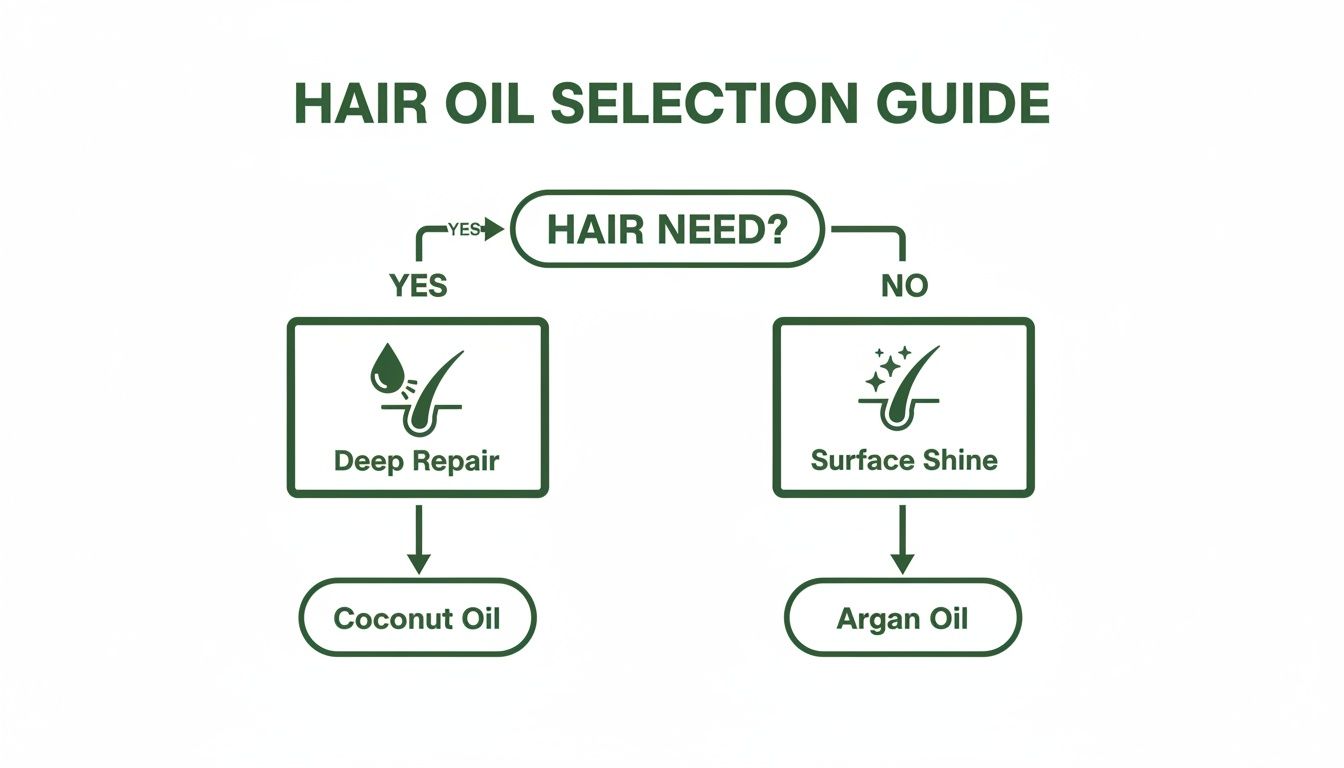
This decision tree makes it simple: if your hair is calling out for deep, structural repair, reach for coconut oil. If all you need is that smooth, polished finish, argan oil is the perfect choice.
For Managing Frizz And Flyaways
For anyone chasing that smooth, sleek finish, argan oil is almost always a wonderful option. Its incredibly lightweight texture coats the hair’s surface without ever feeling heavy, effectively sealing the cuticle to block out humidity. This is what gives you that polished look and keeps frizz from making an unwelcome appearance.
Coconut oil can certainly help with frizz, too, but its richer consistency means you have to be careful. A tiny amount is all you need. It works best on thicker or coarser hair types that can handle its weight without getting greasy. For those with fine hair, it's likely too heavy for daily frizz duty.
- Argan Oil Scenario: A couple of drops smoothed through dry, styled hair to tame pesky flyaways and add that final pop of shine.
- Coconut Oil Scenario: A pea-sized amount warmed in your palms and applied to the ends of thick, curly hair to define texture and calm puffiness.
For Adding Moisture And Hydration
This is where the two oils play very different, but equally important, roles. Coconut oil is a powerhouse deep conditioner. It’s famous for its ability to help hair hold onto its natural moisture by preventing protein loss, especially during washing. It replenishes from within, making it the perfect pre-shampoo treatment to fight off serious dryness.
Argan oil is more of a moisture-sealing specialist. It creates a light barrier on the hair that locks in the hydration you get from your conditioner and leave-in products. It’s less about adding deep moisture itself and more about preserving what’s already there, leaving your hair feeling soft and silky.
Some general research has highlighted coconut oil's effectiveness for hair brittleness. You can learn more about these hair oil findings from various sources.
For Gentle Scalp Care
A healthy scalp is the foundation of great hair, and both oils can play a part in keeping it happy. Coconut oil has some nice cleansing properties that help maintain a balanced environment. A gentle scalp massage with warm coconut oil before you shampoo can be an incredibly soothing and purifying ritual.
Argan oil offers a lighter touch, packed with antioxidants like vitamin E. It can help soothe and moisturize a dry scalp without feeling heavy or greasy. Its balancing nature makes it a great choice for anyone who wants to nourish their scalp without throwing things out of whack.
Hair Concern And Oil Suitability At A Glance
Still weighing your options? This table breaks down the key differences to help you see exactly which oil lines up with your hair goals.
| Hair Concern | Best Suited Oil | How It Helps |
|---|---|---|
| Deep Strengthening | Coconut Oil | Works its way into the hair shaft to fortify the protein structure from the inside, building resilience. |
| Frizz & Shine | Argan Oil | Coats the hair's surface with a light film to smooth the cuticle for a polished, glossy look. |
| Intensive Moisture | Coconut Oil | Helps hair retain its natural moisture and reduces protein loss when used as a pre-shampoo treatment. |
| Sealing Hydration | Argan Oil | Locks in the moisture from your other hair products, preventing it from escaping into the air. |
| Scalp Soothing | Both | Coconut oil brings cleansing properties to the table, while argan oil provides light, antioxidant-rich moisture. |
Ultimately, the choice isn't about which oil is "better"—it's about which one is better for you and your hair right now. By understanding how they each work, you can confidently pick the oil that will best support your hair on its wellness journey.
Choosing The Right Oil For Your Hair Type
Knowing the benefits of an oil is a great start, but the real magic happens when you match the right one to your unique hair. Your hair's texture is the biggest clue to whether it will thrive with coconut oil's deep-penetrating moisture or argan oil's lighter, smoothing touch. Let’s break down which oil to reach for based on your hair type so you can feel confident in your choice.
The goal isn't to follow a rigid set of rules but to learn how to listen to your hair. Once you understand what your strands are asking for, you can create a simple, effective routine that lets their natural beauty shine through.
Guidance For Fine Or Thin Hair
If you have fine or thin hair, you know the struggle. You need nourishment, but so many products just weigh your hair down, leaving it flat and limp. Heavier oils are often the main culprits, which is why a lighter approach is almost always better.
This is exactly where argan oil comes in. Its incredible lightness and ability to smooth the hair's surface make it the perfect finishing product.
- How to Use It: Just warm up a few drops between your palms and glide it over your mid-lengths and ends. It will instantly tame flyaways and add a gorgeous sheen without killing your volume.
- Why It Works: Argan oil's job here is to seal the hair cuticle, which locks in moisture and creates that smooth, polished look. It does all this without the heavy, greasy feeling that can easily overwhelm delicate strands. Think of it as your daily go-to for shine and manageability.
For anyone with finer hair, exploring a curated selection of lightweight argan oil products is a fantastic way to elevate your hair care routine.
Nurturing Thick Or Coarse Hair
Thick and coarse hair is a different story. The individual strands have a larger diameter and a more resilient structure, which means they can handle—and often crave—much richer treatments. These hair types are famously prone to dryness and drink up oils that provide deep, lasting moisture.
Coconut oil is an absolute powerhouse for this hair type. Its unique ability to penetrate the hair shaft allows it to deliver the intense hydration that coarse strands need.
For thick hair, think of coconut oil as a deeply restorative treatment. It works from the inside out to replenish moisture and strengthen the hair's core, leading to softer, more flexible, and manageable locks.
A weekly deep conditioning treatment with coconut oil can make a world of difference. It helps fight that rough, straw-like feeling and dramatically improves elasticity, keeping your thick hair strong and supple.
Support For Curly Or Coily Hair
Because of all their beautiful twists and turns, curly and coily hair patterns are naturally drier than straight hair. It’s a simple matter of physics—the scalp's natural oils have a much harder time traveling down the hair shaft. This means moisture retention and protection are everything.
Coconut oil is a brilliant ally here, especially as a pre-shampoo treatment. By applying it before you wash, you create a protective barrier around the hair strand. This shield prevents the shampoo from stripping away too much of the hair's natural moisture and protein during cleansing.
This one simple step can drastically reduce that post-wash dryness, leaving your curls feeling soft, defined, and well-hydrated. It’s like prepping your hair for wash day, ensuring it stays strong and resilient through the whole process.
Polishing Straight Hair
While straight hair might not face the same level of dryness as curly hair, it has its own challenges—namely flyaways and a tendency to look dull. The trick is to find a product that adds polish and smoothness without making it look greasy.
Argan oil is the perfect candidate. You only need a tiny amount to smooth the hair's surface and impart a weightless, healthy-looking gloss. It’s fantastic for taming static and giving straight hair that sleek, polished finish. Its ability to improve hair's elasticity also keeps strands feeling supple and less prone to breakage. You can learn more about these findings on hair elasticity and how this science applies to different hair types.
Making Hair Oils Part of Your Self-Care Ritual
Turning your hair care routine into a mindful self-care practice can be as simple as adding a natural oil. Using coconut and argan oil isn't just about how your hair looks afterward; it's about the grounding experience of the ritual itself. When you learn how to apply them properly, you elevate a simple task into a soothing, restorative moment.
This is your guide to weaving these incredible oils into your wellness lifestyle. Whether you're after deep repair or just a light, finishing touch, there's a simple, enjoyable method that's perfect for you.
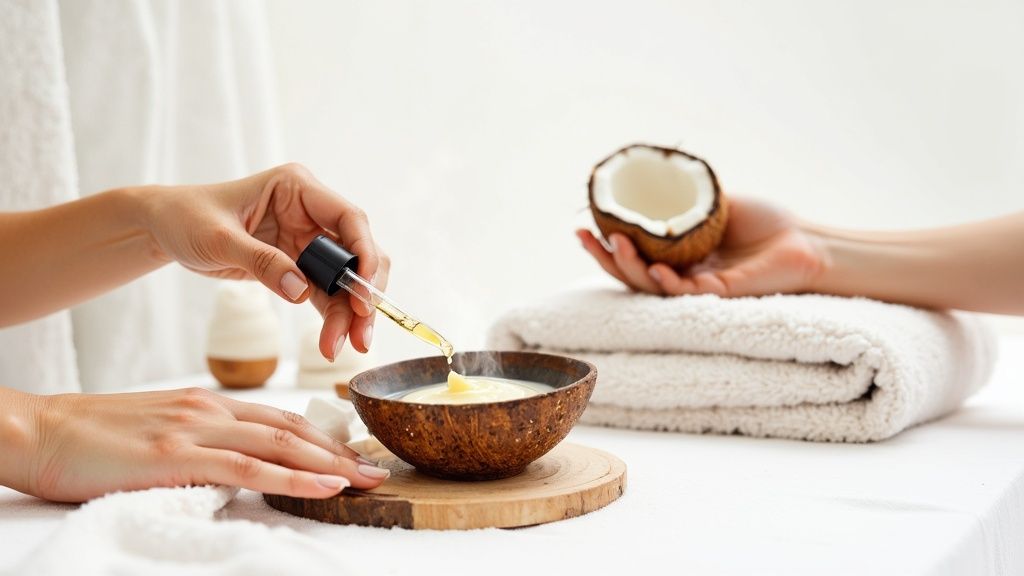
How To Create A Deeply Nourishing Coconut Oil Treatment
Coconut oil really shines when it’s used as an intensive treatment. This gives its smaller molecules plenty of time to work their way deep into the hair shaft. Think of it as a weekly reset for tired, thirsty strands.
As a Pre-Shampoo Treatment
One of the absolute best ways to use coconut oil is as a "pre-poo" mask. Applying it before you wash creates a protective shield around your hair, preventing the shampoo from stripping away too much of your hair's natural protein and moisture.
- How to apply: Warm about a tablespoon of solid coconut oil in your palms until it melts into a liquid. Gently work it through dry hair, paying special attention to the mid-lengths and ends.
- How long to leave it: Let it soak in for at least 30 minutes to an hour before you shampoo like normal. If your hair is in serious need of some TLC, you can even leave it on overnight.
- How often to do it: A weekly treatment is usually the sweet spot for most hair types, especially if your hair is dry or coarse.
As an Overnight Mask
For an even more powerful repair session, an overnight coconut oil mask can deliver incredible softness and strength. This gives the oil the maximum amount of time to penetrate and nourish your hair from the inside out.
Just follow the same steps as the pre-shampoo treatment. Then, simply wrap your hair in a soft towel or a protective cap to keep your pillows clean, and wash it all out in the morning.
Mastering The Art of Applying Argan Oil
Argan oil is all about that lightweight finish and daily protection. Its larger molecules sit beautifully on the hair's surface, which makes it the perfect final step in any styling routine. The key is remembering that a little goes a very long way.
As a Post-Styling Serum
For brilliant shine and taming those last-minute flyaways, argan oil is a true champion. It gives your hair a polished, non-greasy finish that just enhances your natural style.
- Start with just 1-3 drops of argan oil. Seriously, that's all you need.
- Warm the oil by rubbing your palms together.
- Lightly smooth your hands over the surface of your dry, styled hair, focusing on the ends.
This quick step seals the hair cuticle, adding a beautiful luster while keeping frizz under control.
Argan oil is your go-to for daily elegance. Its job is to add that final touch of polish and protection, making it an effortless addition to any morning routine.
As a Heat Protectant
While it’s no substitute for a dedicated heat protectant spray, a light coating of argan oil can offer a gentle buffer before you use hot tools. Apply a tiny amount to dry hair before styling to help seal in moisture. For more tips on supporting your hair's health, you might find our guide on essential oils for hair growth helpful.
Your At-Home Warm Oil Spa Ritual
For a truly luxurious self-care moment, a warm oil treatment can soothe both your hair and your soul. You can adapt this method for either oil, depending on what your hair is craving that day.
- For Deep Nourishment: Gently warm a small amount of coconut oil by placing its container in a bowl of hot water until it’s liquid and comfortably warm to the touch.
- For a Lighter Touch: Argan oil can also be slightly warmed for a soothing scalp massage or to smooth down the hair shaft.
Apply the warm oil to your scalp and hair, massaging it in gently. Wrap your head in a warm, damp towel for 20-30 minutes to help the oil work its magic, and then wash it out. This calming ritual is a beautiful way to unwind and care for your hair at the same time.
Answering Your Top Questions About Coconut & Argan Oil
When you start exploring natural hair care, a few questions always pop up. It's completely normal. Understanding the difference between coconut oil and argan oil is all about figuring out how to build a routine that actually works for your hair. This section is here to clear up some of the most common questions, giving you the confidence to get started.
Let's demystify these amazing ingredients so you can make them a seamless part of your self-care rituals. We'll dive into the specifics and show you how each oil can support your hair's unique personality.
Can I Use Both Coconut Oil And Argan Oil In My Routine?
Yes, absolutely! In fact, they work brilliantly together when you play to their individual strengths. Don't think of them as competitors, but more like a power couple that addresses different hair wellness needs. Each oil has a distinct job, and you can build a truly complete routine by using them for their best purposes.
For instance, you could use coconut oil as a powerful, weekly pre-shampoo treatment to deeply nourish and strengthen your hair from the inside out. Then, after washing and styling, a few drops of argan oil work perfectly as a lightweight finisher to tame frizz, boost shine, and protect your ends.
This combined approach gives you the best of both worlds: the deep, penetrating repair from coconut oil and the light, surface-level polish from argan oil. It’s a fantastic way to give your hair comprehensive care.
How Often Should I Use A Hair Oil?
The perfect frequency really comes down to your hair type, its current condition, and which oil you're reaching for. The most important thing is to listen to your hair. Over time, you’ll learn to recognize what it needs and when it needs it.
Here are a few general guidelines to get you on the right track:
- For Richer Treatments (Coconut Oil): A deep conditioning mask using coconut oil is usually best done once a week. If your hair is very dry or coarse, you might find twice a week is your sweet spot, while those with finer hair may only need it every other week.
- For Lighter Finishing (Argan Oil): As a styling serum, argan oil can be used daily or just as needed. It’s so lightweight that a couple of drops on your ends each day can help keep everything smooth and shiny without causing any buildup.
Will These Oils Make My Hair Greasy?
This is a super common concern, and the truth is that any oil can look greasy if you use too much. The secret to avoiding that slick look is simple: start with less than you think you need. You can always add more, but it's a pain to take it away without starting over with a full wash.
Mindful application is key. Warm the oil between your palms first—this helps it spread much more evenly. Always focus on the mid-lengths and ends, since that's where your hair is the oldest and driest. Try to avoid applying pure oils directly to your roots, especially if you have fine or naturally oily hair.
Which Oil Is Better For Color-Treated Hair?
Both oils are great for color-treated hair, which often becomes more porous and prone to dryness after processing. Used as a pre-shampoo treatment, coconut oil can help protect the hair shaft and reduce the color fading that often comes from frequent washing.
Argan oil, on the other hand, is a superstar for restoring vibrancy and shine to hair that might look a little dull post-color. Its smoothing magic helps seal the hair cuticle, which makes your color look richer and more reflective. Honestly, a strategy of using coconut oil for deep conditioning and argan oil for daily shine is a winner here.
Can I Mix The Two Oils Together?
You sure can! Creating your own custom blends is a great way to personalize your hair care. Mixing a small amount of argan oil into melted coconut oil for a hair mask can give you a treatment that offers both deep penetration and surface smoothing.
For daily styling, however, it’s probably best to stick with argan oil on its own. Its lightweight texture is what makes it such a great finisher, and adding the heavier coconut oil could easily weigh your hair down. The beauty of these oils is their versatility, so feel free to experiment a bit and see what your hair loves most.
Discover the pure, plant-powered goodness your hair deserves. ArtNaturals offers a beautiful range of products, including premium argan oil, to support your wellness journey. Explore our collections and find your perfect match at https://artnaturals.com.