

That tight, almost squeaky feeling after a shower can make you think you've done an especially thorough job cleansing. Yet skin that feels stretched, itchy, or suddenly thirsty may be telling you that your body wash has removed more than sweat and everyday residue. A calmer ritual begins with a different question: does this cleanser respect the skin's natural balance while it washes?
A gentle body wash is more than a fragrance-free label. The cleansing base, pH, surfactants, moisturising ingredients, and way you use the product all shape how your skin feels afterward. That shift in perspective matters in a category that's becoming increasingly focused on skin type. The global body cleansers market was valued at $32.54 billion in 2025 and is projected to reach $54.13 billion by 2034, with sensitive-skin products identified as the fastest-growing subcategory at 7.2% annual growth. (Market context for body cleansers)
Rethinking Your Daily Cleansing Ritual
Maya noticed the pattern during a particularly busy week. She'd take a hot shower at night, lather a strongly scented soap from neck to ankle, and step out feeling polished but uncomfortably tight. Lotion helped for a while, yet by morning her arms and legs felt dry again. Her first instinct was to find a richer cream, but the more useful place to begin was the product used before the cream.
The skin has a naturally acidic surface known as the acid mantle. It helps create a balanced environment while the outer barrier holds onto moisture and meets the outside world. Traditional soap is alkaline, so it can move the skin away from that slightly acidic state. Repeated exposure to a strong cleansing system may leave some people feeling stripped, especially when hot water, vigorous scrubbing, or frequent washing join the routine.
A comfortable clean shouldn't require a tight finish.
This doesn't mean every soap is unsuitable for every person, or that fragrance automatically makes a cleanser harsh. It means the whole formula deserves attention. A fragrance-free wash can still feel drying if its surfactant system is aggressive or its pH is far from the skin's natural range. Conversely, a lightly scented product may feel comfortable for someone who tolerates fragrance well, though fragrance-sensitive shoppers may prefer to avoid it.
Think of your body wash as the opening step in a barrier-support routine. Apply it mainly where sweat and residue collect, use your hands or a soft cloth, and let the cleanser do the work without scrubbing until the skin squeaks. If you're curious about a more tactile, traditional bathing format, this resource on a handmade CBD bar for bath offers another perspective on making bathing feel intentional.
The goal isn't to fear cleansing. It's to move from stripping to gentle purification, leaving the skin clean, soft, and ready for the moisturiser or body oil that follows.
The Science of pH and Syndet Cleansers
The most useful label may not be “natural,” “unscented,” or even “hypoallergenic.” It may be the information that tells you how the cleanser is built. pH and surfactant architecture help explain why two body washes with similar scent profiles can create very different after-shower experiences.
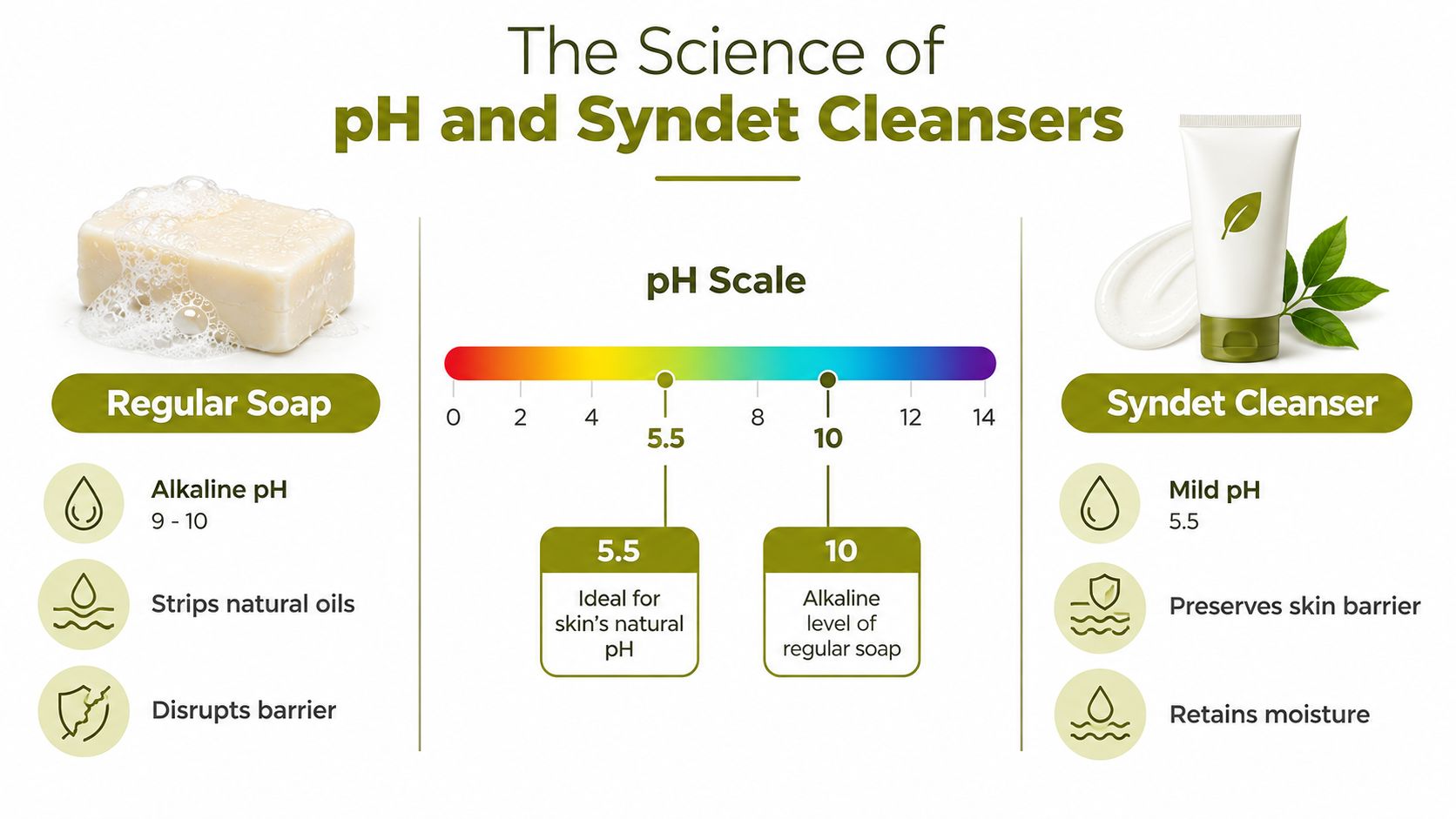
True soap is made through a process that produces an alkaline cleanser. Dermatology literature places typical soap pH around 8.5 to 11.0, while syndets, short for synthetic detergent cleansers, generally sit closer to pH 5.5 to 7.0. Formulas around pH 4.5 to 6 are often used when the intention is to stay close to the skin's acidic environment. (Review of skin cleansers and pH)
Why the distinction matters
A high-pH soap can temporarily push the skin's surface away from its usual acidity. That shift may make the barrier feel less comfortable, particularly if your skin is already dry or easily reactive. A lower-pH syndet doesn't guarantee that every person will love the formula, but it gives the cleanser a more skin-compatible starting point.
The term “syndet” can sound synthetic in a negative way, yet it describes a cleansing system based on detergents rather than traditional soap. The individual surfactants still matter. A poorly designed syndet can be unpleasant, while a thoughtfully balanced one may combine mild cleansing agents, humectants, and emollient ingredients.
Healthy skin has an approximate pH of 5.5, which is why many pH-balanced body washes are designed around that neighbourhood rather than the high-pH range associated with traditional soap. (Explanation of pH-balanced body wash)
How to read the claim
Look for specific language such as:
- pH-balanced: Helpful, though the claim is more meaningful when the brand explains the approximate range.
- Soap-free: Usually suggests a syndet-style cleanser, but it doesn't tell you which surfactants are included.
- Fragrance-free: Useful for people who know fragrance bothers their skin, but it doesn't reveal the cleanser's pH.
- Syndet cleanser: A direct clue that the formula isn't traditional alkaline soap.
A body wash that leaves your skin comfortable has probably achieved a practical balance between cleansing power and surface-lipid preservation. You don't need to memorise cosmetic chemistry. Start by looking for a mild, soap-free system with a pH close to the skin's natural acidity, then pay attention to how your skin responds over several uses.
Decoding Surfactants and Soothing Botanicals
Surfactants are the working part of a body wash. They help water spread across the skin, loosen oil-soluble residue, and carry it away during rinsing. The size of the lather doesn't tell you whether the cleanser is gentle. A dense foam can feel luxurious, while a low-foam formula can cleanse effectively with a softer finish.
Harsh anionic surfactants can interact with the proteins and lipids in the outer skin layer, increasing the chance of a dry or tight sensation after repeated washing. Amphoteric and nonionic surfactants are often selected when formulators want a milder cleansing experience. Ingredients such as cocamidopropyl betaine and sodium cocoyl isethionate are common examples in gentle cleansing systems. (Surfactant information for cleanser formulas)
| Ingredient Type | Common Examples | Primary Benefit |
|---|---|---|
| Mild amphoteric surfactants | Cocamidopropyl betaine | Helps create a comfortable lather and supports a less stripping cleanse |
| Mild syndet surfactants | Sodium cocoyl isethionate, sodium lauroyl isethionate | Cleanses without relying on traditional high-pH soap |
| Mild amino-acid or taurate surfactants | Sodium methyl lauroyl taurate | Supports a soft, low-stress washing experience |
| Humectants | Glycerin | Helps the formula provide a less depleted after-wash feel |
| Botanical and lipid-supporting ingredients | Aloe, plant oils, shea butter | Adds a comforting, conditioning dimension to the rinse step |
Some sensitive-skin body wash ingredient lists combine sodium lauroyl isethionate, sodium methyl lauroyl taurate, cocamidopropyl betaine, and glycerin. (Example of a sensitive-skin ingredient list) That combination illustrates an important principle: a gentle formula usually depends on ingredient teamwork, not one heroic botanical.
Glycerin is a familiar humectant, while aloe and plant oils can make a cleanser feel more cushiony and conditioning. In a wash-off product, these ingredients won't behave exactly like a leave-on serum, but they can still influence the texture and the sensation left behind. The most supportive formula is often a mild cleansing base paired with ingredients that help the skin feel supple rather than squeaky.
For a closer look at how one body-care ingredient story is presented, you can explore this guide to tea tree body wash. Use any ingredient spotlight as a starting point, then return to the complete label and assess the cleanser as a whole.
Look for the relationship between ingredients, not a single fashionable extract.
If a wash contains a beautiful botanical but relies on a cleansing system that leaves you tight, the overall experience may still be too much. A gentle body wash should feel balanced from the first lather through the final rinse.
Matching Formulations to Your Skin Profile
Your skin's behaviour offers a more useful guide than a front-label promise. Notice how it feels during cleansing, immediately after rinsing, and several hours later. Tightness, stinging, rough patches, or a quick return of surface oil can each point toward a different formula choice.
A gentle wash should support the skin's acid mantle rather than stripping it away. A pH-balanced syndet cleanser uses mild cleansing agents instead of traditional soap, while plant-derived surfactants can create a softer lather that lifts sweat and oil with less disruption. The formula's full architecture matters more than one attractive ingredient.
Start with the skin feel
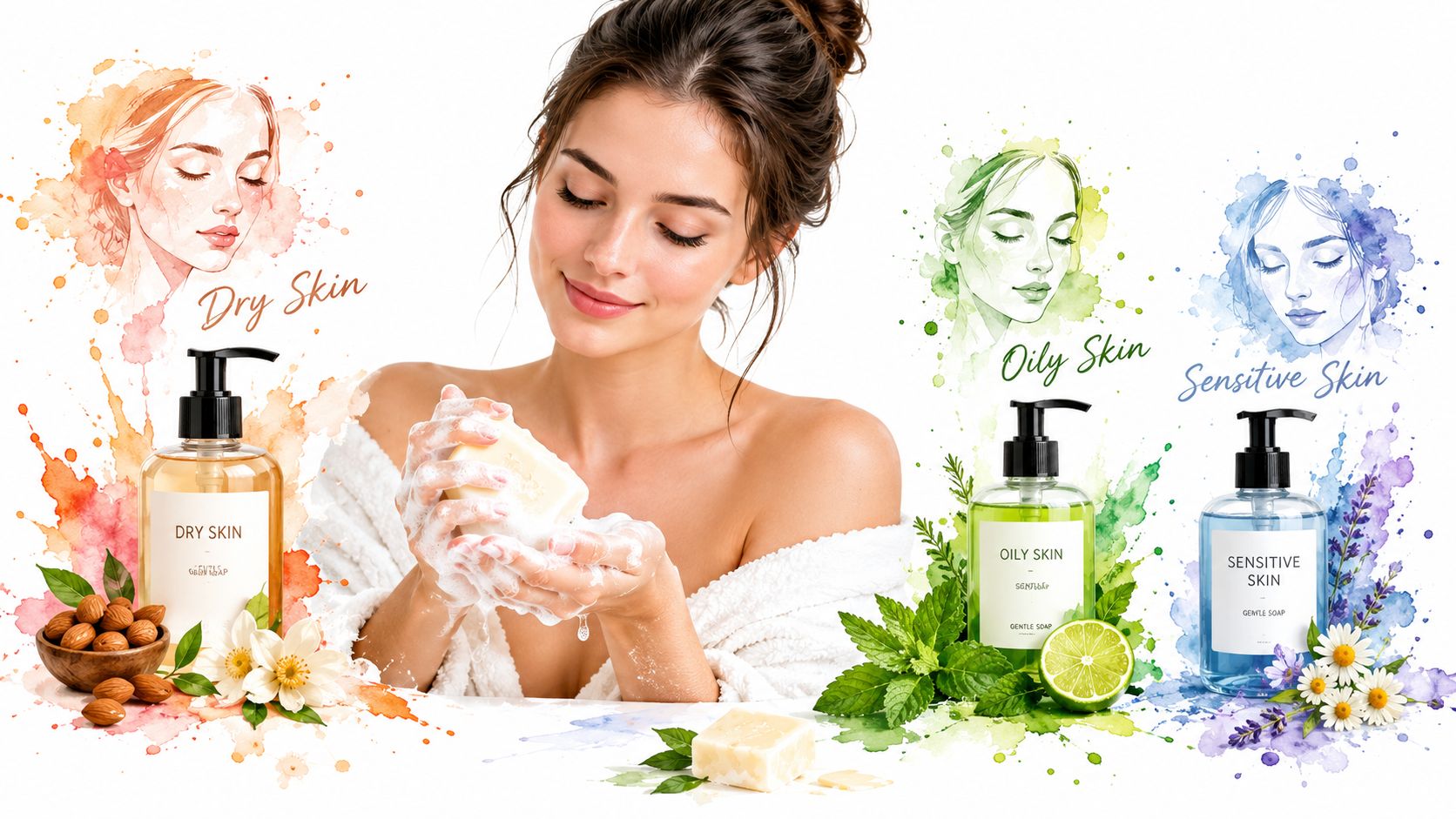
For dry-feeling skin, choose a creamy or lotion-like wash built around a mild syndet base, glycerin, and conditioning ingredients. A cleanser with a cushiony texture can make the routine feel less abrasive. Apply moisturiser while the skin still holds a little surface moisture.
For reactive-feeling skin, begin with fewer variables. A short ingredient list, a fragrance-free or low-fragrance option, and a clearly stated pH make it easier to identify what your skin accepts. “Unscented” and “fragrance-free” can mean different things, so check the ingredient list if scent is a known concern. Plant-derived does not automatically mean irritation-free.
For normal skin, texture and scent offer more room for personal preference. A comfortable daily cleanser still does not need to leave a squeaky finish. Naturally derived essential oils contain scent molecules that some people may find irritating, so choose according to your own tolerance rather than treating “natural” as a guarantee of gentleness.
For oily or combination-feeling skin, resist stronger lather and rough scrubbing. A well-balanced syndet can lift sweat and surface oil while preserving a comfortable after-feel. If cleansing leaves the skin tight, the formula may be asking too much, even if it feels exceptionally fresh at first.
Targeted ingredients belong to a separate category. Mandelic acid may interest shoppers seeking exfoliation, and why Neutralyze uses mandelic acid offers useful ingredient context. It should not be treated as interchangeable with a basic gentle cleanser.
People who prefer to minimise potentially drying ingredients can compare an alcohol-free body wash, while still reading the complete formula, texture, and scent profile.
Here's a visual guide to keep the choice practical:
Patch-test a new product on a small area to reduce guesswork. Stop if the area becomes uncomfortable, then return to a simpler routine while you identify which ingredients suit your skin.
Elevating Your Shower Routine and Sustainability
A gentle formula can only do so much if the shower itself is harsh. Very hot water, long rinsing, rough exfoliating tools, and vigorous towel drying can all make a mild cleanser feel less comfortable. Treat the ritual as a sequence of small choices rather than a single product decision.
Use warm rather than steaming water, and cleanse the areas that need it most instead of automatically scrubbing every inch of skin. Your hands are often enough. If you use a cloth, choose a soft one and wash it regularly so the fabric remains fresh and pleasant against the body.
After rinsing, pat rather than rub. Leave the skin slightly damp, then apply a body lotion, cream, or a small amount of plant oil while the surface still feels fresh. This layered approach helps the moisturising step work with the cleansing step instead of asking the body wash to do everything alone.
The best shower routine is gentle enough that you can repeat it without negotiating with your skin.
Sustainability belongs in this conversation because a daily product creates an ongoing packaging habit. Look for bottles and shipping materials that match your practical recycling options, and consider whether the container can be emptied without excessive product waste. Packaging claims deserve the same thoughtful reading as ingredient claims. “Recyclable” can depend on local facilities, while biodegradable materials need the right disposal conditions.
You can explore guidance on biodegradable packaging for cosmetics when you're comparing brands and trying to connect personal care with broader environmental values. The most useful choice is one you can maintain, whether that means a recyclable bottle, a refill format, or using each product fully before buying another.
For the self-care side of the ritual, this guide on how to create a real routine offers ideas for making everyday care feel more deliberate. You might keep your body wash, towel, moisturiser, and robe together so the routine feels easy rather than rushed. A few quiet minutes can turn cleansing into a grounding pause without requiring an elaborate bathroom shelf.
Common Questions About Gentle Cleansing
Do gentle body washes need preservatives?
Water-based products need protection against unwanted microbial growth, so preservatives and stabilisers can have a practical role in formula safety and shelf stability. “Preservative-free” isn't automatically a better choice if it means the formula has less reliable protection. Ingredient lists may include systems such as sodium benzoate, phenoxyethanol, citric acid, or sodium gluconate, depending on the product. (Example of preservative and stabilisation ingredients)
Read the complete formula and follow the brand's storage guidance. If a product changes smell, texture, or appearance, replace it rather than trying to extend its use.
How can I add exfoliation without overdoing it?
Keep exfoliation separate from your everyday cleansing mindset. Choose a mild approach, use it occasionally, and avoid pairing vigorous scrubbing with hot water and a strong cleanser. If your skin feels tight or tender afterward, pause exfoliation and return to a simple, moisturising routine.
Physical tools, exfoliating acids, and textured washes all create different experiences. Introduce one change at a time so you can tell what your skin accepts.
Should my routine change with the seasons?
Yes, your skin may appreciate a richer, more protective routine during colder or drier weather. You might shorten the shower, choose a creamier gentle body wash, and apply a heavier moisturiser while the skin is still damp.
In warmer, more humid conditions, a lighter texture may feel more comfortable. Sweat and sunscreen can make cleansing feel necessary, but more vigorous washing isn't always the answer. Keep the pH and surfactant principles steady, then adjust texture, frequency, and moisturiser according to how your skin feels.
The practical test is simple: after rinsing, your skin should feel clean but not stripped, refreshed but not tight. If that balance isn't there, change one part of the routine rather than replacing everything at once.
ArtNaturals offers plant-oil-based skincare, bath and body products, soaps, and ingredient-focused self-care options that can complement a gentle cleansing ritual. Visit ArtNaturals to explore products for building a calm, balanced routine around the way your skin feels every day.