

Using rosemary oil for hair isn't complicated. At its core, it’s a simple, mindful practice of diluting the essential oil with a carrier oil—like jojoba or coconut—and massaging the blend into your scalp. You can do this as a pre-shampoo treatment or even add a few drops to your favorite shampoo. The real secret? Consistency and gentle application over time.
A Natural Approach to Nurturing Your Hair
Welcome to the calming world of natural hair care. When we embrace botanicals like rosemary oil, we're not looking for an overnight solution. Instead, we're creating a cherished and mindful self-care routine. This guide is all about making this invigorating oil a beautiful part of your wellness journey, supporting the very foundation of vibrant hair—a healthy, nurtured scalp.

Our focus here is on the simple, rewarding journey of consistent and gentle practices. Integrating rosemary oil into your routine is a perfect opportunity to connect with yourself, turning a mundane task into a moment of real peace and intention.
The Foundation of a Healthy Hair Ritual
A thoughtful hair wellness ritual starts with the basics. Rather than seeing it as just another chore, think of this as a dedicated moment to nourish your body. The goal is to create a healthy scalp environment, which is essential for supporting strong, beautiful hair.
Think of the scalp as the garden from which your hair grows. It just makes sense—a well-tended garden is far more likely to produce beautiful blooms. This is the philosophy behind using rosemary oil; it’s a way to tend to your scalp with care.
What to Expect from This Guide
This guide is designed to make using rosemary oil feel approachable and aligned with a holistic lifestyle. We'll walk through simple, practical methods you can easily adopt, no matter how busy your schedule is.
- Soothing Scalp Massages: Learn the art of a gentle massage to create a relaxing, invigorating experience.
- Enriching Hair Treatments: Discover how to create your own pre-shampoo masks and simple leave-in treatments.
- Simple Daily Additions: Find out how to infuse your existing products for an effortless boost.
The goal is to make this practice feel entirely your own—a rewarding act of self-care that fits seamlessly into your life. It’s your first step toward a more intentional and nourishing hair wellness routine.
Beyond rosemary oil, a natural approach to hair care can involve other wonderful ingredients. For example, many people enjoy the benefits of using aloe vera juice as a leave-in conditioner. By exploring different botanicals, you can build a truly personalized hair care ritual that celebrates the beauty of nature.
Getting Started With Rosemary Oil The Right Way
Before you begin, it's important to understand one crucial step: dilution. Pure rosemary essential oil is very potent. You should never apply it directly to your scalp. It needs to be mixed with a carrier oil first to ensure it's gentle and won't cause irritation.
Think of it this way: the carrier oil is the vehicle that safely delivers the rosemary oil to your scalp and hair follicles. It's a simple step that makes all the difference.
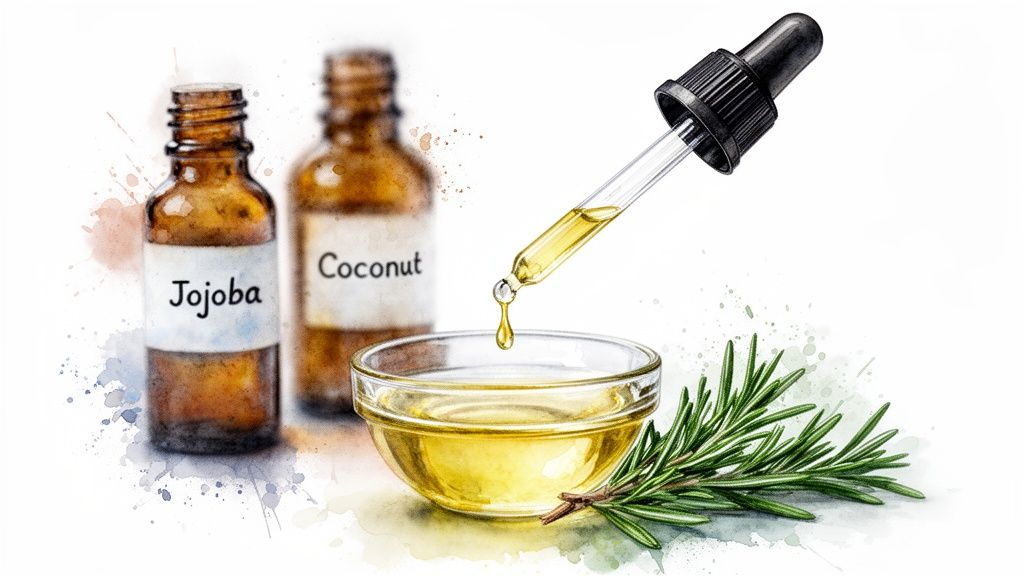
Choosing Your Carrier Oil
Picking a carrier oil is where you can start customizing the experience for your specific hair type. Each one brings its own unique benefits to the table.
Here are a few popular choices:
- Jojoba Oil: This is a fantastic all-rounder. Its structure is very similar to your scalp's natural oils (sebum), so it absorbs well without feeling greasy. It's a great option for almost anyone.
- Coconut Oil: If your hair is on the drier side, coconut oil is a wonderful choice. It's known for its deep moisturizing properties. We recommend using a fractionated (liquid) version, as it’s much easier to mix and apply.
- Castor Oil: This is a thick, rich oil that’s perfect for a deeply nourishing weekly scalp treatment. If you’re looking for an intensive mask, this is a great option.
Once you get comfortable, you can branch out and explore other essential oils for hair growth to add to your blends.
Always Do a Patch Test First
We can't stress this enough. Before you go all-in with any new hair product, especially a potent essential oil blend, please do a quick patch test. It’s a simple way to make sure your skin is on board with the plan.
Just mix up a small amount of your diluted oil and dab it onto a discreet spot, like behind your ear or on your inner elbow. Give it 24 hours. If you see no redness or irritation, you're good to go. It’s a small, mindful step that lets you proceed with total confidence.
Your hair wellness journey is personal. Taking the time to properly prepare your rosemary oil blend and perform a patch test sets the stage for a positive and nurturing experience from the very start.
Some research has explored the benefits of rosemary oil for hair. A 2-3% dilution is a common recommendation for scalp application—strong enough to be beneficial, but gentle enough for regular use.
Simple Rosemary Oil Dilution Guide
To make things easy, here is a quick-reference guide. Remember, consistency is far more important than concentration when it comes to supporting your hair.
| Routine Type | Carrier Oil Amount | Rosemary Oil Drops | Best For |
|---|---|---|---|
| Gentle Daily Use | 1 Tablespoon (15 ml) | 2-3 drops | Adding a boost to a leave-in product or for those with sensitive scalps. |
| Standard Scalp Massage | 1 Tablespoon (15 ml) | 4-5 drops | A perfectly balanced blend for a weekly scalp massage ritual. |
| Intensive Treatment | 1 Tablespoon (15 ml) | 6-7 drops | Creating a potent pre-shampoo mask or a concentrated weekly treatment. |
Use this table as your starting point. You can always adjust the ratios slightly once you see how your hair and scalp respond.
Getting the Most Out of Your Rosemary Oil
Alright, you’ve mixed your rosemary oil blend, and now for the best part—actually using it. The key is to make this a relaxing ritual, not another item on your to-do list. The great thing is there’s no single “right” way to do it. You can easily find a method that fits your schedule and preferences.
Whether you have an hour for a full-on pampering session or just a few minutes before you jump in the shower, there’s a way to make it work. Let’s walk through three of our favorite, most effective methods.
The Soothing Scalp Massage
A scalp massage is probably the most classic and enjoyable way to use rosemary oil. This isn't just about putting oil on your head; it's a mindful practice that helps you unwind while invigorating your scalp.
Start by parting your hair into a few sections so you can get directly to the scalp. Use a dropper or just your fingertips to apply your diluted oil blend right at the roots.
Now, using the pads of your fingers (never your nails!), gently massage the oil into your scalp with slow, circular motions for about 5-10 minutes. The pressure feels wonderful and ensures the oil gets distributed evenly. It’s a perfect little wind-down at the end of the day.
This ritual is as much about the experience as it is about the oil. The physical act of the massage, combined with the fresh, herbal scent of rosemary, transforms a simple hair care step into a truly restorative moment.
The Deep-Dive Pre-Shampoo Treatment
For those days when your scalp and hair are calling out for some extra TLC, a pre-shampoo treatment is the answer. This is our go-to for a lazy Sunday afternoon when we want to give our hair a really deep, nourishing boost.
Apply your diluted rosemary oil generously to your dry scalp and hair, using the same massage technique we just covered. After your scalp is saturated, go ahead and work any leftover oil through the lengths of your hair for some added moisture and shine.
Then, wrap your hair in a warm towel or pop on a shower cap. This traps a little bit of heat, which helps the oil better absorb into the hair and scalp. Let it sit for at least 30-60 minutes. If you have the time, leaving it in for a couple of hours while you relax is even better. When you’re done, just hop in the shower and shampoo it out.
The Quick and Easy Shampoo Infusion
If you’re short on time and looking for the most low-effort way to get rosemary oil into your routine, this method is for you. It lets you enjoy the benefits without adding any extra time.
It’s incredibly simple: just add two to three drops of pure rosemary essential oil directly into the dollop of shampoo in your palm right before you wash. Mix it together, and lather up as you normally would.
When you're washing, just spend an extra minute massaging your scalp to make sure that rosemary-infused shampoo really gets in there. It makes being consistent a total breeze. For an even more convenient option, a pre-mixed blend can be a great choice. Many people love combining rosemary with castor oil, and our ArtNaturals Rosemary and Castor Oil for Hair is a ready-to-use formula that takes out all the guesswork.
Creating Your Personalized Hair Wellness Ritual
Using rosemary oil for your hair is more than just following a recipe; it's about crafting a personal routine that you'll actually enjoy sticking with. When you're working with natural ingredients, it’s helpful to think long-term. This isn't about a quick fix, but consistent, gentle nourishment. Think of it as a journey of getting to know your hair and scalp, paying attention to what they need.

That's the real shift—moving from just following steps to creating a practice that feels good. It’s about building a better connection to your own self-care and noticing the small, gradual improvements along the way.
The Art of Consistency and Patience
When you add something new like rosemary oil to your routine, patience is your best friend. Hair grows in cycles, and it takes time to see changes. It's best to commit to your chosen method for at least a few months to give your scalp a real chance to respond.
Some studies have explored the benefits of consistent rosemary oil use over several months. For instance, you can read up on the study findings at Ethique.com. This is a great reminder that meaningful results often come from sticking with a routine.
Customizing Your Blend with Other Oils
The great thing about rosemary oil is that it plays so well with other botanical oils. This is where you can really start to customize your treatment to address exactly what your hair needs, whether it's dryness, frizz, or an oily scalp.
Here are a few combinations that people enjoy:
- For Extra Moisture: Mix rosemary oil with castor oil. It’s thick and rich, perfect for sealing moisture into dry, thirsty strands. A little goes a long way.
- For Shine and Softness: Blend it with argan oil. This oil is much lighter and fantastic for taming frizz and adding a healthy-looking sheen without making your hair feel heavy.
- For a Balanced Scalp: Pair it with jojoba oil. Jojoba is brilliant because its structure is incredibly similar to our scalp's natural sebum, so it helps regulate oil production. It’s a safe bet for almost any hair type.
Don't be afraid to experiment. You can learn more about the best oils for hair growth to discover other ingredients that might work for you.
The goal is to create a blend that not only supports your hair but also feels like a treat to use. When it feels like a moment of self-care, you're more likely to stick with it.
Tracking Your Personal Hair Story
Watching your progress is one of the most rewarding parts of this whole process. You don’t need any fancy tools—just pay attention to how your hair and scalp feel. Over time, you'll become the best expert on your own hair.
Try keeping a simple journal or just make a mental note of a few things:
- Changes in Texture: Does your hair feel any softer or stronger? Maybe you notice a bit more volume at the roots.
- Scalp Comfort: Is your scalp less itchy or flaky than when you started?
- Overall Shine: Does your hair look a little healthier or have more of a natural luster?
By tuning into these subtle shifts, you can tweak your routine if needed and celebrate the small wins. It’s a fantastic way to appreciate your body and the process of caring for your hair naturally.
Common Mistakes and How to Avoid Them
Starting a new routine is always a bit of a learning curve, and working with rosemary oil is no different. Knowing about a few common slip-ups ahead of time can help you get the best results without any of the guesswork. Think of this as your friendly guide to making your rosemary oil ritual both effective and enjoyable from day one.

If you take away only one thing, let it be this: never apply undiluted rosemary essential oil directly to your scalp. It’s incredibly concentrated, and using it "neat" can lead to irritation and scalp sensitivity—the exact opposite of what we're aiming for. It absolutely needs a carrier oil to act as a safe buffer.
Using Too Much or Too Little
Finding your "Goldilocks" amount of oil is crucial. If you go overboard, you'll end up with a greasy finish that's tough to wash out. But if you're too skimpy, you won't get even coverage across your scalp.
A good starting point is about a tablespoon of your carrier oil mixture for your whole scalp. That’s usually enough to work through without feeling overly oily. If you have exceptionally thick or long hair, you can always add a little more as you go.
Listening to Your Body
Your scalp will tell you what it needs. If you start to feel any itching or see any redness after an application, that’s your cue to make a change. It doesn't mean rosemary oil isn't for you; it just means your current recipe may need a tweak.
Here are a few easy adjustments to try:
- Dilute It Further: The simplest fix is to add more carrier oil to your mix. This lowers the concentration of the rosemary essential oil, making it gentler.
- Switch Your Carrier Oil: Sometimes, the carrier oil can be the issue. If you're using something heavy like coconut oil, maybe your scalp would prefer a lighter option like jojoba or almond oil.
- Reduce Frequency: Applying the oil three times a week might be too much for sensitive skin. Try cutting back to just once or twice a week to see if that calms things down.
A mindful approach is all about observation and response. Paying attention to how your scalp feels allows you to create a personalized routine that truly works for you, ensuring your hair wellness journey is a positive one.
A quick note on pregnancy: it’s always smart to be cautious. We recommend checking with your healthcare provider before adding any new essential oil routine to your self-care during this special time.
The goal here is to feel good about what you're doing. By sidestepping these common mistakes, you can focus on the relaxing, nourishing benefits of your new hair ritual.
Common Questions About Using Rosemary Oil
When you start a new hair care routine, questions are bound to pop up. It's completely normal. Let's walk through some of the most common ones to make sure you feel confident and ready to get started with rosemary oil.
How Often Should I Use Rosemary Oil On My Hair?
The real key here is consistency, not necessarily daily use. For most people, a sweet spot is using a rosemary oil treatment 2-3 times per week. This gives your scalp enough exposure to the oil's benefits without causing buildup or irritation.
If you're adding it to your shampoo, you can just use it on your regular wash days. The most important thing is to pay attention to how your hair and scalp feel. If you notice things getting a bit greasy, just dial it back. The aim is to find a simple, sustainable routine you can stick with for the long haul.
Can I Leave Rosemary Oil In My Hair Overnight?
Yes, you can. Letting a diluted rosemary oil blend sit on your scalp overnight can be a wonderful deep-conditioning treatment. This gives it maximum time to absorb.
Just massage the mixture into your scalp, then protect your pillowcase with a towel or pop on a silk bonnet. When you wake up, shampoo it out thoroughly. Your hair should feel incredibly soft and nourished.
A natural hair care journey is all about working with your body. If you're looking for different approaches to hair support, you might want to explore professional PRP treatments, which take a more clinical approach.
What Is The Best Carrier Oil To Mix With Rosemary Oil?
The "best" carrier oil really depends on your hair type and what it needs. There's no single right answer, but here are a few of our favorites to get you started:
- Jojoba Oil: This is our go-to recommendation for beginners. Its composition is incredibly similar to your scalp's own natural oils, so it's usually very well-tolerated.
- Coconut Oil: Amazing for dry, thirsty hair, but it can be a bit heavy for those with fine hair.
- Castor Oil: This one is thick and incredibly rich. We love using it for a powerful, once-a-week deep treatment.
- Argan Oil: A much lighter option that's fantastic for adding shine and fighting frizz without weighing hair down.
If you're unsure where to begin, you really can't go wrong with jojoba oil. It’s a solid, balanced starting point.
When Can I Expect To See Results?
This is where patience becomes your best friend. Hair growth is a gradual process, so think of this as a long-term commitment to a healthier scalp. Many people start noticing small changes—like a more balanced scalp or a softer texture—within 3 to 6 months of consistent use.
Ready to get started with pure, high-quality ingredients? Check out the ArtNaturals collection to find everything you need for your new hair wellness ritual. https://artnaturals.com