

You're standing in the bathroom with a bottle of oil in one hand and a foaming cleanser in the other, wondering whether putting oil on breakout-prone skin is a clever routine or a fast route to more congestion. That hesitation makes sense. Oil cleansing can feel soothing and effective for some people, but it isn't automatically suitable for every acne-prone face.
The safest way to explore the oil cleansing method for acne prone skin is to treat it as a gentle cleansing option, not a cure or a promise of clearer skin. Your choice of oil, the way you remove it, and your skin's response afterward all matter more than the trend itself.
What Oil Cleansing Actually Means
Oil cleansing uses a plant-based oil or blend to loosen oil-based residue, including excess sebum, sunscreen, and makeup. You massage the oil onto dry skin, then remove it with water or follow with a mild water-based cleanser. The idea is simple: oil can bind with other oily substances, helping lift them without relying on aggressive rubbing.
That approach creates a useful mindset shift. A cleanser doesn't need to leave your face squeaky or tight to feel effective. Harsh, highly foaming washes can remove too much surface oil, while a gentler formula may leave the skin feeling comfortable and clean. Still, comfort alone doesn't prove that an oil is suitable for pores or breakouts.
Practical rule: The oil is a removal step, not a leave-on treatment. It should be rinsed away thoroughly.
The human evidence around cleansers and acne is limited. A 2018 clinical review identified 14 prospective studies with 671 participants, and described the evidence base for cleanser choices as relatively small compared with other acne treatments (clinical cleanser review). In one referenced study involving 28 university students, cleansing oils were reported as better suited to dry and aged skin, while oil-free cleansers were better for oily and acne-prone skin. That doesn't make oil cleansing impossible, but it does mean popular claims deserve a measured response.
A gentle oil cleanse can fit into a broader self-care routine, especially when makeup or sunscreen needs dissolving. If you prefer professional guidance for a deeper cleansing experience, resources such as clear radiant skin facial Tysons Corner may help you understand how a facial routine can be adapted to your skin's comfort and needs.
Carrier oils also have different textures and uses, so learning their basic properties is worthwhile before blending. The carrier oils guide offers helpful background for understanding how oils behave in personal-care formulas.
Choosing Oils That Suit Acne-Prone Skin
The most important distinction is texture. A light, rinseable oil may feel comfortable on oily or combination skin, while a heavier oil can leave a film that feels sticky or occlusive. “Natural” doesn't mean universally compatible, and a product labeled non-comedogenic still needs personal testing because skin can respond differently to the same ingredient.
Jojoba, squalane, grapeseed, rosehip, and hemp seed are commonly considered lighter options. They tend to spread easily and can leave less noticeable residue than heavier oils. Neutral beauty guidance also identifies grapeseed, jojoba, squalane, rosehip, and argan as lighter choices, while cautioning that coconut, mineral, and sometimes olive oil may feel too heavy for acne-prone routines (cleansing oil ingredient guidance).
Carrier Oils at a Glance for Acne-Prone Skin
| Oil | Comedogenic Rating | Skin Feel | Suitability |
|---|---|---|---|
| Jojoba | Often described as low | Light and fluid | A reasonable starting point for combination or oily skin |
| Squalane | Often described as low | Silky and lightweight | Useful when you want slip without a rich finish |
| Grapeseed | Often described as low | Thin and quick-spreading | May suit skin that dislikes heavy residue |
| Rosehip | Often described as low to moderate | Light with a noticeable botanical feel | Better introduced gradually |
| Hemp seed | Often described as low | Light and slightly earthy | An option for a simple blend |
| Coconut | Can be high for some users | Rich and coating | A cautious choice for acne-prone skin |
| Wheat germ | Often considered heavier | Dense and nourishing | More likely to feel occlusive |
| Olive | Varies by formulation and skin | Rich and substantial | May feel too heavy for some oily faces |
Comedogenic ratings can help you narrow a starting point, but they aren't a guarantee. A low rating doesn't mean an oil will suit your skin, and a heavier ingredient may still work for someone else when used in a properly formulated cleanser. The face oils guide for acne can provide additional ingredient context, but your own post-rinse comfort remains the most useful feedback.
Some people experiment with a small amount of black seed oil or tea tree in a blend. Essential oils can irritate sensitized skin, so they shouldn't be treated as automatically gentle, and tea tree should never be applied casually at full strength. Keep the first formula simple. You're testing skin feel, rinseability, and next-day comfort, not chasing a dramatic result.
How to Do the Oil Cleansing Method
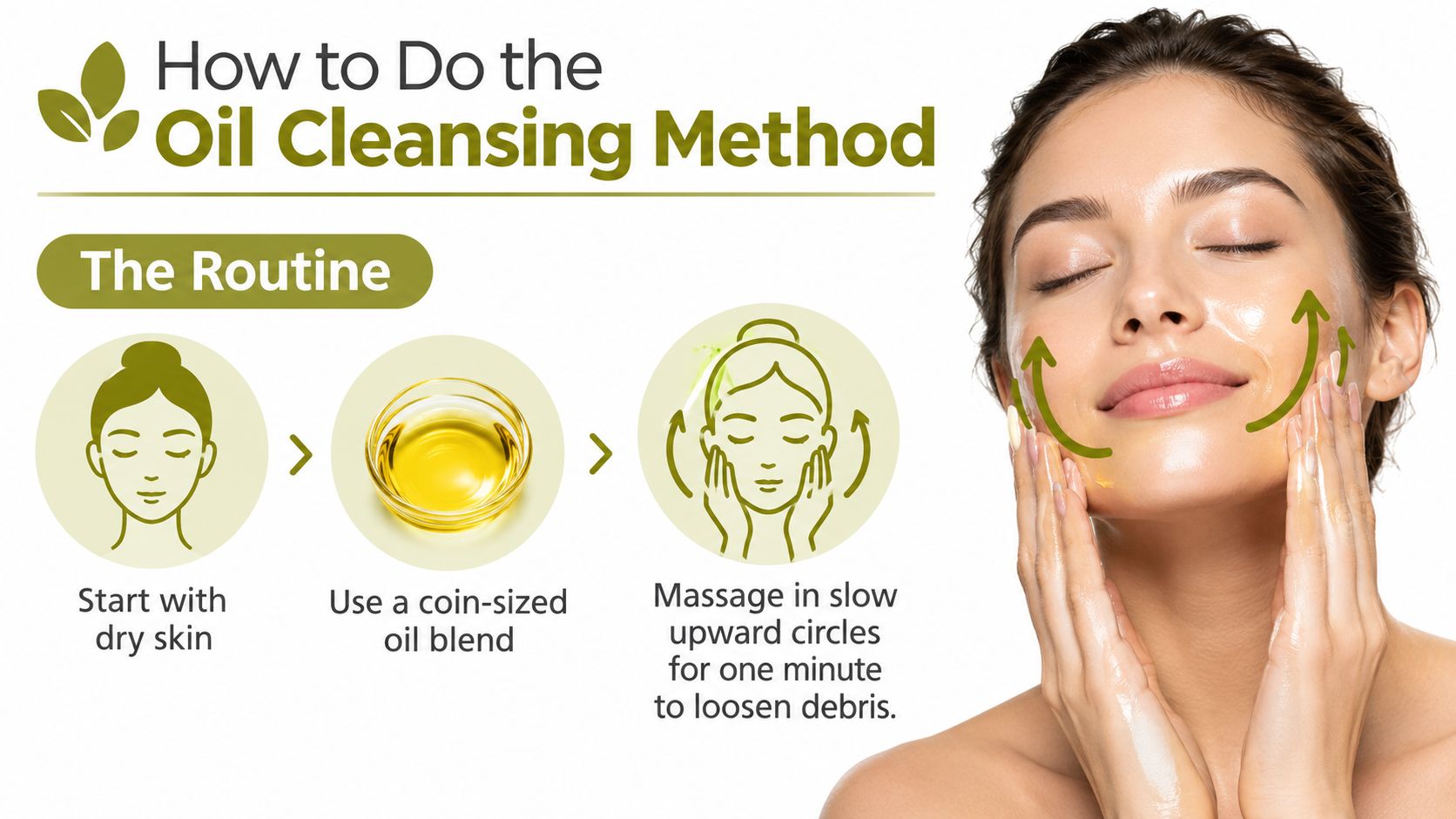
Begin with dry hands and a dry face. Apply about a coin-sized amount of a cosmetic-grade cleansing oil or your chosen blend, then warm it between your palms. Spread it over the face with slow, upward circles, using light pressure rather than trying to scrub away congestion.
A massage of about one minute is enough to loosen sunscreen, sebum, and makeup without turning cleansing into friction. Pay attention to the areas where residue collects, but don't keep rubbing because you hope to force every pore to feel smooth. The goal is to dissolve surface buildup and remove it calmly.
Let the Oil Emulsify
Add a few drops of lukewarm water to your hands and continue massaging briefly. A properly emulsifying cleansing oil will turn milky or cloudy, which signals that the oil and loosened residue are dispersing so they can rinse away more easily. If your straight oil never emulsifies, you'll need to remove it especially carefully rather than assuming water alone will wash it away.
Rinse with lukewarm water. If you use a cloth, choose a soft one and press or glide it gently instead of scrubbing. Pat the skin so it stays slightly damp, then apply a light hydrating layer if your routine needs one.
For oily skin, heavy sunscreen, makeup, or a noticeable film after rinsing, an optional second cleanse can help. Use a gentle, low-pH water-based cleanser and stop there. You don't need to repeat the entire process several times.
If you're comparing ready-made cleansing oils, this Kose Softymo guide explains how different product types are intended to be used. The label matters because a formulated cleansing oil is designed to rinse differently from a plain carrier oil.
The routine is demonstrated visually below. Use the video as a reminder of the gentle motion and dry-skin application rather than a reason to massage longer.
This method is a skill you refine through observation. Your skin may feel calm after rinsing, or it may feel coated, tight, itchy, or unusually shiny. Those signals are more useful than forcing a routine because someone else calls it a game changer.
Adjusting Your Blend to Your Skin
Mara and Jules start with the same idea, but their skin gives them different instructions. Mara has an oily T-zone and congestion near the jaw. She begins with a jojoba and sweet almond blend, moves toward more jojoba, and adds a small amount of black cumin oil because she likes its balancing reputation. She also shortens her massage when her skin looks more flushed afterward.
Jules has drier cheeks and experiences breakouts around hormonal changes. She keeps more sweet almond oil for glide, leaves out black cumin, and spends a little longer on tight areas without pressing harder. Her test is simple: after rinsing, does her skin feel comfortable, or does it feel coated and restless?
Two Reader Profiles, Two Blend Tweaks
| Factor | Mara, Oily T-Zone | Jules, Drier Cheeks, Hormonal |
|---|---|---|
| Starting direction | More jojoba | More sweet almond |
| Example ratio | 80/20 jojoba to sweet almond | 60/40 jojoba to sweet almond |
| Optional addition | A touch of black cumin | None at first |
| Massage adjustment | Shorter when skin feels stimulated | Slightly longer on tight areas |
| Post-rinse goal | Calm, less shiny feel | Comfortable, flexible feel |
| Reason to change | Coating, extra shine, or congestion | Tightness, roughness, or insufficient slip |
These ratios are examples, not rules. The same blend can feel light on one face and heavy on another, especially when the person uses too much product or doesn't rinse thoroughly. Keep the first week focused on observation. Changing the oil, ratio, massage time, and frequency all at once makes it impossible to know what caused a reaction.
A simple journal can help. Note the blend, the amount, whether it emulsified, how your skin felt after rinsing, and how it looked later that day. Adjust one variable at a time, and give your skin enough quiet time to show you a pattern.
Mistakes and Precautions to Watch For
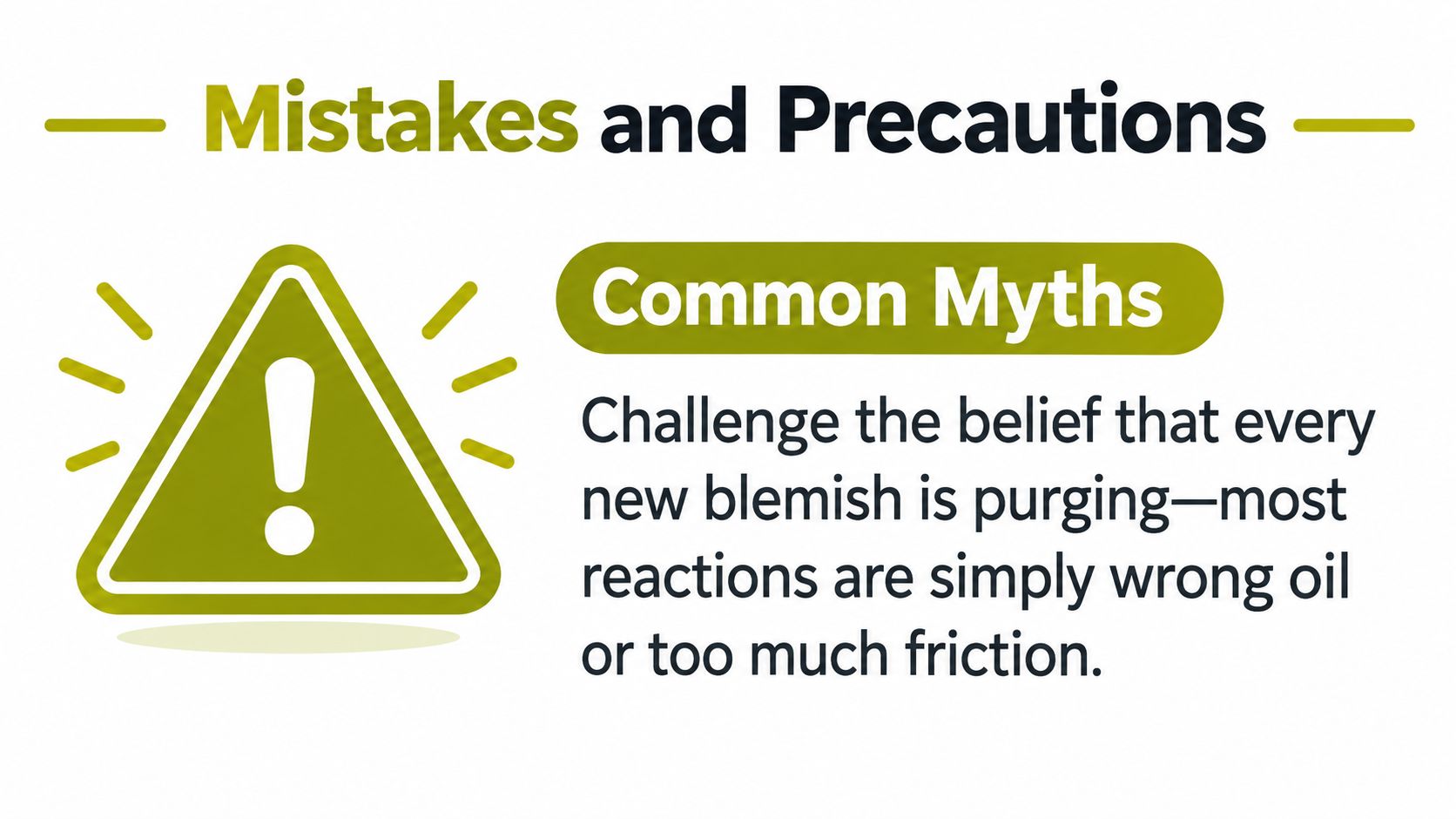
A new blemish isn't automatically “purging.” That label can encourage you to continue a routine that your skin doesn't tolerate. With oil cleansing, a reaction may come from the wrong oil, too much friction, incomplete removal, or a formula that leaves a persistent film.
Straight oils are especially easy to misuse. If the product doesn't emulsify, warm water may not remove all of it, and leftover residue can feel congesting. Heavy oils can also feel uncomfortable when layered over substantial sunscreen or silicone-rich makeup, particularly if the first cleanse is rushed.
Signs to Pause and Reassess
- Unexpected shine: If your face looks much shinier later in the day, the blend may be too rich or the removal incomplete.
- Soreness or itching: These are reasons to stop the new product rather than push through.
- Persistent residue: Try less oil, better emulsification, or a gentle second cleanse.
- More friction: Shorten the massage and use enough slip so your fingertips glide.
- Painful flares: Set the oil routine aside and keep cleansing simple while the skin feels especially reactive.
Patch test each new oil along the jawline for three nights before applying it across the face. That doesn't predict every possible response, but it gives you a quieter way to notice immediate discomfort or irritation. If the area becomes sore, itchy, or suddenly more congested, remove the oil from your trial.
Over-cleansing creates another problem. Rubbing for too long, using hot water, or performing multiple double cleanses can leave the skin feeling stripped, which may lead you to add even more products in an attempt to restore comfort. One careful pass is often more sensible than repeating the routine until the skin feels unnaturally bare.
For additional guidance on essential oil dilution and use, consult this essential oils for skin guide. Oil cleansing remains gentle skincare, not treatment, so painful or persistent skin concerns deserve individualized advice from a qualified professional.
Building a Gentle Weekly Rhythm
A sustainable routine doesn't need to happen every night. Start with oil cleansing on three evenings a week, especially on days when sunscreen, makeup, or outdoor residue has built up. On the other mornings, use a mild water-based cleanser or a simple rinse according to how your skin feels.
A sample rhythm might look like this:
- Monday evening: Oil cleanse, emulsify, rinse, and moisturize lightly if needed.
- Tuesday: Keep the routine simple and avoid extra massage.
- Wednesday evening: Repeat only if Monday left your skin comfortable.
- Thursday: Use your regular gentle cleanser.
- Friday evening: Oil cleanse after makeup or sunscreen.
- Weekend: Choose the quieter option if your skin feels reactive, tight, or unusually shiny.
Space heavier massage nights away from exfoliating products or other active treatments. Your face doesn't need every technique at once, and a calm routine makes it easier to identify what helps and what irritates. If your skin feels unsettled, take a quiet week with lukewarm water and a mild cleanser rather than trying to correct the problem with more oil.
A Short Routine Checklist
Do:
- Patch test: Introduce one new oil at a time.
- Emulsify: Add water before rinsing when the formula is designed to turn milky.
- Use lukewarm water: Keep the temperature comfortable, never hot.
- Listen after rinsing: Look for calm, flexible skin rather than a squeaky finish.
Don't:
- Scrub with a cloth: Soft pressure is enough.
- Chase instant clarity: A single cleanse can't tell you whether a routine suits you.
- Ignore residue: Adjust the amount or add a gentle second cleanse when needed.
- Force frequency: The right rhythm is the one your own skin consistently confirms.
ArtNaturals offers plant-oil skincare, cleansing products, serums, and other personal-care options that can help you build a simple routine around your skin's preferences. Visit ArtNaturals to explore ingredient-focused choices and select a cleanser or oil that fits your approach to gentle, everyday care.