

Many people exploring rosemary oil for hair growth results find it to be a wonderfully gentle and aromatic part of their wellness routine. Most start to see subtle improvements after a few months of consistent use. The key is to think of it less like a quick fix and more like a long-term ritual for nurturing your scalp and hair.
Your Guide to Rosemary Oil for Hair Wellness

Welcome! Let's walk through how you can make rosemary oil a part of your hair care ritual. For centuries, this fragrant herb has been a cornerstone of wellness practices, loved for its invigorating, earthy scent that helps calm the mind and body. It's no surprise that people are turning back to these time-honored, plant-based ingredients to support their hair's natural vitality.
Think of this as an opportunity to create a mindful self-care practice. It’s an invitation to connect with your hair care routine on a deeper level, turning something simple into a genuine moment of relaxation and focus.
Setting a Mindful Foundation
When you start using rosemary oil, patience is everything. Instead of looking for immediate changes, shift your focus to creating a healthy, supportive environment where your hair can thrive over the long haul. It's a journey of consistency and observation.
And while we're talking about hair, it’s impossible to ignore the bigger picture. Your overall well-being has a huge impact on your physical health, hair included. Taking a holistic approach can make all the difference, and you can start your journey to a better you with a health and wellness journal to keep track of it all.
Your Rosemary Oil Journey at a Glance
To help you get started with a realistic mindset, here's a quick summary of what to keep in mind. This little table sets a solid foundation for your journey.
| Aspect | What to Keep in Mind |
|---|---|
| Patience | Visible changes are gradual. It often takes several months of consistent use to really notice a difference. |
| Consistency | Regular application a few times a week is far more supportive than using a large amount all at once. |
| Application | A gentle scalp massage is the perfect way to apply the oil. It turns a simple step into a relaxing ritual. |
| Holistic View | Remember, healthy hair is closely linked to your overall health—diet, stress, and sleep all play a role. |
Think of these points as your friendly reminders. This isn't about chasing overnight results; it's about committing to a practice that supports you and your hair's well-being over time.
How Rosemary Oil Nurtures Your Scalp and Hair
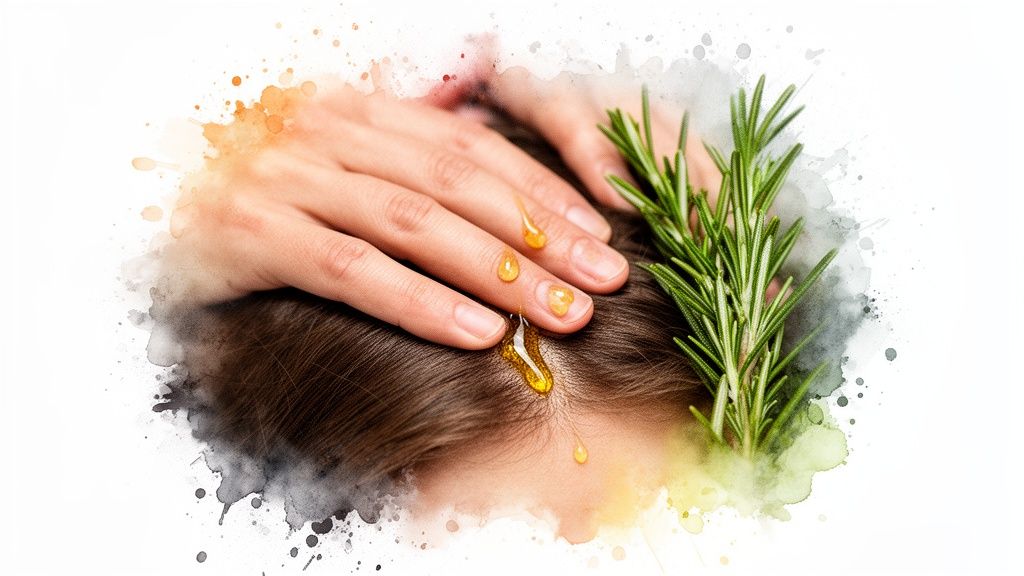
To really understand how rosemary oil can be beneficial, it helps to think of your scalp like a garden. You can't expect flowers to bloom without healthy, well-fed soil, right? The same goes for your hair. A happy, balanced scalp is the foundation for everything that follows, and rosemary oil is a fantastic, plant-based way to nourish that foundation.
One of its most well-known qualities is how it invigorates the scalp. When you gently massage it in, you’re doing more than just relaxing—you're physically boosting circulation to the area. This increased circulation is important because it helps bring more oxygen and nutrients to your hair follicles. This creates a supportive starting point for hair to grow in looking healthy and strong.
Creating a Calm Scalp Environment
But it's not just about stimulation. Rosemary oil is also packed with antioxidants. Think of these as your scalp’s personal helpers, assisting in fending off environmental stressors that can cause irritation and throw things out of balance.
A calm, soothed scalp is where healthy hair can truly thrive. When you're not dealing with common issues like flakiness or itchiness, your follicles can focus on their main job: growing hair. If a dry scalp is your primary concern, we have a whole guide dedicated to natural remedies for dry scalp.
A Gentle, Plant-Powered Approach
So many people are drawn to rosemary oil because it offers a wonderful way to support their hair goals without harsh chemicals. It fits perfectly into a clean beauty mindset, where we prioritize ingredients that come straight from nature.
Choosing to add rosemary oil to your routine is about more than just hair; it's a mindful approach to wellness. You're nurturing your body with a plant-based ingredient, focusing on long-term health instead of a temporary fix.
The gentle nature of this oil is well-regarded. Some interesting research has explored the effects of rosemary oil on hair. One popular study from 2015 looked at its use over a six-month period. Participants who used rosemary oil experienced an increase in hair count, and they also reported less scalp itching compared to another common alternative, making it a comfortable choice for long-term, consistent use. You can read up on these interesting findings on PubMed.
Creating Your Personal Rosemary Oil Hair Ritual
Bringing rosemary oil into your routine is more than just another step; it's a chance to create a simple, soothing moment for yourself. The secret to seeing benefits isn't some complicated process—it's all about gentle, steady consistency. Let's walk through how to build a personal ritual that feels good and fits right into your life.
First things first, and this is the most important rule: always dilute pure rosemary essential oil before it touches your scalp. This is non-negotiable. Straight essential oils are incredibly potent and can easily cause redness and irritation if you're not careful.
Mixing it with a carrier oil is the standard way to do this. Not only does this make it safe to apply, but it also adds a host of other nourishing benefits from the carrier oil itself. Think of carrier oils as gentle, plant-based oils that "carry" the powerful essential oil safely onto your skin.
Choosing Your Carrier Oil
Different carrier oils bring their own unique benefits to the table, so you can really tailor the blend to what your hair needs.
Here are a few of the most popular choices:
- Jojoba Oil: This one is a fan favorite because it's so lightweight. Its structure is surprisingly similar to our scalp's natural oils (sebum), which makes it a fantastic, non-greasy option for almost any hair type.
- Castor Oil: If your hair feels dry or brittle, this is a great choice. It's thick, rich, and well-known for its intense moisturizing qualities.
- Coconut Oil: A true classic, coconut oil is well-loved for its ability to penetrate the hair shaft instead of just sitting on top, delivering moisture deep inside.
Once you've picked your partner oil, getting the ratio right is easy. A great rule of thumb is to mix 3-5 drops of pure rosemary essential oil into one tablespoon of your carrier oil. Just blend them in a small bowl right before you're ready to apply it.
Simple Ways to Use Rosemary Oil
Finding the right application method is all about what works for your schedule and what feels most enjoyable. This is your ritual, after all. The goal is to turn a simple hair care step into a mindful practice. A few minutes of focused, gentle massage can be a wonderfully grounding experience that also happens to be great for your scalp's health.
Here's a quick comparison of different methods to help you find the perfect fit for your lifestyle and hair care routine.
| Method | Best For | Simple How-To |
|---|---|---|
| Scalp Massage | A focused, relaxing treatment to invigorate the scalp. | Apply your oil blend to your fingertips and gently massage your scalp for 5-10 minutes. Leave it on for at least 30 minutes before washing. |
| Overnight Treatment | A deeper, more intensive nourishing experience. | Massage the oil into your scalp and work it through your hair. Cover with a silk cap or bonnet and simply wash it out in the morning. |
| Shampoo Boost | An easy, low-maintenance way to incorporate the oil. | Add 2-3 drops of pure rosemary oil to the dollop of shampoo in your palm, lather up, and wash your hair as you normally would. |
After you've found a method you like, stick with it! The key is consistency. Aim to use your rosemary oil treatment 2-3 times per week to create a steady, supportive rhythm.
Lots of people also love creating their own botanical blends. If you're curious about what else you can mix in, you can learn about other essential oils for hair growth to build a routine that’s perfectly yours.
Understanding the Timeline for Your Hair Journey
When you start any new hair care routine, especially a natural one, the number one thing you need is patience. This isn't an overnight solution. Just like a garden doesn't sprout immediately, nurturing your hair with rosemary oil is a gradual process that rewards consistency.
Your hair has its own natural cycle of growing, resting, and shedding. Anything you do to support that cycle needs time to work. So, think of this as a long-term commitment, not a quick fix. Forget about looking for dramatic changes in the first few weeks—instead, pay attention to the small, encouraging signs along the way.
The First Few Months: What to Expect
In the first one to three months, the changes you'll notice are usually more about feel than look. You might find your scalp feels calmer and less itchy. Maybe your hair feels a bit softer, or you see a little less shedding in your brush.
These are fantastic signs! They tell you that you're creating a healthier environment on your scalp, which is the perfect foundation for happy hair.
Think of your hair journey as a marathon, not a sprint. Celebrating these small victories—like a less irritated scalp or softer strands—is key to staying motivated for the long haul.
These early wins are the building blocks for the more visible rosemary oil for hair growth results you're aiming for.
Hitting the 6-Month Mark and Beyond
This is where your dedication really starts to pay off. Real, visible changes in hair thickness and appearance often start showing up after several months of consistent use. You have to stick with it. That consistency is what allows the beneficial properties in rosemary oil to work in sync with your hair's natural growth phases.
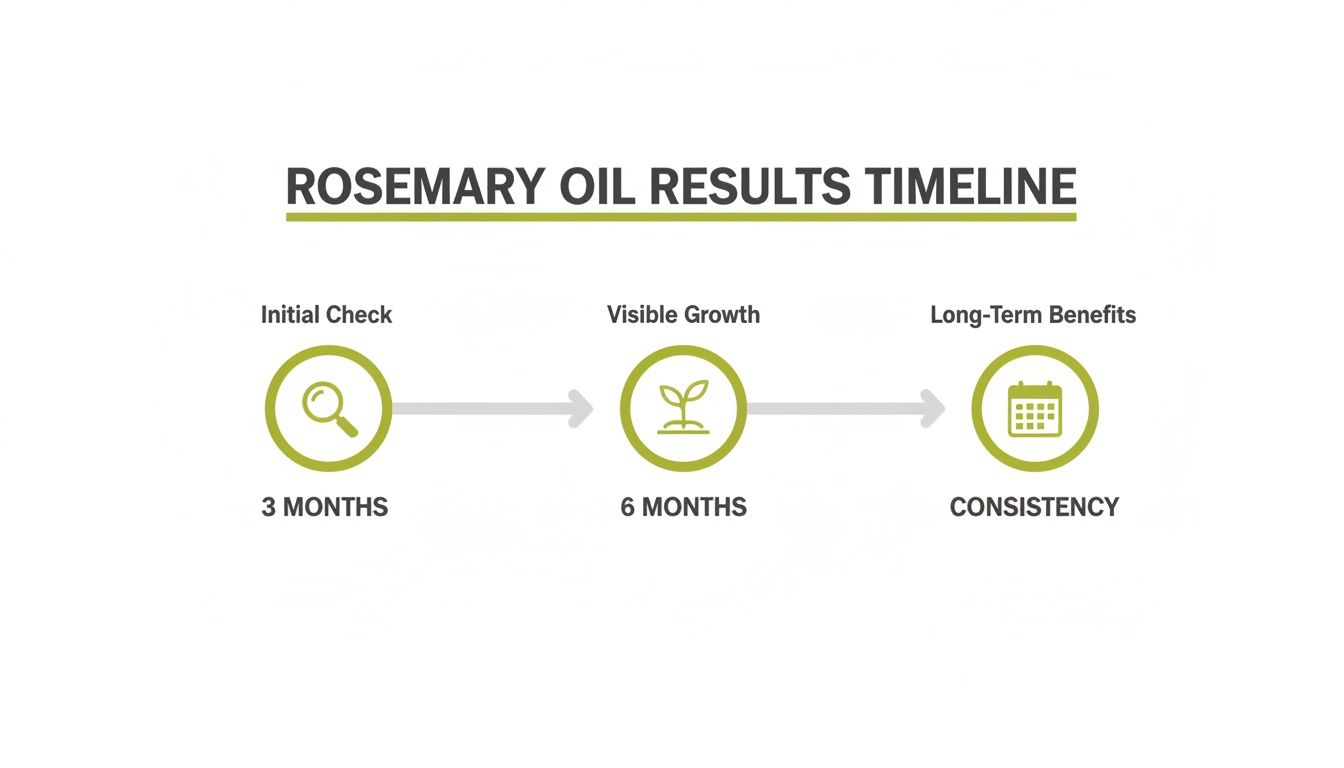
This timeline really drives home the importance of patience. While it's good to check in early, the six-month mark is often the turning point where you can actually see a meaningful difference.
This aligns with a well-known 2015 study that looked at the use of rosemary oil over time. In that research, participants saw no significant changes at the three-month check-in. It was only after a full six months of consistent use that they experienced a notable increase in hair count. You can read more about these findings on Ethique.com.
At the end of the day, everyone's hair is different. But by committing to your routine for at least six months, you give yourself the best possible opportunity to see the benefits you're hoping for.
How to Choose a Quality Rosemary Oil
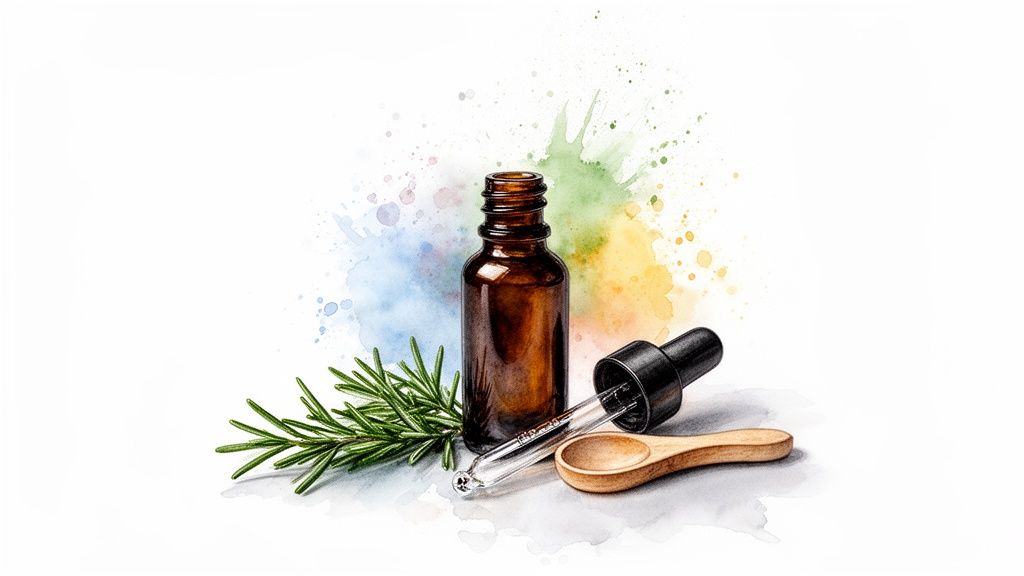
When you're picking out ingredients for your personal care routine, quality is everything. Not all rosemary oils are made the same, and knowing what to look for can help you find a product that aligns with your wellness goals. The goal here is simple: find a pure, potent oil that brings all the botanical goodness to your hair and scalp.
First things first, you'll generally find two types of products on the shelf: pure essential oil and pre-diluted hair oil blends. Pure rosemary essential oil is the concentrated form—powerful, but it absolutely must be diluted with a carrier oil before you put it anywhere near your scalp. A pre-diluted blend is a ready-to-go option, usually mixing rosemary with other fantastic oils like castor or jojoba for a well-rounded hair treatment.
What to Look for on the Label
Think of the product label as your guide. It holds all the clues you need to figure out if you're holding a high-quality oil or something less effective.
Here’s a quick checklist for your next shopping trip:
- Purity: The label should clearly state it's 100% pure rosemary oil. The botanical name, Rosmarinus officinalis, is another great sign you're getting the real deal without any unwanted extras.
- No Unnecessary Fillers: Scan that ingredient list. If you see artificial fragrances, silicones, or other synthetic additives, it might be best to put it back. You want a clean, simple list.
- Source and Method: This isn't always listed, but brands that care about quality often tell you where their rosemary comes from and how they extract the oil. Steam distillation is the gold standard for essential oils.
Your self-care routine deserves ingredients you can trust. Choosing a pure, thoughtfully sourced oil ensures your hair and scalp receive the focused, plant-based care you intended, enhancing your entire wellness ritual.
Don't forget to check the packaging itself. You'll almost always find high-quality essential oils in dark glass bottles, like amber or cobalt blue. This isn't just for looks—the dark glass protects the oil from sunlight, which can break down its compounds and reduce its effectiveness over time.
Exploring a collection of well-made rosemary oil products can be a great starting point to find an option that checks all these boxes.
Common Questions About Rosemary Oil for Hair
When you start digging into the benefits of rosemary oil, you're bound to have a few questions. That's completely normal. Finding the right routine is a personal journey, and it's all about discovering what works for you. To help you get started, we've tackled some of the most common questions we hear.
Can I Use Rosemary Oil Every Day?
The ideal frequency really comes down to your hair type, how sensitive your scalp is, and how you’re applying it. If you're using a pre-diluted oil blend for a scalp treatment, most people find that 2 to 4 times a week hits the sweet spot. This schedule gives your scalp consistent benefits without overwhelming it.
On the other hand, if you're just adding a few drops of the essential oil to your shampoo, you can do that every time you wash your hair. The most important rule is to listen to your body. If you notice any irritation, dial it back. A slow and steady approach is almost always better, making it a sustainable and enjoyable part of your routine.
Should I Apply Rosemary Oil to Wet or Dry Hair?
This is a great question, and honestly, it’s mostly a matter of preference. A lot of people like applying rosemary oil to damp, towel-dried hair. The moisture helps the oil spread more easily, so you get nice, even coverage across your scalp without much effort.
That said, applying it to dry hair works just as well. This method is perfect for a targeted scalp massage right before you hop in the shower or as a deeper overnight treatment. The best advice is to try both and see what fits best into your schedule. The goal is to create a habit you can stick with.
The best application method is the one you will consistently practice. Whether you prefer the ease of applying to damp hair or the focused ritual on dry hair, what matters most is making it a regular part of your wellness routine.
What Is the Best Way to Apply Rosemary Oil for Hair?
Hands down, a mindful scalp massage is the best way to do it. This technique doesn't just get the oil where it needs to go; it turns the whole process into a relaxing moment of self-care. The gentle pressure also stimulates circulation to the scalp, which is a big plus.
Here’s how to do it right:
- Put a few drops of your pre-diluted rosemary oil on your fingertips.
- Gently press your fingers onto your scalp, starting at your hairline.
- Use slow, circular motions to work the oil across your entire scalp.
- Keep this up for a solid 5 to 10 minutes—relax and breathe deep.
Once you're done, let the oil sit for at least 30 minutes before you wash it out. If you want a more intensive treatment, you can leave it on overnight. Just be sure to protect your pillowcase with a towel or a silk hair bonnet.
Can I Combine Rosemary Oil With Other Oils Like Castor Oil?
Absolutely! Blending rosemary oil with other beneficial oils is a fantastic way to create a custom treatment that targets multiple hair concerns at once. Think of it as creating your own super-powered botanical blend.
Castor oil is a classic partner for rosemary oil, loved for its thick, moisturizing consistency that’s a game-changer for dry, brittle hair. Here are a few other great carrier oils to consider:
- Jojoba Oil: This one is super lightweight and very similar to the scalp's natural sebum, making it a great choice for pretty much any hair type.
- Argan Oil: Famous for its ability to smooth hair and add shine, it nourishes both the scalp and the hair strands.
- Coconut Oil: A deeply hydrating oil that’s great for locking in moisture, leaving your hair feeling soft and conditioned.
Combining these oils creates a wonderful synergy, supporting everything from scalp health to hair texture and shine. It allows you to craft a personalized routine that gets you closer to achieving your desired rosemary oil for hair growth results.
Ready to create your own hair wellness ritual? Explore our collection of pure, plant-powered hair care products at ArtNaturals and find the perfect ingredients to support your journey. Discover our customer-favorite Rosemary & Castor Hair Growth Oil at https://artnaturals.com.