

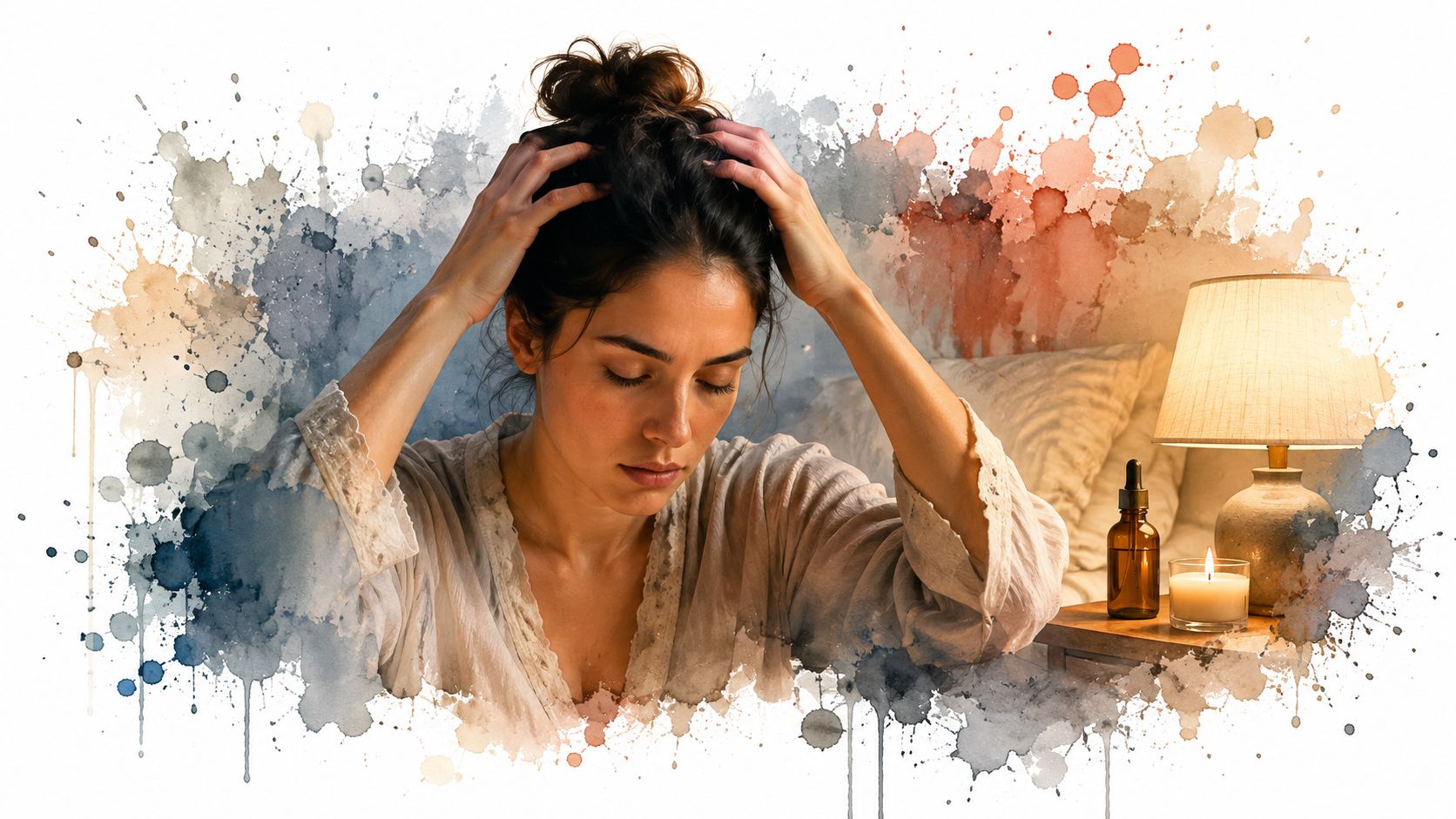
You notice it most on ordinary nights. Your hair is tied up, your day's still in your shoulders, and you've got a few quiet minutes before bed, enough time to press pause and give your scalp a little attention. That's where scalp massage for hair growth fits so naturally, because it feels like self-care first and a hair routine second.
For a lot of people, that's the appeal. Scalp massage is simple, low-fuss, and easy to pair with oils, cleansing, or a bedtime ritual, which is why it keeps showing up in natural haircare conversations. If you're already sorting through options like restore thinning hair resources, scalp massage can feel less intimidating because it starts with something you can do at home, with your own hands.
Why Scalp Massage Has Become a Self-Care Ritual
The appeal is easy to understand. You do not need a device, a long appointment, or a complicated plan to begin. A few calm minutes, a gentle touch, and enough consistency to make it part of your week are usually enough to start.
That simple setup matters because many readers are not looking for a dramatic promise. They want something supportive, soothing, and realistic, especially when their hair routine already includes washing, conditioning, oils, and protective habits. Scalp massage fits into that kind of routine because it can feel calming even before you decide what it is doing for your hair.
What it feels like in real life
A first session should feel slow and settled. The fingertips move across the scalp with steady pressure, and the whole process feels more like easing tension than scrubbing or scratching. If it is done well, the scalp feels cared for, not irritated.
Practical rule: if your hands are tightening, the pressure feels too hard, or your scalp starts to feel hot and raw, ease up and soften the touch.
That gentle quality is part of why the ritual often works well at night. It creates a pause between the day and bedtime, and it turns hair care into something you can enjoy instead of another task to finish. For a fuller view of how massage can fit into a broader hair routine, hair care habits and scalp attention work best when they are consistent and simple.
For readers also trying to restore thinning hair, that perspective can be grounding. Scalp massage is supportive care, not a quick fix, and it makes the most sense as one piece of a wider routine that stays steady over time.
Hand and Tool Techniques That Feel Right
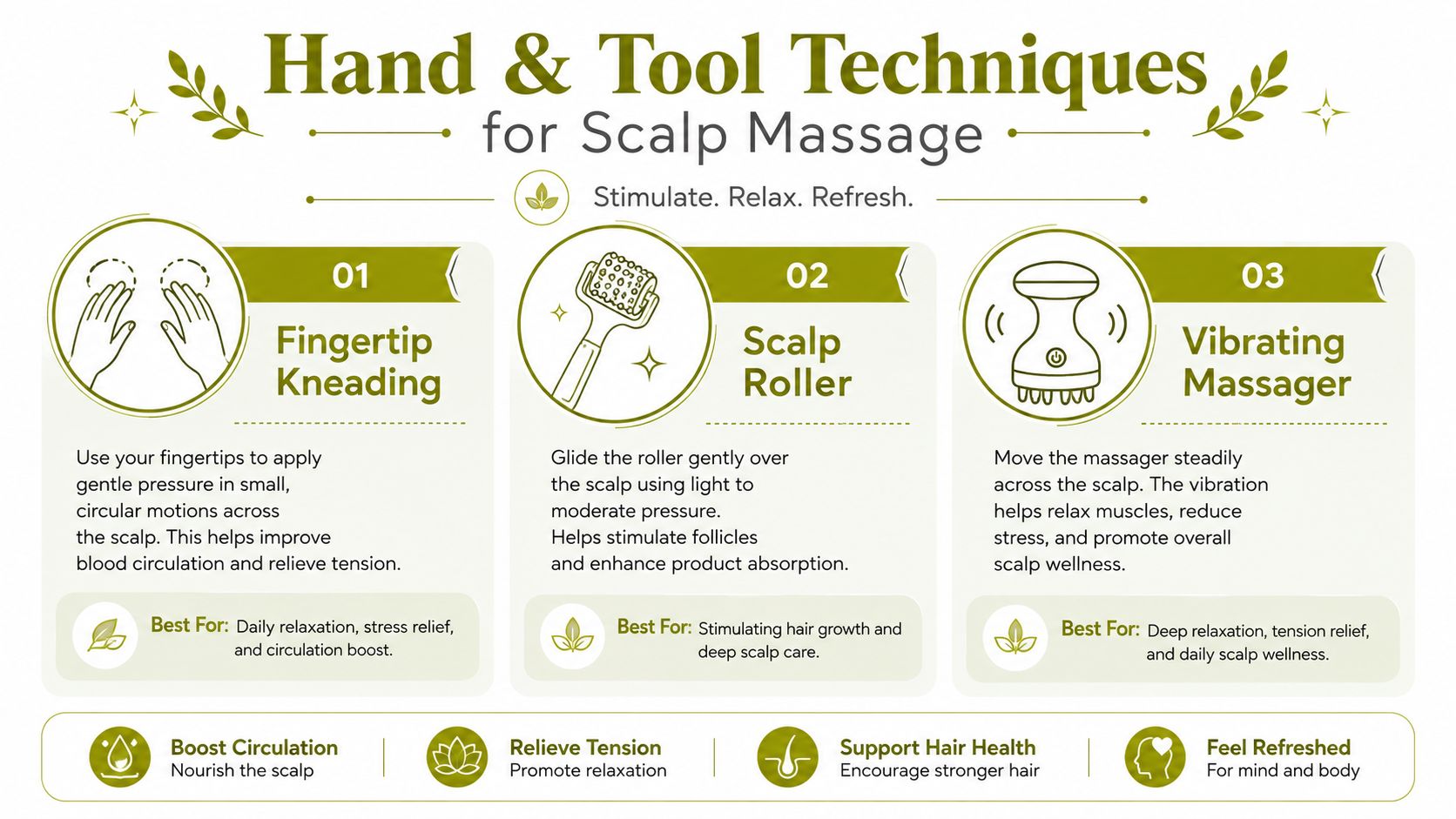
The easiest way to begin is with your fingertips. Use the pads of your fingers, not the nails, and let the motion come from small circles rather than hard rubbing. Start near the temples, move along the hairline, then work toward the crown, so the scalp gets attention in sections instead of all at once.
Fingertips first, then tools if you want them
Hand massage gives you the most control because you can feel pressure changing in real time. Gentle kneading feels different from gliding, and both feel different from small circular motion. The right pressure usually feels warm and reassuring, never scratchy or sharp.
A silicone scalp brush can be useful if you want a little grip without using your nails. A wooden comb with rounded tips feels lighter and can be nice when you want a slower, more comb-like pass through the scalp. A handheld massager adds movement without much effort from your hands, which some people like on wash days or after a long workday.
One simple way to think about it is this, your scalp wants rhythm more than speed. Short, mindful passes usually feel better than fast, frantic movement. If you're new to the routine, five to ten quiet minutes is enough to learn what pressure your scalp likes.
find massage therapy in SLC can be a helpful reference if you're curious about how touch-based wellness is presented in a broader self-care context.
The video below can help you visualize the hand rhythm before you try it yourself.
What the Research Shows So Far
The evidence is interesting, but still modest. A 2016 controlled study followed 9 healthy Japanese men who did a standardized scalp massage for 4 minutes per day over 24 weeks. The treated scalp area did not show a significant change in hair growth rate, but hair thickness increased from 0.085 ± 0.003 mm at baseline to 0.092 ± 0.001 mm at 24 weeks, which is about an 8.2% increase. The same study also reported a temporary drop in hair count at 12 weeks, from 163.889 ± 7.237 hairs/cm² to 155.500 ± 5.607 hairs/cm², which suggests the measured change was strand thickening rather than a clear increase in follicle number. The 2016 controlled study details (PMC4740347).
Why the larger survey still needs care
A later 2019 survey study collected self-reports from 327 people with androgenetic alopecia who used standardized scalp massage. In the subset that massaged for at least 6 months, participants reported a median of 11 to 20 minutes per day and an average of 7.4 months, with 68.9% saying their hair loss stabilized or regrew. The researchers also reported a dose-response pattern, meaning longer or more frequent massage was associated with better self-perceived outcomes. The 2019 self-report survey (PMC6380978).
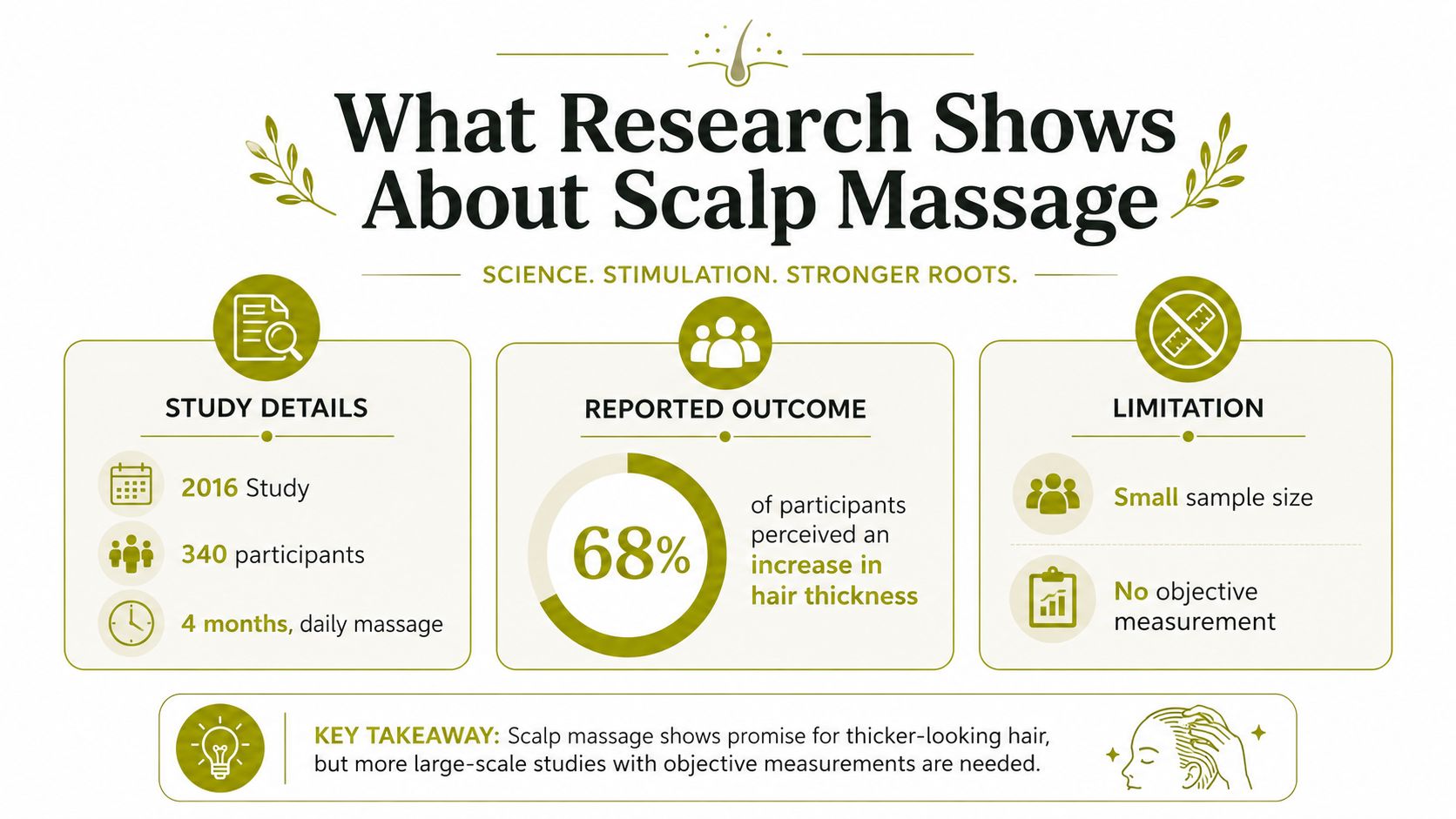
The takeaway is straightforward. Scalp massage may support the feel and thickness of hair for some people, but the current evidence is still small, partly observational, and not enough to treat it like a standalone solution. A useful plain-English overview of the hair growth cycle sits here, which helps explain why hair support routines usually need patience.
Choosing Carrier and Essential Oils Safely
Oil can make massage feel more comfortable, especially if your scalp tends to feel dry or if you want less friction under your fingers. Carrier oils are the base, and they do the everyday work of slipping across the scalp without the intensity of a concentrated essential oil. Jojoba feels light, argan is a little silkier, sweet almond can feel soft and cushiony, and coconut tends to feel richer.
Matching the oil to the feeling you want
If you want something that disappears quickly, reach for a lighter carrier. If you want more slip and a more pampering feel, a richer oil may suit you better. The main point is comfort, because the best oil is the one you'll use consistently.
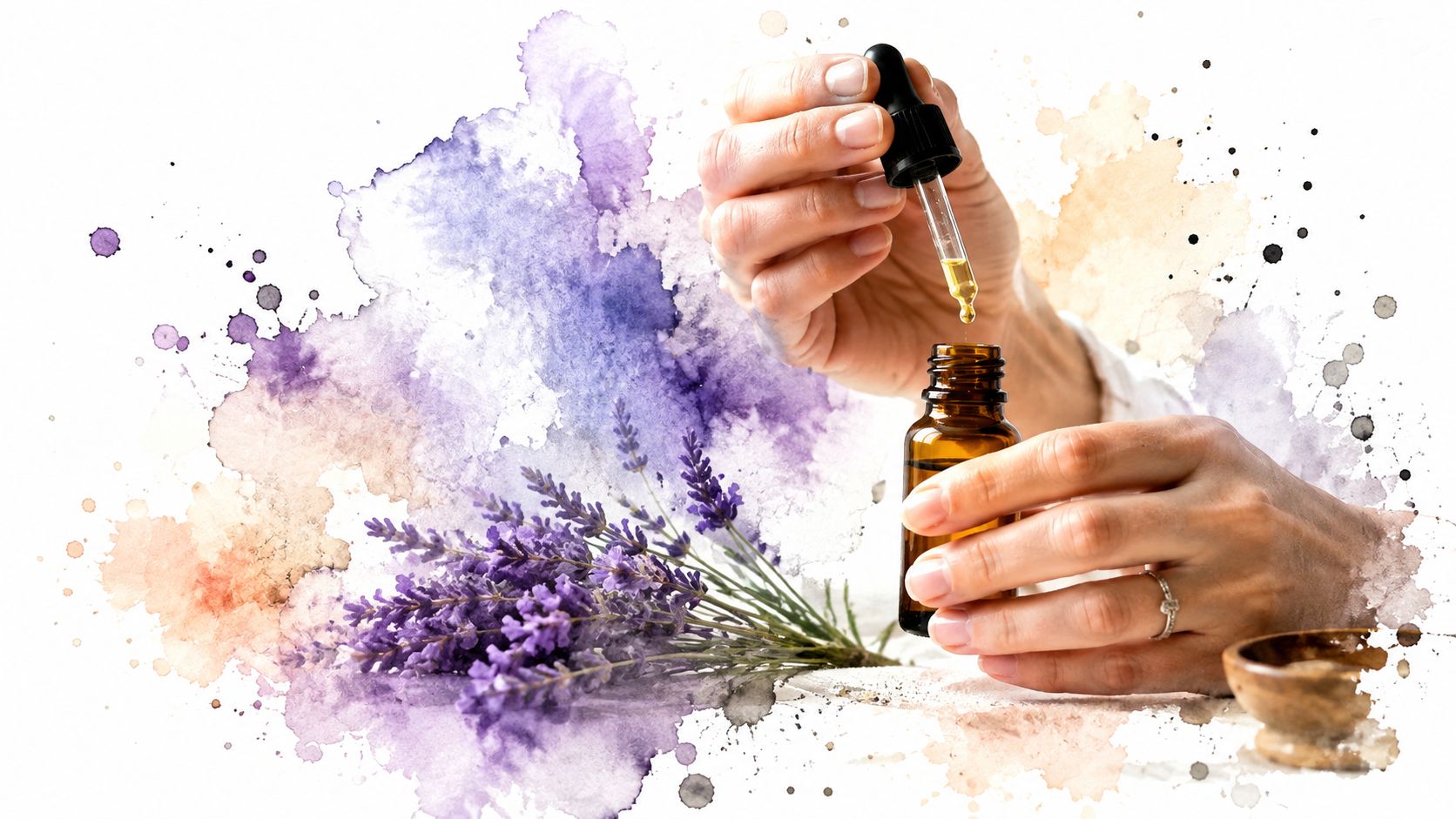
Essential oils are the stronger layer, so they need care. Rosemary, peppermint, and lavender are commonly blended into scalp routines, but they should always be diluted into a carrier oil rather than applied directly to skin. Patch testing matters, especially if your skin is sensitive or you're trying a new blend for the first time.
A blend should feel pleasant, not sharp, burning, or overly perfumed.
For storage, keep mixes tightly closed and out of heat and sunlight so they stay fresher longer. If you're comparing simple ways to build a blend, carrier oils for essential oils is a practical place to start, because it helps you match the base oil to your routine instead of guessing.
Building a Realistic Weekly Routine
A routine works best when it fits the week you live. If you only have a little time, two short sessions can still help you build the habit. If you like structured self-care, massage can sit beside wash day or a nighttime wind-down.
Three ways to make it workable
A minimal routine is best when you're getting started. Choose two short sessions, keep the pressure light, and use very little oil so you can see how your scalp responds. This version is about learning comfort and rhythm, not chasing a perfect schedule.
A balanced routine fits well for people who wash their hair a few times a week. Massage on wash days before cleansing, then add one or two lighter sessions later in the week. That keeps the routine tied to something you already do, which makes it easier to remember.
A daily rhythm makes sense only if it feels calming, not demanding. Some people like a brief evening scalp massage as part of their wind-down, while others prefer to keep massage tied to conditioning or detangling days. If the scalp starts to feel heavy, greasy, or overstimulated, reduce oil or shorten the session.
The first two to four weeks are mostly about observation. Notice whether your scalp feels relaxed, whether your hair responds well to the amount of oil, and whether the session feels restorative or annoying. That feedback is more useful than trying to copy somebody else's schedule.
Troubleshooting, Mistakes, and When to Adjust
A sore scalp after the first few sessions usually means the touch was too firm or the tool was too rough. More pressure does not create better results, so the first adjustment is usually simpler technique, shorter sessions, and lighter hand placement.
Small problems usually have simple fixes
If your hair feels greasy the next day, use less oil or schedule the massage closer to wash day. If a tool feels scratchy, clean it more thoroughly or pause use until the surface feels smooth again. If your scalp starts to feel coated or heavy, scale back instead of pushing through.
Some situations call for a full pause on vigorous massage. Open sores, recent scalp injuries, active inflammatory conditions, and very fragile hair all need caution. In those cases, personalized guidance from a qualified professional is the safer choice.
Massage can support scalp comfort, but it does not replace a broader routine. Gentle cleansing, conditioner, and products that do not leave the scalp feeling crowded still matter, especially if you are trying to support thinner hair with a calmer routine. For a helpful companion perspective, the best scalp care for thinning hair guide can sit alongside the hair care basics you already use, as a reminder that scalp massage works best as part of the whole routine, not as a shortcut around it.
Pairing Massage With a Natural Haircare Routine
Scalp massage makes the most sense when it sits inside a routine, not outside it. Cleanse gently, condition where your hair needs softness, use leave-in care only as needed, and keep protective habits in place so the scalp isn't fighting constant friction. Massage then becomes the quiet middle step, the part of the routine that helps you check in rather than check out.
That's why it can be so grounding over months and seasons. You start noticing how your scalp feels after wash day, how much oil your hair likes, and whether a short evening massage helps you settle down. Those small observations matter more than chasing a dramatic promise.
If you want to go a little deeper, keep a simple journal, note how long each session lasted, what oil you used, and how your scalp felt the next morning. You can also explore ArtNaturals options that fit into a broader self-care shelf, then adjust gradually as your comfort grows. One practical place to begin is with products that support a gentle, plant-based routine, rather than trying to overhaul everything at once.
If you want to build a calmer hair routine with simple, plant-powered essentials, visit ArtNaturals and explore options that fit alongside scalp massage, cleansing, and conditioning. A steady routine is easier to keep when the products feel familiar and uncomplicated.