

A quiet bathroom can reveal a surprising amount about your skincare routine. You pick up a bottle that was once clear or barely tinted, and notice that the serum now looks warm amber, almost like honey. The dropper may leave a faint metallic ring around the rim, making you wonder whether the product has naturally aged, or whether you've done something wrong.
That change is usually part of vitamin C serum oxidation, a chemical process rather than a vague sign that the formula has “gone bad.” The color can tell you something about the condition of the vitamin C inside, but it doesn't automatically mean a safety emergency. What matters is understanding why the shift happened, how much potency may have been lost, and how packaging and storage habits can slow the process next time.
When a Clear Serum Starts to Tell a Story
You open your serum beside the bathroom sink and notice that its once-clear liquid now has a yellow or amber cast. The bottle has not necessarily become dangerous overnight. Its color is a clue that the formula has changed, and vitamin C serum oxidation is usually more useful to understand as a question of quality and potency than as an emergency.
L-ascorbic acid is reactive by nature. Oxygen, light, warmth, and repeated exposure to air can gradually alter it while the bottle sits on a shelf. Dermatology literature on topical vitamin C describes light exposure as one factor that can convert L-ascorbic acid into dehydroascorbic acid, a change commonly associated with yellowing.
Your serum's original appearance provides the most helpful reference point. A faint yellow tint present from the first use may reflect the way that formula was made. A serum that began clear and becomes progressively darker tells a different story. Compare the bottle with its own starting color, rather than with a product photograph or another brand's formula.
A calm rule of thumb: compare the serum with its own original color, not with a product photograph or another brand's formula.
A deeper color shift can mean that less useful vitamin C remains available. The serum may still feel smooth and spread normally, while offering less of the brightening or antioxidant support you expected.
Storage habits help shape that outcome. A sunny windowsill, a steamy shower area, and frequent dropper use all expose the formula to conditions that encourage chemical change. A 2026 real-world oxidation study tracking 12 popular vitamin C serums for 90 days (The study's packaging and color findings) found packaging to be the strongest predictor of stability, with dark glass and opaque airless pumps performing better than clear glass and open droppers. The ingredient list matters, but the bottle and your daily handling habits also help decide how long the serum stays fresh.
The Quiet Chemistry Behind Oxidation
L-ascorbic acid is the most studied topical vitamin C form, and it is also chemically restless. Its ability to donate electrons gives it antioxidant activity, while that same reactivity leaves it vulnerable to gradual change in a water-based serum. The ingredient's strength and its instability come from the same chemistry.
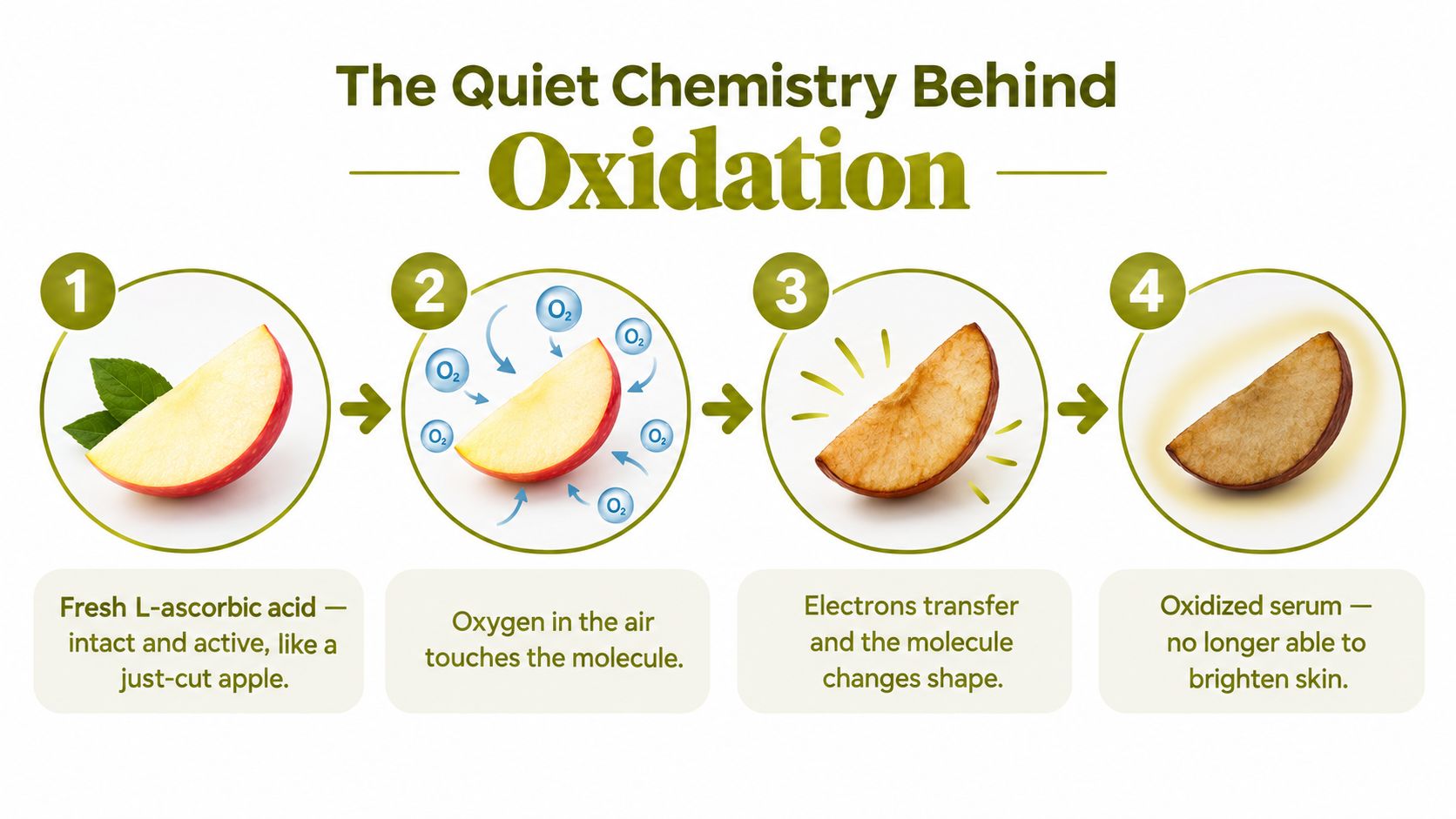
From active molecule to visible change
The process is easier to follow as a sequence:
- Fresh L-ascorbic acid is the form the serum is designed to provide. In a well-made formula, it remains available for the routine you purchased it for.
- Oxygen interacts with the molecule, especially as the bottle repeatedly meets air during use.
- L-ascorbic acid becomes dehydroascorbic acid, also called DHAA. This oxidized form is associated with the yellowing users often notice.
- Further breakdown can follow, including the formation of diketogulonic acid. The molecule has then moved farther from the original vitamin C structure the formula was built around.
The practical lesson is simple: oxidation is progressive. The serum can lose some useful vitamin C before its color changes dramatically, so appearance is a clue rather than a complete measurement of potency.
Why pH matters
pH sets the chemical conditions around the ingredient. L-ascorbic acid formulas are usually kept acidic because that environment supports the ingredient's active form and can help it penetrate the skin. Formulators must balance that benefit with the possibility of a more noticeable sensation on sensitive skin.
A serum's performance depends on more than the ingredient name on the label. Concentration, pH, water, packaging, and supporting antioxidants all influence how long the formula can hold its intended character. Two products that both list L-ascorbic acid may therefore age differently on the same shelf.
The bottle keeps a record of those conditions over time. A serum may lose potency while still feeling smooth and spreading normally. A shift toward yellow, amber, or brown suggests that the oxidation process has progressed, making the change a quality and performance concern rather than an automatic safety emergency.
What Triggers Oxidation in Your Bathroom
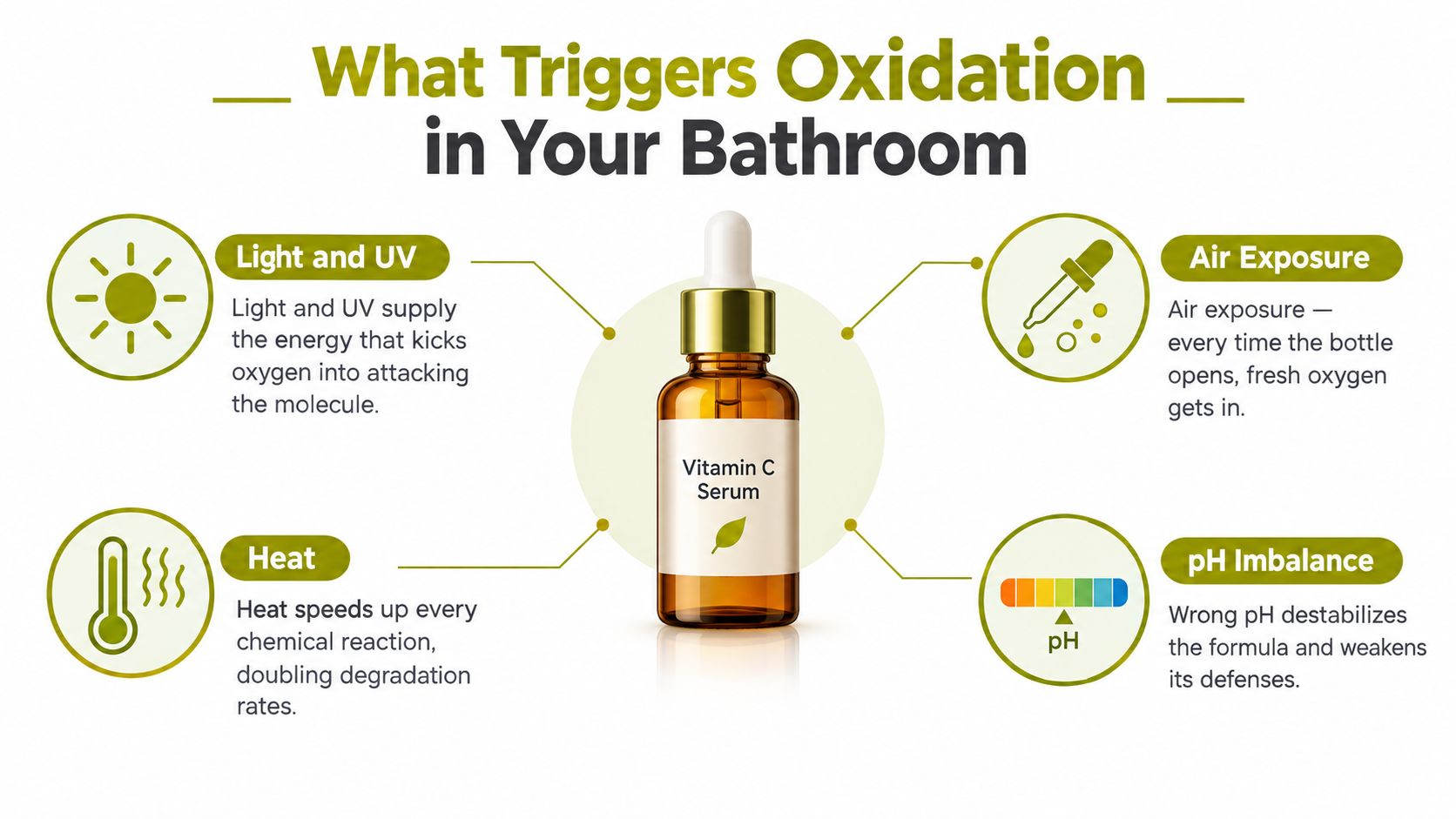
Four conditions matter most in everyday storage: light, air, heat, and pH. None needs to be dramatic on its own. A little exposure repeated each morning can become meaningful when the formula is particularly reactive.
Light reaches farther than you think
Direct sunlight is an obvious concern, but ordinary room light can still matter when a bottle sits exposed day after day. Light supplies energy that can help drive reactions involving oxygen and L-ascorbic acid. Clear bottles offer little protection, while opaque or dark containers reduce the amount of light reaching the formula.
A windowsill is therefore a poor home for a light-sensitive serum. An open shelf across from a bright window may also expose it more than you realize.
Air enters with every opening
Every time you lift a dropper or unscrew a cap, the formula meets fresh air. The empty space above the liquid, known as headspace, becomes a small reservoir of oxygen inside the bottle. Open droppers generally allow more air exchange than packaging designed to limit contact between the remaining serum and the atmosphere.
This doesn't mean one opening ruins a product. It means repeated exposure adds up, especially when the cap stays off while you complete the rest of your routine.
Heat speeds the reaction
Warmth encourages molecules to move and react more readily. A bathroom that becomes hot and humid during a shower is a less protective environment than a cool, dark drawer in a bedroom. Placing the serum near a radiator, heated towel rail, or sunny window adds another avoidable stress.
pH sets the starting conditions
A formula's pH affects how stable L-ascorbic acid can be. A carefully controlled acidic formula gives the ingredient a more suitable environment, while an unsuitable pH can make it harder to preserve the formula's intended performance. Product design research also emphasizes the role of packaging and protective formulation choices in slowing oxidation. Formulation research on long-term L-ascorbic-acid stability describes how product design can change oxidation behavior over time.
These triggers stack. A loosely capped dropper on a warm, bright, humid shelf faces a very different environment from a sealed, opaque pump stored somewhere cool and dark. The practical lesson is simple: protect the formula from several small stresses at once, rather than waiting for one obvious mistake.
How to Tell Your Serum Has Oxidized
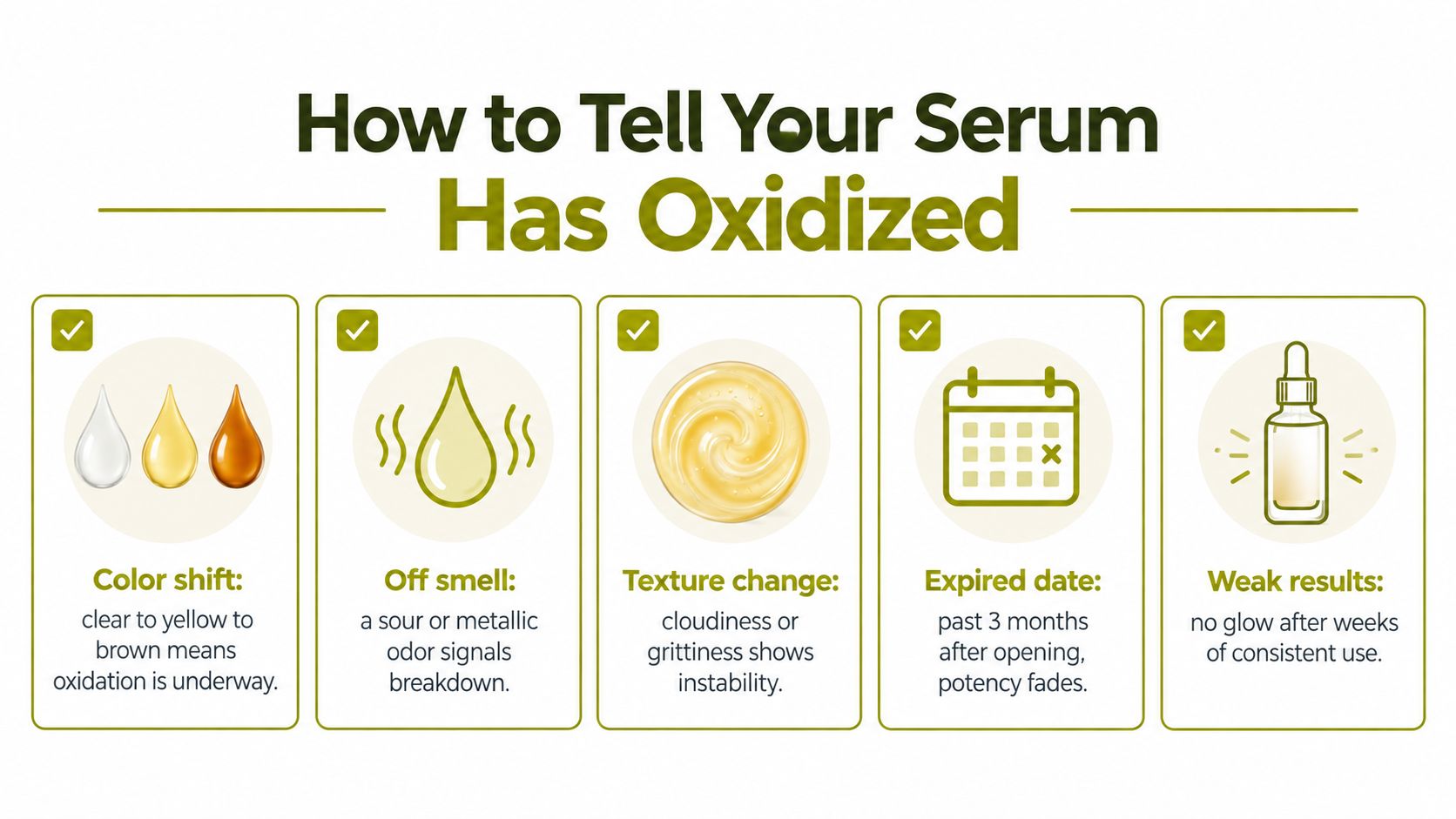
Color is the easiest place to start. A fresh product may be clear or pale yellow, depending on the formula. A noticeable shift toward deeper yellow, amber, orange, or brown suggests that oxidation has progressed, particularly when the serum was originally much lighter. Formulation guidance on the color progression of ascorbic acid identifies this visible change as a common signal of breakdown.
Use the original bottle as your reference
A faint tint at first use isn't automatically a problem. Take a mental note, or place a small drop on white tissue when the bottle is new. That gives you a baseline if the container is dark glass or the dropper itself is tinted.
A serum that slowly deepens in color deserves attention. If it has become amber, orange, or brown compared with its starting shade, replacing it is usually the most sensible choice because the formula may no longer provide the potency you expected.
Notice texture and scent
Oxidation can sometimes appear alongside a texture change. The serum may feel thicker, stickier, cloudier, or less uniform than it did when fresh. These signs aren't always conclusive on their own, but they become more meaningful when they appear with a strong color shift.
Scent offers another clue. A new stale, sour, metallic, or caramel-like odor suggests that the formula has changed. You don't need to sniff closely or keep using a product that feels unpleasant. Your routine should feel comfortable and familiar.
Sensory check: color tells you what you can see, while texture and scent help confirm whether the formula still feels like the product you opened.
If the bottle has been open for a long time, check its packaging instructions and period-after-opening symbol. The symbol is more useful than relying on a universal timetable because formulas and containers vary. Visible cloudiness, separation, grittiness, or an off-note are stronger reasons to replace the product than a barely perceptible tint.
For a broader routine reference, see this guide to using vitamin C serum in a skincare routine. It can help you place the product within cleansing, moisturizing, and daytime care without treating a single ingredient as the entire routine.
A quick visual guide can reinforce these checks:
Choosing a Serum That Stays Stable Longer
Choosing a vitamin C serum isn't only about finding the highest concentration. The form of vitamin C, the pH, the supporting ingredients, the package, and your own tolerance all shape how practical the product will be.
L-ascorbic acid has the strongest research history among topical vitamin C forms, but it's chemically fragile in water-based formulas. It generally requires an acidic environment, often below pH 3.5, and it can oxidize more readily when light, air, heat, or trace metals reach it. Derivatives use modified structures that are generally more resistant to oxidation and can often be formulated at a gentler pH.
| Form | Stability | Strength | Best For |
|---|---|---|---|
| L-ascorbic acid | More vulnerable in water-based formulas | The most studied topical form when correctly formulated | Experienced users who want a direct, active form and can protect it carefully |
| Sodium ascorbyl phosphate | Generally more forgiving than L-ascorbic acid | A derivative that prioritizes formula stability | Routines where ease of storage matters |
| Magnesium ascorbyl phosphate | Generally stable in suitable formulas | A gentler derivative option | People who prefer a milder-feeling routine |
| Ethyl ascorbic acid | Designed for improved stability | A modified vitamin C form for everyday formulations | Users seeking a balance between familiarity and convenience |
| Ascorbyl glucoside | More resistant to oxidation than L-ascorbic acid | A derivative that converts through skin processes | Beginners and people who value a lower-maintenance serum |
The table isn't a ranking. It's a way to match the ingredient to your habits. Someone who uses a serum quickly and stores it carefully may enjoy L-ascorbic acid. Someone who applies vitamin C less often, has sensitive skin, or doesn't want to manage a delicate bottle may find a derivative easier to live with.
Supporting ingredients have a role
Formulators may pair L-ascorbic acid with vitamin E, also called tocopherol, and ferulic acid. Used thoughtfully, these ingredients can support the stability of an ascorbic-acid formula. They don't remove the need for sensible packaging or storage, but they show why the complete ingredient system matters more than one headline ingredient.
A powder format can create a different set of formulation questions, so readers curious about that approach can explore L-ascorbic acid powder for skin before experimenting. If you're exploring broader vitamin C wellness topics, beauty and skin IV therapy is a separate subject from applying a cosmetic serum and shouldn't be treated as a substitute for topical product education.
Your best choice is the serum you can use consistently and store properly. A slightly gentler derivative that remains fresh in your routine may serve you better than a more reactive formula that sits forgotten on a bright bathroom shelf.
Storage and Packaging Habits That Make a Real Difference
A serum can begin oxidizing before you notice a dramatic color change. Each time a dropper opens, light reaches the bottle, or warm bathroom air surrounds it, the formula faces another small stress. Packaging acts like a protective jacket for the ingredients, so the bottle can influence freshness almost as much as the ingredient list.
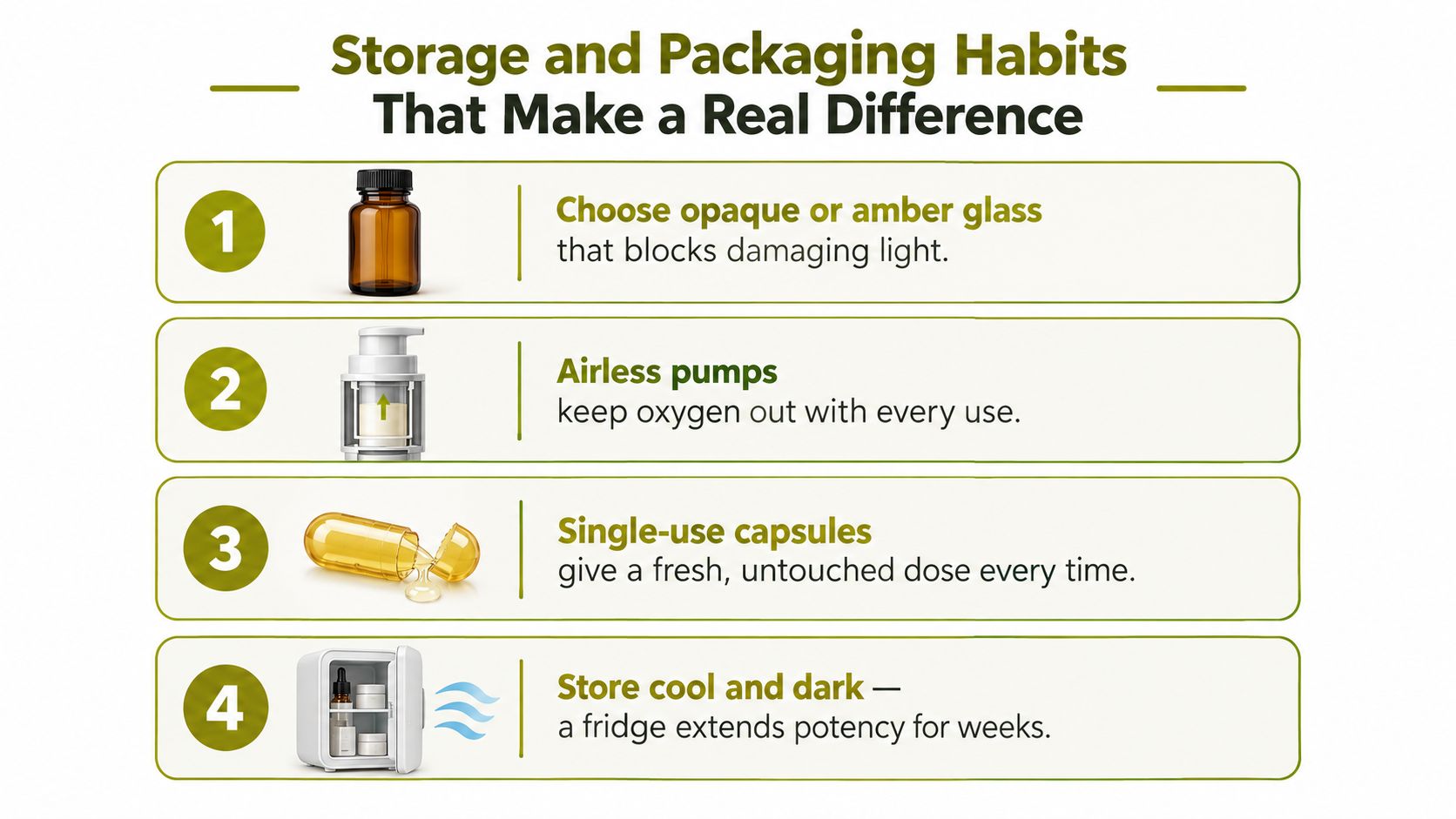
The same packaging comparison showed a clear pattern: dark glass and opaque airless pumps held up better than clear glass and open droppers. The best-performing formula changed only slightly in color, and its pH moved very little during the test. Those results make the container a practical stability choice, not a decorative detail.
Airless pumps limit air exchange with each application. A narrow-necked bottle also exposes less liquid to air than a wide opening. Single-use capsules take that idea further by keeping each dose sealed until use. Clear packaging may help you see the product, but it offers less protection from light.
Build a protective shelf routine
Store the bottle in a cool, dark drawer if your bathroom becomes warm or steamy. A closed cabinet is usually more protective than an open shelf because it reduces light, heat, and sudden temperature changes. If the brand says refrigeration is suitable, chilling an L-ascorbic acid serum after opening may slow oxidation.
Close the cap or pump promptly after dispensing. Keep the dropper from touching your fingers, face, or counter, since contact can introduce residue into the formula. The goal is simple: limit the serum's contact with air, light, warmth, and moisture.
A small, dedicated storage area makes this routine easier. If you are planning a bathroom refresh, browse Western Bathroom Renovations for ideas that can help you create a closed cabinet or drawer away from direct light and shower heat.
A simple do and don't list
- Do choose protective packaging: Opaque or amber glass and airless pumps reduce exposure to light and air.
- Do store it cool and dark: A closed drawer protects it better than an open shelf.
- Do refrigerate when allowed: Follow the brand's instructions rather than assuming every formula needs chilling.
- Do choose a smaller size if you use serum slowly: You may finish it while it still looks and feels fresh.
- Don't leave it on a sunny windowsill: Direct light can speed color changes.
- Don't keep it beside a steamy shower: Repeated warmth creates a less stable environment.
- Don't leave the cap loose: Close the bottle immediately after dispensing.
- Don't decant it: A prettier container may protect the formula less effectively than its original packaging.
Sustainability and stability can support each other. Keeping the original container intact avoids unnecessary transfers and may reduce waste from products that lose potency before you finish them. For another view of material choices, explore biodegradable packaging for cosmetics.
Oxidized Serum and Your Skin, Without the Panic
Two questions often get tangled together: Is an oxidized vitamin C serum dangerous, and is it still doing its job? They don't have the same answer. As L-ascorbic acid oxidizes into dehydroascorbic acid and undergoes further breakdown, the main concern is usually reduced usefulness rather than a hidden toxin.
That distinction matters because many people throw away a lightly tinted serum in alarm, while others keep using a very browned product because it still spreads normally. A 2023 explainer says an oxidized or expired serum is unlikely to cause serious harm and may fail to deliver its intended benefits, though it can sometimes increase sensitivity. A stability-focused guide from 2025/2026 similarly frames oxidation mainly as a loss of effectiveness that may irritate sensitive skin. This explanation of vitamin C oxidation and skin concerns supports a more measured decision.
Let comfort guide the decision
A heavily oxidized formula may feel stickier, sting more, or leave an orangey film. People with sensitive, reactive, or rosacea-prone skin may notice these changes sooner, so continuing to use a questionable bottle isn't worth the discomfort. The same applies if your goal is to improve the look of uneven tone or dullness, because reduced potency directly undermines what you're trying to achieve.
Use this simple decision rule:
- Clear or lightly tinted and unchanged: If the serum still looks, smells, and feels normal, continue using it according to the brand's instructions.
- Noticeably darker than its starting color: If it has shifted toward amber, orange, or brown, replace it rather than expecting the original benefits.
- New odor or texture: If it smells sour or metallic, feels unusually sticky, or has become cloudy or separated, choose a fresh product.
- Sensitive skin response: If it stings in a new way or leaves your skin uncomfortable, stop using it and simplify your routine.
The practical conclusion: oxidation is usually a freshness and potency problem, not a skin emergency, but a changed formula doesn't deserve a permanent place in your routine.
You can't stop a reactive ingredient from aging altogether, but you can slow the clock. Choose a suitable vitamin C form, favor protective packaging, store it away from light and heat, and pay attention to the bottle's original color. Those small choices make ingredient education feel useful in daily self-care rather than abstract chemistry.
ArtNaturals offers vitamin C and other skincare serums alongside haircare, oils, bath, body, and wellness products, giving you options for building a straightforward routine around your preferences. Visit ArtNaturals to explore its skincare collection and choose a vitamin C format you'll be comfortable storing and using consistently.