

You step out of the shower, wrap yourself in a towel, and your shins already feel tight. Your elbows look a little rough, and your hands don't feel as comfortable as you'd like. That's the moment many people reach for body oil, then wonder if it replaces lotion, goes on wet or dry skin, or is there to make skin shine.
What Body Oil Does After a Shower
That post-shower tightness is familiar. Warm water and cleansing can leave skin feeling less comfortable, especially on legs, arms, hands, elbows, and knees. You don't need a complicated routine to respond to it. You need to understand what the product in your hand does.

So, what is body oil used for in everyday care? It's mainly a softening, surface-sealing step. Body oil works primarily as an emollient and occlusive that forms an oily surface layer to help reduce water loss and soften rough skin. In plain language, it sits on top, smooths how skin feels, and helps slow water from escaping.
A Seal, Not a Drink of Water
That distinction matters. Oil doesn't pour water into skin the way you might imagine from the word moisturizing. It helps hold onto water that's already there after bathing, which is why slightly damp skin is such a useful starting point.
Think of a few drops warmed between your palms and smoothed over damp calves. The water left from your shower spreads the oil easily, so you need less product. Skin feels softer and more conditioned without a thick coating.
A light, even layer usually feels more comfortable than a heavy one. If skin stays slick and transfers to everything you touch, you've probably used more than you need.
Body oil also appears in targeted routines beyond full-body use. Some people focus only on hands before bed, or on elbows and knees that feel rough under clothing. Others look for a product made for a specific area and life stage, which is why someone might find belly oil for pregnancy when they want a gentle, area-specific oil for their routine.
The everyday answer stays simple. Body oil is used to soften rough-feeling skin, reduce moisture loss from the surface, and make post-shower care feel more comfortable. It isn't a cure-all, and it doesn't replace every other product you own. Once you see it as a sealant, the next choices about lotion and layering become much easier.
Understanding Oils, Lotions, and Humectants
Most confusion comes from one word. People call almost everything a moisturizer, then expect every product to work the same way. A body oil, a lotion, and a humectant ingredient can all support comfortable skin, but they do different jobs.
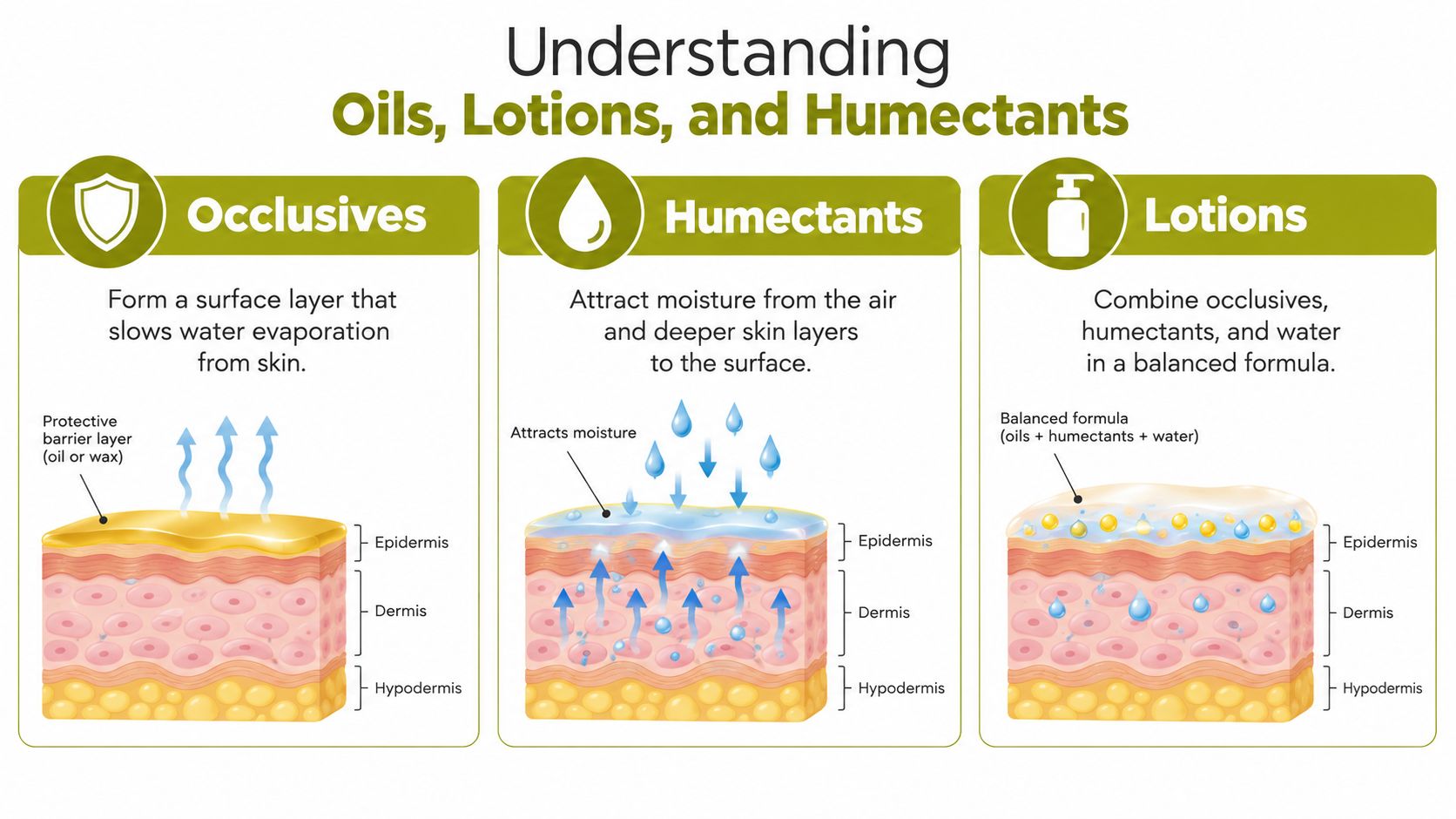
Start with three roles. Occlusives form a surface layer that slows evaporation. Humectants attract and hold water. Emollients help soften and smooth the feel of surface skin, filling in the tiny uneven places that make dry skin feel rough to the touch.
Where Body Oil Fits
Body oil mainly brings the first and third roles. Oils are primarily occlusive and emollient, while humectants attract and hold water, which explains why body oil is often paired with a water-based moisturizer. That's why oil can feel protective and nourishing without behaving like a lotion.
A damp sponge makes this easier to picture. If you leave a wet sponge on the counter, it dries out. If you cover it, it stays damp longer. The cover didn't add water. It slowed evaporation. Body oil works in a similar, simple way on skin that's already damp from bathing.
- Oil alone: Works well as a light finishing step on mildly dry, intact skin after a shower, when surface water is already present.
- Lotion first, oil second: Adds a water-based layer underneath, then uses oil to help seal it in when you want a richer routine.
- Lotion alone: Makes sense when you prefer a quicker feel, want humectant ingredients, or don't enjoy an oily finish during the day.
How Lotions and Butters Differ
Lotions usually combine water, humectants, emollients, and some occlusive ingredients in one formula. That's why they often feel like they're adding moisture rather than only sealing it. If you're also sorting through thicker options, reading about the difference between body butter and lotion can help you place oil alongside those textures instead of treating them as interchangeable.
Useful mental model: Humectants help bring and hold water. Oil helps keep that water from leaving so quickly.
This also explains a common disappointment. If you apply oil to completely dry skin long after bathing, it can feel greasy on top while skin still feels tight underneath. There wasn't much surface water left to seal in. You're not using a bad product. You're asking a sealant to do a humectant's job.
Once you separate adding moisture from helping moisture stay, you can build a routine on purpose. Use oil alone for everyday softness on damp skin. Layer it over lotion when skin feels especially dry. Skip it when you don't want that finish. None of those choices is wrong. They're just different combinations of the same three roles.
Exploring Common Body Oil Ingredients
A bottle labeled body oil might contain one simple oil, a blend of several plant oils, or a fragranced formula with butters and other supporting ingredients. The name on the front tells you very little. The ingredient list tells you what kind of product you're holding.
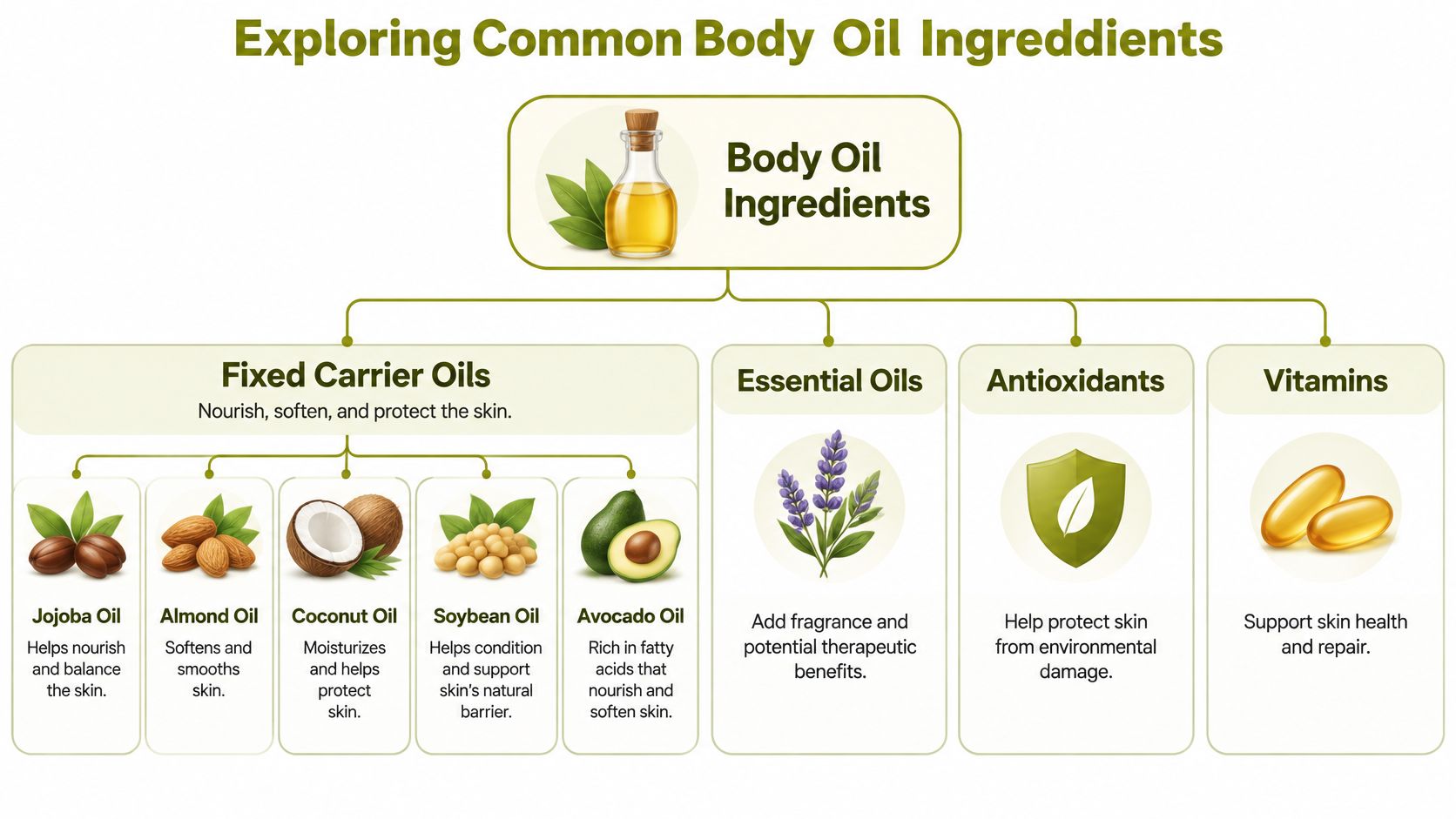
The base of most formulas is a fixed carrier oil. These are the plant oils that make up the bulk of the product and give it its texture and skin feel. Plant oils such as jojoba, soybean, and avocado can remain on the skin surface and act as a barrier that helps maintain moisture. Almond and coconut oil also appear often in leave-on blends.
Common Carrier Oils You May See
- Jojoba oil: Often chosen for a smooth, conditioned feel that spreads easily in a thin layer.
- Almond oil: A familiar carrier in massage and body blends, valued for its soft, gliding texture.
- Coconut oil: Creates a richer, more noticeable surface feel, which some people enjoy on legs and dry-feeling areas.
- Soybean oil: Used in blends where a lighter, even spread is part of the formula design.
- Avocado oil: Brings a more cushioning feel that can suit a richer evening routine.
None of these is universally right for every person. Texture, scent, personal tolerance, and where you plan to use the product all matter. A rich oil that feels lovely on shins might feel like too much on your back or chest.
Carrier Oils Are Not Essential Oils
This is the label distinction readers mix up most often. Essential oils are concentrated aromatic ingredients used mainly for scent in properly formulated products. They aren't interchangeable with carrier oils, and they aren't meant to be applied undiluted as if they were body oil.
If carrier oil is the base that carries the formula across your skin, essential oil is a small, concentrated aromatic addition within a finished product. Those are very different roles.
Some blended products also include butters, waxes, or humectant ingredients alongside oils. Butters and waxes can make a formula feel richer and more protective on the surface. Humectants in a blended moisturizer can add the water-attracting role that pure oil doesn't provide on its own.
Reading a label becomes simpler when you ask three questions. What's the main carrier base? Is fragrance or essential oil part of the intended experience? Is this a pure oil, or a blended moisturizer with several ingredient types? Those answers set realistic expectations far better than words like natural or nourishing on the front of the bottle.
Choosing an Oil for Your Skin
Choosing well doesn't mean finding one perfect oil. It means matching a formula's texture, scent, and ingredient roles to how your skin usually feels and where you plan to use it. Your legs, back, and hands may not want the same product.
Dry or rough-feeling skin often responds well to an emollient-forward leave-on oil used on damp skin, sometimes layered over lotion. Skin that becomes oily easily usually feels more comfortable with a lighter formula, a smaller amount, and targeted use on drier areas rather than a full, heavy layer everywhere.
A Simple Label Reading Framework
Sensitive or easily irritated skin calls for a more conservative start. A fragrance-free, simple formula gives you fewer variables if your skin doesn't agree with something. If you're building broader habits around reactivity, a sensitive skin care routine can help you think about gentle cleansing and product choices alongside oil use.
One limit is worth keeping in mind. Pure oils do not provide humectants such as glycerol or urea, and coconut or olive oil may be less suitable than properly formulated emulsions for some eczema-prone or severely dry skin. That doesn't make those oils bad for everyone. It means a pure oil may not be enough on its own for every skin situation.
| Routine need | Formula direction | Why | Caution |
|---|---|---|---|
| Everyday dryness after bathing | Simple carrier oil or blend on damp skin | Helps seal in surface water and soften rough-feeling areas | Start with a thin layer to avoid transfer |
| Very dry-feeling skin | Lotion first, then oil as a seal | Lotion can provide water and humectants that oil lacks | Pure oil alone may feel insufficient |
| Skin that gets oily easily | Light formula, targeted areas only | Gives softness without coating areas that don't need it | Heavy use on chest or back may feel uncomfortable |
| Sensitive skin | Fragrance-free, short ingredient list | Fewer aromatic ingredients to consider | Patch test first and introduce one product at a time |
ArtNaturals Lavender + Jasmine Face & Body Oil is one example of a fragranced body oil positioned for dull and dry-feeling skin, which illustrates why scent preference matters in the decision. Someone seeking a calm evening ritual may enjoy that style of formula. Someone avoiding fragrance would reasonably choose a simpler, unscented option instead.
Use the table as a starting point, not a prescription. Read the full ingredient list, consider the area you'll apply it to, and notice how your own skin responds over a few uses. Personal tolerance is part of the choice, and no plant-derived ingredient is automatically suitable for everyone.
Applying Body Oil on Damp Skin
A good routine doesn't need ten steps. It needs the right order, a modest amount, and timing that gives the oil something to seal in. People who say body oil just sits on their skin are applying it too late, using too much, or both.
The visual below sums up the basic sequence before we walk through it.
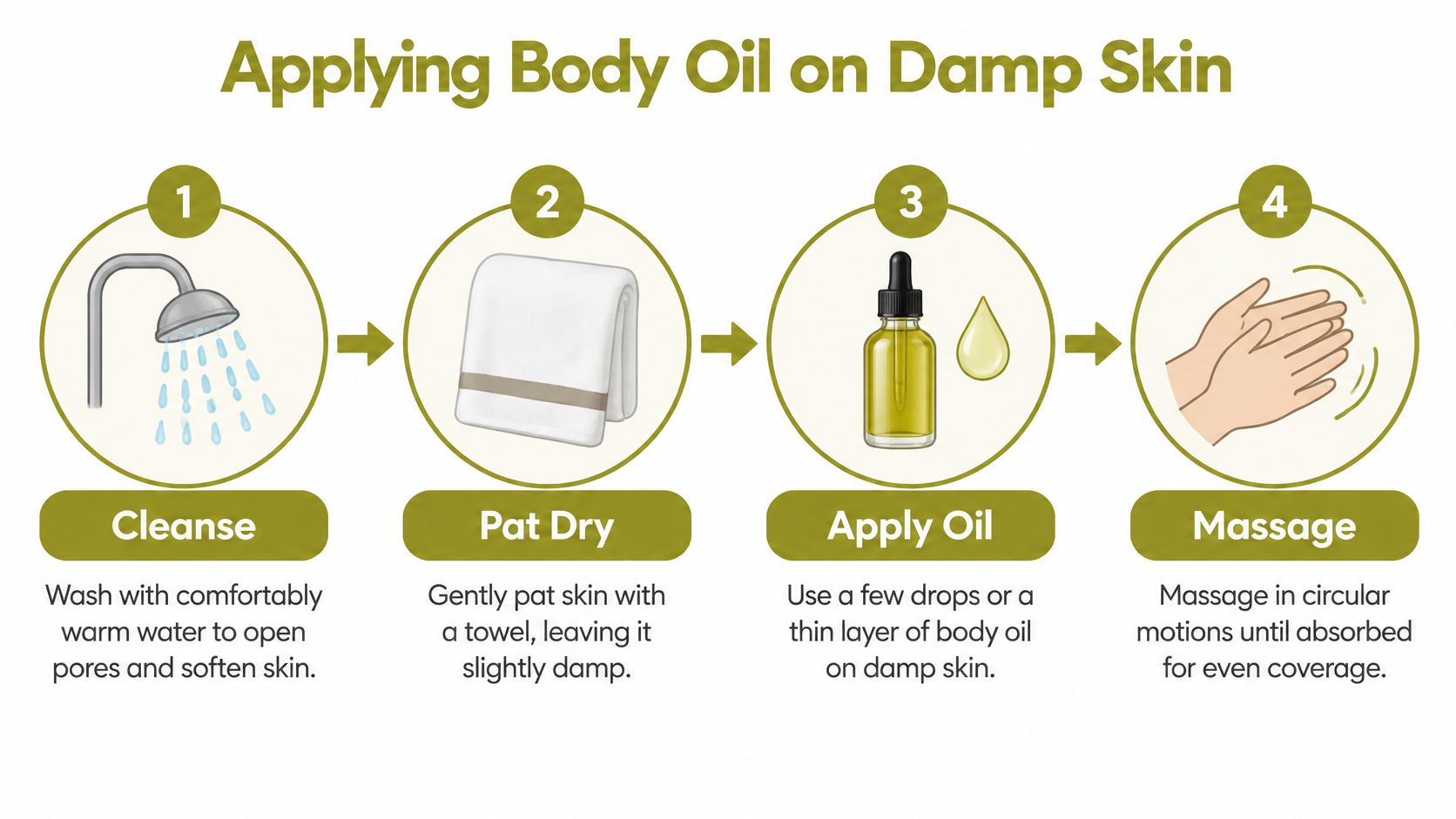
Start with comfortably warm water and gentle cleansing. When you step out, pat rather than vigorously rub with your towel. You want skin that's not dripping, but still slightly damp and warm to the touch.
A Calm Four Step Routine
- Cleanse gently: Wash as you normally would, without making the water hotter or the shower longer than your skin enjoys.
- Pat skin damp: Leave a light film of water on the surface instead of drying completely.
- Apply within a few minutes: Smooth a few drops or a thin layer over one area at a time, such as legs, then arms, then torso.
- Massage until even: Use long, gentle strokes so the finish looks soft and conditioned, not glossy or slippery.
This timing is the whole point. Applying moisturizer immediately after bathing while skin is still damp helps trap water and reduce evaporation, and with body oil you only need enough to spread evenly while avoiding slippery floors. Working in sections helps you notice if one area needs a touch more and another needs less.
You have two useful layering options. Use oil alone on damp skin for everyday softness. Or apply a water-based lotion first, then a thin layer of oil over it when you want a richer, more sealing finish, especially on shins, elbows, knees, and hands.
The short video below shows the general hand movements and pacing, which can be easier to copy than written steps alone.
Give the oil a brief moment to settle before dressing. If your clothes pick up a lot of product, reduce the amount next time rather than rubbing harder. A smaller amount spread over damp skin often feels better than a larger amount forced over dry skin.
Finish with two practical habits. Step away from the tub or shower area before applying oil to your legs and feet, since residue can make floors slick. Rinse your hands before touching fixtures, jars, or door handles. Those small details turn a nice idea into a routine you'll actually repeat.
Body Oil Uses for Massage and Wellness
Once the post-shower basics feel clear, body oil becomes more flexible. The same bottle can support a short self-massage, targeted care for rough-feeling areas, or a scented evening wind-down. What changes is the amount you use, the fragrance you choose, and how slowly you apply it.
For massage, oil's job is partly mechanical. A small amount reduces friction so your hands glide more smoothly over shoulders, calves, or feet. Start with less than you think you need. You can add a drop if your hands drag, but too much makes grip difficult and leaves a finish you may not want on bedding or clothing.
Three Everyday Ways to Use It
- Self-massage after a long day: Warm oil between your palms and use slow pressure on calves, forearms, or the tops of shoulders. Keep the layer thin enough that your hands can still move with control.
- Targeted dry-feeling areas: After bathing, give elbows, knees, hands, legs, and shoulders a second light pass. This is surface comfort care for intact skin, not a way to repair damaged skin.
- A scented wind-down ritual: Choose a finished body oil with an aroma you enjoy, apply it slowly after an evening shower, and let the scent be part of the transition toward rest.
Aromatherapy-style use needs one clear boundary. Body oil can carry fragrance or essential oils, but essential oils are concentrated aromatic ingredients that should not be confused with fixed carrier oils or used undiluted on skin. A properly formulated scented body oil is a finished cosmetic product. A separate essential oil is not the same thing.
Enjoying a scent as part of a calming ritual is a cosmetic and lifestyle choice. It doesn't turn a body oil into a medical treatment, and it doesn't need to in order to be worthwhile.
If you're curious about how carrier bases and aromatic oils are paired, learning more about using carrier oils with essential oils can clarify dilution and product roles before you experiment. That knowledge helps you respect concentration rather than guessing.
Adjust the routine to the moment. A morning application might be quick, light, and unscented under clothing. An evening massage might use a little more oil, slower strokes, and a fragrance you associate with relaxing. The product hasn't changed. Your purpose has, and that purpose should guide how much you apply and where.
Using Body Oil Safely and Responsibly
Natural is a description of origin, not a promise about how your skin will react. Plant-derived ingredients can feel lovely for one person and uncomfortable for another, especially when a formula includes fragrance or essential oils. A calm routine includes a little caution.
Start by reading the full ingredient disclosure, not only the front label. Introduce one new product at a time so you can tell what's helping and what isn't. If you change your cleanser, lotion, and oil in the same week and your skin feels irritated, you won't know which product to pause.
Practical Precautions That Protect Your Routine
- Patch test first: Try a small amount on a limited area before wider use, especially with a fragranced formula or sensitive skin.
- Avoid fragile areas: Keep body oil away from eyes and from broken, inflamed, freshly shaved, or sunburned skin.
- Watch your response: Stop using a product if burning, itching, swelling, or a spreading rash develops.
- Respect concentration: Don't apply undiluted essential oils to skin as a substitute for body oil.
If you want more detail on aromatic ingredients, guidance on how to use essential oils on skin responsibly is a useful companion to label reading. Fragrance-free carrier oil formulas are generally the more conservative starting point when scent isn't important to you or your skin tends to react easily.
It's also helpful to separate cosmetic comfort from medical care. Body oil can soften rough-feeling, intact skin and help reduce surface moisture loss. It shouldn't be presented as a solution for inflammation, infection, acne, open wounds, or chronic skin disease. If itching, cracking, pain, or irritation continues, that's a reason to seek appropriate medical guidance rather than adding more products.
Rethinking Bath Oil and More Is Better Thinking
Another common assumption is that pouring oil into bathwater gives the same benefit as applying it directly. For moisturizing, leave-on application to damp skin is the more useful approach because the product stays where you placed it in a controlled amount. Oil dispersed in a tub is harder to control, and it can leave the bath and floor slippery.
More oil doesn't automatically mean more comfort. A thin, even, leave-on layer you can repeat consistently is usually the more practical choice.
Wipe up residue, rinse your hands after application, and be careful when stepping into or out of the tub after using oil-based products. Safety details sound ordinary, but they're part of responsible self-care, not an afterthought.
By now, the decision path should feel manageable. Ask whether your skin needs water, a seal, or both. Choose a carrier formula that fits the area and your tolerance for scent. Apply a thin layer to damp skin, layer over lotion when you want more support, and pause any product your skin clearly doesn't enjoy. That's what body oil is used for at its best, a simple, intentional step that helps everyday skin feel softer and more comfortable.
If you're ready to build that post-shower sealing step into your own routine, explore the body care, carrier oils, and thoughtfully scented options at ArtNaturals and choose a formula that fits your skin, your scent preferences, and the way you like to unwind.