

You've done the careful research, skipped the scented options, and chosen a serum that promises gentle hydration. Then, an hour later, your cheeks feel warm and tight. It's a familiar and frustrating moment, and it doesn't mean you've failed at skincare. Finding the best hyaluronic acid serum for sensitive skin isn't usually about the headline ingredient at all. It's about learning to read the whole formula calmly, and giving your skin time to respond.
Why Sensitive Skin Reacts to Even Gentle Serums
You apply the new serum after cleansing, and it feels fine at first. By midday, there's a light sting when you smile, or a pink flush that wasn't there this morning. It's easy to blame the hyaluronic acid itself, or to assume your skin is just difficult.
That reaction makes more sense once you look at what surrounds the HA. The complete formulation, not HA alone, determines tolerability. Preservatives keep a water based serum safe to use, solvents help it spread, and botanical extracts add scent or a plant based story. Any one of those supporting ingredients can be the reason sensitive skin feels unsettled, even when the main hydrator is known for being gentle.
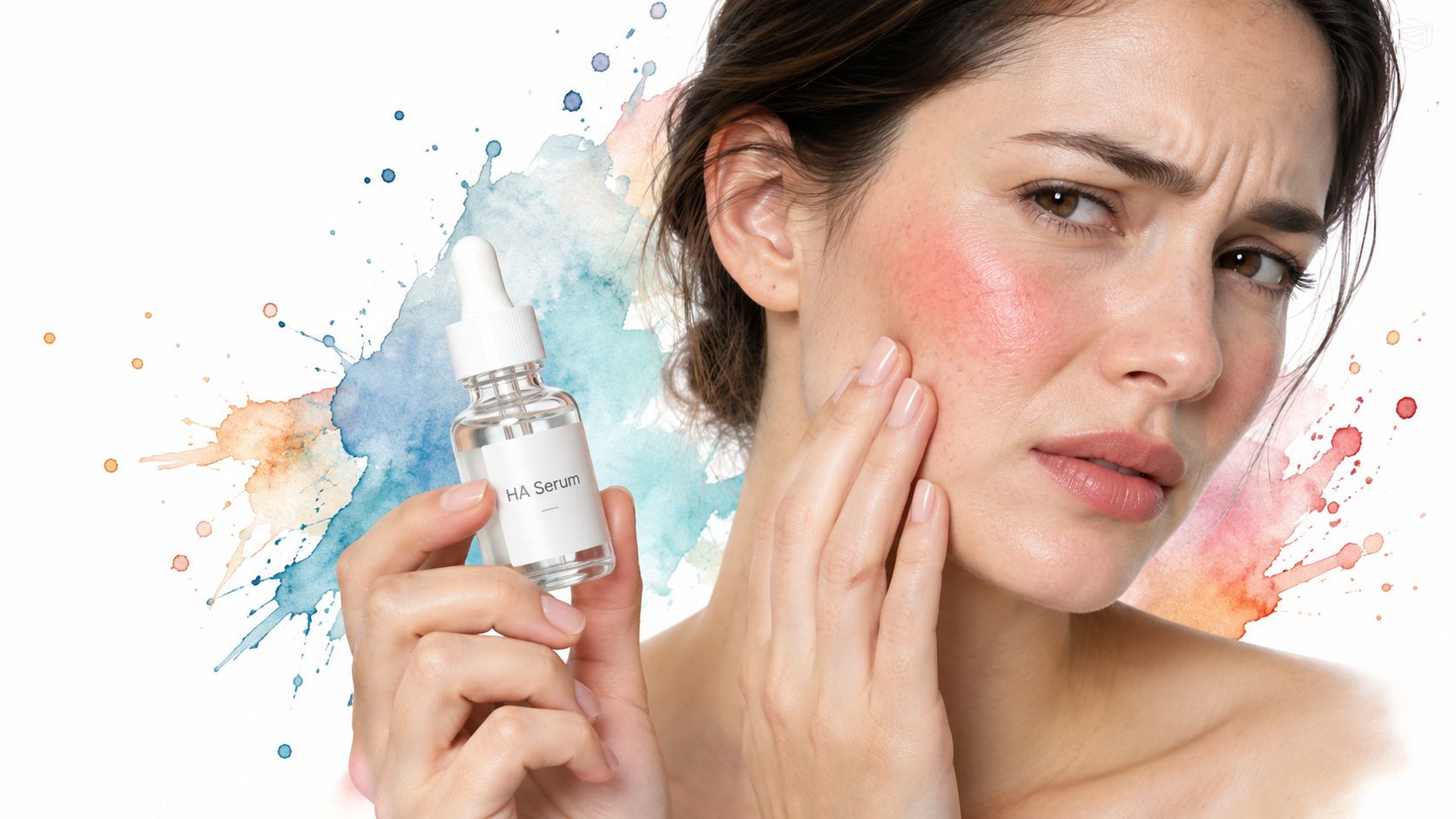
That pattern shows up in the numbers, too. In a 2023 clinical study of an HA moisturizing cream, stinging was reported in 30.0% of participants, irritation in 23.3%, and other adverse reactions in 10.0%, even though hyaluronic acid is widely viewed as a gentle hydrator. The takeaway isn't that HA is harsh. It's that one formula's experience doesn't predict another's.
Why the Supporting Cast Matters
Think of a serum like a simple recipe. HA is the main ingredient on the label, but fragrance, essential oils, drying alcohols, acidity, and preservative choices shape how the finished product sits on reactive skin. A longer ingredient list also gives you more variables to sort through when something feels off.
- Fragrance and essential oils: These add scent, but they're common sources of discomfort for reactive skin.
- Botanical extracts: Plant based doesn't automatically mean calmer, and concentrated extracts can still feel active on skin.
- Preservatives and solvents: These are necessary in many formulas, but the specific system used affects overall tolerance.
This is also why learning about everyday skin barrier repair habits can help, since a stressed barrier often reacts to products that calmer skin might accept. The same principle applies after too much sun, when gentle routines to calm sunburned skin naturally focus on simplicity first. For daily choosing, the question shifts from which brand is most popular to which complete formula looks quietest on paper.
A helpful reframe: You're not shopping for hyaluronic acid alone. You're shopping for everything that comes with it.
How Molecular Weight Changes How HA Behaves
Hyaluronic acid isn't one uniform ingredient in every bottle. It's made in different sizes, called molecular weights, and size changes where the ingredient does its work. Once you understand that, labels that mention multiple forms of HA start to make practical sense.
High molecular weight HA is the larger form. It primarily remains at the surface, where it forms a light, moisture supporting film. That surface layer is often what gives skin an immediately smoother, plumper feel after application.
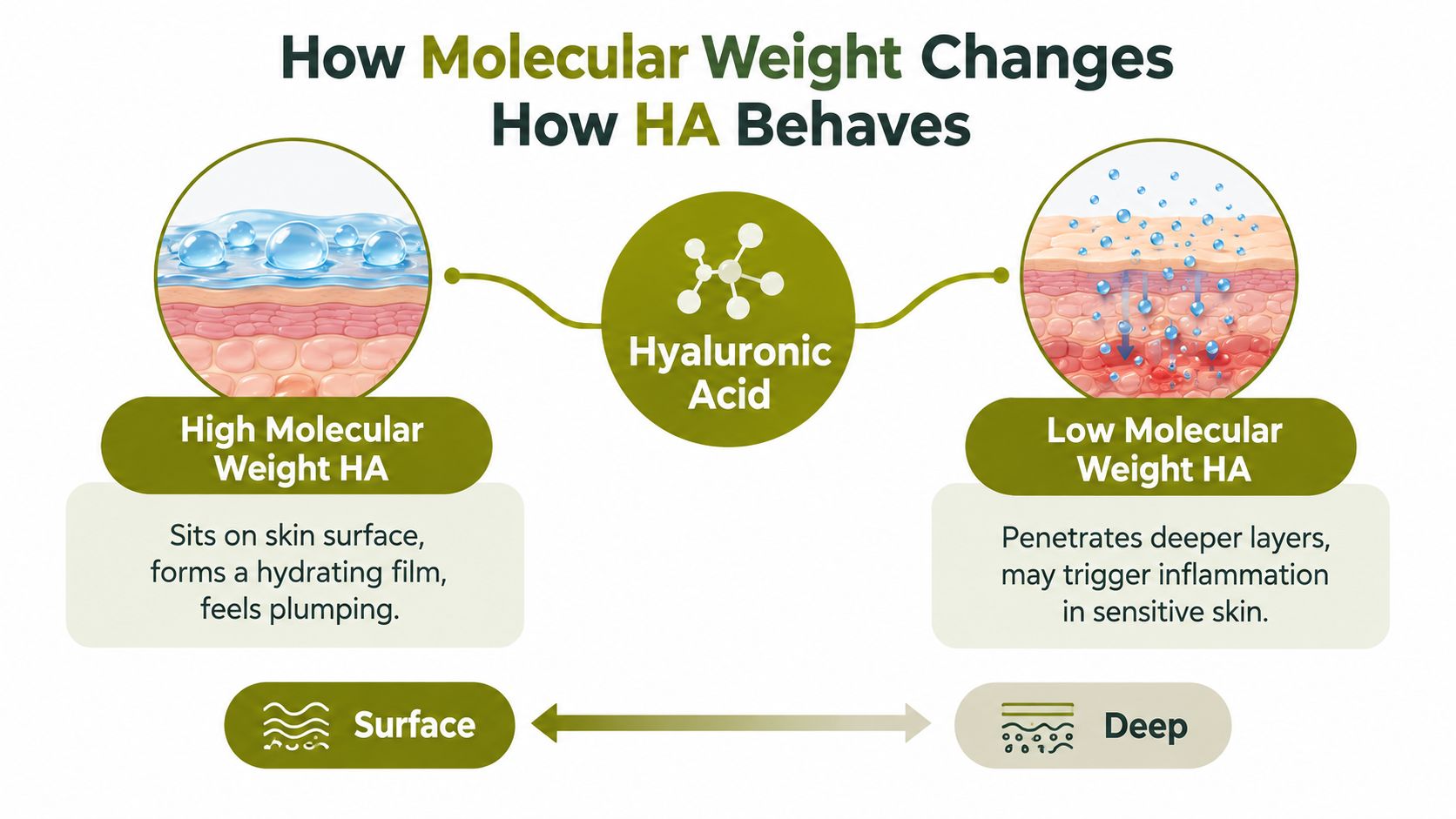
Low molecular weight HA is smaller, so it can move farther into the upper layers of the skin. You can see the difference in ingredient reference data on HA penetration rates, which reports approximately 14% to 19% penetration for low molecular weight molecules measuring 400 daltons to 100 kilodaltons, compared with about 2.73% to 10.2% for larger molecules. Those figures describe how molecule size behaves, not a promise of a particular visible result.
What This Means When You're Shopping
A multi weight formula combines both approaches. The larger molecules support surface hydration right away, while the smaller fractions work within the outer layers. For many people with reactive skin, that blend feels more balanced than relying on a single size.
That doesn't make smaller automatically better. A serum built only around very small fractions isn't a guaranteed upgrade, and a surface focused formula isn't inferior. What matters is whether the brand explains what it's using, instead of listing hyaluronic acid as if it were one standard format.
When you're comparing two serums, try this order. First, check whether the formula describes one weight or a combination. Second, look at the rest of the ingredient list for potential sources of discomfort. Third, consider texture, since a serum you'll use consistently, once or twice a day, serves your routine better than one that feels sticky or irritating and sits unused.
The smartest question isn't whether a serum contains HA. It's what size HA, in what company, and in what kind of base.
Reading a Sensitive Skin Label Without Guesswork
A front label can say gentle, clean, or hydrating. The ingredient list on the back tells a more specific story, and learning to scan it takes less time than you'd expect. You're not looking for perfection. You're looking for fewer obvious flashpoints.
Start with fragrance, because it's the easiest check. In the United States, fragrance materials may be grouped under the single label term "Fragrance" rather than having every component listed individually, and the FDA notes that some fragrance components can cause sensitivity or allergic reactions. That means a single word, Fragrance or Parfum, can represent a blend you can't fully evaluate. For sensitive skin, choosing a product without that word removes one large unknown.
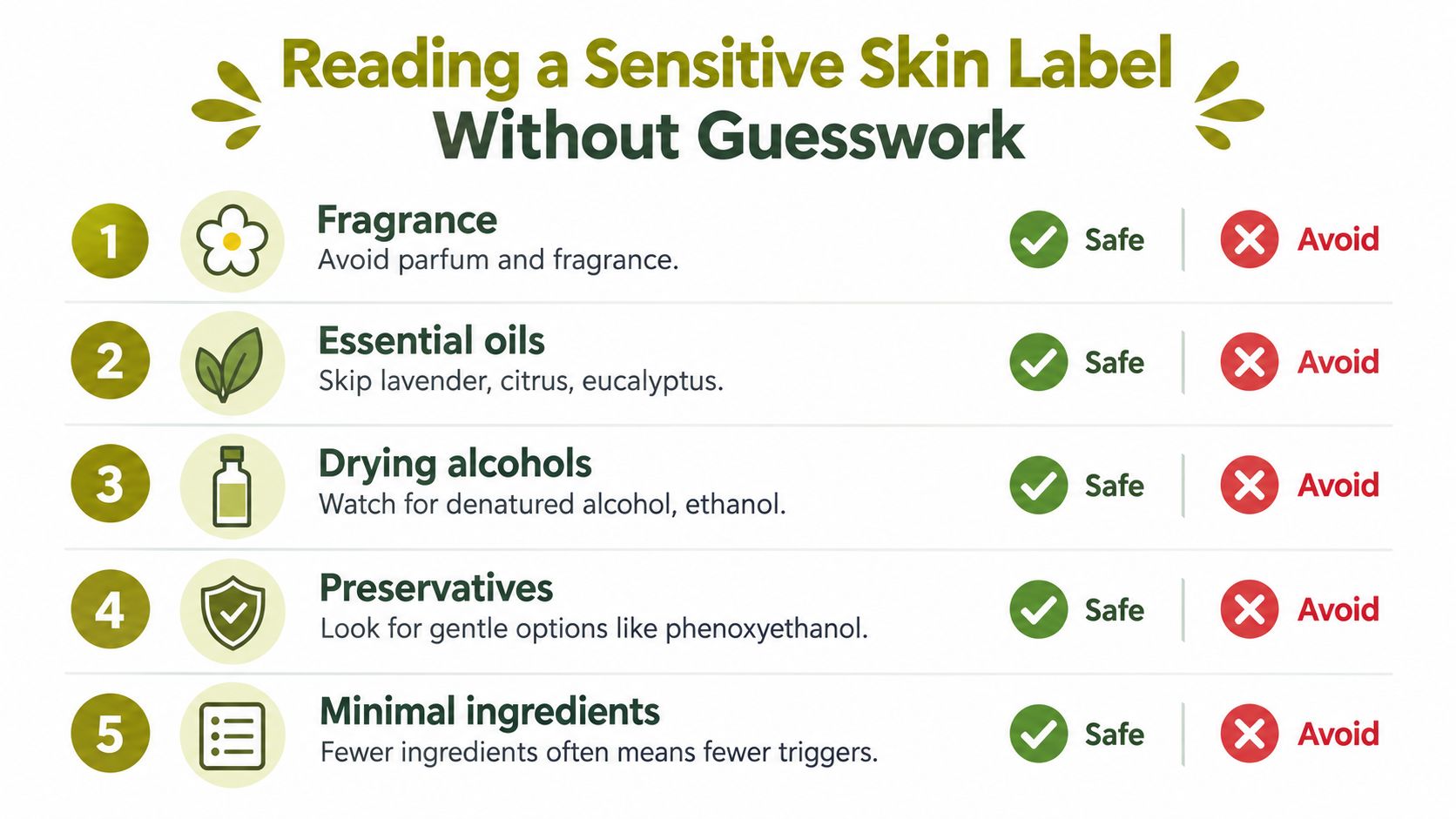
Next, scan for essential oils and fragrant plant extracts, such as lavender, citrus, or eucalyptus oils. They're natural in origin, but natural and non irritating aren't the same thing. The same caution applies when you're learning about other calming ingredients, which is why guides on topics like using niacinamide with sensitive skin also start with the full formula.
A Short Label Routine
- Fragrance check: Look for Fragrance or Parfum anywhere in the list, not just near the top.
- Alcohol check: Watch for denatured alcohol or ethanol high in the list, which can feel drying.
- Length check: A shorter, recognizable list gives you fewer variables if your skin reacts.
- Position check: Ingredients are generally listed in descending order, so early placement means a larger share.
Preservatives deserve a calm eye rather than fear. A water based serum needs a preservative system, and options like phenoxyethanol are widely used. The goal isn't a preservative free product. It's a formula that doesn't stack several potential triggers together.
If you'd like a visual walkthrough of building a gentler routine around ingredient choices, the video below offers a helpful starting point.
A Simple Patch Test Protocol You Can Run at Home
A patch test sounds formal, but it's really just a slow introduction. You're giving one small area of skin a preview before your whole face meets a new formula. For reactive skin, that pause is worth it.
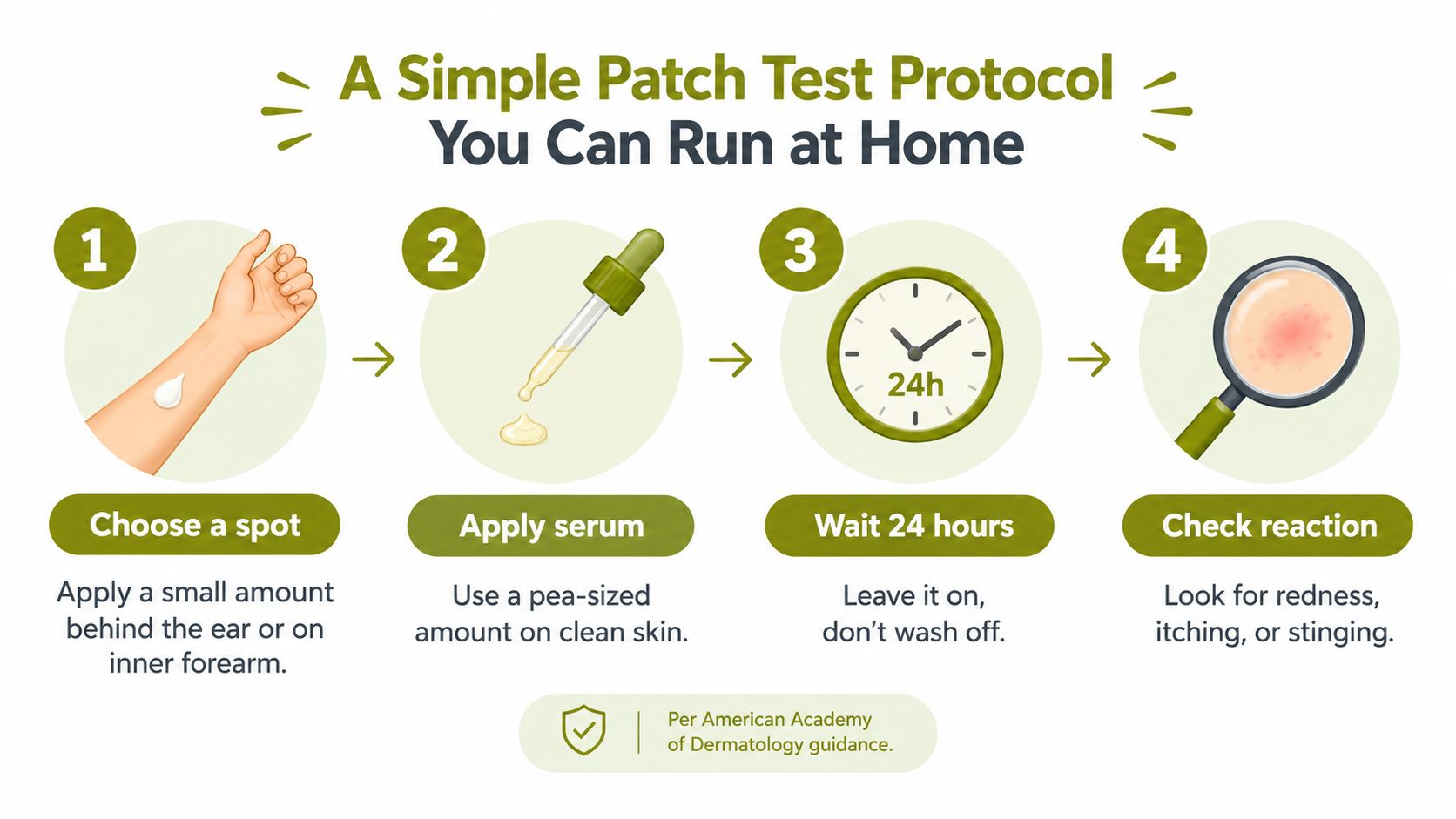
The American Academy of Dermatology offers a clear method. In its guidance on testing skin care products at home, it recommends applying a new product twice daily to a quarter sized area, such as the underside of the arm or the bend of the elbow, for 7 to 10 days before broader use. Use the same amount and thickness you'd plan for your face, and leave it on for the usual amount of time.
How to Run Your Test
- Choose one spot: Pick the bend of your elbow or the underside of your arm, and use clean, dry skin.
- Apply a small amount: Use a quarter sized area, twice daily, at your normal thickness.
- Keep everything else steady: Don't start another new product during the same week.
- Check daily: Note any redness, itching, swelling, or stinging, and when it appears.
If redness, itching, or swelling shows up, stop using the product on that spot. A brief tingle that fades quickly is different from burning or redness that builds with each application. Trust the pattern over a single moment.
If the week passes without issue, introduce the serum to your face once daily at first, then increase frequency if it continues to feel comfortable. A clean patch test doesn't guarantee full face tolerance, since facial skin can respond differently. It lowers the guesswork, and testing one change at a time makes any later reaction much easier to trace back to its source.
Building a Daily Routine Sensitive Skin Can Trust
Once a serum has passed your patch test, the routine around it matters as much as the bottle. Hyaluronic acid is a humectant, which means it binds water rather than creating moisture on its own. How you layer it decides whether that water stays where you want it.
Commonly cited ingredient guidance on HA and hydration describes HA as capable of binding up to 1,000 times its weight in water, and notes that it works best when smoothed onto slightly damp skin and followed with a sealing moisturizer. The mechanics are simple. Damp skin provides available water, the serum helps hold it at the surface, and your moisturizer slows evaporation, especially in heated indoor air or dry weather.
A Calm Morning and Evening Order
- Cleanse gently: Use lukewarm water and avoid scrubbing, then pat skin so it's damp, not dripping.
- Apply serum: Smooth a thin layer over your face while that slight dampness remains.
- Seal promptly: Follow with a bland moisturizer before the serum fully dries down.
- Add sunscreen in the morning: Keep it as your final daytime step.
If you're refining your technique, a step by step guide on how to use hyaluronic acid serum in your routine can help you settle the order. Readers thinking about how skin's needs shift over time may also find Ideal Face & Body's mature skin advice useful context for keeping routines simple and consistent. ArtNaturals offers a Hyaluronic Acid Serum for Face described as suitable for all skin types, including sensitive skin, which fits this same damp skin, then moisturizer approach.
If your skin feels tighter after using HA, check your layers before blaming the serum. An unsealed humectant in dry air often needs a cream on top.
Start once daily, in the evening if mornings feel rushed. Give a new routine a few weeks of steady use before judging it, since hydration habits build gradually. Fewer steps also make it easier to notice what's helping.
Know your stopping signals, too. Persistent burning, spreading redness, itching, or worsening tightness are reasons to pause the serum, not push through it. Discomfort that grows with each use usually points to the overall formula, and setting it aside is a reasonable, skin respecting choice.
Why a Higher HA Percentage Is Not Always Better
It's tempting to treat the percentage on a bottle like a score. A higher number feels more effective, and marketing often encourages that reading. For sensitive skin, that shortcut can lead you away from the formula that would feel best.
Concentration is only one variable, and it doesn't describe molecular weight, texture, preservatives, or fragrance. A modest percentage in a quiet, well built base can feel far calmer than a high percentage surrounded by potential triggers. Judging by percentage alone also ignores how different vehicles and application methods change the experience.
The research points in the same nuanced direction. In a 2024 double blind randomized trial of 36 adults with dry skin, a low molecular weight HA lotion produced higher skin capacitance after four weeks than high molecular weight HA, with no significant differences in transepidermal water loss or symptom scores and no reported side effects. In plain terms, one hydration measure improved more, while other measures didn't separate the formulas. That's useful information, and it's also a reminder that a single number rarely tells the whole story.
What to Value Instead of a Big Number
Look for a thoughtful blend of molecular weights, a fragrance free base, and a texture your skin enjoys wearing daily. If you're exploring richer options aimed at mature skin, such as a firming hydration serum for mature skin, apply the same label and patch test habits before regular use. Added ingredients mean added variables, whatever the HA percentage says.
A healthier benchmark is simple. Your skin should feel comfortably hydrated, without new stinging, redness, or tightness. If a lower percentage serum delivers that consistently, it's the better match for you, regardless of what a bolder number promises.
A Quiet Checklist Before You Choose Your Next Serum
You now have four steady filters to carry into any purchase. They won't make choosing the best hyaluronic acid serum for sensitive skin automatic, but they'll make it calmer and more methodical. Think of them as anchors, not rules you have to follow perfectly.
Start with a formula that's fragrance free and built with a straightforward ingredient list. Then check how the HA itself is described, favoring brands that explain their molecular weights. Finally, protect your progress with a real patch test and a moisturizer layered on top.
Quick Sensitive Skin Serum Checklist
| Filter | What to Look For | Why It Matters |
|---|---|---|
| Fragrance | No Fragrance or Parfum on the label | Removes a blended group of unknown components |
| Molecular weight | A described blend or a clearly stated weight | Shows how the HA is built to behave on skin |
| Ingredient list | Short, recognizable, few fragrant extracts | Fewer variables if your skin reacts |
| Patch test | Twice daily on one small area for 7 to 10 days | Catches many reactions before full face use |
| Layering | Damp skin, then a bland moisturizer | Helps the humectant hold water comfortably |
If burning, persistent redness, or new tightness appears after you start, pause the product rather than adding more steps to compensate. And if a serum feels comfortable, give it a few weeks of consistent use before deciding. Sensitive skin usually rewards patience and simplicity over constant switching, and a routine you can maintain is the one most likely to serve you well.
If you're ready to build a gentler routine around simple, transparent ingredients, explore the hyaluronic acid serums and everyday skincare at ArtNaturals. You'll find plant powered formulas, clear ingredient information, and options organized by skin concern, so you can choose at your own pace. Start with one calm addition, patch test it well, and let your skin set the speed.