

For most natural shower routines, use body wash before body scrub, and limit exfoliation to 2 to 3 times a week. Let warm water soften your skin, cleanse first, then use the scrub on damp skin before rinsing and moisturizing.
You're standing in the shower with a bottle of body wash in one hand and a jar of scrub in the other. The labels seem simple enough, yet the order can feel surprisingly unclear. Should the scrub lift away buildup first, or should the wash prepare the skin?
For a calm, practical ritual, wash first, scrub second is the most useful starting point. Cleansing removes surface dirt, oil, and sweat, giving plant-based exfoliants a cleaner surface to work on. Afterward, a final rinse clears away the particles, and moisturizer helps leave your skin feeling comfortable rather than tight.
Setting the Foundation for Your Shower Ritual
A shower works best when each step has a clear purpose. Body wash cleans the surface. Body scrub polishes areas that feel rough or uneven. Moisturizer supports the soft, conditioned finish afterward.
The wash-first order also suits the way many current body-care routines are designed. Guidance from Dove's body scrub routine recommends removing dirt and oil with body wash before applying a scrub to damp skin, then rinsing and moisturizing immediately.
Why cleansing comes first
Daily life leaves a mixture of sweat, sunscreen, body oils, and environmental residue on the skin. A gentle wash lifts that surface layer so the scrub doesn't have to work through it. Sugar, salt, or another natural exfoliating base can then glide across damp skin with less friction and rinse away more cleanly.
Think of it as preparing a clean canvas. You aren't trying to make the scrub do the job of a cleanser. You're giving each product one focused role, which makes the whole ritual feel simpler and more intentional.
Practical rule: Wash away surface buildup first, then exfoliate only where your skin needs extra smoothing.
Water temperature matters, too. Warm water can make the shower feel soothing and helps soften surface buildup, while very hot water can leave skin feeling dry or uncomfortable. A comfortably warm rinse is enough to prepare your body without turning the shower into an aggressive treatment.
For a broader routine that combines cleansing, moisturizing, and other body-care steps, explore this body skin care routine. The same principle applies throughout: start with the gentlest useful step, pay attention to how your skin feels, and add richer products after cleansing.
This order turns an ordinary shower into a small act of care. The water wakes up your senses, the wash clears the way, and the scrub becomes a brief moment of focused touch instead of another hurried task.
Comparing the Two Shower Sequencing Methods
The order you choose changes the feel of the whole shower. Washing first creates a clean, damp surface for exfoliation, while scrubbing first lets the cleanser follow behind and remove the oils or particles a richer formula leaves on the skin. Water temperature shapes both options. Comfortably warm water softens surface residue and keeps the skin pliable, while very hot water may leave it feeling dry or sensitive.
| Routine Factor | Wash Then Scrub | Scrub Then Wash |
|---|---|---|
| Skin preparation | Clears surface dirt, oil, and sweat before exfoliation | Exfoliates while some surface residue remains |
| Feel during use | Scrub glides across clean, damp skin | Scrub feels richer before the cleanser follows |
| Natural exfoliants | Sugar or salt meets the skin without cleanser residue in the way | Particles loosen buildup before the wash removes what remains |
| Rinse-off ease | A final rinse carries away the scrub before moisturizing | The second wash removes leftover oils or particles |
| Useful for | Simple, everyday body-care routines | Scrubs that feel oily, rich, or difficult to rinse |
| Main focus | Cleanse, polish, then condition | Polish, cleanse, then finish with moisture |
The case for washing first
Washing first suits a straightforward plant-based shower ritual. A gentle body wash clears the loose film left by sweat, body oils, and daily activity, allowing the scrub to move across damp skin with less interference. A mild, plant-based formula such as this gentle body wash works well as the opening cleansing step.
The sequence also follows a natural sensory rhythm: warm water softens the skin, the wash creates a clean starting point, and the scrub adds focused texture and touch. Keep the skin damp rather than dripping wet. Too much water can thin the scrub and make its grains slide away before they can spread evenly.
After exfoliating, rinse until the skin feels clear of residue. The surface should feel smooth and comfortable, with enough moisture left from the shower for body lotion or oil to spread easily. This body scrub sequencing guide also describes washing before or after exfoliation as a practical choice shaped by the formula and your routine.
When scrub first may feel right
Scrubbing first can suit a product that leaves a noticeable oil layer. The wash that follows removes remaining particles and richer ingredients, giving the skin a cleaner finish. This order may also appeal when you want exfoliation to begin the ritual and cleansing to close it.
Pay attention to the finish after rinsing. If the scrub feels heavy, washing afterward may be more comfortable. If the second cleanse leaves your skin tight, return to washing first and apply moisturizer while the skin is still slightly damp.
The right sequence leaves your skin clean, comfortable, and easy to moisturize.
Your Step by Step Exfoliation Routine
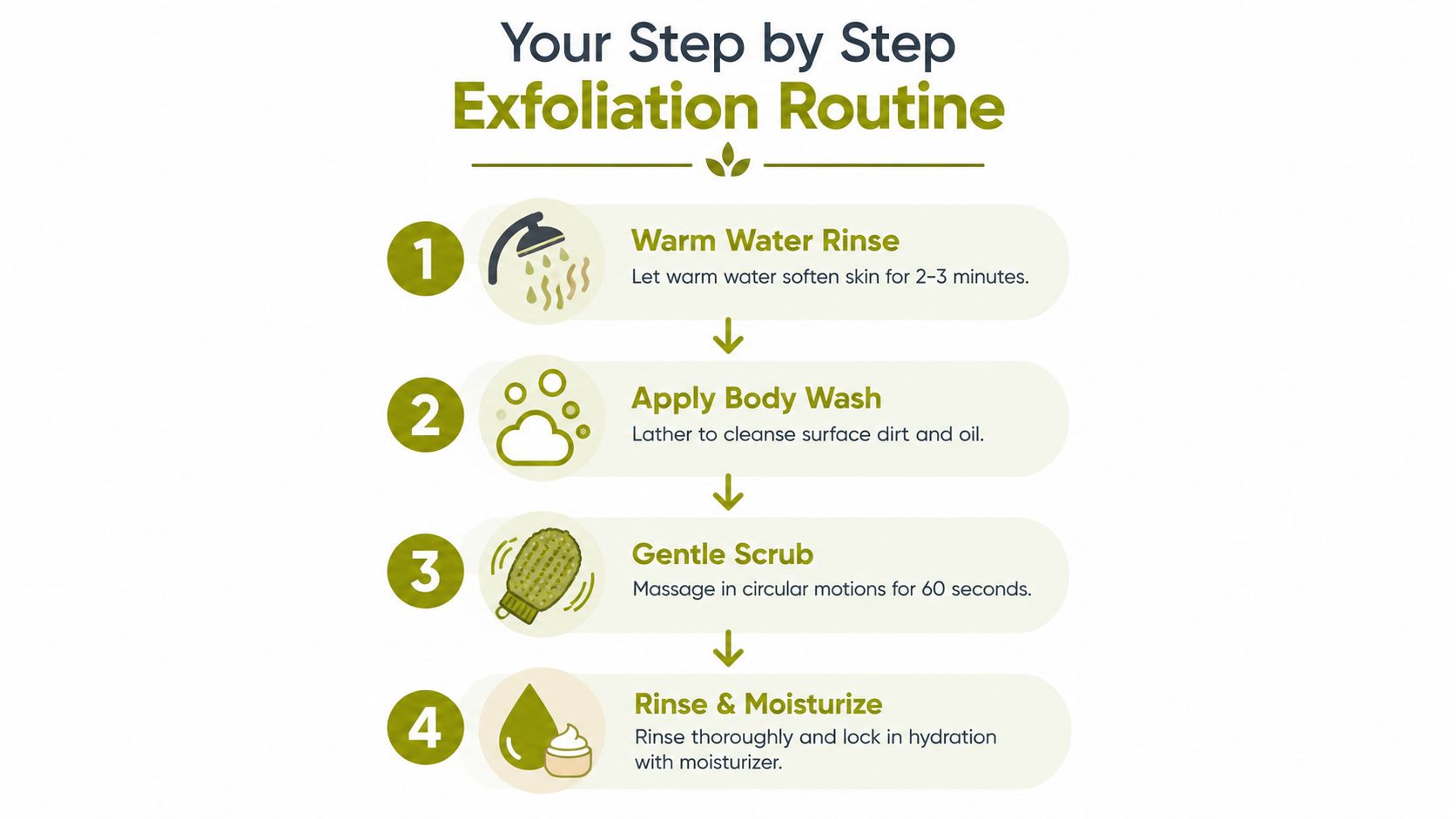
A good scrub starts before you open the jar. Give your body time to adjust to the water, and resist the urge to begin with vigorous rubbing. The goal is to soften the skin and let the product move smoothly.
Start with warm water
Stand under comfortably warm water for a few minutes before applying products. This helps soften surface buildup and makes damp skin a better setting for a body scrub. Your skin should feel moist and supple, not waterlogged.
Next, apply your body wash. Use your hands, a soft cloth, or a gentle shower tool to spread the cleanser across the body. Rinse thoroughly so the skin is clean but still damp.
Apply the scrub with a light touch
Scoop out enough product for the area you're treating and spread it between your palms first if the texture feels dense. Press it onto damp skin, then use small circular motions rather than dragging the particles back and forth.
Give extra attention to elbows, knees, ankles, shins, and heels, since these areas often feel rougher. Use less pressure on the inner arms and other delicate-feeling areas. You don't need to force the scrub to work. The particles and water should do most of the movement.
Dermatology-oriented guidance recommends keeping the massage gentle and brief, no longer than about 30 seconds, then rinsing with lukewarm water and moisturizing generously. You can find that technique in this guide to using body scrub.
A brown sugar formula can be a pleasant option when you want a soft, kitchen-inspired sensory experience. Learn more about choosing and using a brown sugar scrub as part of a gentle body-care ritual.
Rinse and moisturize without delay
Rinse until the water runs clear and no grains remain in the folds of the skin. Avoid rubbing hard with your towel. Pat your body dry, leaving a slight trace of dampness, then apply a body lotion, butter, or oil.
Moisturizer feels most comfortable when it follows the rinse while the skin is still slightly damp. That final step completes the flow, moving from warm water to cleansing, exfoliation, and a soft, conditioned finish.
The ritual doesn't need to feel complicated. Keep the water comfortable, keep your touch light, and treat the rinse and moisturizer as part of the scrub rather than optional extras.
Customizing Frequency and Products for Your Skin Type
Exfoliation works best as an occasional rhythm, not a daily obligation. Most guidance places body scrub use at 2 to 3 times per week, while sensitive skin may be more comfortable with use once weekly, according to body scrub frequency guidance.
Your skin's response should guide the routine more than a fixed calendar. If the skin feels comfortable and smooth, your current approach may be suitable. If it feels tight, tender, or unusually dry, reduce the frequency and focus on moisturizing.
Choose the texture with intention
A fine sugar scrub can feel soft and cushiony as it moves over damp skin. Sugar-based formulas often suit a gentle polishing ritual, especially when paired with botanical oils or butters that give the product a creamy slip.
Salt scrubs can feel more invigorating and textured. They may appeal to people who like a stronger sensation on areas such as heels, feet, elbows, or knees. The experience depends on the size and shape of the particles, so don't judge a product only by its ingredient name. A coarse formula requires a lighter hand than a fine one.
Adapt the routine to your skin
Sensitive skin benefits from a smaller amount, light pressure, and less frequent use. Choose a fine-textured scrub, avoid delicate areas, and stop if the skin feels uncomfortable.
Dry-feeling skin may prefer a creamy formula with plant oils or butters. Keep the massage brief, rinse well, and follow with a rich lotion while the skin is still damp. Exfoliation should support a softer feel, not become another source of tightness.
Normal skin can usually tolerate a balanced routine with a moderate texture and occasional use. Even then, rough areas don't need constant attention. Treat the elbows, knees, and ankles selectively rather than scrubbing the entire body with the same pressure.
Let your skin set the pace. A satisfying scrub is gentle enough that your body feels cared for after the shower, not challenged by it.
Read the product label, consider the texture in your hand, and introduce a new formula gradually. A natural ingredient isn't automatically right for every person or every area, so mindful selection remains part of the ritual.
Common Shower Mistakes to Avoid
A body scrub can feel wonderfully effective because you notice the grains, the scent, and the immediate change in skin texture. That sensory feedback can tempt you to press harder or scrub longer. More friction isn't a better routine, though. A gentle massage is enough to spread the product and polish the surface.
Mistake one is using too much pressure
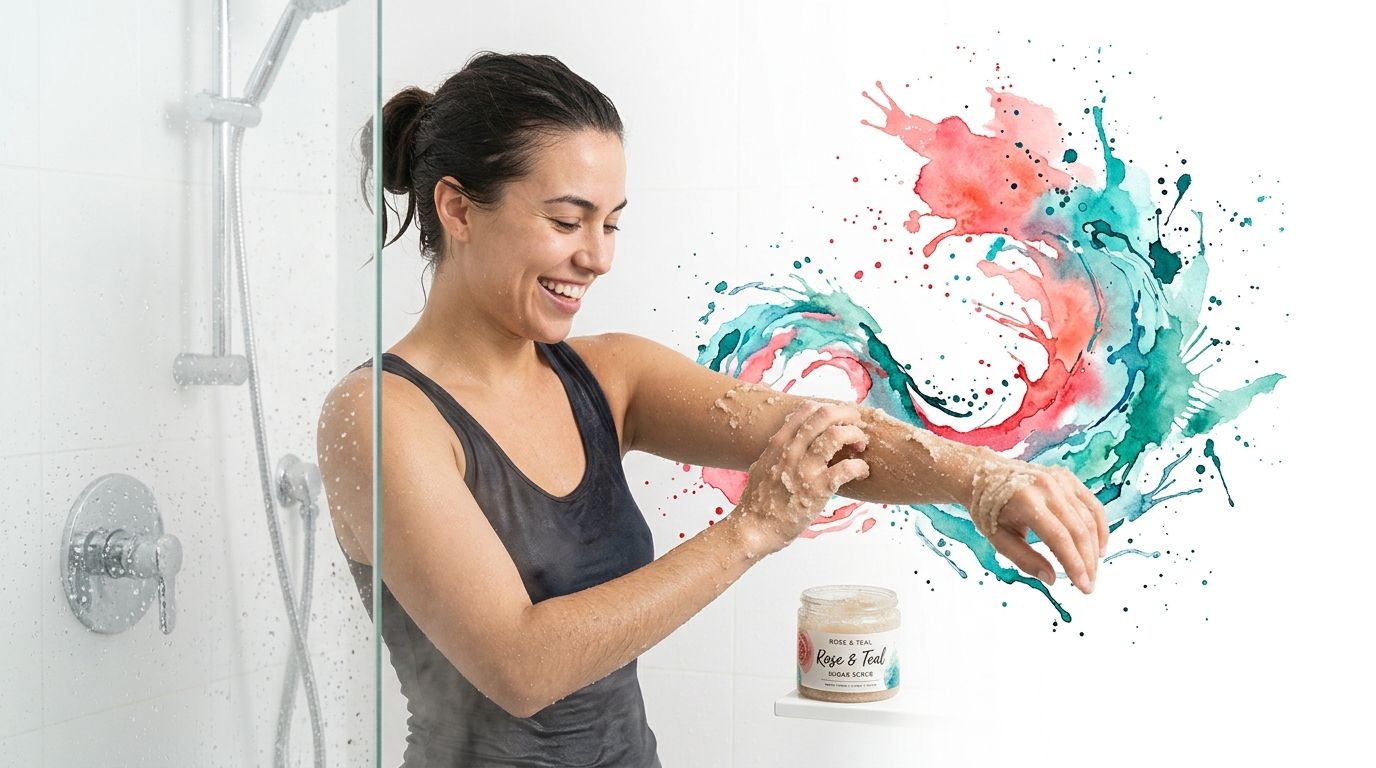
If you need to brace your arm or see the skin becoming uncomfortable, ease off. Move in small circles and allow the dampness of the skin to help the scrub glide. Concentrate on rougher areas instead of repeatedly passing over the same patch.
A loofah, brush, or exfoliating glove can add extra friction, so be cautious when combining one with a grain-based scrub. One exfoliating tool is usually enough for a single area.
Mistake two is choosing water that feels too hot
Very hot water may make a shower feel luxurious at first, but it can leave the skin feeling stripped or uncomfortable. Choose warm water instead, especially on days when you're exfoliating. The skin only needs enough warmth to soften and cleanse comfortably.
Mistake three is scrubbing compromised skin
Skip physical exfoliation on irritated, inflamed, or broken skin. Scrub particles are intended for the outer layer of healthy-feeling skin, and applying them to a compromised area can increase discomfort and barrier stress, as explained in this body scrub safety guidance.
Pay attention to signs that your routine needs a pause:
- Tightness: Focus on gentle cleansing and moisturizer until the skin feels comfortable again.
- Stinging: Rinse thoroughly and avoid adding more exfoliating products.
- Visible irritation: Leave the area alone rather than trying to smooth it immediately.
- Persistent discomfort: Seek personalized advice from a qualified healthcare professional.
The final common mistake is waiting too long to moisturize. Pat dry, keep a little dampness on the skin, and apply your chosen lotion or oil soon after rinsing. This small timing choice makes the transition from exfoliation to comfort feel much more complete.
The Benefits of Plant Powered Body Care
The order of your products matters, but so does the experience they create. A body wash with a clean, fresh botanical scent can make the cleansing step feel uplifting, while a scrub with plant oils or natural fragrance can turn exfoliation into a slower, more grounding ritual.
Plant-powered formulas often bring multiple sensory elements together. You may notice the grain of sugar or salt, the slip of coconut, jojoba, or another botanical oil, and the aroma of an essential oil or plant absolute. Those details don't need to promise dramatic results to make the shower feel more considered.
Look beyond the label
“Natural” can describe a wide range of textures and fragrances, so read the ingredient list and product directions. Consider whether the exfoliant is fine or coarse, whether the base feels creamy or oily, and whether the scent suits your preferences.
A sugar scrub may feel more cushiony, while a salt scrub may offer a brisker, more textured massage. Botanical oils can add slip, but they may also leave a richer finish. The right choice depends on how you want your skin to feel after rinsing.
Make the ritual feel restorative
A plant-based body wash and scrub can support a simple rhythm:
- Cleanse gently to remove the day's surface buildup.
- Exfoliate deliberately on damp skin, using only the pressure you need.
- Rinse completely so the skin feels fresh rather than coated.
- Moisturize thoughtfully with a lotion, butter, or body oil that complements the finish.
For readers comparing ingredient-focused options, this guide to best plant based soap brands can help you think about plant-derived cleansing products and the kind of formulation you want in your shower.
A natural routine also encourages you to buy with purpose. Choose a wash for how it cleanses, a scrub for the areas and texture you want to address, and a moisturizer for the finish you enjoy. When every product earns its place, the shower feels less like a crowded sequence and more like a personal wellness ritual.
Embracing a Mindful Approach to Daily Self Care
The answer to body scrub before or after body wash is straightforward for most routines: cleanse first, exfoliate second, and moisturize after rinsing. Use warm water, apply the scrub to damp rather than dripping skin, and keep the massage light. Let your own comfort determine how often you repeat the step.
A quiet evening can make the routine feel especially restorative. You wash away the day, pause while applying the scrub to your elbows or knees, and finish with lotion before getting dressed. In that moment, the value isn't only the way your skin feels. It's the chance to slow down and notice what your body needs.
Build a ritual you'll actually enjoy
Keep your favorite products within easy reach. Choose a scent that suits the mood, play calming music if you like, and leave enough time to rinse thoroughly rather than rushing through the final step. You can also make the room feel more intentional by exploring ideas to find candles for self-care, while keeping any flame safely away from water, towels, and other flammable items.
Your routine doesn't need to look elaborate. A gentle wash, an occasional scrub, and prompt moisturization can be enough to create a consistent sense of care. If your skin feels dry or irritated, simplify the ritual and return to exfoliation only when it feels comfortable again.
Let the shower become a reliable pause in your day. The right order gives you structure, while a gentle pace leaves room for the sensory pleasure that makes self-care sustainable.
ArtNaturals offers plant-powered body-care options, including body washes and exfoliating scrubs, so you can build a simple wash, scrub, and moisturize ritual around your preferences. Visit ArtNaturals to explore body care, botanical oils, and everyday wellness products for your next shower ritual.