

Adopting an eco-friendly skincare routine is a conscious choice for well-being—both for you and for the planet. When you opt for eco friendly skincare brands, you're choosing products built on transparency, sustainability, and the restorative power of plants.
Embracing a More Mindful Skincare Philosophy

The shift toward conscious beauty isn't just about what's in the bottle; it's about changing how we view our daily rituals. It’s about seeing skincare as a moment of genuine self-care that’s deeply connected to nature, not just another task to check off a list.
This mindset makes you more aware of the ingredients you put on your skin and the bigger story behind them. By choosing brands that share these values, you’re joining a movement that prioritizes the whole picture—from thoughtfully harvested botanicals to recyclable packaging—ensuring every product is created with intention.
The Connection Between Nature and Nurture
At its heart, eco-friendly skincare is all about celebrating our bond with the natural world. It harnesses the power of plant-based ingredients that work with our skin, providing gentle nourishment.
When you select a product made with responsibly sourced ingredients, you’re adopting a routine that is as kind to the earth as it is to your skin. For anyone just starting out, learning to find natural skincare for sensitive skin is a perfect first step toward building a gentle, earth-friendly regimen.
This mindful shift invites you to slow down and appreciate the simple act of caring for yourself, transforming a routine into a restorative moment of calm and connection with nature.
Why Conscious Choices Matter
Choosing eco-friendly skincare empowers you to make decisions that truly align with your values. It’s about more than just buying a cream or a serum; it's about investing in a beauty philosophy that champions transparency and sustainability.
This guide will walk you through the world of conscious beauty, giving you the confidence to spot the brands that genuinely care. We'll break down the core principles, making it simple to choose eco friendly skincare that supports your well-being and the planet's health.
What Defines an Eco-Friendly Skincare Brand?
The term "eco-friendly" gets used a lot in the beauty world, but what does it really mean? It’s more than just a popular phrase; it’s a brand's deep commitment to making choices that are kind to your skin and the planet.
Think of it like cooking a meal from scratch. The best dishes start with high-quality, thoughtfully sourced ingredients. The same goes for genuinely eco-friendly skincare. It’s about considering the entire journey of a product—from the seed in the ground to the bottle on your shelf.
To really understand what sets eco-friendly skincare brands apart, we need to look past the marketing slogans and focus on the actions behind them.
Key Pillars of Eco-Friendly Skincare
Navigating the green beauty aisle can feel overwhelming, but it gets much easier once you know the core principles that define a truly conscious brand. These are the key qualities that separate genuinely dedicated brands from others.
This table breaks down the essential commitments that form the foundation of an eco-friendly ethos.
| Pillar | What It Means for Your Skincare |
|---|---|
| Clean Ingredients | The formula relies on botanicals and naturally derived ingredients, skipping harsh synthetics that can be less friendly to skin or aquatic life when washed down the drain. |
| Thoughtful Sourcing | Ingredients are harvested responsibly, protecting natural resources and supporting local communities. |
| Cruelty-Free Practices | No animal testing is conducted at any point—from raw ingredients to the final product. This is often backed by certifications like Leaping Bunny. |
| Sustainable Packaging | The brand uses materials like glass, recycled plastics (PCR), or biodegradable options to minimize landfill waste and reduce its environmental footprint. |
These pillars are the bedrock of any brand that is serious about sustainability and thoughtful practices. They represent a promise of transparency and care.
The demand for this kind of integrity is reshaping the beauty industry. The global clean beauty market has seen significant growth, with a projected value in the billions. This shift is powered by shoppers like you—in fact, a large percentage of consumers now say they actively look for natural or organic skincare. It’s a clear signal that people want products that are good for them and good for the world.
Beyond the Bottle: A Holistic Approach
A truly dedicated brand doesn't stop at the formula. Their commitment to the environment can be seen in many parts of their business, from the energy used in their offices to the way they ship their products.
This wider view is what separates the good from the great. A brand's responsibility extends to its broader sustainability initiatives and its role in the community. It’s about running a business that leaves the world a little better than it found it.
This holistic perspective transforms skincare from a mere consumer product into a practice rooted in respect—for our bodies, for others, and for the planet.
By keeping these characteristics in mind, you can confidently spot the eco-friendly skincare brands that are making a real difference. Your daily routine becomes more than just self-care; it becomes a small but powerful vote for a healthier, more sustainable future.
How to Read Labels and Certifications with Confidence
Stepping into the world of sustainable beauty can feel like learning a new language. You're faced with dozens of symbols, confusing claims, and long ingredient lists. It's easy to feel overwhelmed.
But here’s the secret: understanding what to look for is the key to choosing products that truly align with your values and wellness goals. Think of a product label as its story. It tells you where the ingredients came from, how the product was made, and what the brand believes in. Learning to read that story empowers you to shop with clarity and ease, turning a confusing chore into a confident choice.
Decoding Common Certifications
Certifications are your friend here. They are trusted stamps of approval from third-party organizations that have already done the homework for you. When you see one, you know a brand has met specific standards.
Here are a few of the most common symbols you’ll see and what they mean:
- Leaping Bunny Certified: This is the gold standard for cruelty-free practices. It indicates that no animal testing happened at any stage of product development—from the raw ingredients to the final formula.
- USDA Organic: This seal means the ingredients were grown and processed according to strict federal guidelines covering everything from soil quality to pest control. To earn this seal, products generally must contain a high percentage of organic ingredients.
- Vegan Certified: You'll often see a "V" symbol for this one. It's a straightforward confirmation that the product contains absolutely no animal-derived ingredients or by-products, like honey, beeswax, or certain types of collagen.
These little logos offer a fantastic shortcut to understanding a brand's core values. For anyone who wants to go a bit deeper, a guide on identifying natural product claims and reading labels offers some great insights that apply across the board.
Navigating the Ingredient List
Beyond the symbols, the ingredient list (often called the INCI list) gives you the real inside scoop. They can look intimidating, but a few simple tricks will have you scanning them with ease.
First, remember that ingredients are listed in order of concentration, from highest to lowest. The first five or six ingredients usually make up the bulk of the product. When you're looking for an eco-friendly brand, you want to see recognizable, plant-based names right at the top of that list.
A simple rule of thumb? Look for ingredients you recognize from nature. Think nourishing plant oils like jojoba or almond, botanical extracts like green tea or chamomile, and gentle floral waters. These are the building blocks of a truly clean, earth-friendly product.
This simple decision tree can help guide your choices when you're looking for eco-friendly skincare, focusing on cruelty-free practices, sustainable packaging, and clean ingredients.
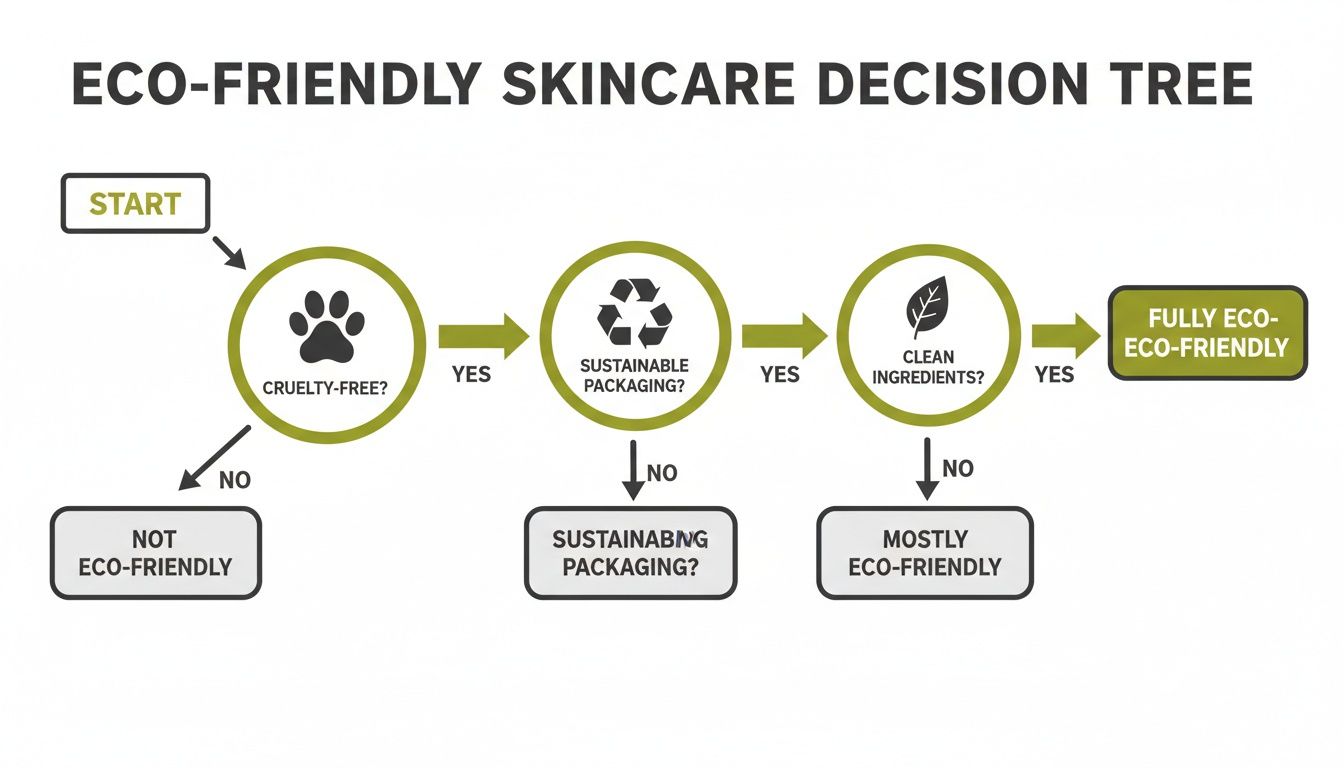
This visual guide helps simplify the process, showing that a truly eco-friendly choice often satisfies multiple criteria for conscious consumption.
And people are definitely catching on. The demand for these kinds of products is growing—the natural and organic personal care market is projected to reach new heights. This shift is driven by our collective desire for gentle, transparent formulas, with skincare making up a significant portion of this market.
Becoming a conscious consumer isn't about being perfect; it's about making small, informed choices one step at a time. By learning to read labels and recognize key certifications, you’re taking back the power to build a skincare routine that feels good in every sense—nurturing your skin, honoring your values, and caring for our planet.
The Power of Sustainable Ingredients and Sourcing
Let's get to the heart of what makes an eco-friendly product truly special: the ingredients. That journey from a plant in the ground to a formula in a bottle is where the real intention lies.
When we talk about sustainable ingredients, we're really talking about elements pulled straight from nature. Think vibrant botanical extracts, aromatic essential oils, and rich, hydrating carrier oils. These are the building blocks that work with your skin, offering care that feels both pure and gentle.
From The Earth to Your Skin
Knowing where your skincare ingredients come from creates a much deeper connection to your daily ritual. It’s no longer just a list on a label; it’s about the life of each plant, herb, and flower. This is the whole point of thoughtful and sustainable sourcing.
Sourcing isn't just about finding an ingredient. It’s about how and where it was grown and harvested. Eco-friendly skincare brands that are genuinely committed to wellness put a huge emphasis on methods that respect the earth and uplift the communities that cultivate these resources.
It means choosing plants grown without synthetic pesticides, harvesting them at just the right time, and making sure the entire process gives back to the land. This careful approach helps protect biodiversity and keeps our ecosystems healthy for the long run.
Why Thoughtful Sourcing Matters
Thoughtful sourcing adds a human element to the equation. It often means that the people who grow and harvest the ingredients are treated fairly and work in safe conditions. For any brand that believes in holistic wellness, this commitment to people is important.
When you choose products with thoughtfully sourced ingredients, you’re casting a vote for a more compassionate beauty industry. It’s a small choice that ripples outward, creating a larger, positive impact.
A thoughtfully sourced ingredient tells a story of respect—for the plant, the planet, and the people who nurtured it. This integrity is what makes a product feel truly good, both on your skin and in your heart.
This commitment is what builds your trust, assuring you that the products you use are as kind to the planet as they are to your skin.
Key Ingredients in Conscious Skincare
As you get better at scanning ingredient lists, certain names will start to pop out as signs of a truly nature-focused formula. Recognizing them is a simple first step toward making more confident choices. If you want to take a closer look at these botanicals, you can explore some great natural ingredients for glowing skin.
Here are a few wonderful examples to look for:
- Essential Oils: Potent plant extracts like lavender, tea tree, and chamomile are loved for their calming aromas and skin-balancing benefits. They turn your routine into a true sensory experience.
- Botanical Extracts: Ingredients like green tea, calendula, and rosemary are known to contain antioxidants that help protect and soothe the skin.
- Carrier Oils: Deeply nourishing oils like jojoba, argan, and rosehip often form the base of a formula. They are appreciated for their fatty acids and vitamins that deliver hydration and support a healthy skin barrier.
Seeing these ingredients is a great signal that a brand is dedicated to plant-powered wellness. By understanding the true power of sustainable sourcing, you can connect with your skincare on a new level and build a routine that’s rooted in the restorative beauty of nature.
Understanding Packaging and Your Carbon Footprint
A brand’s commitment to the planet doesn't stop with the beautiful formula inside the bottle. The packaging that holds your favorite serum or cream tells a huge part of its environmental story, making it a critical piece of the eco-friendly puzzle.
Truly conscious brands know that what’s on the outside matters just as much as what's on the inside. That’s why we’re seeing a thoughtful shift away from single-use plastics and excessive materials toward more mindful, earth-friendly alternatives.
The Shift Toward Sustainable Packaging
This move toward greener packaging isn't just a passing trend. It's a real, lasting change in how eco friendly skincare brands think and operate. They're actively searching for materials that complete a sustainable cycle, so once you’ve used the last drop, the container doesn’t just end up in a landfill.
Here are a few of the most common approaches you'll see on the shelves:
- Recyclable Materials: Glass, aluminum, and certain plastics (like PET) are popular for a reason. They can be reprocessed into something new, which cuts down on the need for virgin resources.
- Recycled Content (PCR): Post-consumer recycled (PCR) materials are made from plastics that we've already used and recycled. Using PCR plastic diverts waste from landfills and can lower carbon emissions.
- Biodegradable Options: Some innovative brands are turning to plant-based materials that naturally break down over time. You can dive deeper into the future of biodegradable packaging for cosmetics to see how it's shaping the industry.
- Minimalist Design: Sometimes, the greenest package is the one that uses the least material. Think no unnecessary boxes, no plastic shrink-wrap, and no decorative inserts.
This widespread focus on packaging is a direct response to consumer demand. The sustainable beauty market is a multi-billion dollar industry and continues to grow. That growth is being fueled by shoppers like you making eco-conscious choices. With a majority of consumers now actively seeking out eco-friendly labels, brands are listening. You can read more about this growing market on insightaceanalytic.com.
Your Product’s Journey and Its Carbon Footprint
"Carbon footprint" might sound technical, but it’s really just a way of measuring the total environmental impact of a product’s entire life. Think of it as the complete travel story of your favorite face oil, from its very beginning to the moment it lands on your doorstep.
This journey covers everything: growing and harvesting the ingredients, manufacturing the product, creating the packaging, and shipping it to your home. Every single step uses energy and creates emissions.
Choosing brands that prioritize lightweight, recyclable packaging and local sourcing helps minimize this footprint, making your self-care ritual a lighter one for the planet.
A brand that's genuinely committed to sustainability is constantly looking for ways to shrink its impact. They might source ingredients from nearby farms to cut down on transportation miles, power their facilities with renewable energy, or opt for shipping materials that are both lightweight and recycled.
When you support brands that do this work, you’re not just buying a product. You're becoming part of a cycle of care that starts with the earth, moves through the brand, and ends in your home. It’s a small but powerful way to make your routine restorative in every sense of the word.
How to Build Your Own Sustainable Skincare Routine
Building a sustainable skincare routine isn't about throwing everything out and starting from scratch. It’s a gentle art, a series of small, thoughtful choices that add up over time.
Think of it as making simple swaps that feel right for both your skin and the planet. This shifts your daily self-care from a chore into a restorative practice that honors your well-being and the environment. The goal here is progress, not perfection.
Simplify with Multi-Purpose Products
One of the easiest ways to create a more eco-friendly routine is to simplify. A bathroom cabinet overflowing with dozens of products can create unnecessary waste. The fix? Look for hardworking, versatile products that can pull double or even triple duty.
A great botanical oil, for instance, can work as a gentle makeup remover, a hydrating facial moisturizer, and a nourishing cuticle treatment all in one. A simple, beautifully made cleansing bar can work well for your face and body. These kinds of multi-taskers don't just save space; they can also cut down on the packaging you bring into your home.
- Rosehip Oil: A true workhorse. Use it for facial hydration, to help with the appearance of scars, or to tame dry hair ends.
- Shea Butter: Fantastic as a rich body moisturizer, a simple lip balm, or a soothing spot treatment for dry patches.
- Castile Soap: This classic plant-based soap can be diluted to work as a face wash, body wash, or even a gentle cleaner around the house.
Mindful Practices in Your Daily Ritual
Sustainability is about more than just what’s in the bottle—it’s also about how you use it. Weaving a few mindful habits into your daily ritual can make a surprisingly big impact.
Water usage is a great place to start. It’s as simple as turning off the tap while you’re lathering up your cleanser or massaging in a facial scrub. Another easy swap is switching to reusable cotton rounds instead of the disposable kind. This one small change can eliminate a lot of daily waste over the course of a year.
The core idea is simple: use what you have, and use it well. Make a commitment to finish a product completely before you even think about buying a new one. This not only prevents a collection of half-empty bottles under your sink but also fosters a deeper appreciation for each item you own.
When you start adopting these habits, your routine becomes less about going through the motions and more of a thoughtful ritual. Every choice becomes a quiet act of care for yourself and the world you live in, making your journey with eco friendly skincare brands a genuinely fulfilling one.
Your Top Eco-Friendly Skincare Questions, Answered
As you start dipping your toes into sustainable beauty, you're bound to have some questions. Shifting to more mindful choices is a journey, and getting clear on a few key ideas can make the whole process feel less overwhelming. Let's tackle some of the most common curiosities.
What Is the Difference Between Vegan and Cruelty-Free?
This is a big one. You'll often see these two terms used together, but they address completely different ethical concerns. Understanding the distinction is key to picking products that truly match what you stand for.
-
Cruelty-Free: This is all about animal testing. When you see a product labeled as cruelty-free—especially with an official Leaping Bunny logo—it indicates that no animal testing occurred at any stage, from the raw ingredients to the final bottle on the shelf.
-
Vegan: This term focuses purely on the ingredient list. A vegan product is formulated without any animal-derived ingredients or by-products. That means no honey, beeswax, lanolin, or animal-based collagen.
The important thing to remember is that a product isn't automatically both. A lip balm could be cruelty-free but use beeswax, which means it isn’t vegan. On the flip side, a lotion could have all plant-based ingredients but be made by a company that tests other products on animals. Thankfully, many eco-friendly skincare brands today make it a priority to be both.
Does "Natural" Automatically Mean Eco-Friendly?
Not necessarily, and this is where things can be tricky. "Natural" feels good, but because the term isn't officially regulated, it can mean different things to different brands. A genuinely eco-friendly product looks at the entire picture, not just where the ingredients came from.
Think about it this way: an ingredient could be 100% natural, but what if harvesting it was harmful to a local ecosystem? Or what if it was shipped halfway around the world in layers of plastic? That "natural" choice now has a heavier environmental footprint.
True sustainability goes way beyond the ingredient list. It's about a holistic commitment to thoughtful sourcing, responsible manufacturing, and low-impact packaging that honors the planet from start to finish.
How Can I Start Making My Routine More Sustainable?
You don’t have to throw everything out and start from scratch. The best approach is to take small, thoughtful steps. It's all about progress, not overnight perfection.
A fantastic first step? Use up what you already have. It sounds simple, but resisting the temptation to buy the next new thing until your current products are gone is one of the most powerful ways to reduce waste and shop more consciously.
Another great swap is to find products that can pull double (or triple) duty. A high-quality botanical oil, for instance, can often work as a makeup remover, a facial moisturizer, and even a hair treatment. That’s three plastic bottles replaced with one. By making one smart choice at a time, you’ll slowly build a routine that feels amazing for both you and the planet.
Ready to embrace a skincare routine rooted in nature? ArtNaturals offers plant-powered serums, oils, and cleansers made with clean ingredients and a commitment to accessible, effective self-care. Explore our collections and find your new favorite ritual.