

Embarking on a journey to encourage natural hair growth is an act of self-care. It’s about patience, understanding your body, and creating a nurturing environment where your hair can thrive. Think of it less as a race for an overnight transformation and more about working with your hair's natural rhythm.
Understanding Your Hair's Natural Journey
Before exploring new products and routines, it’s helpful to get a feel for the natural cycle your hair already follows. Every strand on your head is on its own unique timeline, moving through phases of growing, resting, and eventually shedding. This quiet, constant process is the real foundation of hair wellness.
Once you appreciate this cycle, your mindset can shift. Instead of looking for a quick fix, you start focusing on providing consistent, gentle support. It’s a perspective that helps cultivate the patience needed for any meaningful self-care practice.
The Gentle Rhythm of the Hair Growth Cycle
You can think of a single hair strand's life as a three-part story, with each chapter playing a vital role. This journey is happening all over your scalp, all the time.
- Anagen (The Growing Phase): This is the main event—the active period where your hair is actually growing from the follicle. It’s by far the longest phase, and its duration is what determines your hair's maximum potential length.
- Catagen (The Transition Phase): After the growth spurt, the hair follicle shrinks. This is a short transitional stage that signals the end of active growth for that specific strand.
- Telogen (The Resting Phase): Finally, the hair rests in the follicle for a while before it sheds. This makes way for a brand new strand to begin its own anagen phase, starting the cycle all over again.
I like to think of the scalp as a garden. Not every flower blooms at the exact same moment. In the same way, each hair follicle is on its own schedule. This beautiful, staggered timing is what ensures you maintain a full head of hair while older strands make way for new ones.
This timeline gives you a great visual of the hair growth cycle's distinct stages, from the active anagen phase to the resting telogen phase.
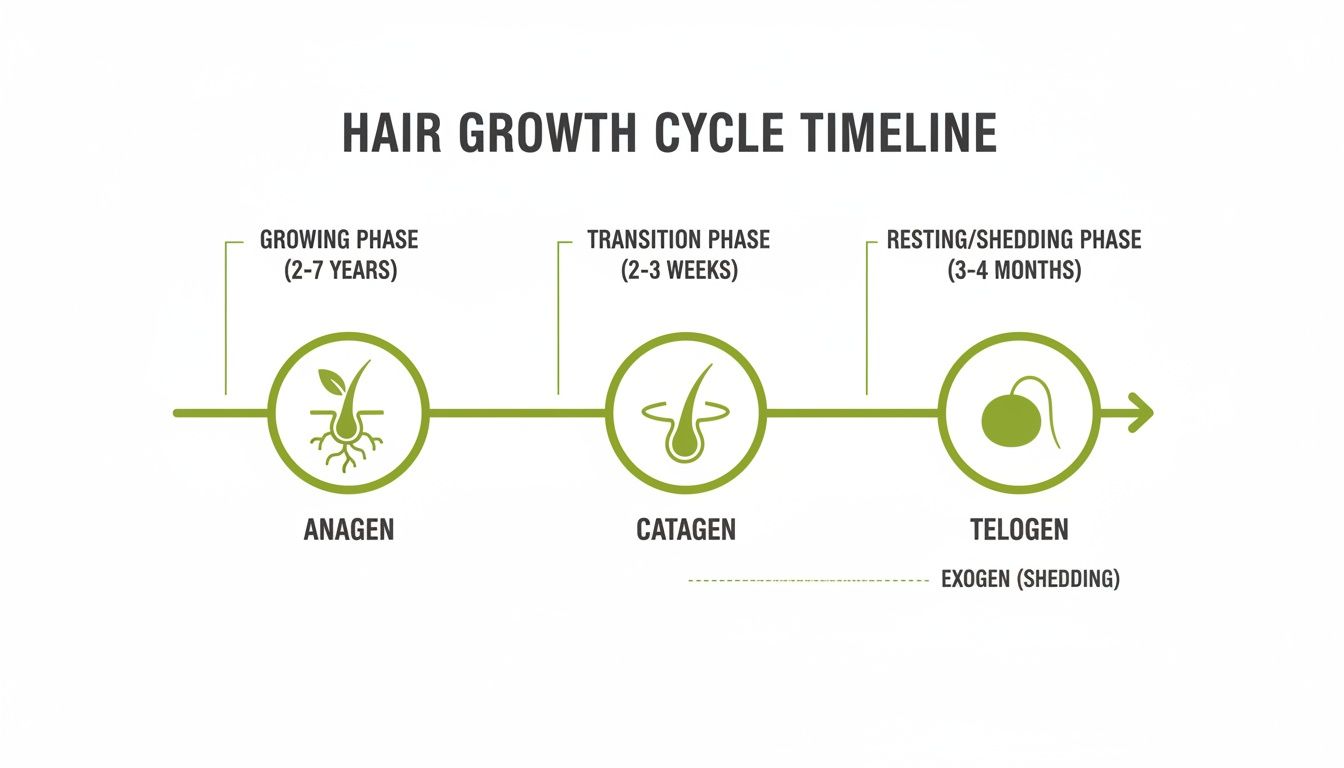
This shows that the vast majority of your hair is in the growth phase at any given time, which is why consistent, thoughtful care can be so impactful.
Factors That Influence Your Hair's Appearance
While the growth cycle is an internal process, many external and lifestyle factors can influence how your hair looks and feels. Things like daily stress, what you eat, and even how you style your hair all play a part.
For example, high-tension hairstyles can put unnecessary strain on your follicles. On the other hand, a balanced diet provides the essential building blocks your body needs to create strong, healthy-looking strands from the inside out.
On average, hair grows about half an inch per month, which adds up to around six inches per year. At any given moment, about 85-90% of the hairs on your scalp are in the growth phase. This rate is influenced by personal factors like genetics and overall wellness, which underscores how unique every person's hair journey is. You can discover more insights about hair growth statistics and learn how our bodies support this amazing process.
Building Your Gentle Hair Care Ritual
Think of creating a hair care routine as an act of self-care. It’s not about adding a dozen complicated steps to your day. Instead, it’s about forming consistent, mindful habits that fit into your life and give your hair the support it needs.
The most important thing to remember is to be gentle. Over-washing can strip your hair and scalp of their natural protective oils, leaving strands feeling dry and dull. Spacing out your washes is a simple change that allows your scalp's ecosystem to find its balance.
Finding Your Cleansing Rhythm
For many people, washing every three to four days is a great starting point. This keeps your scalp feeling fresh without compromising moisture. If you’re used to washing your hair every day, this can feel like a big adjustment, but your scalp can adapt over time.
For active lifestyles, a good dry shampoo can be a helpful tool. It’s useful for absorbing excess oil at the roots, which can help you extend time between washes.
This small tweak—washing less—is one of the kindest things you can do for your hair. It fosters a healthy scalp environment, saves you time, and cuts down on the daily wear and tear from washing and styling.
Don't Forget Your Scalp
Healthy hair starts at the scalp. Just like the skin on your face, your scalp can accumulate buildup from products like dry shampoo, conditioners, and styling creams. This residue can clog follicles and get in the way of healthy hair growth.
One of the best ways to show your scalp some love is with a gentle massage.
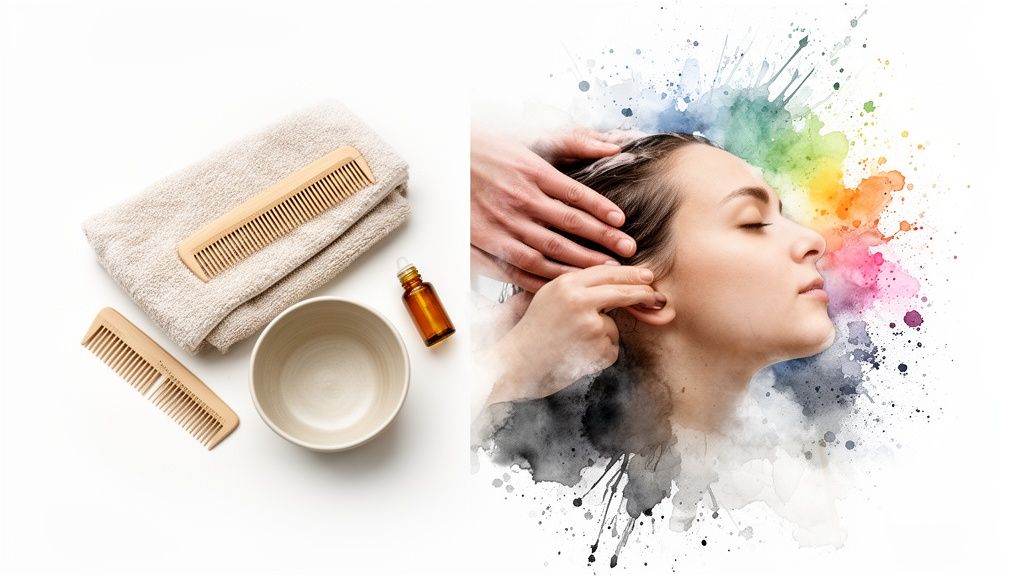
- Boosts Circulation: Using your fingertips or a soft scalp massager in small, circular motions helps get blood flowing to the follicles.
- Breaks Up Buildup: A good massage helps loosen product residue before you get in the shower, making your shampoo more effective.
- It’s a Moment of Zen: Beyond the hair benefits, it’s a wonderful, calming ritual that can help melt away tension from a long day.
You can do a quick scalp massage on dry hair right before you wash it, or even while you’re lathering up your shampoo. Just a few minutes, a couple of times a week, can make a world of difference in how your scalp feels.
Think of your scalp as the foundation of your hair's wellness. When you give it regular, thoughtful attention, you're creating the best possible starting point for every strand.
Your Weekly Hair Wellness Ritual
Consistency beats complexity. A simple, repeatable ritual is far more beneficial than an elaborate one you can’t stick with. The goal is to build habits that feel genuinely nurturing. Feel free to use this sample schedule as a starting point and tweak it to fit your hair and your lifestyle.
Here’s an idea of what a supportive and realistic week could look like:
| Day | Morning Ritual | Evening Ritual |
|---|---|---|
| Day 1 | Gently cleanse with a sulfate-free shampoo. Follow with a deep conditioner or mask on mid-lengths and ends. | Let hair air-dry as much as you can. Sleep with it in a loose braid on a silk pillowcase. |
| Day 2 | Refresh roots with a light spritz of dry shampoo if needed. Style with minimal heat. | Gently brush hair from ends to roots to move natural oils down the hair shaft. |
| Day 3 | Go for a heat-free style—a low pony with a silk scrunchie or a chic headband works great. | Do a gentle 5-minute scalp massage before bed to support the follicles. |
| Day 4 | Time to cleanse again. This time, just use a regular conditioner instead of a deep treatment. | Apply a nourishing hair oil or serum just to the ends to seal in moisture while you sleep. |
| Day 5 | Style your fresh hair. Don’t forget a heat protectant if you’re using any hot tools! | Protect your style in a loose bun or "pineapple" style overnight. |
| Day 6 | A perfect day for a stylish hat or a simple updo. A little dry shampoo can add some volume. | Another great opportunity for a relaxing scalp massage. |
| Day 7 | Let your hair rest. Try to avoid products and tight styles to give your scalp a breather. | Gently detangle your hair to prep for wash day tomorrow. |
Remember, this is just a template. The most important thing is to listen to what your hair and scalp are telling you and adjust as you go. Your routine should feel good and supportive, not like another item on your to-do list.
Tapping into Nature's Best-Kept Secrets for Hair
There’s something powerful about turning to nature for hair care. Using botanicals isn’t just about following a trend; it's about reconnecting with a gentle, time-tested approach to wellness.
This move towards clean, plant-powered ingredients is becoming more common. Many people are choosing to nourish their hair with ingredients that come from the earth.
The Energizing Power of Rosemary Oil
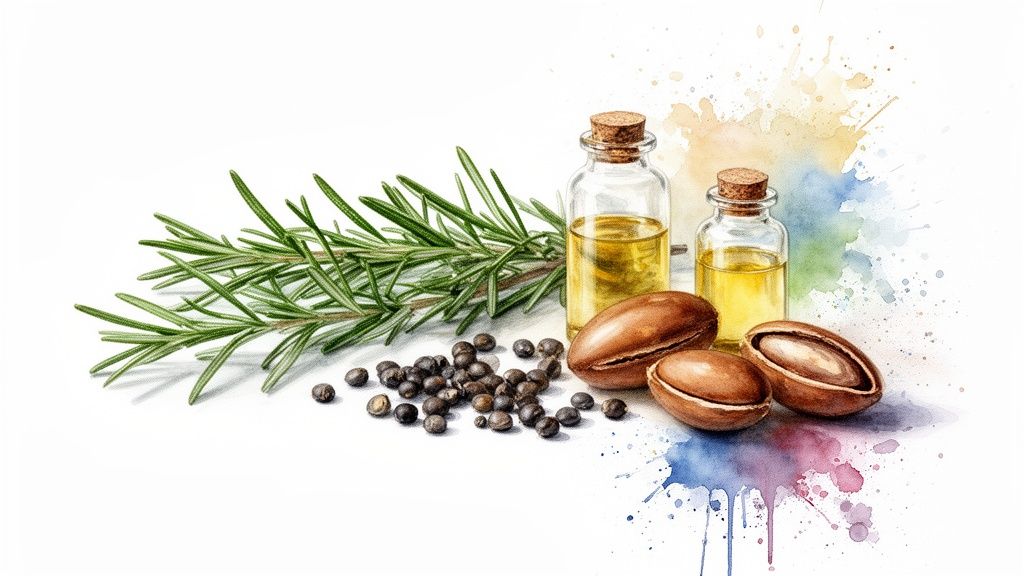
Rosemary oil is a staple in the natural hair community, known for the refreshing, tingly sensation it brings to the scalp. Its crisp, herbal scent can turn a routine scalp massage into a mini spa moment.
Getting started is easy. Because essential oils are concentrated, it’s best to mix them with a "carrier" oil first—jojoba, coconut, or argan are all fantastic choices. A good rule of thumb is to add just a few drops of rosemary oil to about a tablespoon of your carrier oil.
Gently work the mixture into your scalp with your fingertips for a few minutes. This feels amazing and ensures the oil gets evenly distributed, setting the stage for a perfect pre-shampoo treatment.
The Deep Nourishment of Castor Oil
Castor oil is the heavyweight champion of moisture. It's uniquely thick and rich, which makes it incredible for sealing hydration into the hair shaft. If you're dealing with dry, brittle ends, this oil can be a game-changer.
Many people love using it as a deep conditioning treatment. Simply apply it to your mid-lengths and ends before washing, and let it sit for at least 30 minutes to an hour. For an even bigger moisture boost, you can leave it in overnight—just be sure to wrap your hair or cover your pillowcase.
Heads up: because it's so dense, you might need to shampoo twice to get it all out. The payoff is hair that feels deeply conditioned and incredibly soft. For more ideas on using different oils, check out our guide on the best oils for hair growth.
The "Liquid Gold" Finish of Argan Oil
There's a reason they call it "liquid gold." Argan oil is celebrated for its lightweight feel and its ability to deliver a gorgeous, non-greasy shine. It’s packed with nutrients that leave hair feeling silky and looking luminous.
The best part about argan oil is how versatile it is. Here are a few ways to use it:
- To Tame Frizz: Warm a single drop between your palms and smooth it over dry hair. It instantly calms flyaways and adds a beautiful gloss.
- As a Detangler: A tiny amount on damp hair makes post-shower combing easier and adds a light layer of moisture.
- For a Dry Scalp: Since it's not as heavy as other oils, you can massage it directly into your scalp without it weighing your roots down.
The beauty of using plant-based oils is that they invite you to slow down and connect with your routine. The simple act of massaging an oil into your scalp becomes a mindful practice, a quiet moment dedicated to your own well-being.
Crafting Your Own Botanical Blends
Here's where the fun begins. One of the best things about using natural ingredients is that you can create custom blends that are perfect for your hair. You can find inspiration from all sorts of DIY essential oil blends.
For example, you could combine the deep moisture of castor oil with the invigorating feel of rosemary for a powerhouse pre-shampoo scalp treatment. Or mix lightweight argan oil with a few drops of calming lavender for a soothing overnight hair serum. The possibilities are endless, letting you create personal rituals that feel both effective and deeply nurturing.
Nourishing Your Hair From The Inside Out
What you see on the outside—the shine and strength—is often a reflection of what's happening on the inside. While the right shampoos and serums are part of the puzzle, the foundation for incredible hair is built from within. The connection between what you eat, how much water you drink, and your daily habits is key.
Think of it this way: you wouldn't build a house with flimsy materials. Your hair follicles are the same; they need a steady supply of high-quality vitamins and minerals to do their best work.
Eating For Hair Wellness
Building a diet that supports your hair growth journey doesn't have to be complicated. Just focus on adding a variety of whole, colorful foods to your plate. Each one brings something unique to the table for your hair's vitality.
The goal isn't about achieving a "perfect" diet overnight. It's about consistently choosing foods that are as good for your hair as they are for the rest of your body.
Here are a few power-packed nutrients to focus on and where to find them:
- Biotin: This B-vitamin is well-known in the hair world. It supports healthy hair and nails. You can find it in everyday foods like eggs, almonds, and avocados.
- Iron: This mineral supports oxygen transport. Healthy blood flow to the scalp is essential, and iron helps get that oxygen to your hair follicles. Load up on leafy greens like spinach, lentils, and seeds.
- Zinc: Think of zinc as part of your hair's maintenance crew. It plays a role in hair tissue repair and growth. Pumpkin seeds, chickpeas, and nuts are fantastic sources.
- Vitamin C: This antioxidant is iron's best friend. It helps your body absorb iron, making them a powerful duo. You'll find it in berries, citrus fruits, and bell peppers.
It's clear that healthy hair is a major wellness goal for many people who seek out natural, supportive solutions.
The Role Of Hydration And Stress
Beyond your plate, two other lifestyle factors come into play: water and stress.
Staying properly hydrated is one of the simplest things you can do for your hair. Every cell in your body needs water to function, including the cells that build your hair strands. When you're hydrated, your body can efficiently deliver all those great nutrients to your scalp.
Likewise, managing daily stress is an act of hair care. Chronic stress can throw your entire body out of balance, and your hair growth cycle is often affected. Building in small, mindful practices—a quiet walk, a few minutes of meditation, gentle yoga—can help create the balanced internal environment your hair needs.
Embracing a holistic view means recognizing that every choice—from the food you eat to the water you drink—contributes to your hair's story. It’s about creating a lifestyle that nurtures you from the inside out.
If you want to get serious about optimizing your hair health, it might be worth getting a blood test for vitamin and mineral deficiency to see what your body needs. For more straightforward and actionable tips, check out our guide on how to grow hair faster naturally.
Rethink Your Styling and Protective Habits
All the hard work you put into growing your hair can be undone with rough daily habits. The secret to seeing more length isn't just about what grows from your scalp—it's about protecting the hair you already have from daily wear and tear.
This isn’t about a complicated, time-consuming routine. It’s about making small, mindful shifts in how you handle your hair. Over time, these little changes add up to significantly less breakage and stronger, healthier strands.
Use Smarter Tools
The brushes, combs, and towels you use every day can be your hair's best friend or its worst enemy. Making a few simple swaps is one of the easiest ways to be kinder to your strands.
- Ditch the Cotton Towel: Your regular bath towel can have rough fibers that snag your hair cuticles, causing frizz and snapping delicate strands. A better choice is a microfiber towel. It’s super absorbent and gently soaks up water without you having to rub or wring your hair out.
- Get Friendly with a Wide-Tooth Comb: Hair is at its most elastic when it’s wet. Raking through it with a standard brush can cause damage. Instead, reach for a wide-tooth comb to gently work through knots, always starting from the ends and moving your way up to the roots.
These two small changes protect your hair when it's most vulnerable, creating a better foundation for styling.
Master the Art of Gentle Detangling
How you get the tangles out can mean the difference between keeping your length and creating a whole new set of split ends. The trick is to be patient and work with your hair, not against it.
A great tip is to prep your damp hair with a light leave-in conditioner or a tiny bit of argan oil. This adds "slip," which helps the comb glide through much more easily.
Always work in small, manageable sections. When you’re combing through the ends of a section, hold the hair firmly a few inches above where you're combing. This stops you from pulling and putting tension on the root.
Think of detangling as a moment of self-care, not a race to the finish line. When you slow down and treat your hair gently, you’re honoring all the effort you’ve put into its health.
Give Your Hair a Break with Protective Styles
A protective style is exactly what it sounds like: a hairstyle that tucks your ends away, keeping them safe from rubbing against your clothes or getting snagged. It's the perfect way to give your hair a rest from daily manipulation.
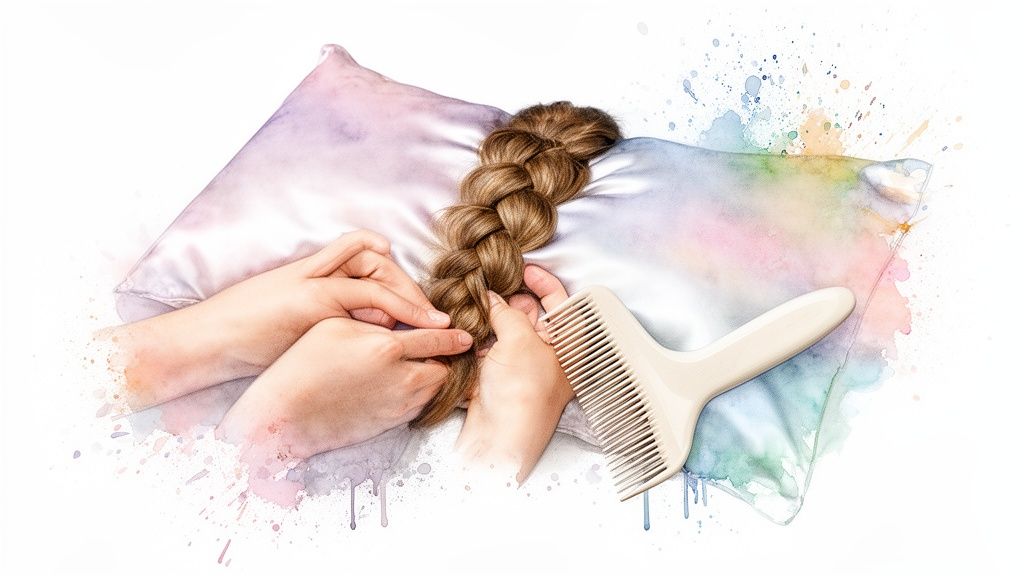
The best options are always low-tension. Think loose braids, a soft bun secured with a silk or satin scrunchie, or two-strand twists. These styles are beautiful and functional without putting strain on your scalp. Steer clear of anything that feels too tight or pulls at your hairline, as that kind of tension can lead to breakage. Learning how to prevent hair breakage is a game-changer for seeing results.
Upgrade Your Beauty Sleep
Believe it or not, you can protect your hair even when you're sleeping. As you toss and turn, a standard cotton pillowcase creates friction that can rough up your hair, leading to tangles and weakness over time.
Switching to a silk or satin pillowcase is a simple, luxurious fix. The smooth surface lets your hair glide around without friction, which means less frizz and fewer tangles in the morning. Another great habit is to loosely gather your hair into a high, soft bun on top of your head (sometimes called a "pineapple") with a silk scrunchie. This keeps it contained and protected while you rest.
Your Hair Growth Questions, Answered
Starting a new routine to encourage hair growth always brings up a few questions. It’s a process that requires patience and consistency, so getting clear, honest answers can make all the difference. Let's tackle some of the most common things people wonder about when nurturing their hair.
How Long Until I See a Difference in My Hair?
This is the big one, isn't it? Since hair grows at its own pace—typically about half an inch per month—it takes time to see noticeable changes in length. You'll likely need a few months of consistent care before the new growth becomes obvious.
The trick is to focus on the small wins along the way. Things like less hair in your brush, a calmer scalp, or a bit of extra shine are all fantastic signs that your efforts are paying off. These early improvements show your routine is working in harmony with your hair's natural cycle.
Can I Make My Hair Grow Faster?
While we can't speed up our hair's growth rate (that's mostly down to genetics), we can create the perfect environment for it to thrive. Think of it less like hitting the accelerator and more like clearing roadblocks that might be holding it back.
By focusing on a nutrient-rich diet, gentle styling habits, and consistent scalp care, you’re giving your hair everything it needs to reach its full potential. It's all about supporting your body’s natural ability to grow strong, healthy hair.
Embracing your hair's natural timeline is a true act of self-care. When you focus on providing consistent support, you're not just aiming for longer hair—you're cultivating a deeper connection with your own well-being.
Are Certain Oils Better for Hair Health?
Different plant-based oils bring unique benefits, and part of the fun is figuring out which ones your hair responds to best.
- Rosemary Oil: A long-time favorite for scalp massages. It creates a wonderfully invigorating, tingling sensation and its fresh, herbal scent can turn your routine into a mini spa session.
- Castor Oil: This one is incredibly thick and rich. It’s a powerhouse for sealing in moisture, making it perfect for protecting dry, thirsty ends. Many people love using it as an intensive pre-shampoo treatment.
- Argan Oil: Known as 'liquid gold' for a reason. It's much lighter than castor oil and is fantastic for adding a silky, non-greasy shine, taming flyaways, or giving your hair a polished finish.
The "best" oil really comes down to your hair type and what you're trying to achieve, so don't be afraid to experiment.
How Often Should I Trim My Hair if I Want It to Get Longer?
It might sound backward, but regular trims are essential for growing your hair long. A trim doesn't make hair grow faster from the scalp, but it's crucial for preserving the length you already have.
Split ends can travel up the hair shaft, causing the strand to break off much higher up. By snipping off just the very ends every 3-4 months—often called a "dusting"—you stop that damage in its tracks. This keeps your strands strong and helps you retain length over time, making your hair look fuller and healthier.
At ArtNaturals, we believe in the gentle power of plant-based ingredients to support your hair wellness journey. Explore our collection of nourishing oils, shampoos, and conditioners designed to fit seamlessly into your self-care rituals.