

Preventing hair breakage comes down to being more mindful in your daily routine. Think gentle handling and consistent moisture. By trading some common habits for more nurturing ones, you start building a strong foundation for hair that not only looks healthy but is genuinely resilient.
Building a Gentle Daily Hair Care Foundation
The secret to addressing hair breakage isn't a single product; it's the small, consistent things you do every day. When you start treating your hair care routine less like a chore and more like a self-care ritual, you may notice a positive difference in your hair's health. It’s all about creating habits that shield your strands from the daily stressors that can lead to split ends and snapping.
Rethink Your Detangling Tools
One of the biggest contributors to hair damage is mechanical stress. This is especially true when you brush your hair while it's wet and at its most fragile.
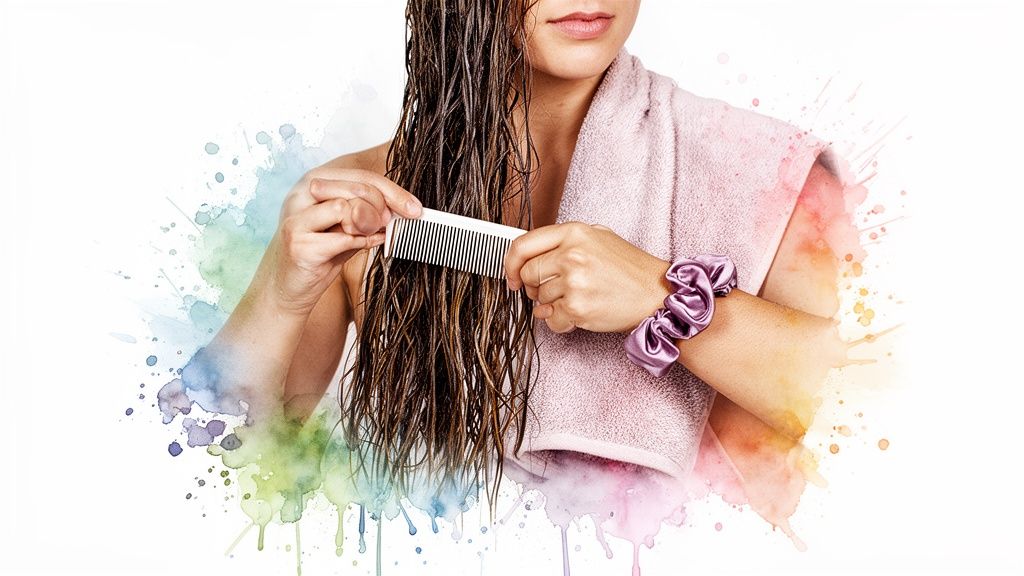
Instead of a standard bristle brush, try a wide-tooth comb. This one change can be a game-changer. Always start detangling from the ends and gently work your way up to the roots. This method helps prevent yanking on knots and reduces the tension that can cause hair to snap.
Adopt Mindful Washing and Drying Habits
Your wash day is another critical moment to either protect or challenge your hair's integrity. Very hot water can strip your hair and scalp of their natural, protective oils, leaving them feeling dry and brittle. A helpful approach is to use lukewarm water for washing and then finish with a cool rinse. This helps seal the hair cuticle, which locks in moisture and adds a touch of shine.
After you wash, try not to rub your hair with a rough cotton towel, as the friction can be harsh on the hair cuticle. Instead, gently squeeze the excess water out or blot it dry with a soft microfiber towel or an old cotton t-shirt. This small shift minimizes stress when your hair is at its most vulnerable. If you're also experiencing dryness, looking into some natural remedies for a dry scalp can work hand-in-hand with these gentle washing habits.
"Mechanical stress, like aggressive brushing and tight hairstyles, can contribute to hair damage. Simple adjustments, like using wide-tooth combs and opting for looser styles with silk scrunchies, can dramatically cut down on friction and protect your hair's integrity."
Choose Hair-Friendly Accessories
Let's talk about what you use to tie your hair back. Tight ponytails or braids held with standard elastic bands can create friction and tension, often leading to breakage where the band sits.
Whenever you can, opt for looser styles. And consider switching to accessories made from softer materials. Silk or satin scrunchies are a great choice because they glide over the hair without snagging or pulling, which makes a noticeable difference in reducing friction.
Nourishing Your Hair from Within
Lustrous hair isn't just about the products you use; it starts with what you put into your body. Your diet and hydration levels are the foundation for every single strand, providing the essential building blocks for strong, resilient hair.
Think of your hair follicles as tiny construction sites. To build strong keratin—the protein that makes up your hair—they need a consistent supply of vitamins and minerals. If those supplies are low, the hair they produce may be weaker and more likely to snap.
Fueling Your Hair for Strength
A balanced diet, packed with a few key nutrients, can support your hair's texture and ability to withstand daily wear and tear.
- Biotin and Protein Powerhouses: Eggs, nuts, and seeds are wonderful additions to your diet. Protein is what hair is made of, and biotin is important for producing the keratin that forms it.
- Iron-Rich Greens: Spinach and kale are great sources of iron. Iron is essential for helping red blood cells deliver oxygen to your follicles, a vital process for healthy-looking hair.
- Omega-3 Fatty Acids: You'll find these in foods like salmon, avocados, and flaxseeds. These healthy fats are amazing for nourishing the scalp and giving your hair a beautiful, natural shine.
Sometimes, underlying health considerations can contribute to weak hair and breakage. If you suspect an internal issue might be at play, you may find it helpful to look into approaches like Ayurvedic treatment for hypothyroidism.
Don't Forget to Hydrate
It's one of the simplest things to do, yet so easy to forget: drink enough water. When you're dehydrated, your body pulls moisture from wherever it can, and that includes your hair.
Dry, brittle strands that have lost their elasticity can be a sign of dehydration. Staying hydrated helps keep your hair moisturized from the inside out, making it more flexible and better able to bend without breaking.
Your daily water intake directly influences your hair’s moisture balance. Aiming for consistent hydration is a foundational step in building hair that is pliable and less prone to brittleness.
The connection between our internal wellness and the health of our hair is well-established. For more information, you can find general hair loss statistics that highlight global trends. By nourishing your body, you’re setting the stage for your hair to truly thrive.
A Smart Approach to Heat Styling and Salon Treatments
Heat styling and salon treatments are a fun way to express ourselves. The goal isn't to give up your flat iron or skip color appointments forever. It's about being mindful and building a routine that keeps your hair strong through it all. With a few protective habits, you can enjoy your favorite styles without sacrificing your hair's wellness.
Before any heat touches your hair, creating a barrier is key. A quality heat protectant is your best friend here; think of it as armor for your hair. These products help seal the cuticle and slow down how quickly your hair heats up, which is important for minimizing moisture loss and preventing the kind of damage that leads to snaps and splits.
Your New Rules for Heat
There’s a reason your styling tools have different temperature settings—not all hair is the same. If your hair is fine, thin, or has been colored, it’s more fragile and benefits from a lighter touch. A good rule of thumb is to stay below 350°F. For those with thicker or coarser hair, you might need more heat, but always start low and only increase the temperature if necessary.
Giving your hair a day off can also be a game-changer. Try to embrace your natural texture a few days a week or get creative with heatless styling. You might be surprised at the gorgeous, soft waves you can get from simple overnight braids or the volume you can achieve with a set of rollers.
A healthy styling routine is all about balance. When you consciously add in heat-free days and always use a protectant, you give your hair a chance to recover and stay strong.
Handling Chemical Treatments with Care
Coloring, bleaching, and relaxing treatments can be tough on hair. To soften the impact, it’s a good idea to space out your appointments, giving your hair plenty of time to bounce back. In the weeks before you head to the salon, make deep conditioning a priority. Arriving with well-moisturized, fortified hair can make a world of difference.
Heat styling is a known contributor to breakage, especially for those who use hot tools regularly. Simply turning down the temperature and always using a protectant can help preserve your hair's natural strength. For those interested in market trends around hair wellness, you can find more insights on hair thinning reports. By adding back lost moisture with weekly deep conditioners, you’re building tougher, more resilient hair.
Choosing Products and Ingredients for Hair Resilience
The products in your shower can be your hair's best friend. It all comes down to knowing what's inside the bottle. When you learn to look past the marketing and understand the ingredients, you can build a routine that genuinely strengthens your hair from the inside out.
Think of it less like searching for one perfect solution and more like assembling a supportive team. Your shampoo, conditioner, and weekly treatments all play a role. Each one is a chance to give your hair the moisture and strength it needs to stand up to daily wear and tear.
Harnessing the Power of Botanical Oils
Nature often has beautiful answers for hair care. Botanical oils are fantastic for nourishing the scalp and coating the hair shaft, providing a much-needed layer of protection and moisture.
- Argan Oil: Nicknamed ‘liquid gold’ for a reason, it’s loaded with fatty acids and vitamin E that hydrate and soften hair. This boost in elasticity means your hair can stretch and bend more before it snaps.
- Rosemary Oil: A true scalp champion. This essential oil supports circulation at the follicle, creating an ideal environment for strong, healthy hair to grow.
- Castor Oil: Known for its thick, rich consistency, castor oil is a moisture-sealing powerhouse. It's especially great for protecting fragile ends and adding a defensive layer to the entire strand.
When you use these oils, you're doing more than just making your hair look good—you're caring for your scalp, which is where true hair health begins. If you're curious to learn more, our guide on the benefits of rosemary oil for hair growth goes into much greater detail.
Building Your Product Toolkit
Your defense against breakage benefits from a few key players. A well-rounded routine isn't just about a single oil; it's about having the right cleanser, conditioner, and treatment working together.
A great product lineup is like a balanced diet for your hair. You need gentle cleansers, rich conditioners for moisture, and targeted treatments to repair and protect.
Start with a sulfate-free shampoo. These are a great option because they clean your hair without stripping away the natural oils that keep it flexible.
Always follow up with a conditioner packed with hydrating ingredients. Things like hyaluronic acid or shea butter are fantastic because they pull moisture deep into the hair shaft and help smooth down the outer cuticle, which reduces frizz and friction.
Here's a quick reference guide to some effective plant-based ingredients.
Hair-Nourishing Ingredients and Their Benefits
| Ingredient | Primary Benefit | How It Helps Prevent Breakage |
|---|---|---|
| Argan Oil | Moisturization | Improves elasticity, making hair less likely to snap. |
| Shea Butter | Deep Conditioning | Coats the hair shaft to lock in moisture and smooth the cuticle. |
| Rosemary Oil | Scalp Health | Supports circulation to the follicles for stronger-looking hair. |
| Keratin | Repair | A protein that fills in weak spots along the hair strand. |
| Castor Oil | Sealing & Protection | Creates a protective barrier to reduce moisture loss and damage. |
Having these ingredients in your arsenal gives your hair a wonderful foundation.
For an extra dose of TLC, a weekly hair mask can work wonders. Look for formulas with proteins like keratin—they can help patch up the tiny cracks and weak spots along each strand.
Finally, a good leave-in treatment is your daily shield. It protects your hair from daily stressors, from pollution to friction. Layering these products creates a comprehensive defense system that keeps your hair strong, flexible, and resilient.
Customizing Your Routine for Your Hair Type
When it comes to hair care, one size does not fit all. A routine that works wonders for your friend's fine, straight hair might not be right for your thick coils. The secret to preventing breakage is getting to know your hair's unique personality—its texture, its quirks, its needs—and giving it exactly what it's asking for.
Think of it as working with your hair's natural tendencies instead of fighting against them. Once you tailor your approach, you can begin to address its specific weak points, building strength and resilience from the inside out.
Care for Fine or Thin Hair
Fine hair has a delicate structure. Because each strand has a smaller diameter, it’s easily weighed down by heavy products and can snap under physical stress. The name of the game here is lightweight hydration.
You’ll want to look for conditioners and leave-in treatments that moisturize without feeling heavy. It's often helpful to steer clear of heavy butters and oils that can create buildup, leaving hair looking limp. The right products can keep your strands flexible and full of life.
Supporting Thick or Coarse Hair
Thick or coarse hair might seem strong, but it's often prone to dryness. That lack of moisture can lead to tangles and breakage. For this hair type, a helpful motto is: deep moisture is essential.
A rich, buttery hair mask used at least once a week can be a saving grace. It keeps those robust strands supple and much easier to manage. When detangling, always work with a wide-tooth comb on hair that's slick with conditioner. This gives you the slip you need to gently work through knots without hearing that dreaded snap.
If you're not sure whether your hair is thirsty for moisture or could use more strength, this can help you pinpoint the right ingredients to look for.
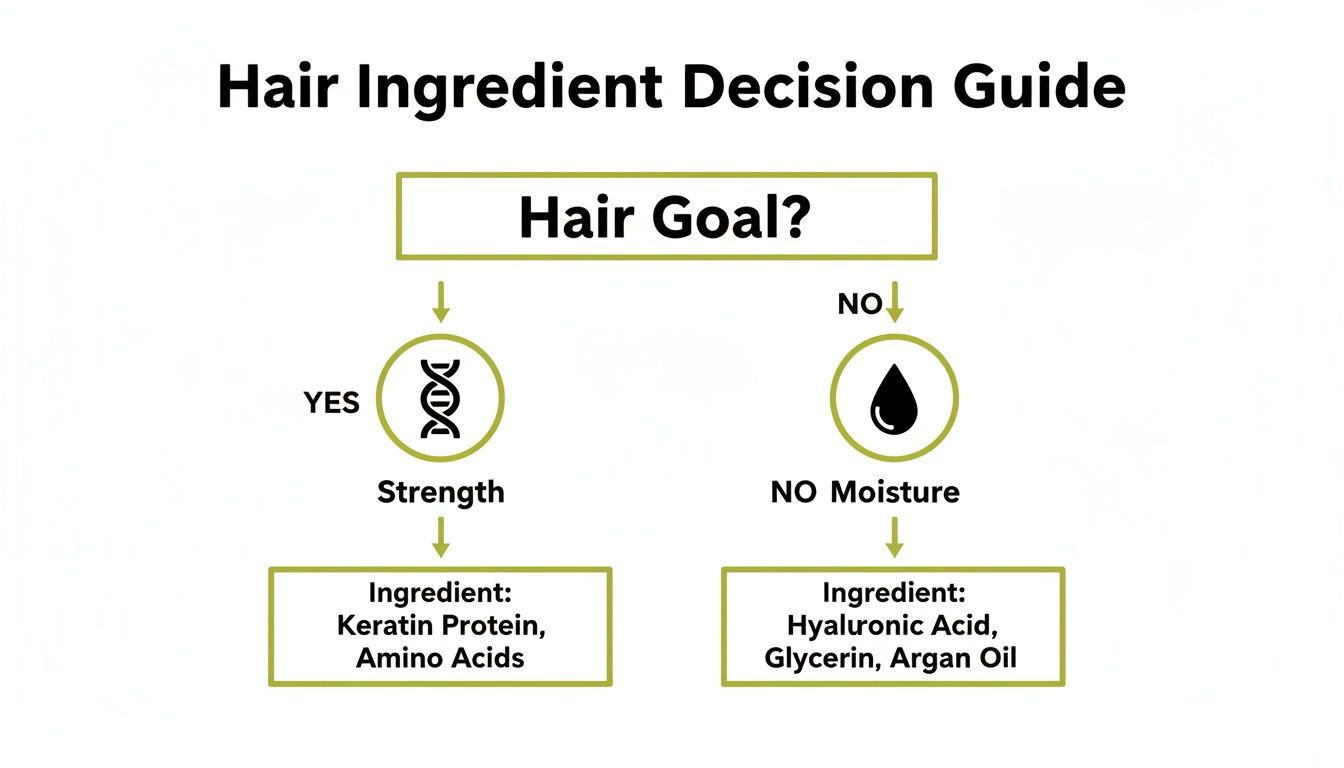
Sometimes, just knowing whether to grab a protein treatment or a hydrating mask makes all the difference.
Nurturing Curly and Coily Hair
Curls and coils are stunning, but their structure makes them naturally fragile. All those beautiful bends and turns create roadblocks for the scalp's natural oils, which often can't make the full journey down to the ends. This can leave your ends dry, vulnerable, and prone to splitting.
For textured hair, the goal is to lock in moisture. Your routine can be built on three pillars: gentle handling, moisture-heavy products, and protective styling.
Many people with curls find success with co-washing (washing with a cleansing conditioner instead of shampoo) to avoid stripping away moisture. You can also lean on protective styles like twists, braids, or loose updos to give your hair a break from daily styling and friction. Learning how to sleep with curly hair is another game-changer—it can drastically cut down on nighttime tangles and breakage while preserving your curl pattern.
Simple At-Home Treatments for Stronger Hair
You don't always need a salon product to give your hair some love. In fact, some powerful ingredients for stronger, healthier hair might already be in your kitchen. Whipping up a quick DIY treatment is a wonderful self-care ritual that can make a real difference in preventing breakage.

Nourishing DIY Hair Masks
Treating your hair to a weekly mask is a fantastic way to replenish lost moisture and restore a soft, supple feeling. You can get great results with just a couple of simple ingredients.
- Avocado and Olive Oil: A classic for a reason. Mash half an avocado and mix in a tablespoon of olive oil. The combination of healthy fats provides incredible deep hydration for thirsty strands.
- Yogurt and Honey: Mix plain yogurt and honey together for a mask that helps bring a beautiful, natural-looking shine back to dull, tired hair.
A gentle scalp massage with a few drops of rosemary oil can also be a wonderful addition to your routine. It’s a simple act that supports a healthy environment for your hair follicles.
These easy-to-make treatments are a great starting point. If you're curious about other ways to bring your strands back to life, you can explore more tips on how to repair damaged hair naturally.
Got Questions About Hair Breakage? We've Got Answers.
Even when you're doing your best, questions about hair breakage are bound to come up. Knowing the difference between natural shedding and actual damage is a helpful first step, so let’s clear up a few common questions.
Does Trimming My Hair Help with Breakage?
Yes, it's very helpful. Think of regular trims as preventative maintenance for your hair. Snipping off the ends every 6-8 weeks gets rid of split ends before they can travel further up the hair shaft.
A split end is a fracture that can continue up the strand, weakening it and causing it to snap off much higher up. While a trim won't make your hair grow faster from the scalp, it's a great way to protect the length you've already worked so hard for.
How Do I Know if It's Breakage or Just Normal Shedding?
This is a great question. The answer is pretty simple once you know what to look for. It all comes down to the strand itself.
When your hair sheds naturally, the entire strand falls out from the root. If you look closely at the end, you'll often see a tiny white bulb. That's a sign of a complete hair cycle.
On the other hand, breakage is just what it sounds like: a piece of hair that has snapped somewhere along its length. These are shorter, fragmented pieces without that little white bulb. You might find them on your shirt, your pillow, or in the sink after you brush.
How Often Should I Be Using a Deep Conditioner or Mask?
For most people, using a deep conditioning treatment or a hair mask once a week is a great rhythm. It's an ideal way to infuse your hair with moisture and keep it flexible and strong.
But it's important to listen to your hair. If it's feeling extra dry and brittle—perhaps from heat styling or a recent color treatment—bumping that up to twice a week can make a positive difference. If your strands feel rough or straw-like, consider it a sign that your hair is thirsty.
At ArtNaturals, we believe that nature provides the best ingredients for bringing hair back to life. Our collection of plant-based oils and gentle formulas is designed to help you build a routine for strong, resilient hair you'll love. Ready to get started? Explore our products and find your perfect match.