

Welcome to the world of hair oiling, a timeless practice that's as much about self-care as it is about nurturing your scalp and hair. So many factors play into the health and vitality of our hair, and incorporating natural hair oils for hair growth is a wonderful way to create the kind of healthy, well-nourished environment where your hair can truly flourish.
The Role of Hair Oils in Your Wellness Routine
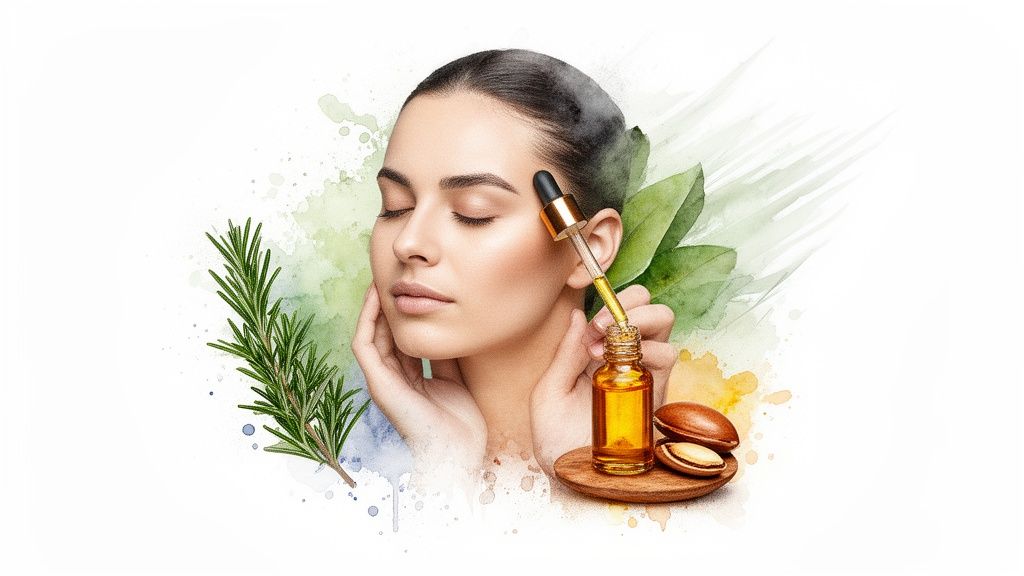
Think of your hair like a garden. For anything to grow strong and vibrant, it needs healthy soil. Your scalp is that soil. Hair oiling is a practice built around this idea, using rich, plant-derived oils to deliver essential moisture and nutrients right where they're needed most.
This simple act fits so perfectly into a modern wellness routine. It’s not just about what you’re putting on your hair; it’s about carving out a moment for yourself, connecting with natural ingredients, and listening to what your body needs.
Embracing a Plant-Powered Approach
Making hair oiling a consistent part of your routine is a gentle way to support your hair’s natural journey. When you focus on scalp health and keeping your strands hydrated, you're laying the groundwork for hair that doesn't just look its best, but feels its best, too.
The core idea is simple: a healthy scalp is the foundation for healthy-looking hair. Nourishing that foundation with plant-based oils is an intuitive, grounded step toward reaching your hair wellness goals.
What You Will Discover
Consider this guide your go-to resource for exploring the benefits of hair oils. We'll walk through everything you need to start your own mindful hair oiling practice with total confidence.
Here’s a sneak peek at what we'll cover:
- Understanding Your Hair: We'll dive into the hair growth cycle to see why scalp care is so important.
- Exploring Natural Oils: You'll get to know different plant-based oils and what makes each one unique.
- Personalizing Your Routine: We’ll help you figure out how to choose the right oils for your specific hair type and concerns.
- Creating a Mindful Ritual: Discover simple application techniques to turn oiling into a relaxing, beneficial experience.
Understanding Your Hair's Natural Growth Cycle
Before we dive into how hair oils can be part of your routine, it’s helpful to understand the beautiful, natural rhythm of your hair. Each strand on your head is on its own journey, moving through a constant cycle of growing, transitioning, and resting. It’s a lot like the seasons of a plant.
Think of it this way: a garden needs healthy, fertile soil to produce vibrant flowers. In the same way, your hair relies on a happy, balanced scalp to truly flourish. When we talk about using hair oils for hair growth, what we're really doing is tending to that foundational environment. By creating supportive conditions, you help your hair thrive through every phase of its life.
The Three Main Phases of Hair Growth
Your hair’s journey is broken down into three main stages. Not all of your hair is in the same phase at once—which is why it’s completely normal to shed a small amount each day. It’s just part of the process.
-
The Anagen (Growing) Phase: This is the main event, the "spring and summer" of your hair's life. During this active growth stage, which can last for several years, cells in the root build new hair. A well-nourished scalp can support each strand during its longest and most demanding period.
-
The Catagen (Transition) Phase: Think of this as the "autumn" of your hair's cycle. It’s a short, transitional stage that lasts only a few weeks. Growth stops, and the hair strand prepares for the final phase.
-
The Telogen (Resting) Phase: This is the "winter" for the hair strand. It rests in the follicle for a few months before it’s naturally shed, making way for a brand new hair to begin its anagen journey all over again.
Seeing the cycle laid out like this makes it clear why scalp care is everything. A healthy scalp environment provides the support your hair needs to make the most of that all-important anagen phase.
Your Scalp Is the Garden for Your Hair
It’s an old analogy, but it’s a good one: your scalp is the soil from which your hair grows. If the soil in a garden is dry or lacks nutrients, the plants may struggle. Your scalp is no different. A dry, congested, or irritated scalp can get in the way of your hair looking and feeling its best.
A mindful hair oiling ritual is an act of tending to your personal garden. When you massage nourishing oils into your scalp, you’re helping to moisturize the skin, clear away buildup, and create a calm, supportive environment for every single strand.
This simple act of care works with your body’s natural processes. It’s not about forcing anything, but about providing supportive conditions for your hair to thrive on its own terms.
How Oiling Supports This Natural Rhythm
Applying hair oil is a simple yet powerful way to connect with and support your hair's natural cycle. By focusing on the health of your scalp, you're nurturing the very foundation of your hair’s well-being. This practice helps keep the scalp moisturized and supple, creating an ideal setting for your hair follicles.
When you create a consistent hair oiling ritual, you're taking a proactive step in your self-care journey. You’re dedicating time to nourish your body, supporting its innate rhythms, and setting the stage for hair that feels just as healthy as it looks.
Exploring the Best Plant-Based Oils for Hair
Now that you have a good handle on your hair’s natural growth cycle, let's dive into the wonderful world of plant-based oils. Each one, whether it comes from a seed, a nut, or a flower, has its own unique blend of nutrients and benefits. Think of them like ingredients in your kitchen—some are perfect for a light dressing, while others are better for a rich, slow-cooked sauce.
The growing interest in these natural ingredients isn't just a trend; it's a movement toward more mindful, plant-powered wellness. The global market for hair oils was valued at USD 4.86 billion in 2025 and is expected to climb to USD 6.75 billion by 2033. It's clear that people are rediscovering the power of these oils to support their hair's natural vitality. You can see more on this in this market analysis on databridgemarketresearch.com.
So, let’s explore some of the most celebrated oils and see what makes them such a staple in hair care rituals around the globe.
Rosemary Oil
Rosemary oil is instantly recognizable for its fresh, invigorating feeling. When you massage it into your scalp, that classic herbaceous scent can turn a simple routine into a spa-like moment, helping you feel focused and clear-headed.
This botanical oil is fantastic for a stimulating scalp massage. A happy scalp is the foundation for healthy-looking hair, and the simple act of massaging this oil in can leave your roots feeling refreshed and awake.
Castor Oil
When you think of powerhouse plant-based oils, it’s hard not to mention Castor Oil. This one is a classic for a reason. It's incredibly thick and rich, with a heavy, viscous texture that feels deeply conditioning.
Because of its density, castor oil is a go-to for targeted treatments. Many people love applying it directly to their scalp or ends to deliver intensive moisture right where it’s needed most. It does a great job of coating the hair shaft, leaving it feeling protected and soft.
Argan Oil
Often called "liquid gold," argan oil is prized for its lightweight texture and incredible ability to add shine and smoothness. Straight from Morocco, this oil is packed with fatty acids and antioxidants, making it a brilliant ally against frizz and flyaways.
Unlike some of its heavier counterparts, argan oil absorbs beautifully without leaving a greasy film behind. This makes it super versatile—you can use it as a pre-shampoo treatment, a leave-in on damp hair, or a finishing touch on dry hair to get a gorgeous, healthy-looking gloss.
A great hair oil doesn't just sit on the surface; it complements your hair's natural texture. The goal is to find an oil that makes your hair feel nourished and look vibrant, not weighed down.
Coconut Oil
Coconut oil is probably one of the most famous hair oils out there, and it’s earned its reputation for being a deep moisturizer. Its properties allow it to hydrate hair from the inside out instead of just slicking down the surface.
It works wonderfully as a pre-shampoo treatment, creating a barrier that helps protect your strands from being stripped by cleansing. If you have thick, curly, or very dry hair, an overnight coconut oil mask can be a game-changer, leaving your hair feeling incredibly soft and much more manageable by morning.
Jojoba Oil
Here’s a fascinating one: jojoba oil’s makeup is incredibly similar to the natural sebum our own scalps produce. This unique characteristic makes it a perfectly balanced and gentle moisturizer for both your scalp and hair.
For anyone with an oily scalp, jojoba oil offers lightweight hydration without making things feel greasy. It’s a fantastic "all-rounder" that can moisturize hair, soothe the scalp, and leave your strands feeling soft and healthy. You can dig deeper into how different oils work in our article on the best oils for hair growth on artnaturals.com.
Peppermint Oil
Just like rosemary, peppermint oil is famous for the cool, tingling sensation it brings. That refreshing feeling is both soothing and awakening, which is why it’s such a popular ingredient in scalp treatments.
When you dilute just a few drops with a carrier oil like coconut or jojoba, peppermint oil can take your scalp massage to the next level. The crisp, clean scent and invigorating tingle make it perfect for a morning ritual to help you feel energized and ready to take on the day.
A Quick Guide to Hair-Nourishing Oils
To help you find the right oil for your routine, here's a quick comparison of what these popular oils are known for and what hair concerns they’re best suited to address.
| Oil | Known For | Best For Hair Concerns Like |
|---|---|---|
| Rosemary | An invigorating and refreshing scalp sensation. | Creating a revitalizing scalp massage experience. |
| Castor | A thick, rich, and deeply moisturizing texture. | Providing intensive hydration to dry scalp and ends. |
| Argan | Being lightweight, taming frizz, and adding shine. | Smoothing flyaways and adding a non-greasy gloss. |
| Coconut | Deep moisture and protection. | Restoring softness to dry, porous, or thick hair. |
| Jojoba | Balancing scalp sebum and gentle hydration. | Moisturizing without weighing down fine or oily hair. |
| Peppermint | A cool, tingling, and awakening scalp feel. | An energizing scalp treatment to refresh and soothe. |
At the end of the day, choosing an oil is a personal journey. The best way forward is to listen to your hair's unique needs and have fun experimenting to see which botanical blend makes it feel its absolute best.
How to Choose the Right Oil for Your Hair Type
Finding the perfect hair oil isn’t about chasing a single "miracle" product. It's much more personal than that—it’s about learning to listen to what your hair and scalp are actually telling you they need. Think of it like skincare; your skin’s needs can change daily, and the same is true for your hair. The trick is to match an oil’s specific benefits to your hair’s unique texture and current condition.
This shift towards personalized care is a big reason why therapeutic hair oils are gaining so much traction. The U.S. market for oils focused on nourishment and repair is projected to grow from USD 1.4 billion in 2025 to a massive USD 2.2 billion by 2035. It shows just how many of us are turning to clean, antioxidant-rich oils as a key part of our self-care rituals. You can read more on this trend at Future Market Insights.
To get started, this decision tree can help you narrow down the options based on what’s bothering you most about your hair.
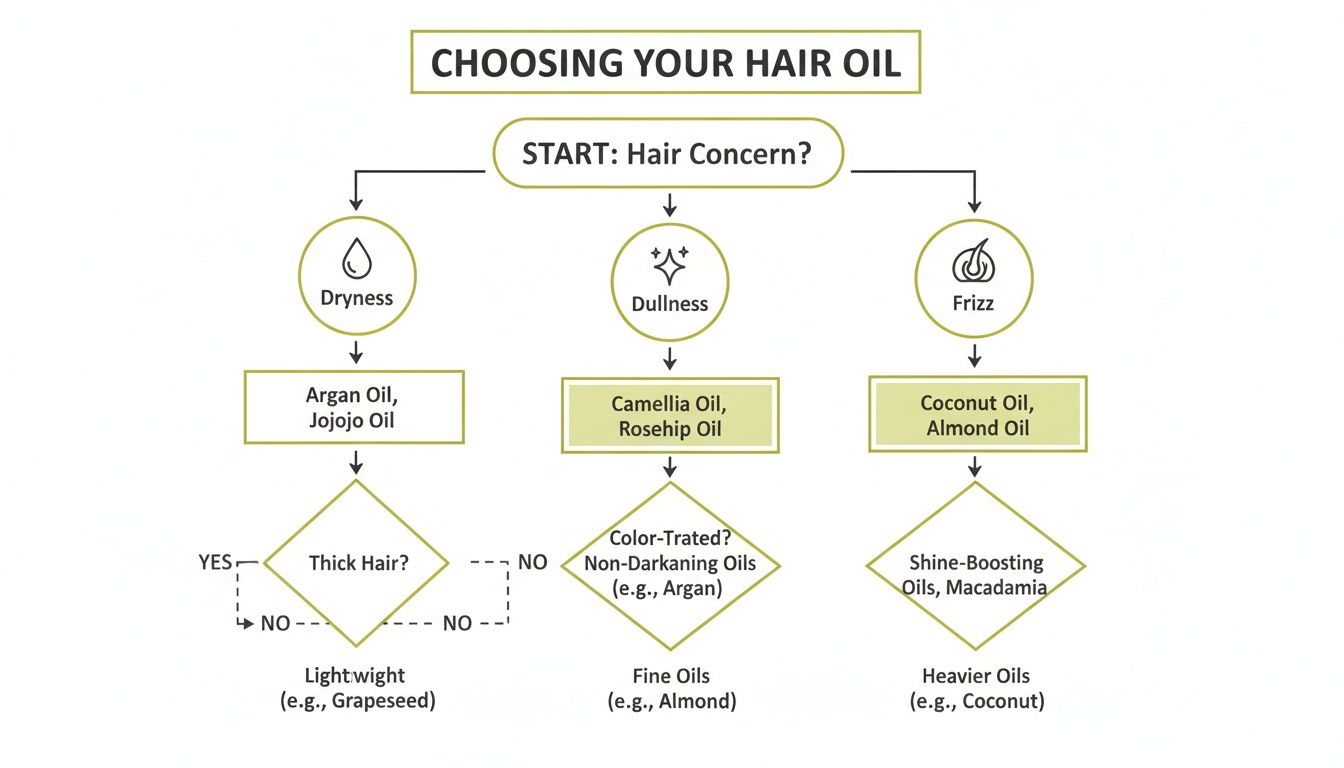
As you can see, simply identifying your main goal—whether it's managing dryness, bringing back shine, or calming frizz—is the best first step to finding your ideal oil.
For Fine or Oily Hair
If you have fine hair that gets weighed down easily, or if your scalp leans oily, you'll want to stick with lightweight oils. Think of them like fast-absorbing serums for your hair; they sink in quickly to deliver nutrients without leaving a greasy film behind.
- Jojoba Oil: This one is a master of balance. Because its makeup is incredibly similar to your scalp's natural sebum, it moisturizes without feeling heavy.
- Argan Oil: A classic for a reason. This silky oil is fantastic for smoothing flyaways and adding a touch of gloss to your ends, all without feeling heavy.
For Dry or Thick Hair
For hair that always seems thirsty, feels coarse to the touch, or is beautifully thick and curly, richer oils are your best bet. These more substantial oils are brilliant at sealing the hair cuticle to lock in moisture, offering a much-needed deep conditioning treatment.
- Coconut Oil: Famous for its ability to moisturize from the inside out, coconut oil can make hair feel softer and much easier to manage. It's perfect as a pre-shampoo treatment.
- Castor Oil: With its uniquely thick texture, castor oil provides some serious, intensive moisture. It’s best used for targeted scalp massages or for coating the very ends of dry hair.
For a Balanced or Normal Scalp
If your hair and scalp are pretty content—not too oily, not too dry—you're in a great position to experiment. You might love a medium-weight oil, or you could even get creative and blend a couple to make your own custom-tailored treatment.
The best way to start is to go slow. Use just a few drops, see how your hair feels, and then add more if needed. You can always add, but you can't take away! Let your hair's texture be your guide.
Getting to know the differences between these oils helps you make a smarter choice. To dive deeper into how you can combine different types for unique benefits, take a look at our guide on carrier oils for essential oils on artnaturals.com. This is how you turn a simple routine into a truly personalized ritual.
Creating Your Own Mindful Hair Oiling Ritual
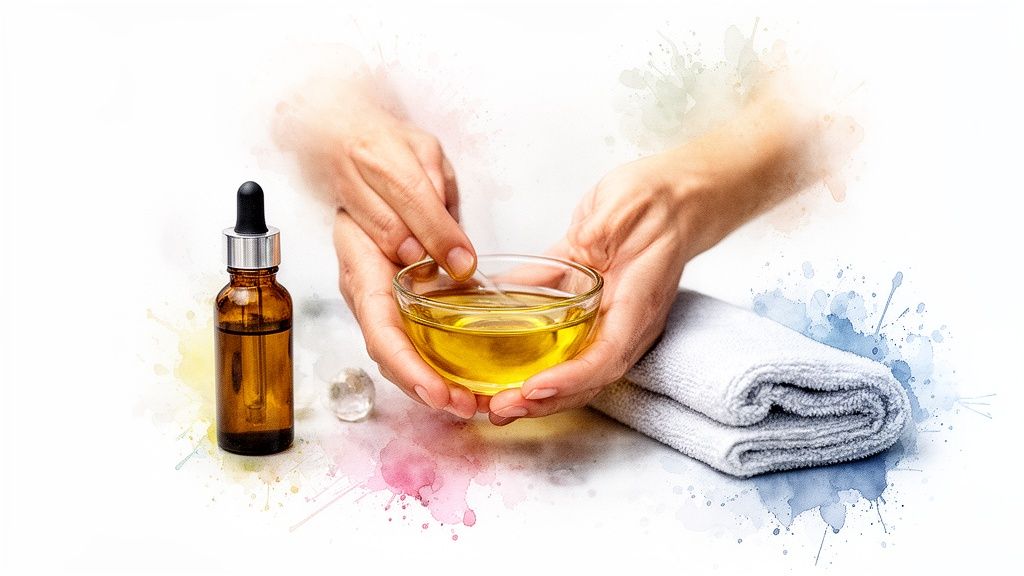
Let's shift the way we think about hair care. It doesn't have to be just another task on your to-do list. A hair oiling ritual is a chance to press pause, tune into your senses, and give yourself a few moments of dedicated self-care. It’s about more than just the product—it’s about creating a space to unwind while you nourish your hair from root to tip.
This simple act can easily become a favorite part of your weekly wellness routine. When you bring intention to each step, you turn what could be a chore into a genuinely calming and restorative experience.
Preparing for Your Ritual
The right atmosphere makes all the difference. Before you even pick up the bottle, take a minute to set a peaceful tone. Maybe that means dimming the lights, putting on some soft music, or just finding a quiet corner where you won’t be interrupted.
Think of it as your own little at-home spa moment. The whole point is to feel relaxed and present, letting the oil and the gentle massage do their work.
The essence of a ritual is mindfulness. When you warm the oil or massage your scalp, you are not just caring for your hair; you are honoring your well-being.
Once you’re settled, get your oil ready. Pour a small amount, maybe a tablespoon to start, into a little bowl. If you want a more luxurious feel, you can gently warm the oil by placing that bowl in a larger one filled with warm water for a few minutes. It’s a simple touch, but it helps the oil spread more easily and feels incredible on the scalp.
A Step-By-Step Guide to Scalp Massage
A good scalp massage is the heart of any hair oiling practice. It’s a beautiful way to encourage circulation to your scalp, which is key to creating a healthy environment for your hair. Here's a simple, effective technique to get you started.
-
Start with Parted Hair: Using a comb or just your fingers, make a part right down the middle of your dry, unwashed hair. Dip your fingertips into your warm oil and gently dab it along the part line, getting it directly onto your scalp.
-
Continue in Sections: Keep making new parts, about an inch apart, on either side of your head. Apply the oil along each new part until your entire scalp has a light, even coat.
-
Massage with Gentle Pressure: Now for the best part. Use the pads of your fingertips (never your nails!) to massage your entire scalp in slow, circular motions. Start at your hairline and work your way back to the nape of your neck, applying firm but gentle pressure.
-
Work Through the Ends: After you've massaged your scalp for a good 5-10 minutes, take any leftover oil on your hands and gently work it through the lengths and ends of your hair. The ends are almost always the driest part, so they'll soak up that extra moisture.
Exploring Different Oiling Techniques
Your hair oiling ritual should fit your life and your hair's needs. Remember, consistency is more important than intensity, so find a method that feels easy to stick with.
- The Pre-Shampoo Treatment: This is the classic and most popular approach. Apply the oil as described, and just let it sit for at least 30-60 minutes before you hop in the shower to wash your hair. This gives the oil plenty of time to work its magic.
- The Deep Overnight Mask: If your hair is feeling extra thirsty, an overnight treatment can be a game-changer. After applying the oil, just wrap your hair in a silk scarf or a shower cap to keep your pillowcase clean. Wash it all out in the morning.
- A Quick Frizz-Taming Finish: You don't always need a deep treatment. A tiny amount of a lightweight oil, like argan, can work wonders on dry, styled hair. Warm a single drop between your palms and lightly skim it over any flyaways for instant shine and smoothness.
If you’re still figuring out the best timing, you can learn more about when to apply oil on hair in our detailed guide on artnaturals.com. Finding the right rhythm will make this whole practice feel even more natural and beneficial.
A Holistic Approach to Achieving Healthy Hair
Using hair oils is a fantastic way to care for your hair, but it's important to remember they're just one part of the bigger picture. Think of it like this: you can't just water a plant and expect it to thrive without good soil and sunlight. The same goes for your hair; its health is a direct reflection of your overall well-being.
True, lasting hair health comes from a complete approach that considers what you put on your hair and what you put in your body. It's about creating a healthy ecosystem where everything is connected and your hair has everything it needs to flourish.
Nurturing Hair from the Inside Out
Your daily habits are the foundation for great hair. While a consistent oiling ritual can work wonders on the outside, pairing it with supportive lifestyle choices creates lasting change from the roots up.
Here are a few simple things you can incorporate into your daily life:
- A Balanced Diet: Your hair is built from the nutrients you eat. Making sure you get enough protein, along with other hair-supportive nutrients like biotin, iron, and key vitamins, is essential.
- Proper Hydration: Dehydration affects your scalp just as much as your skin. Sipping water throughout the day is a simple but incredibly effective way to keep your hair follicles happy and moisturized.
- Stress Management: High stress levels can have an impact on your hair cycle. Finding small moments of calm—whether through meditation, a gentle walk, or just a few deep breaths—can make a surprising difference.
- Gentle Hair Handling: Be kind to your strands. Swap your rough towel for a soft microfiber one, try a silk pillowcase to reduce friction, and avoid hairstyles that pull too tightly. These little changes add up.
Your hair care routine doesn't start and end with products. It’s woven into the way you nourish your body, manage your energy, and move through your day.
Your Journey to Radiant Hair
As we've seen, getting the healthy, vibrant hair you want is a personal journey that takes discovery and consistency. It all starts with understanding your hair’s natural rhythm and choosing pure, plant-based ingredients that feel right for you. When you create a mindful oiling routine, you’re not just applying a product; you're taking a cherished moment for yourself.
Ultimately, this guide is about more than just hair. It's an invitation to take a kinder, more natural approach to your entire wellness routine. When you combine the external nourishment of quality hair oils with the internal support of a balanced lifestyle, you create the perfect conditions for your hair to truly thrive.
Got Questions About Hair Oils? We've Got Answers
Diving into the world of hair oiling can feel like learning a new language, so it's totally normal to have a few questions. Getting the little details right is what turns a simple routine into a self-care ritual that truly works for you. Let's tackle some of the most common questions to get you started with confidence.
How Often Should I Be Oiling My Hair?
There’s no one-size-fits-all answer here—it really comes down to listening to your hair and scalp. For most people, a good rhythm is 1-3 times per week. This frequency provides consistent nourishment without overloading your follicles.
If your scalp is on the drier side, you might find it craves a light oiling session more often. On the flip side, if you have naturally oily hair, a weekly deep treatment before you shampoo is probably your sweet spot. Your hair will tell you what it needs; you just have to pay attention.
Is It Okay to Leave Oil in My Hair Overnight?
Yes, and your hair will thank you for it! An overnight treatment is like a deep conditioning spa session while you sleep, especially for hair that feels parched or looks lackluster. It gives the oils maximum time to moisturize the hair shaft, leaving you with incredibly soft, supple strands by morning.
It's simple: just work the oil into your scalp and hair before bed. To keep your pillowcase clean, wrap your hair in a silk scarf or a bonnet. When you wake up, just follow your usual wash and condition routine.
But Won't Hair Oil Make My Hair Greasy?
This is a common concern! When you use them the right way, hair oils should leave your hair looking vibrant and feeling soft, not weighed down. The trick is twofold: picking the right oil for your hair type and not overdoing it on the application.
- For finer hair: Lightweight oils like jojoba and argan are your best friends because they absorb in a flash.
- For thicker or drier hair: Richer oils like castor are amazing, but are often best used as a targeted scalp massage oil or just on your ends.
Always start small. A few drops warmed up between your palms is usually plenty. Focus on the scalp (where growth starts) and the ends (which are the oldest and driest part of your hair).
Pro-tip: A common mistake is drenching the mid-lengths of your hair. This area doesn't need as much oil and is where greasy buildup often happens. By starting with less and applying it strategically, you'll get all the benefits without the weigh-down.
Can I Mix and Match Different Hair Oils?
Absolutely! Blending your own oils is a fantastic way to create a custom cocktail for your hair's specific needs. A popular approach is to mix a great carrier oil (like coconut or jojoba) with a few drops of a potent essential oil (like rosemary or peppermint). This lets you get the combined benefits of different plants.
You might even come across unique ingredients and wonder about their properties, like whether Batana oil promotes hair growth. Of course, if you'd rather skip the DIY, a professionally formulated blend is an excellent, hassle-free alternative.
Ready to turn this knowledge into a nourishing ritual? At ArtNaturals, we're all about harnessing the power of nature to bring out the best in your hair. Check out our collection of pure, high-quality hair oils and find the perfect partner for your hair wellness journey at https://artnaturals.com.