

You've just rinsed away your cleanser, your face is still slightly damp, and a bottle of toner is waiting by the sink. Do you pour it onto a cotton pad, press it in with your hands, or use a pre-soaked pad? The answer depends less on habit and more on the toner's texture, your skin's comfort, and the kind of routine you want to maintain.
Toner is a lightweight layer used after cleansing and before serum or moisturizer. A well-chosen formula can help skin feel refreshed, lightly hydrated, and ready for the steps that follow. The way you apply it matters too. Gentle pressure, a modest amount, and a short pause can make the ritual feel smoother without turning it into a complicated process.
The global skin toner market was estimated at USD 744.2 million in 2023 and is projected to reach USD 1,084.9 million by 2030, with 5.6% annual growth projected from 2024 to 2030, according to Grand View Research's skin toner market overview. As toner becomes a familiar part of everyday skincare, practical application guidance becomes more useful than one-size-fits-all rules.
Introduction to Toner and Why Application Matters
Think about the moment after cleansing. Your skin feels clean, perhaps a little tight, and you're deciding whether toner is an essential step or another product on the shelf. A gentle toner can act as a preparatory layer, helping your face feel comfortable and ready for serum, moisturizer, or other lightweight treatments.
Toner isn't meant to be scrubbed into the skin or used until your face feels squeaky. Modern formulas vary widely. Some are watery and fresh, some are milky and cushiony, and others contain exfoliating ingredients that call for a slower introduction. The texture gives you an important clue about the most comfortable application method.

A person with dry-feeling cheeks may prefer clean hands and a soft pressing motion. Someone with a thin, watery toner may find a cotton round easier for even distribution. A pre-soaked toner pad can suit a rushed morning when convenience matters most. None of these methods is automatically right for everyone.
The practical principle: choose the application method that gives you even coverage with the least friction.
The basic sequence is simple: cleanse, apply toner, pause briefly, then continue with serum or moisturizer. For a helpful overview of how products can be layered, explore this guide to the art of layering skincare. You'll also want to pay attention to how much formula reaches your skin, where you apply it, and whether the product leaves your face comfortable afterward.
When to Use Toner in Your Daily Routine
Toner belongs immediately after cleansing. Once you've rinsed away your cleanser, pat your face gently with a soft towel, leaving the skin slightly damp rather than completely dry. Apply toner while the routine still feels connected, instead of waiting until your face feels tight.
The usual order is:
- Cleanse: Wash away everyday buildup and cleanser residue.
- Tone: Apply a small amount evenly across the face.
- Treat: Use serum or another lightweight treatment.
- Moisturize: Add a cream or lotion suited to your skin's feel.
- Protect in the morning: Finish with sunscreen as part of your daytime routine.
Toner doesn't need to be rinsed off. Apply it, let it settle, and continue with the next layer. Dermatology guidance places toner after cleansing and before serum or moisturizer, and recommends allowing about one minute for absorption before layering, as described by Cleveland Clinic's guide to facial toner.
Morning and evening can both work for a gentle, hydrating formula if your skin enjoys that rhythm. Some people prefer toner in the morning because it creates a fresh base for moisturizer and sunscreen. Others use it at night after cleansing, when a slower routine feels more relaxing. You can also keep it to one time of day if that makes the habit easier to maintain.
A simple routine is often more sustainable than a crowded one. If you use a hydrating serum such as hyaluronic acid afterward, apply it once the toner has settled. This guide to using hyaluronic acid serum can help you think through that next layer without rushing the order.
How to Apply Toner With Hands Cotton Pads and Toner Pads
The best method usually follows the formula's consistency. Thin, watery toners spread easily across a cotton pad. Thicker, milky, or hydration-focused formulas often feel more economical and direct when pressed in with clean hands. Pre-soaked pads prioritize speed and consistent convenience.
Using clean hands
Wash and dry your hands before starting. Dispense a small amount into your palms, then bring your hands to the center of your face. Press and pat outward across the cheeks, forehead, nose, and chin, keeping the product away from the immediate eye area.
Hands work especially well when the toner has a serum-like slip or a milky texture. Cotton can absorb part of a richer formula, while your palms transfer it directly to the skin. Keep the pressure light. Your hands should glide or press, not drag.
Using a cotton pad
For a watery toner, place a small amount on a cotton round or pad. It should be damp enough to move comfortably across the face, but not so saturated that it drips. One or two cotton pads are usually enough for even facial coverage without excessive waste, according to Rodan + Fields' toner application guidance.
Start at the center of the face and sweep outward with gentle strokes. Move across the forehead, cheeks, nose, and chin, then stop before the immediate eye area. Don't scrub at stubborn areas or keep passing over the same patch. A light pat at the end can help the remaining product settle.
Using pre-soaked toner pads
Pre-soaked pads are ready when you need a quick, tidy step. Take one pad, smooth it over the face with light outward movements, and follow the product's directions if it's designed to remain on the skin. Some pads have a textured side, so use the smoother side when your skin feels dry or easily bothered.
Remember: a toner should leave your skin lightly damp and comfortable, not dripping or rubbed warm.
After any method, wait about one minute before applying serum or moisturizer. This pause gives the toner time to settle and helps prevent the next product from immediately sliding around. If you're refining your broader self-care routine at the sink, you might also enjoy this easy peel-off nail polish tutorial for a separate, low-effort beauty ritual.
For a visual demonstration of the three approaches, watch the video below.
How Much Toner to Use for Different Skin Types and Textures
Using more toner won't automatically make the routine more effective. The right amount is enough to spread comfortably across the face without dripping, tugging, or leaving a heavy film. Your skin's feel and the formula's consistency should guide the adjustment.
Dry or sensitive-feeling cheeks usually benefit from a lighter touch and less repeated contact. Oil-prone areas may tolerate more focused application, especially when the toner is intended for that purpose. Combination skin can be treated as several zones rather than one uniform surface.
| Skin Type / Toner Texture | Recommended Amount and Method | Gentle Application Tip |
|---|---|---|
| Dry skin / milky or hydrating toner | Use a small amount in clean hands and press over the face | Give dry-feeling cheeks fewer passes and follow with moisturizer |
| Sensitive-feeling skin / simple watery toner | Use a modest amount with hands or a lightly damp cotton pad | Avoid rubbing and keep the application limited to comfortable areas |
| Combination skin / lightweight toner | Use hands on the cheeks and a cotton pad over the T-zone if desired | Adjust pressure by area instead of treating the whole face identically |
| Oil-prone skin / thin toner | Use enough to lightly dampen one cotton pad, adding only if coverage requires it | Concentrate gently on the T-zone and avoid repeated swiping |
| Any skin type / exfoliating toner | Use the amount directed on the product label and introduce it gradually | Don't apply it automatically as often as a hydrating toner |
One or two cotton pads are generally sufficient to cover the face without dripping, but the exact amount still depends on the pad's size and absorbency. If the pad is barely damp and skips across the skin, add a little more. If it feels soaked, heavy, or leaves liquid running down your neck, use less next time.
Texture also affects waste. A watery formula may distribute evenly on cotton, while a thicker toner may be better pressed from the palms. If your skin is easily unsettled by friction, this guide to natural skincare for sensitive skin offers useful context for keeping product choices and application habits gentle.
Common Mistakes to Avoid When Applying Toner
A toner can feel uncomfortable even when the formula itself seems suitable. The problem is often the technique: too much friction, too much liquid, or too much frequency. Small changes can make the step calmer.
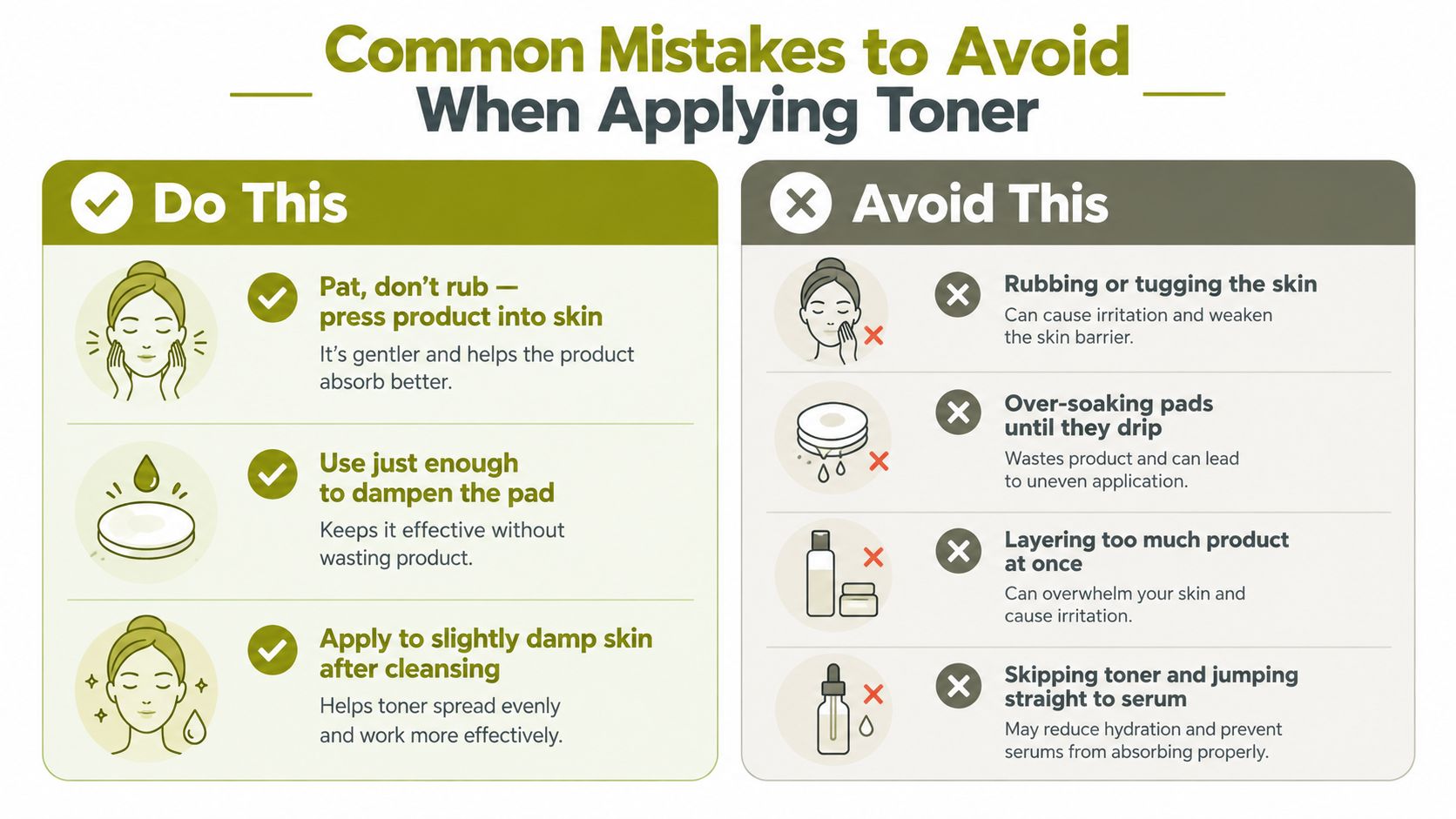
Rubbing instead of patting
Vigorous swiping can make the skin feel warm or uncomfortable, particularly around delicate areas. Use a clean pad with a light hand, or press toner in with your palms. You're distributing a liquid, not polishing the surface.
Over-soaking the pad
A dripping pad wastes product and makes the next step messy. A pad should feel evenly damp, with enough slip to move without pulling. If it's saturated, squeeze or replace it rather than repeatedly passing excess liquid over the face.
Applying too much
More formula can leave skin sticky and encourage unnecessary rubbing as you try to spread it. Start with a small amount, assess the coverage, and add only what's needed. Even application matters more than a generous pour.
Skipping the absorption pause
Applying serum immediately while toner is still sliding across the face can make the layers pill or feel crowded. Allow about one minute for absorption before moving on, following the practical guidance from Cleveland Clinic.
Using active toner too often
Hydrating toners are commonly used once or twice daily when skin tolerates them. Toners containing stronger ingredients such as AHAs or BHAs are often used only one to three times per week, with some people beginning every other day if their skin is easily irritated, according to Thayers' toner frequency guidance.
If your face feels persistently tight, dry, or uncomfortable after application, pause and reassess the formula, amount, and frequency. A gentler routine is usually more useful than pushing through discomfort.
Building a Simple Toner Habit You Can Stick With
A toner habit doesn't need to take over your bathroom shelf. Cleanse first, choose the method that matches the texture, apply a modest amount, press or sweep gently, and give the skin a short pause before serum or moisturizer.
For a morning ritual, a lightweight hydrating toner can fit neatly between cleansing and moisturizer. In the evening, you may prefer a milky texture applied with your hands, especially when your skin feels drier after washing. If the weather or indoor air makes your skin feel different, adjust the amount and pressure rather than forcing the same routine every day.
Consistency matters more than perfect technique. If using toner twice daily feels like too much, begin once a day. If you're introducing an exfoliating formula, follow the slower frequency guidance above and pay attention to how your skin feels between applications.
A calming routine is one you can repeat without bracing for discomfort.
Let toner become a small moment of care at the sink. The right texture, a clean application method, and a patient pause can turn a confusing step into an easy part of your everyday glow ritual.
ArtNaturals offers skincare options including hydrating and ingredient-focused serums that can complement a simple cleanse-and-tone routine. Visit ArtNaturals to explore skincare and self-care products, then choose the textures and formulas that fit comfortably into your ritual.