

When you decide to repair your damaged hair naturally, you’re committing to a gentler, more patient approach. It's all about consistency—using nourishing ingredients and being mindful of how you treat your hair day-to-day. This means dialing back the heat styling, making deep conditioning a regular ritual, and protecting your strands from stress. Over time, this allows your hair to slowly but surely regain its strength and vitality.
Your Gentle Start to Natural Hair Repair
Starting a hair repair journey is an act of self-care. It's your chance to slow down, connect with your hair's needs, and treat it with the kindness it deserves. Forget about a single, quick fix. Instead, think of this as a guide to help you bring back your hair's natural beauty with gentle, plant-based methods.
This is your playbook for reviving shine, softness, and strength using ingredients from nature. The idea is to feel good about your routine and turn daily habits into something that genuinely contributes to your well-being.
Why a Natural Approach Matters
Choosing to go the natural route for hair repair means you're working with your hair, not against it. Some harsh chemicals and aggressive treatments might create the illusion of healthy hair for a little while, but they can often lead to more dryness and damage down the road.
A natural routine is different. It’s built on:
- Deep Nourishment: Using ingredients like plant oils and butters that are rich in essential fatty acids and vitamins to help moisturize the hair shaft.
- Gentle Cleansing: This means avoiding harsh detergents that can strip your hair of its natural, protective oils, which can lead to dryness and brittleness.
- Building Resilience: Supporting hair strength from the core with consistent, mindful habits that help keep the hair cuticle smooth and prevent future breakage.
This whole approach is based on the idea that lasting hair wellness is something you cultivate with patience and consistency.
By focusing on what you add—more moisture, more protection, more gentle handling—you create a positive cycle of care that builds on itself week after week.
Setting a Foundation for Success
Before we get into specific treatments, it helps to get into the right mindset. Your hair didn't get damaged in a day, and its appearance won't transform overnight either. It’s a gradual process.
As you start out, it's helpful to understand some of the foundational remedies you can lean on. For instance, looking into the many benefits of aloe vera for healthy hair can give you a great sense of how a simple, powerful ingredient can make a wonderful addition to your routine.
In this guide, we’ll walk through how to spot the signs of damage, create nourishing weekly rituals, and build a daily routine that protects and strengthens your hair. Let's begin this gentle journey together.
Understanding What Your Damaged Hair Needs
Before you can start to support damaged hair, it helps to get good at listening to what it’s telling you. If you can decode the common signs of distress, you can create a care plan that works for your hair, instead of just trying a bit of everything.
Think of it like this: your hair has its own language. That frizz you can’t seem to tame? That’s often a sign that your hair's outer layer, the cuticle, is roughed up and in need of moisture to help it lie flat. On the other hand, if your hair feels overly soft when it's wet or snaps easily, it may be signaling a need for protein to help rebuild its structure.
A Guide to Your Hair's Signals
Becoming a "hair detective" is all about building intuition. Maybe you've noticed your hair feels strangely rough after a wash, gets tangled way more than usual, or has just lost the healthy-looking sheen it used to have. These are all clues. Recognizing exactly what's happening—like figuring out you have heat-damaged hair, for example—is the first step. From there, you can look for the right strategies to rescue heat-damaged hair.
This handy table connects common hair concerns with what they might mean and a gentle, natural first step you can take.
| Symptom | What It Might Mean | A Gentle First Step |
|---|---|---|
| Dull & Rough Texture | The hair cuticle is raised and not reflecting light. It's likely thirsty. | A weekly deep conditioning treatment with ingredients like aloe vera or avocado oil. |
| Excessive Frizz & Flyaways | Your hair is dehydrated and reaching into the air for moisture. | Try a lightweight leave-in conditioner or a few drops of Argan oil on damp hair. |
| Snaps Easily When Dry | It lacks flexibility and strength, a sign of both moisture and protein loss. | Focus on gentle handling and introduce a protein-rich mask with egg or yogurt. |
| Feels Gummy or Stretchy When Wet | The protein structure may be compromised. This is sometimes called "hygral fatigue." | Ease up on heavy moisturizing conditioners and opt for a strengthening treatment. |
| Lots of Tangles & Knots | Raised, damaged cuticles are catching on each other instead of lying flat. | Use a wide-tooth comb and a slippery conditioner before you even start to detangle. |
Ultimately, listening to your hair helps you choose the right natural approach for its specific needs.
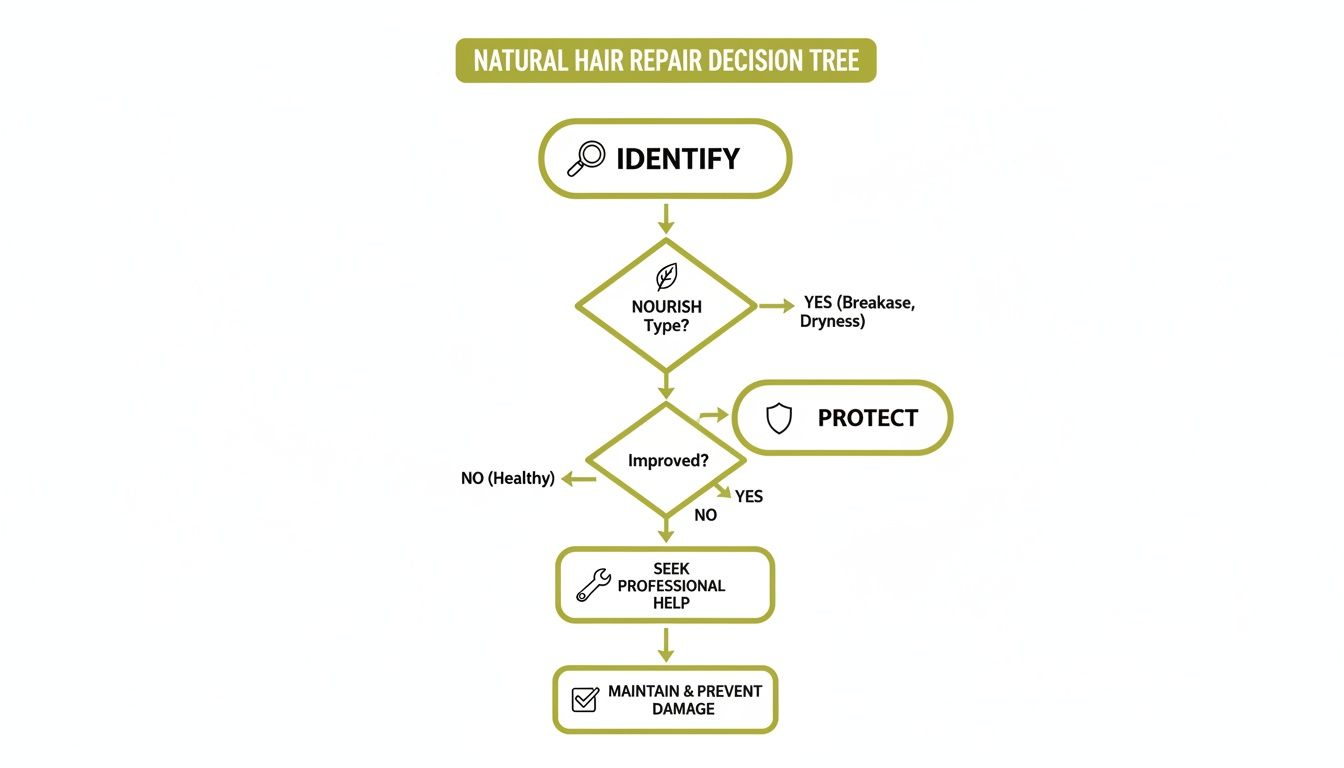
This decision tree gives you a simple roadmap to follow: identify the main issue, nourish it with the right ingredients, and then protect it from further damage.
The Two Pillars of Hair Health: Moisture and Protein
When you get right down to it, most hair damage relates to an imbalance between two things: moisture and protein. These two are the dynamic duo that gives your hair its softness, stretch, and strength.
-
Moisture-Deprived Hair: This is hair that feels dry, brittle, and just plain rough. It may not shine, can tangle easily, and gets frizzy at the first sign of humidity. It's calling out for hydrating ingredients that can get inside the hair shaft and lock in moisture.
-
Protein-Deficient Hair: This hair may be weak, limp, and might feel overly soft or stretchy. It can lack a strong internal structure, so it breaks easily. It needs ingredients that can help rebuild and fortify its core.
The tricky part is finding the right balance. Too much protein without enough moisture can make your hair feel brittle all over again. And don't forget, a healthy-feeling scalp is the foundation for healthy-looking hair. If you’re dealing with dryness and flakes at the roots, adding some natural remedies for a dry scalp into your routine can make a world of difference.
Your hair communicates its needs clearly if you learn how to listen. Responding with the right balance of moisture and strength-supporting care is the foundation of any effective natural repair routine.
The good news? Sticking with a gentle, plant-based routine can really pay off. By tuning in to your hair's signals, you're setting yourself up for a successful journey back to healthy, happy hair.
Creating Weekly Rituals for Deep Nourishment
Lasting hair repair isn't a one-and-done deal. It's about building consistent, mindful habits that become a part of your self-care routine. When you set aside a little time each week to give your hair some focused attention, you may see a wonderful difference in its texture, strength, and shine.
Think of this as your weekly reset. It's a chance to slow down, put on some good music, and turn your bathroom into a mini-sanctuary. This is how you transform a simple hair treatment into a restorative experience that nurtures both you and your hair.
DIY Deep-Moisture Avocado and Honey Mask
If your hair feels dry, brittle, or just rough to the touch, this creamy, moisture-packed mask can feel like a lifesaver. Avocados are loaded with fatty acids and vitamins that moisturize and strengthen the look of the hair strand. Honey is a natural humectant, which means it pulls moisture from the air into your hair, leaving it feeling incredibly soft.
To whip up this mask, you'll need:
- One ripe avocado: Make sure it’s nice and soft for easy mashing.
- Two tablespoons of raw honey: It helps smooth down the rough, lifted cuticles of damaged hair.
- One tablespoon of olive oil or coconut oil: This adds an extra dose of moisture and makes the mask easier to apply.
Start by mashing the avocado in a bowl until it’s completely smooth. Getting all the lumps out is key—a fork or a small food processor works great. Then, stir in the honey and your oil until the whole mixture is creamy and well-combined.
Gently work the mask through clean, damp hair, paying special attention to the mid-lengths and ends where damage usually shows up the most. Let it work its magic for 20-30 minutes. For an extra boost, pop on a shower cap or a warm towel. The trapped heat helps the ingredients penetrate more deeply. When you're done, rinse it all out with lukewarm water.
Strengthening Argan and Castor Oil Treatment
Is your hair prone to snapping and breakage? Does it just feel weak? A warm oil treatment can give it the nourishment it's calling for. Argan oil is famous for adding a soft, protective layer without weighing hair down, while rich castor oil is a powerhouse for nourishing the scalp and fortifying weak-feeling strands.
If you want to dive deeper into the world of oils, our guide to the best oils for hair growth has even more info on how different plant-based oils can support your hair's journey back to health.
Here’s what you need for this treatment:
- Two tablespoons of argan oil: A lightweight favorite for adding shine.
- One tablespoon of castor oil: A thicker, heavy-duty oil known for its nourishing power.
- A few drops of rosemary essential oil (optional): It smells amazing and offers great scalp benefits.
To warm the oils, place them in a small, heat-safe bowl, then set that bowl inside a larger one filled with hot water. You're aiming for pleasantly warm, not hot. Once it's warmed through, stir in the rosemary oil if you're using it.
Now for the best part. Using your fingertips, carefully massage the oil blend into your scalp with gentle, circular motions. This feels incredible and helps stimulate blood flow. Then, work the rest of the oil down through the lengths and ends of your hair.
Let this nourishing treatment soak in for at least 30 minutes. If you have the time and your hair is extra thirsty, you can even leave it on for a few hours. When you're ready to rinse, shampoo and condition as you normally would—you might need a second round of shampoo to get all the oil out.
Turning Treatment Time Into a Ritual
The real magic of these weekly practices happens when you treat them with intention. This isn't a chore; it's your dedicated time to pause and reset.
Try these simple ideas to set a calming mood:
- Light your favorite candle or diffuse some lavender essential oil.
- Put on a chill playlist or an interesting podcast.
- Have a super soft, fluffy towel ready to go.
When you create a peaceful environment, you’re signaling to your brain that it’s time to relax. This small shift turns a simple hair treatment into a holistic wellness practice, making your journey to healthier hair something you genuinely look forward to. And when you enjoy it, you'll stick with it—and consistency is key.
Building a Gentle Daily Hair Care Routine
Lasting hair wellness isn’t about a dramatic, once-a-month treatment. It's built in the small, thoughtful habits you practice every single day. While your weekly rituals are great for deep nourishment, your daily routine is where you truly defend your hair from ongoing stress. This is the cornerstone of any plan for repairing damaged hair naturally.
This means shifting our thinking away from quick fixes and toward consistent, mindful care. Think of it this way: every time you touch your hair—from washing and brushing to styling—it's an opportunity. You can either support its healing process or, without realizing it, set it back. By weaving just a few simple, hair-loving habits into your day, you make natural repair a sustainable and almost effortless part of your wellness journey.
Rethinking Your Wash Day Frequency
One of the kindest things you can do for damaged hair is to simply wash it less often. It might sound counterintuitive, but over-washing can strip your scalp of its natural, protective oils. This can leave both your roots and your strands feeling dry and vulnerable to more damage.
Finding your perfect wash schedule is a personal journey. If you're a daily washer, try stretching it to every other day. If you already wash every few days, see if you can squeeze in just one more day between cleanses. This small change gives those beneficial oils a chance to travel down the hair shaft, naturally conditioning your ends.
The Art of Gentle Cleansing
When wash day does arrive, how you wash is just as important as how often. A gentle approach minimizes the physical stress on strands that are already fragile.
- Use Lukewarm Water: Hot water can feel nice, but it can lift the hair's outer cuticle layer, inviting frizz and moisture loss. Tepid or lukewarm water is much kinder to your hair and scalp.
- Focus on the Scalp: Concentrate your shampoo right at the roots, which is where most of the oil and product buildup happens. Gently massage your scalp with your fingertips—never your nails!—to cleanse without roughing up your hair.
- Let the Suds Do the Work: As you rinse, the shampoo will naturally flow down the lengths of your hair. This is enough to get them clean without you needing to scrub away at your delicate ends.
This mindful approach helps maintain your scalp’s natural balance, which is the true foundation of healthy-looking hair. You can see this trend reflected in the growth of the natural hair care market, where ingredients that support scalp wellness are becoming more popular.
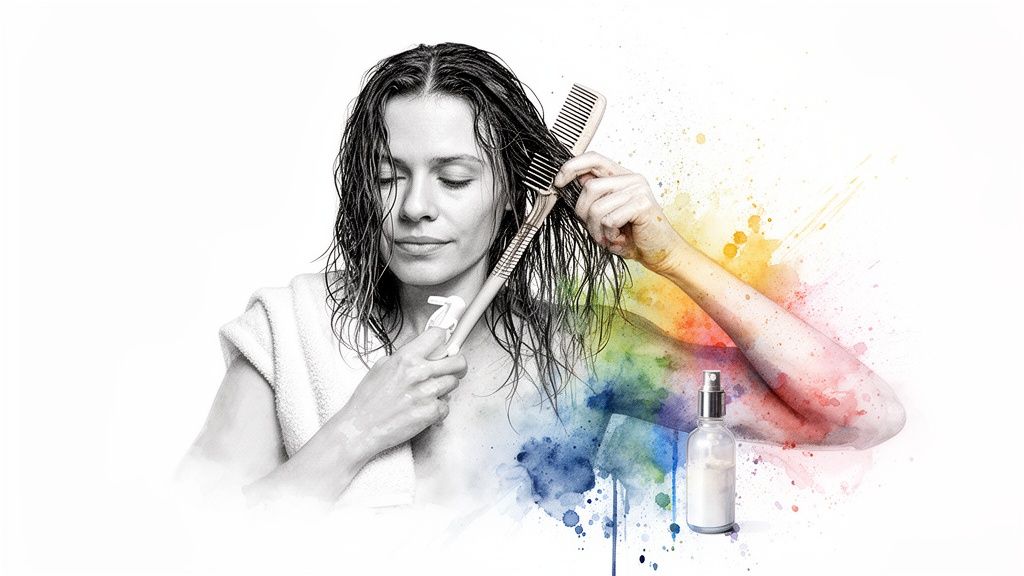
Mindful brushing is less about speed and more about patience. Starting from the ends and gently working your way up prevents you from forcing tangles into tighter knots, which is a major cause of breakage.
Mindful Detangling and Brushing
The way you brush your hair can either make or break your repair efforts. Ripping a brush through tangled, fragile hair is one of the fastest ways to cause more damage. It's time to embrace a slower, more deliberate method.
Always start detangling from the ends of your hair, slowly working your way up toward the roots. This technique lets you gently work out knots one section at a time without yanking on the hair shaft from the top. A wide-tooth comb or a brush made specifically for detangling is a game-changer, especially when your hair is damp and at its most vulnerable.
Embracing Heat-Free Styling
Finally, giving your hair a real break from heat is one of the most impactful changes you can make. Hot tools strip moisture and can damage the protein structure of your hair, undoing your hard work in an instant.
It’s easier than you think. Try these simple, heat-free options:
- Air-Drying: Whenever you can, let your hair air-dry at least 80% of the way before even thinking about a blow dryer. Gently blot the excess water out with an old t-shirt or a microfiber towel instead of rubbing it with a rough bath towel.
- Braids and Buns: A couple of loose braids or a soft, twisted bun can create beautiful, natural-looking waves while you sleep. No heat required.
- Silk or Satin Protection: Swap your cotton pillowcase for a silk or satin one. It creates less friction, which means fewer tangles and less breakage when you wake up.
Building these gentle habits into your daily life is a powerful act of self-care. It's a commitment to treating your hair with the kindness it deserves and creating the perfect nurturing environment where it can finally heal and thrive.
How Trims and Protective Styles Support Hair Health
So you're doing all the right things—deep conditioning, using gentle products, and babying your hair. That’s fantastic. But if you’re not managing the existing damage and protecting your hair from daily wear and tear, you might feel like you’re taking one step forward and two steps back. This is where strategic trims and smart styling come into play. Think of them as the defensive line in your hair repair strategy.
Why You Can't Skip Regular Trims
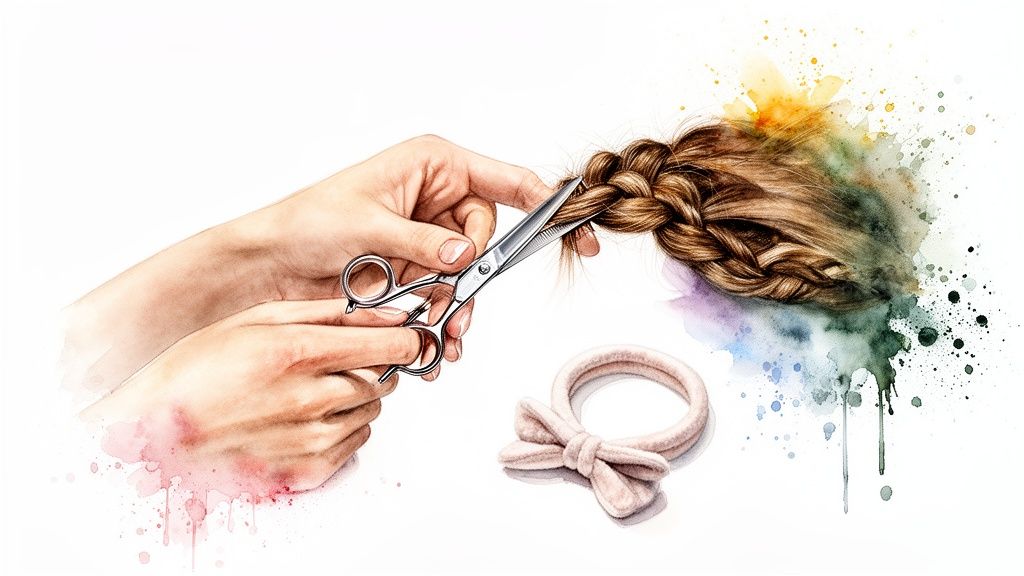
I know, cutting your hair when you’re trying to grow it out can feel counterintuitive. But holding onto frayed, split ends is one of the biggest roadblocks to healthy-looking hair. A split end isn't just a cosmetic issue; it's a structural weakness. Left alone, that tiny split can travel up the hair shaft, causing more breakage and making your hair look thinner and more fragile.
Getting a small trim every 8 to 12 weeks is the best way to stop this damage in its tracks. You're not sacrificing length in the long run; you're preserving it. You can even ask your stylist for a "dusting," which is a micro-trim that snips off just the very tips without taking off any noticeable length. It makes a world of difference in how healthy your hair looks and feels.
The Power of Gentle Protective Styles
A protective style is exactly what it sounds like: a hairstyle that tucks away your delicate ends, shielding them from the outside world. Think about it—your ends are the oldest, most fragile part of your hair. They constantly rub against your clothes, your pillowcase, and car headrests, which leads to friction, tangles, and breakage.
The secret here is to stick with low-tension styles. Pulling your hair into a super-tight ponytail or slicked-back bun might look sharp, but the constant tension can strain your hair follicles. We're aiming for styles that are gentle, comfortable, and functional.
The goal of protective styling isn't just to look good; it's to create a gentle environment where your hair is shielded from the friction and stress that can hinder its recovery.
Easy, Low-Tension Style Ideas
You don’t have to be a master braider to protect your hair. Some of the most effective styles are also the simplest. Here are a few ideas that work beautifully without putting any stress on your strands:
- Loose Braids: A classic for a reason. A single, loose braid down your back or two soft pigtail braids are perfect for keeping hair contained, especially while you sleep.
- Gentle Buns and Twists: Swap out that tight elastic for spin pins or a soft scrunchie. A low bun or a simple two-strand twist keeps your ends safely tucked away all day without any pulling.
- The Silk or Satin Scarf: Wrapping your hair in a silk or satin scarf at night is a wonderful way to prevent friction. You can also wear it as a chic headband or tie it around a bun during the day for an extra layer of protection.
When you combine regular trims with gentle styling, you create a complete system of care. You’re not just feeding your hair with masks and oils; you’re actively safeguarding it from the very things that caused the damage in the first place.
This is a Marathon, Not a Sprint: A Realistic Timeline for Hair Repair
Let’s be honest: when you start a new hair care routine, you want to see results yesterday. But repairing damaged hair naturally is all about patience and consistency. Think of it less like a quick fix and more like nurturing a plant back to health.
You’re not just applying products; you're fundamentally changing your hair's environment and building healthier habits. True, lasting change takes time, and your hair will recover at its own unique pace.
What to Expect and When
It's easy to get discouraged if you don't see a dramatic difference overnight. Setting gentle, realistic expectations will help you stay motivated and appreciate the small wins along the way. While everyone's hair is different, here’s a general idea of what you can look forward to.
- The First Month (Weeks 1-4): The initial changes will be more about feel than look. After a few deep conditioning treatments, you’ll likely notice your hair feels softer and less dry. It might be easier to detangle, too.
- Seeing the Difference (Months 1-3): This is when visual improvements may start to appear. You might notice a bit more shine returning, less frizz, and less hair in your brush. That's a huge win!
- The New Normal (Months 3-6+): With consistent care, your hair will begin to feel genuinely stronger and more resilient. The biggest change will be the healthy-looking new growth coming in from the roots, which is a direct reflection of all your hard work.
Remember to celebrate the little things—a great hair day, noticing your ends aren't splitting as much, or just enjoying the ritual of your weekly hair mask. The journey is about how your hair feels just as much as how it looks.
Trusting the Process
Switching to natural hair care isn't just a fleeting trend. It's a shift toward more mindful, ingredient-conscious wellness. In fact, the global natural hair care market is growing rapidly as more people look for gentle solutions. Many people choose these products specifically to help repair damage and strengthen their hair. You can see the data on the natural hair care market's growth for yourself.
This repair journey is also the perfect time to give your scalp some love and encourage healthy new growth from the source. To support your efforts, our guide on how to grow hair faster naturally has some great tips that work beautifully with this repair plan.
Above all, be kind to yourself and your hair. Every gentle choice you make is another step toward the vibrant, resilient hair you deserve.
Common Questions About Natural Hair Repair
As you start weaving these new habits into your life, you're bound to have questions. That's a good thing! Getting curious is a huge part of figuring out what your hair uniquely needs. I've been there, and I've heard these same questions from so many others on their own hair repair journeys.
Let's clear up some of the common ones. Think of this as a quick chat to help you move forward with confidence.
How Often Should I Use a Natural Hair Mask for Damaged Hair?
This is all about listening to your hair. There's no single right answer, but a great starting point for most people with noticeable damage is a deep conditioning treatment once a week. This rhythm gives your hair a consistent infusion of moisture and nutrients without overdoing it.
If your hair feels very porous and soaks up everything instantly, you might benefit from bumping it up to twice a week, at least for the first month. On the flip side, if you have fine hair that gets weighed down easily, stretching it out to every ten days might be your sweet spot. The real test is how your hair feels afterward. If it's soft, springy, and hydrated, you've found your rhythm.
The secret to success is creating a ritual you can actually stick with. Consistency will always beat intensity when it comes to hair health, so pick a schedule that works for you.
Can Natural Oils Make My Hair Greasy?
This is probably the number one fear I hear, but it's completely avoidable. The issue isn't the oil itself; it's almost always about how much you're using and where you're putting it. When you get the technique right, natural oils can be your hair's best friend.
A little truly goes a long, long way, especially with richer oils like castor or coconut. To keep things light and bouncy, not limp and oily, try these tricks:
- Start at the Ends: Your ends are the oldest, thirstiest part of your hair. Give them the most love! Work the oil through your mid-lengths and ends first, then use only what’s left on your hands to lightly smooth the hair closer to your scalp.
- Apply to Damp Hair: A few drops of a lighter oil, like argan or jojoba, spread much more easily on damp hair. This helps it absorb into the hair shaft instead of just sitting on top.
- Pick Lighter Oils: For everyday moisture or if you have finer hair, you don't have to reach for the heavy stuff. Lighter oils like argan, grapeseed, and sweet almond are fantastic for adding shine and fighting frizz without the weight.
How Long Until I See Results from a Natural Hair Repair Routine?
I know you want to see a change overnight, but patience is your most valuable tool here. You're working with your hair's natural growth cycle, gently rebuilding its strength from the inside out. The good news is, the results you get will be real and lasting.
You'll probably feel a difference in softness and find your hair is easier to manage within just a few weeks. That initial "ah-ha!" moment is so encouraging.
As for visible changes—like less frizz and a healthy sheen—you'll likely start noticing those after one to three months of sticking with your new routine. The big-picture transformation, like significantly less breakage and stronger-looking new growth, is a long-term game. We're talking several months down the line. Just remember to celebrate the small wins as you go!
At ArtNaturals, we're all about harnessing the power of nature to bring your hair back to life. Our products are thoughtfully created to give your hair the clean, effective support it needs on its repair journey.