

If you want to reduce frizz naturally, the secret often comes down to two things: deeply moisturizing your hair and gently sealing its outer layer, also known as the cuticle. Simple shifts in how you wash, condition, and dry your hair can make a world of difference, calming unruly strands without needing a cabinet full of harsh chemicals.
Understanding Why Hair Gets Frizzy
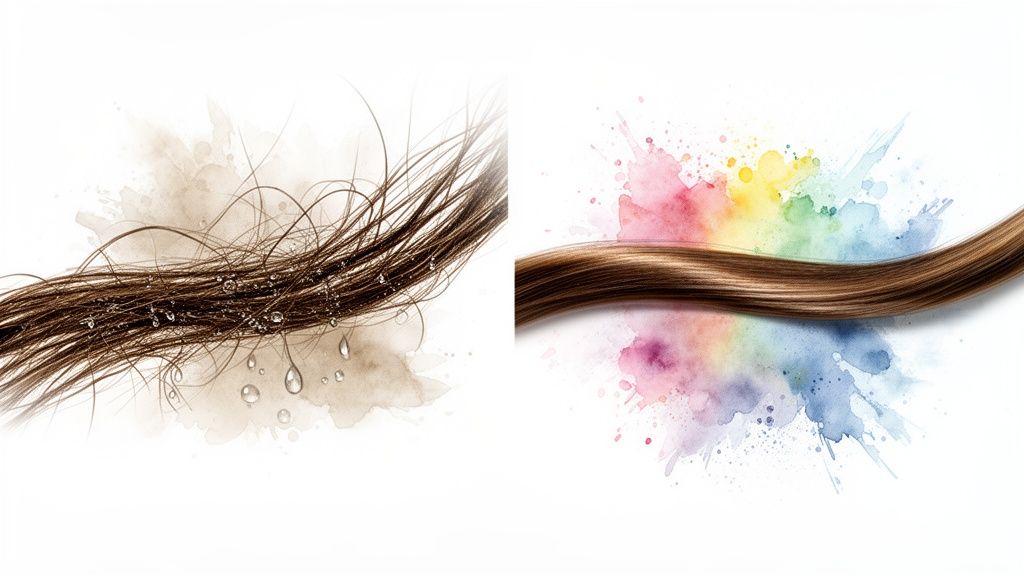
Think of frizzy hair as your hair's way of telling you it's thirsty. On a microscopic level, frizz happens when the hair’s protective outer layer—the cuticle—lifts up. You can picture the cuticle as tiny shingles on a roof. When they lie flat and smooth, your hair looks sleek and shiny.
But when your hair is dry, damaged, or naturally porous, those shingles raise. This creates an open invitation for moisture from humid air to rush in, causing the hair shaft to swell and create that familiar, unruly texture. It's why a humid day can sometimes feel like a challenge to your hairstyle.
The Connection Between Dryness and Frizz
At its heart, thirsty hair will try to drink moisture from anywhere it can find it, including the air. This makes dryness a primary trigger for frizz. Hair can become dry for a handful of common reasons:
-
Over-washing: Cleansing too often can strip away the natural sebum that keeps your scalp and hair hydrated. This is a big one, especially if you also experience a flaky, itchy scalp. If that sounds familiar, you might find some gentle solutions in our guide on natural remedies for a dry scalp.
-
Harsh Ingredients: Certain ingredients in shampoos and stylers can be very drying, leaving the hair cuticle exposed and vulnerable.
-
Heat Styling: High heat from blow dryers and flat irons can remove moisture from your hair strands, weakening them over time.
-
Environmental Factors: Everyday things like sun exposure, wind, and even dry indoor air can zap the hydration right out of your hair.
Frizz isn't a "hair type" but a condition. It's a signal that your hair may need more hydration and gentler care. When you focus on nourishing your hair, you encourage the cuticle to lie flat, which naturally results in smoother, more manageable strands.
Many of us are familiar with this. In fact, finding natural ways to smooth hair has become a shared goal for many. Understanding what contributes to your frizz is the first real step toward building a simple, effective routine to support smoother hair.
Crafting Your Gentle Anti-Frizz Hair Ritual
Think of your hair care routine not as a battle against frizz, but as a peaceful ritual. It's about tuning into what your hair truly needs and transforming daily habits into moments of self-care that encourage smoothness from root to tip. The process starts the moment you step into the shower.
Start with a Kinder Cleanse
Your washing habits lay the groundwork for everything else. Many shampoos produce a big, satisfying lather, but that's often thanks to sulfates. While effective at cleaning, these detergents can be too aggressive, stripping away the natural oils your hair needs to stay hydrated. This is often the first step on the road to frizz.
Making the switch to a sulfate-free shampoo is one of the most impactful changes you can make. These gentler formulas clean your hair well without stripping away essential moisture, helping maintain your hair's delicate balance. It's a small swap with big rewards.
Master the Art of Conditioning and Drying
After cleansing, a rich, hydrating conditioner is a wonderful tool. Look for formulas packed with natural moisturizers that help seal and smooth the hair's outer layer, or cuticle. When you apply it, focus on the mid-lengths and ends where hair is oldest and driest. Let it sit for a few minutes to allow it to sink in.
How you dry your hair is just as critical as how you wash it. A vigorous rubbing motion with a standard cotton towel can be a common misstep. The friction can rough up the hair cuticle, creating a perfect opportunity for frizz.
Pro Tip: Ditch the rough towel. Instead, gently squeeze and blot the excess water from your hair with a soft microfiber towel or even an old, clean t-shirt. This simple habit dramatically reduces friction, keeping the hair cuticle smooth.
Your sleep setup can also make a difference. Reducing friction overnight means you can wake up with smoother hair. Some people find success swapping their pillowcases for silk or find that sleeping on luxuriously soft bamboo cotton sheets helps tame their mane by morning.
Find Your Perfect Wash Schedule
There’s no one-size-fits-all answer for how often you should wash your hair. Washing too much can contribute to dryness, but not washing enough can lead to scalp buildup. The key is to find the rhythm that works for your hair.
- Fine or Oily Hair: You might need to wash every other day to feel fresh without over-drying.
- Thick, Coarse, or Curly Hair: Your texture often thrives on its natural oils, so try washing just two or three times a week.
- Dry or Damaged Hair: Spacing washes even further apart can help your hair hang onto every bit of precious moisture.
Pay attention to how your hair feels. If it’s constantly frizzy and feels brittle, try extending the time between washes by just one day. This gives your scalp’s natural oils a chance to travel down the hair shaft, which is nature’s own best frizz-fighter.
Tapping Into Nature for Smoother Hair
Sometimes, the best support for frustrating frizz isn't a complicated formula but something much simpler. Turning to natural ingredients is a wonderful way to bring calm and balance back to your hair care. Think of plant-based oils and butters as nature’s own smoothing treatments; they’re packed with nutrients your hair needs to seal its cuticle and create a gentle shield against frizz-inducing humidity.
When you start exploring the world of botanicals, you get to know what your hair truly loves. It’s less about a quick fix and more about making mindful choices, whether you’re picking a new product off the shelf or whipping up a simple treatment in your own kitchen.
Beloved Botanicals for Frizz Control
Certain natural oils have earned a stellar reputation for a reason. They're filled with the fatty acids and vitamins that are important for keeping your hair moisturized, strong, and resilient.
-
Argan Oil: Often called “liquid gold,” this oil is a fan favorite because it’s incredibly lightweight. It absorbs quickly to lock in moisture and add a beautiful sheen without feeling greasy or heavy. A few drops are all you need to tame flyaways.
-
Coconut Oil: This is a true deep-conditioning powerhouse. Coconut oil is unique because it can penetrate the hair shaft, hydrating from the inside out. It's known to help reduce protein loss, which can leave your hair feeling stronger and less prone to the kind of damage that leads to frizz.
-
Shea Butter: For very dry, thick, or coarse hair, this creamy, rich butter is a lifesaver. It’s an amazing emollient that coats each strand, sealing in moisture and creating a protective barrier that smooths the cuticle and guards against the elements.
Humidity is often a primary factor behind frizz, and many people are turning to nature for solutions. The market for anti-frizz products is growing, largely fueled by a love for organic, plant-based options. If you're curious, you can explore more insights on the rise of natural anti-frizz solutions.
This simple visual breaks down the core ideas behind a gentle, anti-frizz ritual.
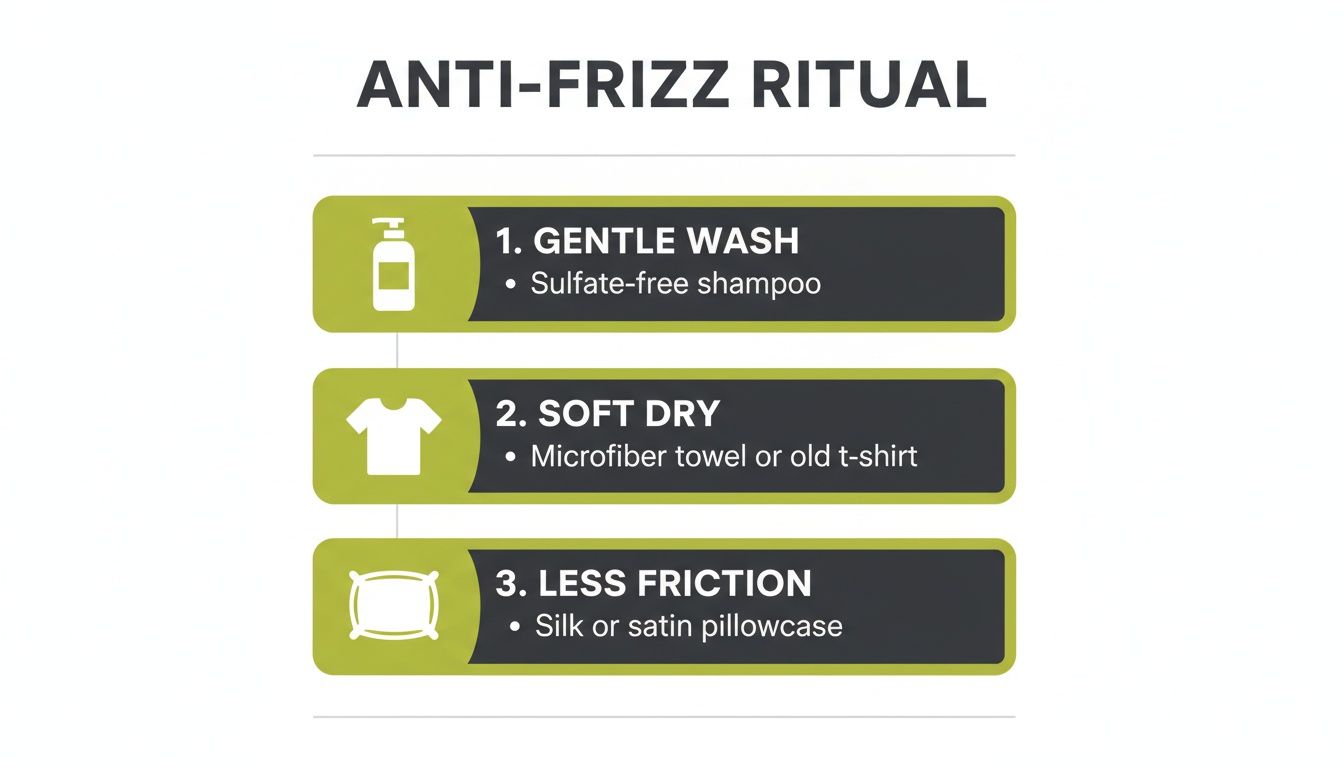
Ultimately, supporting frizz-free hair naturally comes down to a few consistent, gentle habits that respect and protect your hair’s delicate structure.
Navigating the world of natural oils can feel overwhelming, so here’s a quick guide to help you pick the perfect one for your hair's needs.
Your Guide to Natural Anti-Frizz Oils
| Natural Oil | Primary Benefit | Best For Hair Type | How to Use |
|---|---|---|---|
| Argan Oil | Lightweight moisture & shine | Fine to medium, all types | As a finishing serum on dry hair or added to conditioner. |
| Coconut Oil | Deep penetration & moisture retention | Medium to thick, dry or damaged | As a pre-shampoo treatment or a deep-conditioning mask. |
| Avocado Oil | Intense hydration & vitamin-rich | Dry, brittle, or color-treated | Mix into a DIY hair mask or use as a hot oil treatment. |
| Olive Oil | Seals moisture & adds weight | Thick, coarse, or very dry | As a deep conditioner; can be heavy for fine hair. |
| Jojoba Oil | Mimics natural scalp sebum | Oily roots, dry ends, fine hair | Apply to ends to seal moisture or lightly on the scalp. |
| Shea Butter | Heavy-duty sealant & protection | Very dry, coarse, curly, coily | Use as a leave-in conditioner or to seal ends. |
Remember, a little goes a long way! Start with a small amount and see how your hair responds before adding more.
Going Beyond Oils with Floral and Herbal Essences
Your natural toolkit doesn't have to stop at oils and butters. For centuries, people have used floral and herbal infusions in their beauty rituals for their conditioning properties. Some enthusiasts even take up cultivating roselle hibiscus for its hair benefits, a beautiful plant celebrated for its ability to naturally soften and detangle hair.
The goal isn’t to erase every single flyaway—it's to work with your hair’s natural texture. When you give it the moisture and gentle care it’s thirsty for, you encourage it to settle into its healthiest, smoothest self.
Bringing these botanicals into your routine can be as easy as mixing a few drops of essential oil into your conditioner or treating yourself to a weekly hair mask. If you're interested in learning more about how different oils can contribute to overall hair health, you might enjoy our guide on essential oils for hair growth. This approach is about nurturing your hair, building a strong foundation that leads to less frizz and more shine.
Whip Up a DIY Hair Mask for a Deep Dose of Hydration
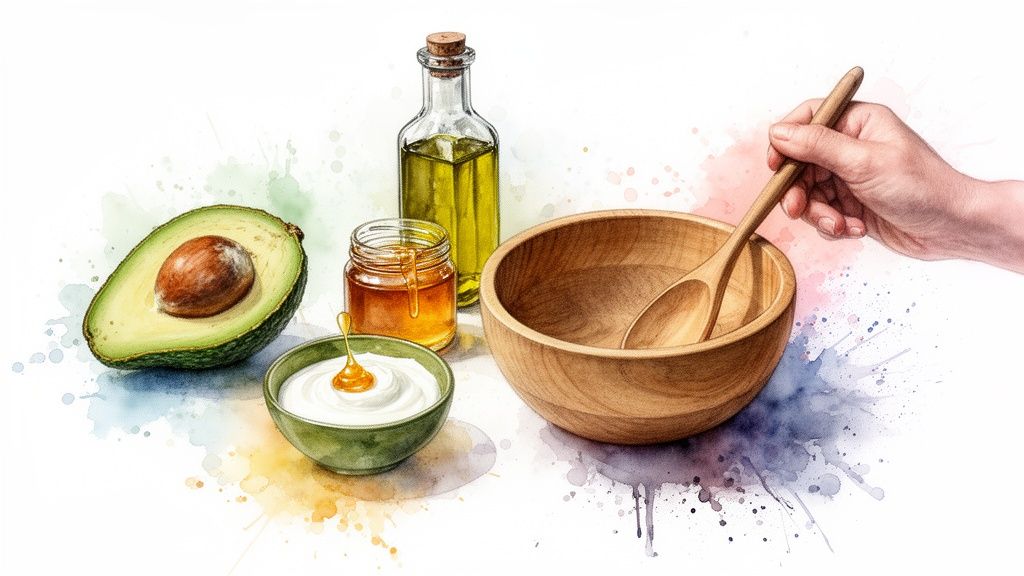
Sometimes, wonderful hair remedies are waiting in your kitchen. Making your own hair mask is a fantastic, accessible way to give your hair a concentrated shot of moisture that a daily conditioner might not match.
Think of it as a weekly spa treatment. This ritual penetrates deep into the hair shaft to smooth down the cuticle, making your hair more resilient against frizz in the long run.
The Ultimate Hydrator: Avocado and Olive Oil Mask
For hair that feels perpetually dry and frizzy, this mask is a nourishing treat. Avocado is packed with beneficial fatty acids and vitamins, while olive oil is a time-tested emollient that locks in moisture and leaves hair feeling incredibly soft.
Here’s what you’ll need:
- ½ of a ripe avocado
- 1 tablespoon of olive oil
- 1 tablespoon of honey (optional, but great for attracting extra moisture)
First, mash the avocado in a bowl until it’s completely lump-free. Then, stir in the olive oil and honey until you have a smooth, creamy paste. Apply it onto damp hair, paying special attention to your mid-lengths and ends, as that’s usually where frizz and dryness are most noticeable.
Let it work for 20-30 minutes. For an extra boost, you can wrap your hair in a warm towel to help the ingredients penetrate even deeper. Once your time is up, rinse it all out with lukewarm water and follow up with your usual shampoo and conditioner.
This isn't just a quick fix for frizz; it's about building healthier, stronger hair from the inside out. When you consistently give your hair this kind of deep hydration, you fortify every single strand. If you're looking for more ways to revive tired locks, our guide on how to repair damaged hair naturally is a great place to start.
The Shine-Booster: Honey and Yogurt Treatment
Is your hair feeling a bit dull or unruly? This simple two-ingredient mask can bring back its natural softness and shine. The lactic acid in yogurt acts as a gentle cleanser that smooths the hair cuticle, while honey works as a natural humectant, pulling moisture into the hair shaft.
Grab these from the fridge:
- 2 tablespoons of plain, full-fat yogurt
- 1 tablespoon of raw honey
Just whisk the two ingredients together in a bowl until they're perfectly combined into a smooth, spreadable mixture. Apply it to clean, damp hair, making sure to cover everything from root to tip.
Let it sit for about 15-20 minutes. This mask is lighter than the avocado one, making it a perfect choice for finer hair types that need hydration without being weighed down. Rinse it out thoroughly with cool water to seal the cuticle and lock in shine. Learning how to reduce frizzy hair naturally is all about finding these simple, calming rituals that work for you.
Everyday Styling Tips for Frizz-Free Days
How you handle your hair after the shower is just as critical as how you wash it. The right styling habits can help lock in moisture for a smooth finish that lasts. It’s all about creating a solid foundation.
The best time to apply any styling product is when your hair is damp—not dripping wet, but not yet dry. Applying a lightweight leave-in conditioner or a few drops of serum at this stage helps seal the hair's cuticle before it starts pulling moisture from the air.
Focus your application on the mid-lengths and ends, which are almost always the driest and most frizz-prone parts of your hair. This simple step creates a shield, keeping your hair hydrated and under control, even when the humidity rises.
Gentle Styling Without the Heat
If you want to get ahead of frizz, try cutting back on heat. High temperatures are a primary culprit behind chronic frizz because they strip moisture and can rough up the hair’s protective outer layer. Learning to work with your natural texture is one of the kindest things you can do for your hair.
Here are a few favorite heat-free methods:
-
Braiding: A simple, loose braid in damp hair works wonders. As it dries, you're left with soft, natural-looking waves. For a more defined pattern, try two braids instead of one.
-
Twisting: This is fantastic for defining tighter curls and coils. Just twist small sections of damp hair to encourage your natural pattern and keep the strands clumped together smoothly as they dry.
-
Bunning: For big, soft waves, try coiling your damp hair into a loose bun. Whether you place it high on your head or low at the nape of your neck, it's an easy way to get gentle volume and shape.
These techniques don't just protect your hair; they're also a great time-saver.
Mindful Heat Styling
Sometimes you may want to use a flat iron or curling wand. When you do, a few small tweaks can drastically reduce damage. First and foremost, always use a heat protectant. It's non-negotiable. Think of it like sunscreen for your hair—it creates an essential barrier.
Keep your tools on a low to medium heat setting. Very high temperatures are rarely necessary and can contribute to the kind of damage that causes stubborn frizz. A slower, more gentle approach will give you much healthier and smoother results over time.
For those random flyaways that pop up midday, a quick touch-up is all you need. Take a single drop of a lightweight oil (argan and jojoba are perfect for this) and rub it between your palms. Gently smooth your hands over the frizzy spots. It adds just enough moisture and shine to tame things down without making your hair greasy.
Answering Your Top Natural Frizz Control Questions
Switching up your hair routine always brings up a few questions. As you start to explore how to tame frizz the natural way, you’re probably wondering how long it’ll take, what works for your specific hair type, and what other little things can make a big difference. Let's get into some of the most common questions we hear.
How Long Until I See a Difference?
This is a big one, and the honest answer is: it takes a little patience. While you'll probably feel immediate softness after your first deep conditioning mask or oil treatment, lasting change in frizz can take a few weeks to show up.
Think of it this way: you're restoring your hair's natural moisture balance. As you consistently use gentle habits, your hair will slowly become stronger and less reactive to humidity. It's a gradual process, but seeing your hair get healthier day by day is incredibly rewarding.
Can I Use Natural Oils on Fine Hair Without It Looking Greasy?
Absolutely! This is a common concern, but it's all about technique. For fine hair, the secret is using the right oil and, more importantly, the right amount. Lighter oils like jojoba or grapeseed oil are fantastic because they sink in quickly without leaving a heavy, weighed-down feeling.
The key is to apply the oil only to your mid-lengths and ends—stay far away from your roots.
A great rule of thumb is to start with just a few drops warmed up between your palms. You can always add more. Applying it to damp hair also helps it spread out more evenly and feel much lighter than putting it on dry hair. This way, you get all the smoothing power without sacrificing your volume.
Are There Any Lifestyle Habits That Can Help Reduce Frizz?
Yes, and you might be surprised by how much these small daily adjustments can help. Supporting your hair goes beyond just products and styling.
- Upgrade Your Pillowcase: A silk or satin pillowcase is a wonderful addition to your routine. Cotton can be rough on your hair cuticle, causing friction that leads to tangles and frizz overnight. A smoother surface lets your hair glide, protecting it while you sleep.
- Shield Your Hair from the Elements: We protect our skin from the sun, so why not our hair? On very sunny or windy days, wearing a hat or a stylish scarf can prevent environmental damage that dries out your hair and invites frizz.
- Hydrate and Nourish Your Body: Healthy hair often starts from the inside. Drinking plenty of water and eating a balanced diet full of healthy fats and vitamins will give your body the building blocks it needs for stronger, more resilient hair that's naturally less prone to frizz.
Ready to bring the best of nature into your hair care routine? The ArtNaturals collection is designed with pure, plant-powered ingredients to help you get that smoother, healthier hair you're looking for. Explore our gentle shampoos, nourishing conditioners, and restorative hair masks today.