

You're standing in the skincare aisle with a phone full of saved routines, comparing bottles that promise smoother texture, balanced shine, and clearer-looking pores. One serum says “clarifying,” another highlights botanicals, and a third lists several acids you've never heard of. The choice feels less like self-care and more like a chemistry exam.
A serum for acne-prone skin doesn't need to make your routine more complicated. Think of it as a lightweight middle layer between cleansing and moisturizing, chosen for one or two clear goals. The right formula can bring focused ingredients, such as salicylic acid or niacinamide, into a simple plant-forward ritual without replacing the basics your skin already needs.
This guide will help you read labels, understand concentration cues, pair active ingredients thoughtfully, and build a breathable routine that feels manageable. You'll also find a practical layering order and a clean-beauty checklist, so you can trade urgency and product overload for a calmer, more informed choice.
When Your Routine Feels Stuck on a Crowded Shelf
Maya has already bought a cleanser, a moisturizer, a mist, and two spot treatments. She's now holding three serums while scrolling through saved videos, each one recommending a different “must-have” ingredient. Her skin feels shiny in some areas, tight in others, and the crowded shelf makes every bottle seem necessary.
The more useful question isn't “Which serum promises the most?” It's “What does my routine need?” A serum is usually a focused leave-on step. It can support concerns such as visible oiliness, uneven texture, or the look of post-blemish marks, but it works best alongside a gentle cleanser, a comfortable moisturizer, and daytime sun protection.

Start with one clear purpose
A plant-forward routine can still include carefully selected active ingredients. Salicylic acid may suit someone focused on the look of congestion, while niacinamide may appeal to someone who wants a more balanced appearance and a comfortable, hydrated finish. Botanical companions such as aloe, green tea, or soothing plant oils can add a sensory, ritual-like quality, but “natural” doesn't automatically mean every formula will suit every complexion.
A calmer shelf usually starts with a clearer brief: choose one primary concern, one texture you'll enjoy using, and a routine you can repeat.
Label percentages can offer useful context, yet a higher number isn't automatically a better match. The formula's texture, supporting ingredients, fragrance profile, and your own tolerance all matter. A serum that feels light and easy to apply is more likely to become part of your everyday rhythm than one that feels aggressive or fussy.
The pages ahead focus on ingredient roles, label-reading cues, layering order, and common misconceptions. The aim isn't to chase instant perfection. It's to help you create a focused, breathable routine that gives each product a sensible job.
What a Serum Actually Does for Your Skin
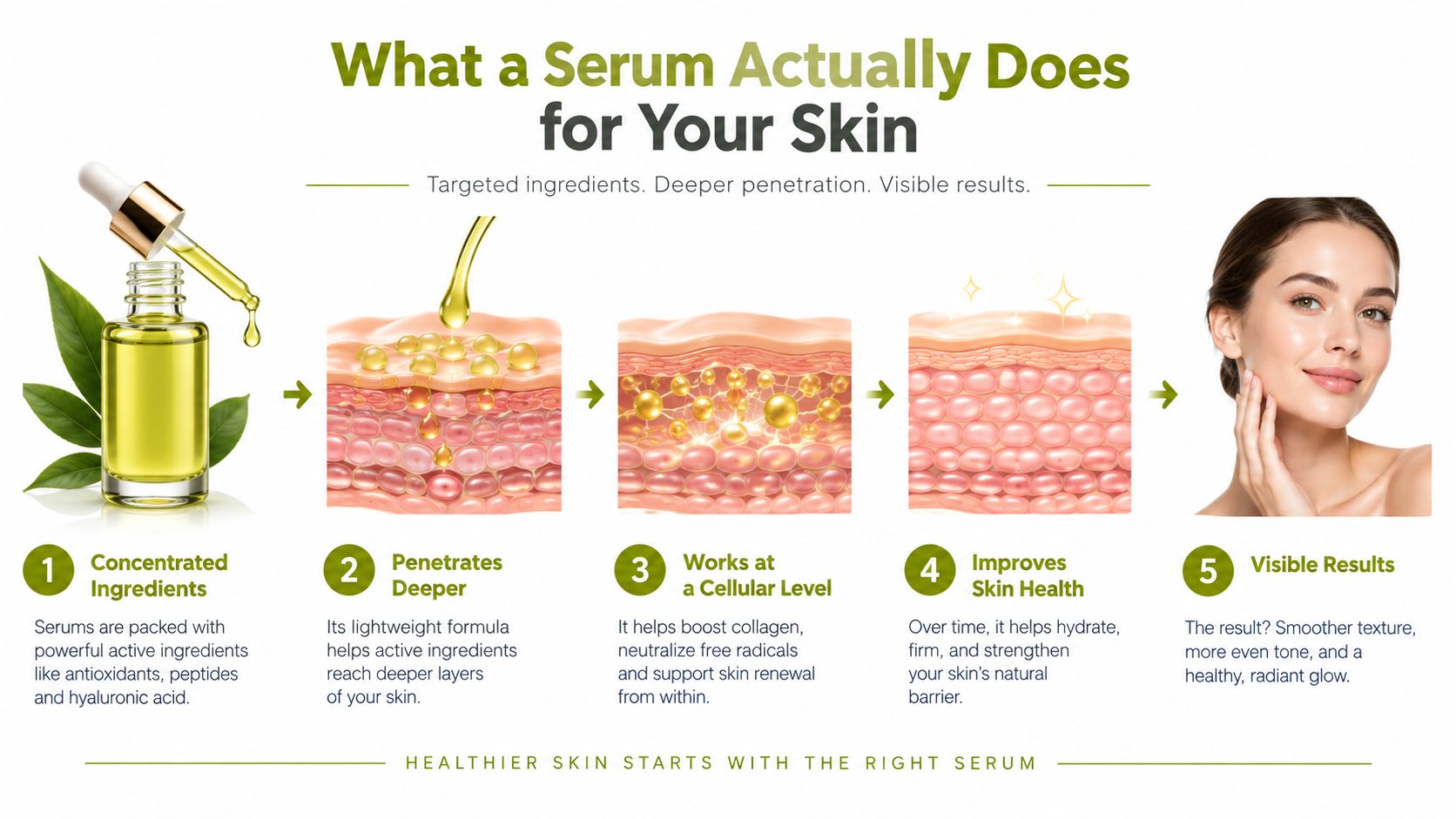
A serum is a lightweight, leave-on formula designed to deliver selected ingredients after cleansing and before moisturizer. An everyday comparison is a concentrated splash of flavor in a glass of water. It's more focused than plain water, but it still belongs within the larger drink, not instead of it.
Cleansers are made to lift away surface oils, sunscreen, makeup, and daily residue before being rinsed off. Moisturizers generally create a more comforting, cushioning layer that helps reduce the feeling of dryness. Serums sit between those steps, often using a fluid, gel, or thin emulsion texture that spreads quickly without the richer feel of a cream.
Why texture matters
Acne-prone skin often feels uncomfortable with heavy, greasy layers, especially when several products are stacked together. Lightweight, water-based and non-comedogenic formulas are commonly recommended for this reason, and a hyaluronic acid serum guide notes that acne-prone skin tends to do well with lighter textures. The same guide discusses hyaluronic acid concentrations between 0.5% and 2%, a useful reference when comparing hydrating formulas.
A serum doesn't “push” ingredients into your skin in a dramatic or mechanical way. Instead, its leave-on format gives the formula time to remain on the surface while you continue with the rest of your routine. That makes the order important: apply it after cleansing, then follow with moisturizer.
Some readers find it helpful to compare product roles through a 2026 clear skin routine, especially when they're unsure how a serum differs from a cleanser or cream. Use that kind of routine overview as a planning aid, not as a reason to add every suggested step.
Give the serum one job
A serum can be a precise part of a complete self-care ritual. It might bring a soft gel texture to an evening routine, add a hydrating layer after cleansing, or provide a targeted active before a moisturizer. It shouldn't be expected to replace cleansing, hydration, sun protection, or professional guidance when skin concerns are persistent or distressing.
That simple division of labor keeps your routine easier to understand. Once you know whether you're shopping for pore-focused exfoliation, visible tone support, oil-balance care, or hydration, the ingredient list becomes much less intimidating.
Acne-Favorite Ingredients Worth Knowing
Ingredient names become easier to compare when you ask the same three questions each time: What is it? What skin concern does it target? How might it fit into a gentle, plant-forward routine? That approach helps you avoid treating a serum as a collection of impressive-sounding ingredients with no clear purpose.
Salicylic acid and BHA
Salicylic acid is a type of beta hydroxy acid, or BHA, commonly used in formulas designed for the look of congestion and uneven texture. It's oil-compatible, which is one reason it appears in products intended for oily or acne-prone skin. A practical botanical pairing might be aloe or green tea, selected for a more soothing, comfortable feel around the exfoliating ingredient.
BHA is the broader category, while salicylic acid is the name you'll most often see on a product label. If you're comparing options, the salicylic acid serum guide for oily skin can provide additional ingredient-focused context without requiring you to build a complicated routine.
Niacinamide
Niacinamide is a form of vitamin B3 that's often chosen for visible oil balance, the look of enlarged pores, uneven tone, and a stronger-feeling skin barrier. It tends to work well in water-based serums and can be paired with hydrating ingredients such as glycerin or botanical aloe.
A skincare guide for oily, combination, or acne-prone skin discusses niacinamide in the 5% to 10% range for concerns such as shine and the appearance of enlarged pores, as described by Cosmopolitan's niacinamide serum guidance. That range is a shopping reference, not a reason to assume a stronger formula will feel better.
Retinoids
Retinoids are vitamin A derivatives used in skincare routines focused on renewal, texture, and the appearance of blemish-related unevenness. They can be more demanding than a basic hydrating serum, so a gentle, low-start formula and a slow introduction make sense for someone new to active skincare.
Pairing a retinoid with a simple moisturizer is often more useful than surrounding it with several additional actives. A plant-forward routine might reserve botanical ingredients for the cleanser or moisturizer, keeping the retinoid step straightforward and easier to monitor.
Azelaic acid
Azelaic acid is a multifunctional ingredient commonly included in routines aimed at the look of uneven tone, texture, and blemish-prone skin. It can be a useful option for someone who wants a single active with a broad skincare role rather than several separate bottles.
A lightweight formula with glycerin, aloe, or another familiar humectant may feel more approachable than a heavily fragranced treatment. As with any active, introduce it thoughtfully and observe how your skin responds.
Tea tree
Tea tree is a botanical ingredient frequently used in products for oily or blemish-prone skin. Its plant origin makes it attractive to natural-beauty shoppers, but natural doesn't mean universally gentle. Essential-oil-rich formulas can feel intense for some people, particularly when combined with acids or retinoids.
Look for clear ingredient labeling and use a patch test before applying a tea tree serum broadly. A fragrance-free moisturizer can provide a quieter companion layer, rather than adding more aromatic ingredients at the same time.
Zinc
Zinc appears in skincare for its shine-balancing and calming profile, especially in formulas created for oily-looking skin. It may show up as a supporting ingredient rather than the headline active, so read the full ingredient list instead of relying only on the front label.
Zinc can sit comfortably within a plant-forward routine that includes a light gel moisturizer or hydrating mist. Its role is supportive, which means it doesn't need to carry the entire routine.
A quick comparison
| Ingredient | What It Targets | Best Pairing Note |
|---|---|---|
| Salicylic acid | The look of congestion, oil, and uneven texture | Pair with a simple hydrating layer such as aloe or glycerin |
| BHA | Exfoliation and pore-focused care | Keep the rest of the routine gentle |
| Niacinamide | Visible shine, uneven tone, and enlarged pores | Works naturally with humectants and lightweight moisturizers |
| Retinoids | Renewal and the look of rough texture | Use with a plain moisturizer and introduce slowly |
| Azelaic acid | The appearance of uneven tone and texture | Pair with soothing, low-fragrance support |
| Tea tree | Oily-looking, blemish-prone skin | Patch test and avoid stacking many aromatic actives |
| Zinc | Shine balance and a calmer-looking complexion | Combine with a simple gel or fluid moisturizer |
Ingredient combinations can be useful, but more is not always more. A serum with one well-understood active may be easier to use consistently than a crowded formula that leaves you unsure which ingredient is responsible for a good or uncomfortable reaction.
Reading Concentrations Like a Label Detective
A serum label is a small piece of practical information. Start with the front of the bottle, then turn it around and check the ingredient list, percentage disclosures, texture description, and directions. You don't need a chemistry degree. You need a repeatable way to compare two products.
Useful label cues
Salicylic acid serums are commonly formulated between 0.5% and 2%, and 2% is the highest concentration permitted for U.S. over-the-counter skincare, according to NBC News Select's salicylic acid product guidance. Niacinamide may appear across a broad range, with 5% to 10% often discussed for oily or acne-prone skin. Azelaic acid products are frequently positioned around 10%, while retinoid formulas are often introduced at lower strengths.
The verified product guidance above gives a useful range for salicylic acid, but don't assume every ingredient follows the same labeling convention. Zinc and tea tree may be identified clearly without a percentage, and a botanical extract may appear lower on the list because it's used in a smaller amount.
| Active Ingredient | Typical Range | Label Reading Tip |
|---|---|---|
| Salicylic acid | 0.5% to 2% | Check the disclosed percentage and follow the directions |
| Niacinamide | 2% to 10% | Compare the percentage with the rest of the formula |
| Azelaic acid | Around 10% | Look for a clearly stated concentration |
| Retinoids | Low-start formulas | Check the specific retinoid and introduction guidance |
| Zinc | Varies by formula | Look for the exact zinc compound and supporting ingredients |
| Tea tree | Varies by formula | Check whether it appears as an oil or extract and patch test |
Compare bottles side by side
Bottle A lists salicylic acid at 2% and has a thin, water-like texture. Bottle B doesn't disclose a percentage but places niacinamide prominently in the ingredient list and describes the product as a lightweight gel. Neither bottle automatically wins.
Bottle A may make more sense for someone specifically seeking an exfoliating step and already comfortable with that type of formula. Bottle B may suit someone prioritizing a softer daily layer for visible shine and a balanced finish. The better choice depends on your goal, tolerance, and the rest of your routine, not on the largest number printed on the package.
Ingredient order can offer clues because ingredients are generally listed from higher to lower amounts, although labeling rules and formula conventions can vary. Treat the list as a useful map, not a perfect measurement. A niacinamide face serum guide can also help you recognize where this ingredient fits in an ingredient-led routine.
Layering a Serum Into Your Daily Routine
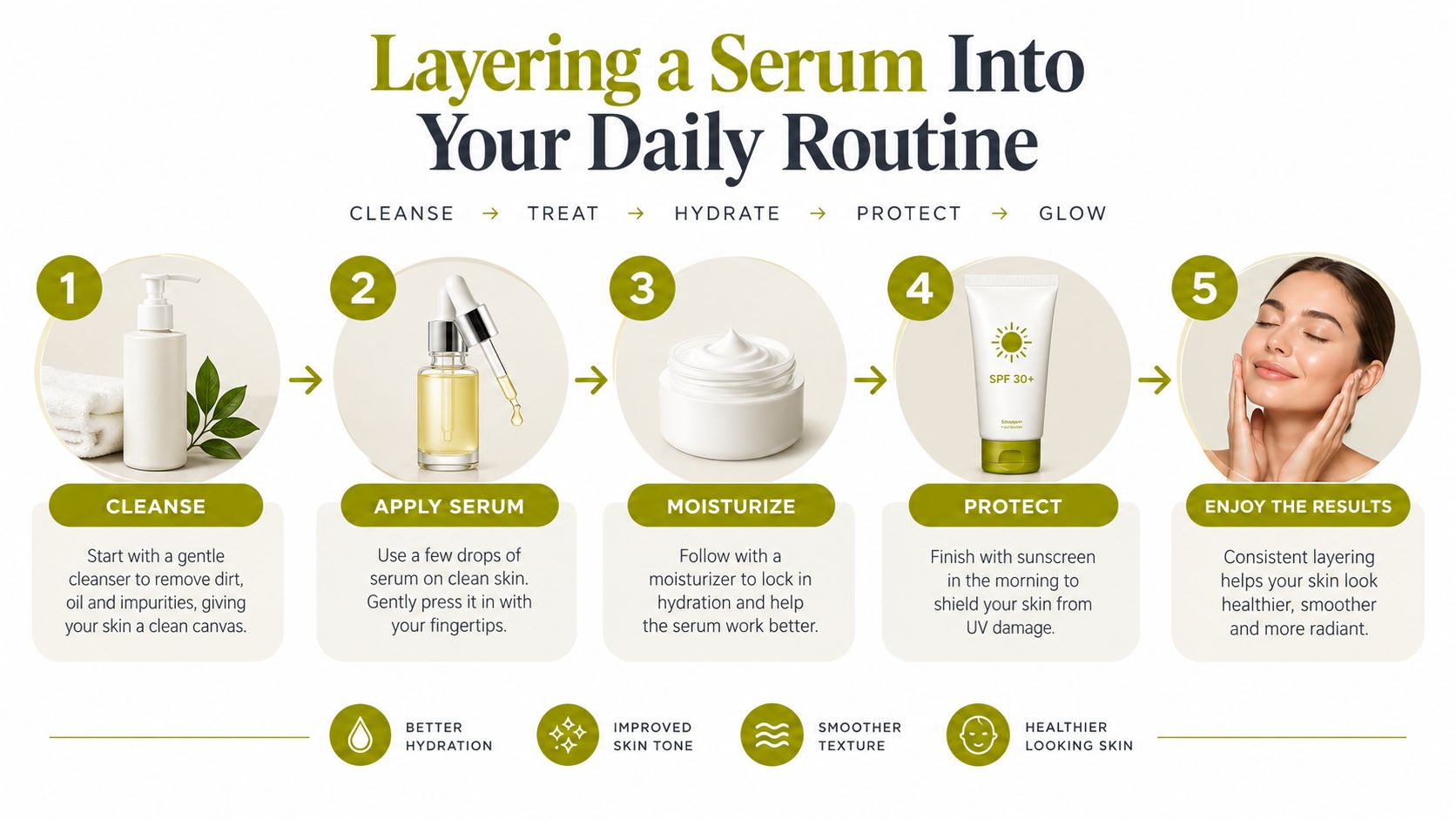
A serum belongs after cleansing and before moisturizer. That placement keeps the routine logical: remove surface residue, apply the focused leave-on layer, then add comfort and protection around it.
Morning order
Use this sequence when your skin tolerates the selected products:
- Cleanse gently: Rinse away overnight oil without leaving your skin feeling tight.
- Tone if you already use one: Choose a hydrating mist or toner rather than adding another exfoliating step.
- Apply serum: Use the amount directed on the bottle, spreading it over clean skin.
- Moisturize: Choose a lightweight lotion, gel, or fluid that feels comfortable.
- Finish with SPF: Daytime sun protection belongs at the end of the morning routine.
Salicylic acid can be used after cleansing and before moisturizer, usually once daily in the evening, according to Ulta's salicylic acid serum directions. An expert summary in the same guidance notes that timing can also depend on tolerance, so the label and your skin's response should guide the schedule.
Keep combinations simple
Niacinamide and salicylic acid may appear in the same overall routine, but introducing both at once can make it harder to understand how your skin is responding. A gentler approach is to begin with one active, then add another only when the first step feels comfortable and predictable.
At night, some people choose a retinoid or azelaic acid step instead of an exfoliating serum. That doesn't mean you need every active. It means you can assign different products to different evenings, leaving room for a plain moisturizer and a slower pace.
For a sensitive-skin version, skip one active altogether. Use a hydrating serum or mist, follow with moisturizer, and introduce the chosen active on separate nights. The ArtNaturals layering skincare guide offers further routine-order context for readers who want to visualize how products fit together.
Sensitive-skin rule: change one variable at a time, and let comfort guide the pace.
This video offers a visual reminder of how a serum can sit within a broader routine:
Myths Versus Facts in Acne Skincare
Skincare myths often begin with a reasonable observation, then stretch it too far. A serum can be helpful, but its value depends on the ingredient, the formula, the surrounding routine, and how consistently you can use it.
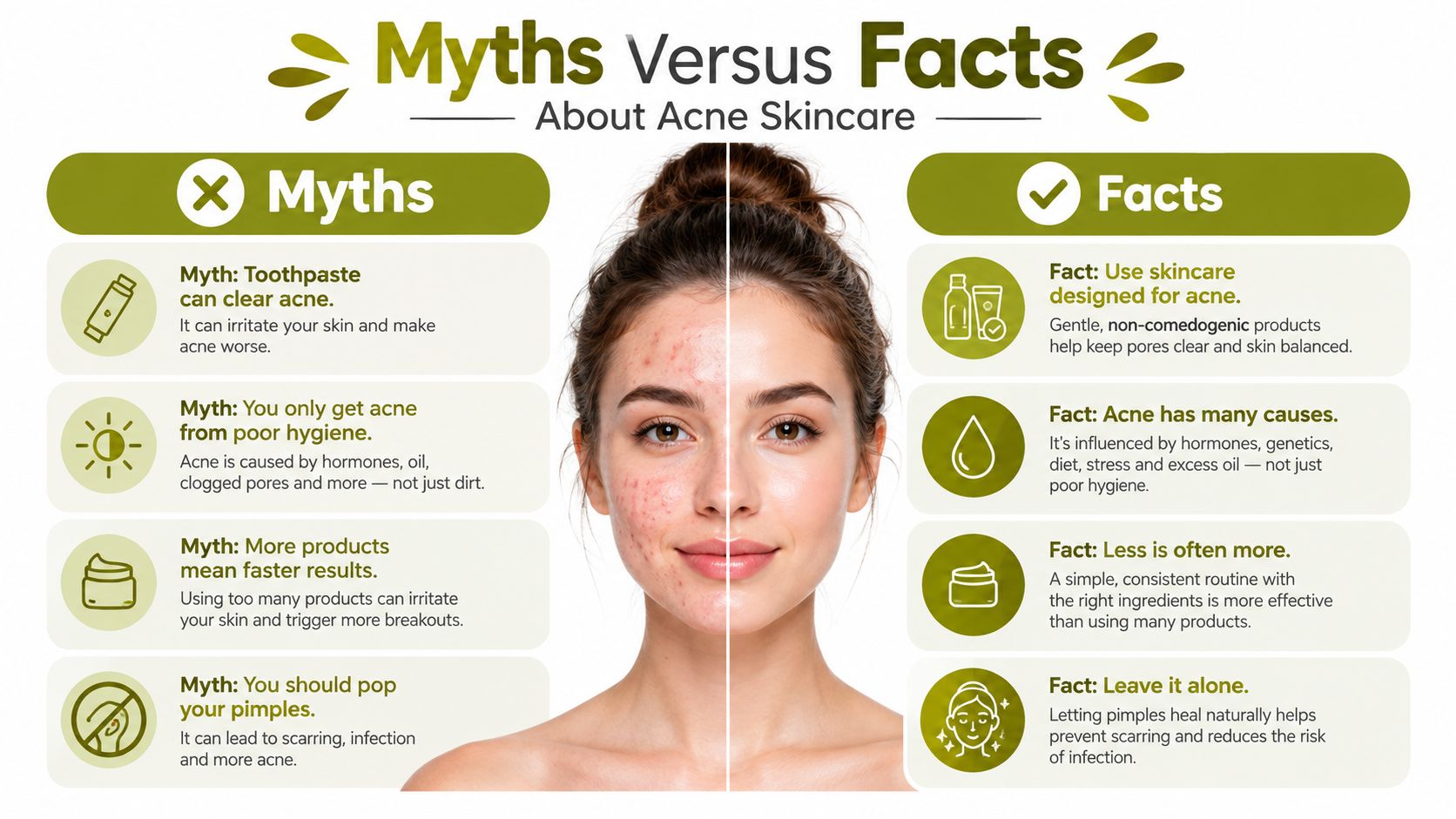
Myth one, more actives mean clearer-looking skin
Fact: Several exfoliants, retinoids, aromatic botanicals, and strong-feeling treatments can make a routine harder to tolerate. Salicylic acid, niacinamide, retinoids, and azelaic acid each have different roles, so combining them without a plan may create unnecessary complexity.
A focused routine gives you better information. If you use one new active at a time, you'll have a clearer sense of what feels comfortable and what doesn't.
Myth two, natural means non-comedogenic
Fact: Plant-derived ingredients can be beautiful additions to a routine, but their origin doesn't determine how every person will respond. Tea tree, essential oils, rich plant oils, and fragranced extracts may not suit everyone.
Read the complete ingredient list and look for a texture that feels light enough for your preferences. A botanical ingredient should complement the formula, not exempt it from scrutiny.
Myth three, oily skin doesn't need moisture
Fact: Oily-looking skin can still feel dehydrated or tight. A lightweight moisturizer or humectant serum can make the routine feel more balanced than repeatedly stripping the skin with harsh cleansers.
Moisture doesn't have to mean a heavy cream. Gel textures, fluid emulsions, glycerin, and hyaluronic acid can offer a less occlusive-feeling layer.
Myth four, spot-treating solves the whole routine
Fact: A spot product addresses a small area, while a daily routine supports the overall look and feel of the complexion. A serum may be used more broadly, depending on its directions, but it still needs to fit with cleansing, moisturizing, and daytime protection.
Myth five, a dry, tight feeling means the product is working
Fact: Tightness is feedback, not a trophy. If a product leaves your skin uncomfortable, scale back, simplify the surrounding steps, or stop using it and seek professional advice when needed.
Choosing a Serum With a Clean Beauty Mindset
Clean beauty is easier to practice when you turn broad values into specific checks. A plant-forward formula can include evidence-backed actives and botanical companions, but transparency matters more than a vague “natural” promise.
Use four filters
- Scan the INCI list: Look for fragrance-free formulas if scent tends to bother you, or identify naturally derived scent sources clearly if you prefer them. Essential oils and aromatic extracts still deserve careful consideration.
- Check the texture language: “Gel,” “fluid,” and “water-based” usually signal a lighter sensory experience. If the product makes a non-comedogenic claim, treat it as one useful filter rather than a guarantee for every individual.
- Review pH information: Some brands disclose a skin-friendly pH range. When it's provided, use it as additional context alongside the active ingredient and directions.
- Consider the packaging: Recyclable materials and minimal packaging can reduce unnecessary waste. ArtNaturals highlights recyclable, biodegradable shipping boxes as part of its sustainability approach.
Botanicals such as witch hazel, green tea, and aloe may appear beside salicylic acid or niacinamide in plant-aware formulas. Their presence doesn't automatically make a serum gentle, so check how the complete formula fits your preferences and tolerance.
Patch-test a new product according to the brand's instructions before making it a full-face step. Then shortlist two or three serums that pass all four filters. Waiting long enough to compare the labels is usually more useful than buying the bottle with the most dramatic front-of-pack promise.
Your Simple Daily Ritual for Calm Skin
A practical morning ritual can stay wonderfully short: gentle cleanser, hydrating mist, acne-focused serum, lightweight moisturizer, and mineral sunscreen. Choose one primary active, apply it as directed, and give the routine time to become familiar before adding another treatment.
In the evening, a retinoid or azelaic acid step may replace an exfoliating active, while other nights can focus on hydration and comfort. Keep the motions slow. Let the serum spread without rubbing aggressively, then finish with a moisturizer that leaves your skin feeling settled.
Clean beauty works best as a practice of thoughtful editing. A few well-chosen products, a readable ingredient list, and a routine you can repeat will serve you better than an overcrowded shelf. Calmer-looking skin grows from consistent daily choices, not aggressive quick fixes.
Explore ArtNaturals for plant-forward skincare, including ingredient-focused serums and lightweight self-care essentials that can support a simple routine for acne-prone skin. Choose a focused formula, pair it with gentle hydration, and build your ritual one considered step at a time.