

You're probably seeing it right now. A bottle with a green label, an herbal name, maybe a little rosemary sprig on the front, sitting between your usual shampoo and the conditioner you keep buying out of habit.
That's how rosemary tends to enter a routine. Not as a dramatic switch, but as a quiet question. Is this just another nice-smelling botanical shampoo, or does it do something useful for the scalp and hair?
That's the better place to start. Shampoo with rosemary makes more sense as a scalp-care cleanser with a botanical boost than as a miracle product. Once you look at it that way, the label gets easier to read, the marketing gets easier to filter, and the bottle you choose is more likely to fit your actual wash routine.
Why Rosemary Keeps Showing Up in Your Shower
You spot it on a label that says balance or clarify, with rosemary printed larger than almost anything else on the front. That choice is not random. Brands use rosemary to signal a certain kind of shampoo before you ever read the ingredient list.

Part of that appeal is sensory. Rosemary smells green, clean, and slightly sharp in a way that suggests freshness without drifting into sugary fragrance. For shoppers who want their wash routine to feel more scalp-focused than perfume-focused, that herbal profile makes immediate sense.
It also fits the kind of claims people are seeing more often on shampoo bottles. Instead of broad promises about fixing everything, rosemary usually appears beside words like refresh, soothe, purify, or daily cleanse. That language points you toward function. The bottle is presenting itself as a cleanser for the scalp first, with the botanical acting as part of that identity.
It signals a certain kind of formula
Rosemary on the front label often hints at three things.
- A botanical style. The formula wants to read as plant-centered, even if the full ingredient list still includes standard cleansers and conditioning agents.
- A scalp-care angle. The product is more likely to talk about comfort, oil balance, or a clean-feeling root area than dramatic length claims.
- An everyday routine fit. Rosemary tends to show up in shampoos meant to feel pleasant and repeatable, not harsh or overly treatment-like.
That signal is useful, but it is not a guarantee. One rosemary shampoo may be brisk and clarifying. Another may be creamy, mild, and made for frequent washing. The front label gives you a clue, not the full story.
The question isn't whether rosemary is magical
A better question is what job rosemary is doing in this specific shampoo.
That is the part shoppers often miss. Rosemary is an ingredient, not a formula by itself. It works like a note in a recipe. The final result depends on everything around it, including the cleansers, conditioners, fragrance system, and how often you plan to use it.
A shampoo with rosemary can be a good fit because it helps the whole product feel fresher, more scalp-minded, or easier to use regularly. That is a more grounded way to understand why it keeps showing up. Rosemary has become shorthand for a cleanser with a botanical boost, and that shorthand only becomes useful once you start matching the bottle to your scalp type and wash routine.
What Rosemary Brings to a Shampoo
Rosemary contributes three things you can notice right away. The first is scalp feel. The second is formula support for the hair fiber. The third is the sensory experience, which often matters more than expected in a product they use several times a week.
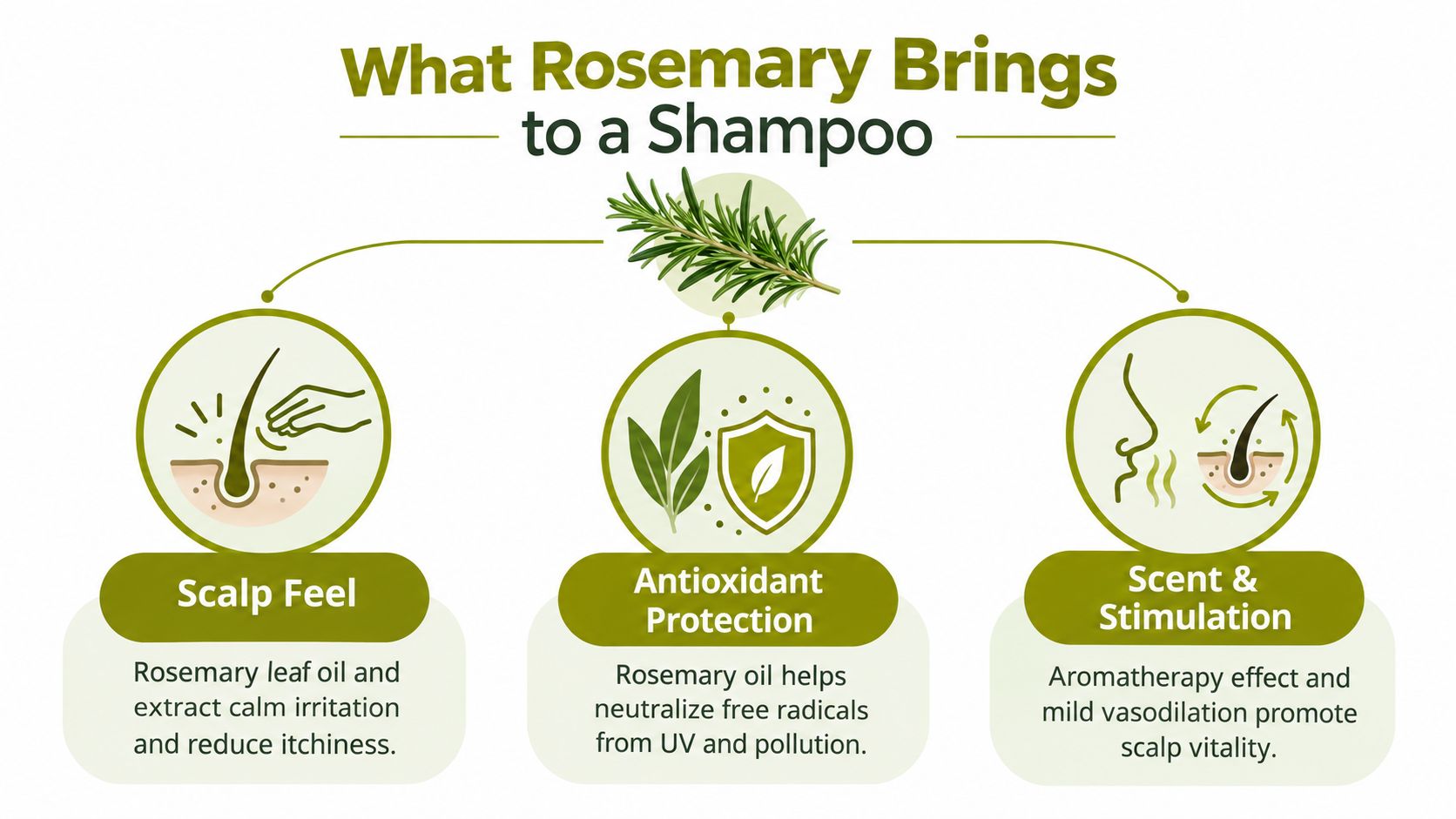
The scalp feel is often why people keep using it
A rosemary shampoo can feel brisk and fresh without leaning entirely on a sharp menthol tingle. Depending on the formula, rosemary leaf oil or rosemary leaf extract can give the wash a clean, herbaceous character that makes the scalp feel revived rather than aggressively cooled.
That distinction matters. A strong cooling sensation can feel dramatic for one wash but tiring over time. Rosemary tends to sit in a calmer lane. You still notice it, but it doesn't have to dominate the experience.
If you've been curious about the broader conversation around rosemary in haircare, ArtNaturals has a helpful read on rosemary oil for hair growth. It's useful context, but shampoo still needs to be judged as a rinse-off product first.
It can support a more resilient-feeling routine
Shampoo doesn't rebuild the hair in one step, and rosemary isn't a shortcut around dryness or breakage. What it can do, in a well-built formula, is contribute to a more supportive wash experience.
Independent formulation work on rosemary-based herbal shampoos points to a practical pattern. The most successful formulas combine rosemary with cleansing and conditioning support while keeping the product near scalp-friendly ranges for pH, stable viscosity, good foam, and measurable antimicrobial activity against dandruff-associated organisms such as Malassezia furfur, as described in a review of rosemary-based herbal shampoo formulation factors.
That sounds technical, but the takeaway is simple. Rosemary works best when the whole shampoo is well designed. A balanced cleanser, a little slip, a little comfort, and a formula that rinses clean will usually do more for the user than a front label that says rosemary in large type.
Here's a quick visual explainer before we get more label-specific:
The scent does some quiet work too
Not every benefit has to be dramatic. Rosemary has a green, slightly piney, kitchen-herb quality that often reads clean without smelling sugary or heavy. In shared bathrooms or lower-fragrance households, that can be a real advantage.
- For morning showers it often feels crisp and wakeful.
- For fragrance-sensitive homes it usually fades faster than sweeter or muskier shampoos.
- For mixed routines it layers easily with unscented conditioner, hair oil, or styling cream.
Practical rule: If you enjoy the way a shampoo smells and your scalp feels comfortable after rinsing, you're much more likely to use it consistently. Consistency usually matters more than novelty.
How Rosemary Appears on an Ingredient List
Turn the bottle around and rosemary usually stops looking romantic and starts looking specific. That's good. Ingredient lists are where a rosemary shampoo becomes easier to judge.
One important thing to know is that rosemary doesn't appear in just one form. A formula may use leaf oil, leaf extract, or both. Product ingredient lists also show rosemary alongside surfactants, humectants, and preservatives rather than as a stand-alone star. One rosemary shampoo ingredient list, for example, includes rosemary leaf extract and rosemary leaf oil with cleansing agents such as ammonium lauryl sulfate and cocamidopropyl betaine, as shown in this rosemary shampoo ingredient example.
Leaf oil and leaf extract aren't the same thing
Rosemary leaf oil is the more concentrated aromatic form. It's usually added in smaller amounts and contributes more strongly to scent and scalp feel.
Rosemary leaf extract is often gentler in character and may be carried in water or glycerin. It still supports the botanical profile of the formula, but it won't behave exactly like the oil.
Some labels may use the updated botanical naming style, such as Salvia Rosmarinus, while others still use Rosmarinus Officinalis. Both point you toward rosemary.
Use the ingredient list like a map
Start with the cleanser base, then locate the rosemary, then check its company.
| INCI Name | What It Is | Typical Position in Formula |
|---|---|---|
| Rosmarinus Officinalis (Salvia Rosmarinus) Leaf Oil | Concentrated aromatic oil from rosemary leaves | Usually middle to lower portion |
| Rosmarinus Officinalis (Salvia Rosmarinus) Leaf Extract | Botanical extract, often milder than the oil | Middle to lower portion |
| Rosemary Leaf Water | Water-based rosemary ingredient | Often around the middle, depending on formula |
| Rosemary Complex | Marketing blend that may combine rosemary with other botanicals | Varies, needs closer reading |
A quick scan helps:
- Find the surfactants first so you know whether the shampoo is built to cleanse softly or more.
- Check where rosemary appears because that gives you a rough sense of emphasis, even if it doesn't tell the whole story.
- Look beside it for ingredients like aloe, panthenol, glycerin, or biotin if you want a more cushioning feel.
Ingredient lists reward patience. You don't need to decode every word. You just need to notice the pattern.
If rosemary is present but the rest of the formula looks harsh for your scalp, the front label won't rescue it. If rosemary is paired with a gentler base and supportive ingredients, it's more likely to feel good in real life.
How to Choose a Rosemary Shampoo for Your Scalp
The best rosemary shampoo for you usually has less to do with the herb itself and more to do with the cleanser system around it. If the base leaves your scalp too tight, too coated, or too greasy too quickly, rosemary won't fix that mismatch.
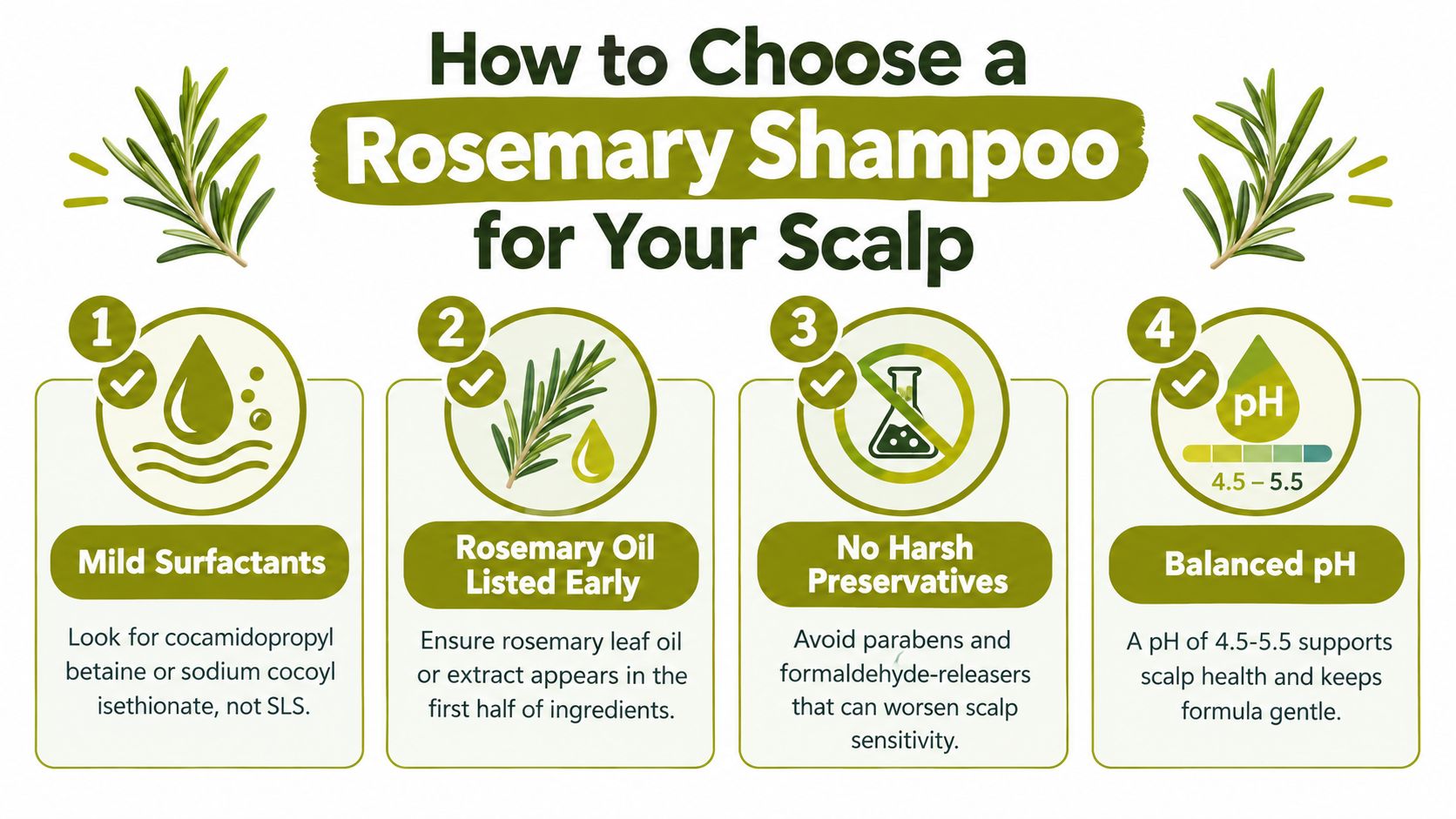
Start with the surfactants
This is the part most shoppers skip, but it tells you a lot. The cleansing agents decide whether the shampoo feels soft, squeaky, rich, or clarifying.
For many people, ingredients such as cocamidopropyl betaine, decyl glucoside, or sodium cocoyl isethionate feel more comfortable for regular washing than stronger detergents. If you want a softer everyday formula, reading up on sulfate-free shampoo benefits can help you understand why the base matters so much.
A more cleansing formula isn't always bad. It may suit someone with very oily roots, heavy styling buildup, or frequent workouts. It just shouldn't be chosen by accident.
Then look for the cushion
Once the cleanser base looks promising, scan for ingredients that help the formula feel balanced.
A few common signs of support:
- Glycerin helps draw in moisture and can reduce that dry-after-rinsing feeling.
- Panthenol often adds a smoother, more flexible feel to the hair.
- Aloe vera can make an herbal shampoo feel less sharp.
- Squalane or lightweight oils may soften the overall finish, especially for drier hair types.
Some shoppers also want extra scalp-focused ingredients. Peppermint, tea tree, or exfoliating ingredients may appeal to oil-prone or flaky scalps, but they also make the formula more active. That can be helpful for one person and too much for another.
Sensitive scalp shoppers need a stricter filter
If your scalp tends to react easily, don't stop at the word rosemary. Keep reading.
Look carefully for:
- Strong added fragrance if perfume is one of your known triggers.
- Harsher cleansers if your scalp already feels tight after washing.
- Methylisothiazolinone if you try to avoid preservatives with a reputation for irritation in sensitive users.
- Heavy root-coating ingredients if buildup tends to make your scalp feel congested.
A useful real-world option is to compare a few bottles side by side in the same category. One may feature rosemary but rely on a sharper cleanser base. Another may place rosemary inside a softer, more moisturizing system. ArtNaturals offers a Gold Argan Oil & Vitamin E hair growth shampoo that includes rosemary among its ingredients, which makes it one example of a formula where rosemary sits within a broader blend rather than carrying the whole product alone.
Packaging tells you something too
Opaque or darker bottles can make sense for formulas that include aromatic oils. They help limit light exposure and often suggest the brand thought about ingredient stability as well as shelf appearance.
The front label draws you in. The back label tells you whether the shampoo is built for your scalp.
Using Rosemary Shampoo in Your Routine
A rosemary shampoo usually works best when you treat it like a scalp-focused cleanser, not like a mask or leave-in. That sounds obvious, but people often rush this step, rinse too fast, or pile conditioner too close to the roots and then wonder why the whole routine feels muddy.
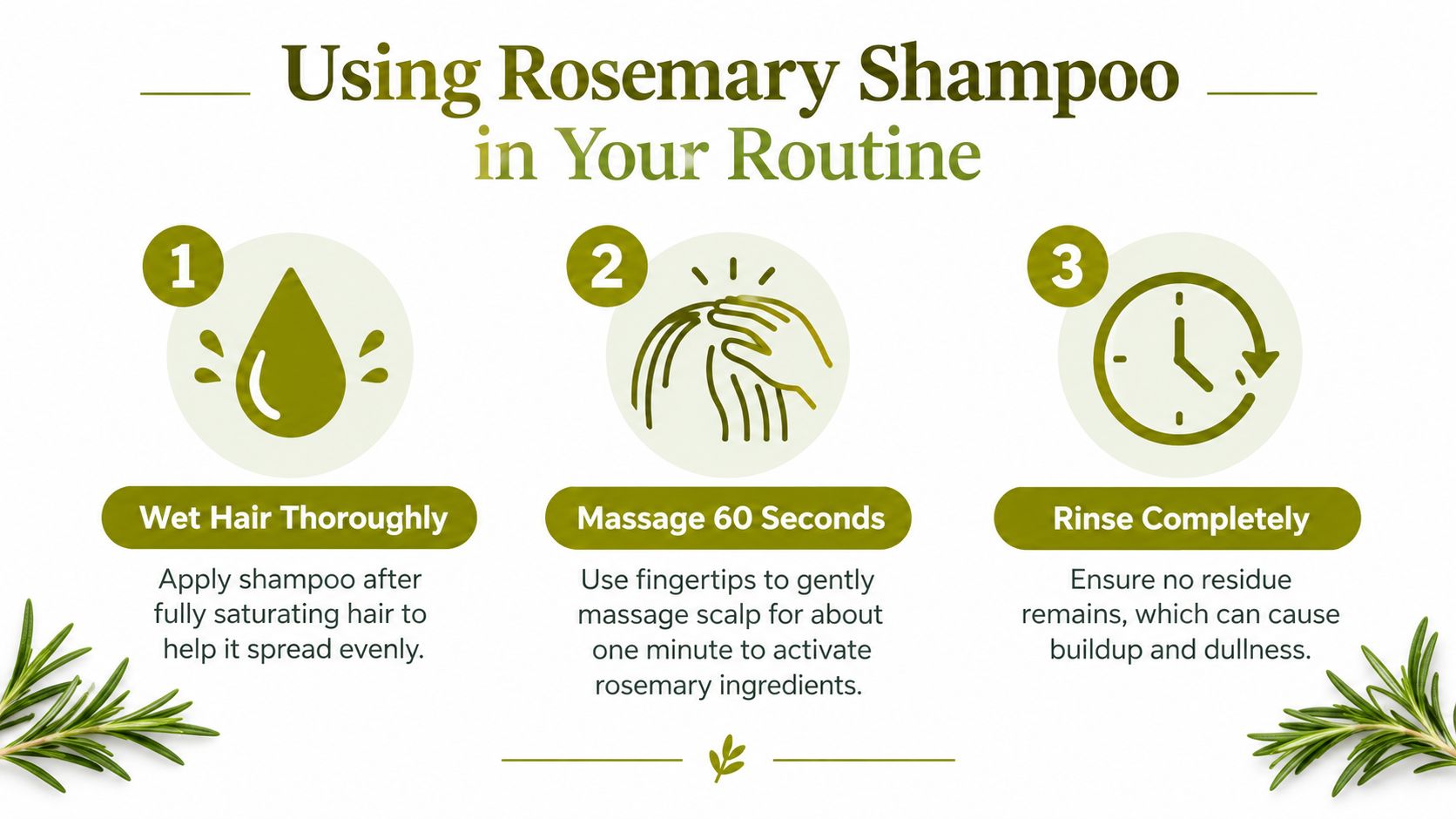
A simple wash looks like this. Wet the hair thoroughly. Apply the shampoo mainly to the scalp. Massage with the pads of your fingers for about a minute, then rinse well. Conditioner can go on the mid-lengths and ends after that.
Different hair types use it differently
A person with fine, oil-prone hair may use a mild rosemary shampoo often because they like that fresh-root feeling and don't want a heavy finish. Someone with thicker curls may use it fewer times per week and keep the rest of the routine richer and more conditioning.
That doesn't mean one approach is better. It means frequency should match texture, oil level, and styling habits.
- Fine or oily hair often likes a lighter rosemary shampoo with a clean rinse.
- Wavy or medium-density hair may do well using it as the main shampoo and pairing it with a richer conditioner.
- Curly or coily hair often benefits from focusing shampoo on the scalp while protecting the lengths with conditioner or a gentler in-between cleanser.
Small technique changes help
Water temperature matters more than people think. A lukewarm rinse is usually easier on the scalp than very hot water, especially if you already struggle with dryness or tightness after washing.
Rotating products can help too. Many people do well with one rosemary shampoo for regular use and another cleanser for occasional deeper washing or heavier buildup days.
If your scalp feels clean but not squeaky, and your roots stay comfortable as they dry, your shampoo is probably doing its job.
For people who notice flakes, tightness, or inconsistency between wash days, it can also help to keep the rest of the routine simple. A light scalp product on non-wash days, a conditioner that stays off the roots, and less aggressive scrubbing often make a bigger difference than changing shampoos every week.
Setting Realistic Expectations From a Rosemary Shampoo
A lot of disappointment starts with the wrong job description. People buy a shampoo with rosemary expecting it to transform their hair on its own, then judge it unfairly when it behaves like what it is. A rinse-off cleanser.
That format matters. Rosemary may be an appealing ingredient, but shampoo only stays on the scalp briefly. A broader review of rosemary in hair care notes an important practical gap: much of the stronger human interest around rosemary centers on oils, serums, or treatment-style formats rather than rinse-off shampoos, which leaves open questions about contact time and how much shampoo format changes effectiveness, as discussed in this review of rosemary in hair growth and rinse-off product limits.
What you can reasonably notice
Instead of waiting for one dramatic visual change, look for smaller signs that the formula suits you:
- Scalp comfort after drying
- Less tightness or heaviness between washes
- Cleaner-feeling roots without over-drying
- A routine you enjoy repeating
If you want more context around the growth question specifically, ArtNaturals also discusses it in does rosemary help your hair growth. It's useful background, but it doesn't change the basic truth that shampoo should be judged first by how well it cleanses and how your scalp responds over time.
Think in habits, not hype
Give a rosemary shampoo a fair window. Four to six weeks is usually enough to learn whether your scalp feels more settled, whether your lengths behave well after washing, and whether the scent and texture fit your real routine.
That's a more grounded benchmark than expecting a front-label herb to carry the entire result. Good hair routines are usually stacks of small choices. A comfortable cleanser, reasonable wash frequency, supportive conditioning, and patience.
A Simple Way to Start With Rosemary Shampoo
If you're rosemary-curious but don't want to overhaul your whole routine, keep the first step small. Choose a formula that matches your scalp before it matches a trend. If your roots get oily fast, lean toward a lighter, cleaner-rinsing base. If your scalp gets tight easily, look for a gentler cleanser with some cushion from ingredients like glycerin, aloe, or panthenol.
A low-pressure trial works best
Try it in place of one of your usual wash days rather than making it your entire personality by the weekend. Alternate with your familiar shampoo if your scalp needs time to adjust.
A simple checklist helps:
- Formula fit means the cleanser base matches your scalp type.
- Wash rhythm means you're using it as often as your hair needs.
- Supporting products means conditioner and styling products aren't undoing the comfort you want at the scalp.
- Patience window means you're tracking how it feels over several weeks, not after one dramatic or underwhelming wash.
You don't need a perfect bottle. You need a shampoo with rosemary that feels good to use, cleans without picking a fight with your scalp, and earns its place in the shower by being consistent.
ArtNaturals offers plant-focused haircare and wellness products that fit naturally into routines like this, including rosemary-forward options and shampoos built around botanical ingredients. If you want to explore scalp-friendly cleansers, hair oils, and everyday self-care staples in one place, visit ArtNaturals.