

A face can feel tight after cleansing, look flaky around the nose, and still develop clogged pores or blemishes by the end of the day. If you've been using stronger washes, scrubs, and drying spot treatments only to feel drier and more uncomfortable, your skin isn't failing. Your routine may be asking it to do too much.
Skincare for dry acne-prone skin works best when hydration and breakout care support each other. The aim isn't to strip away every trace of oil. It's to keep the skin comfortable enough for a simple routine you can follow consistently.
Understanding the Dry Acne Paradox
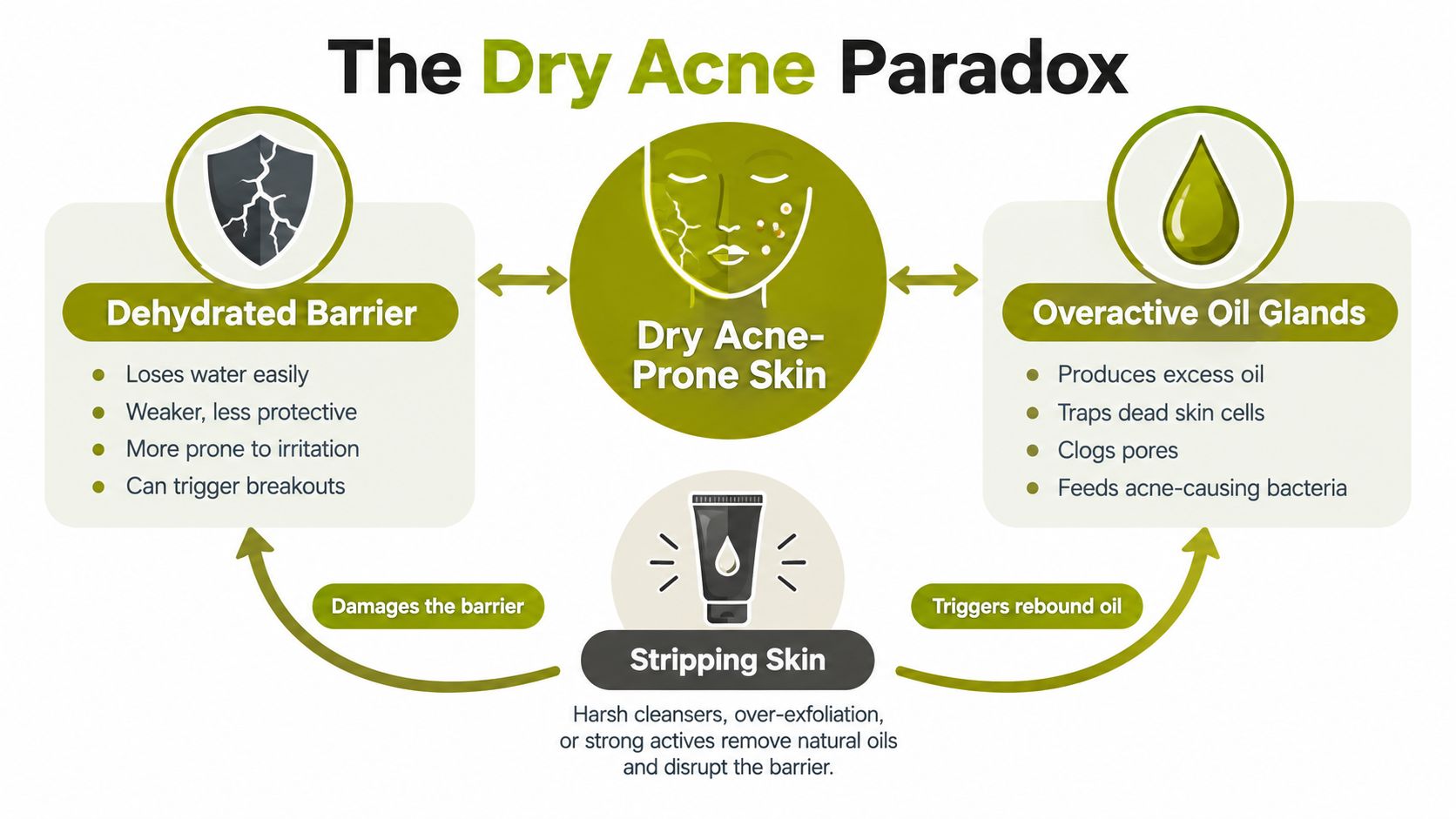
You wash your face because it feels congested. A few minutes later, your cheeks feel stretched, your chin starts to flake, and a new blemish appears near your jaw. The natural reaction is to cleanse more thoroughly or add another exfoliating product. That can create a frustrating loop: the skin feels cleaner for a moment, but increasingly fragile afterward.
Dryness and acne aren't mutually exclusive. Dry skin describes a lack of oil, while dehydrated skin describes a lack of water, and a person can experience either one alongside a tendency toward clogged pores. Acne treatments can also contribute to tightness and irritation. The American Academy of Dermatology's moisturizer guidance notes that ingredients such as benzoyl peroxide and retinoids may dry or irritate skin, while moisturizer can help skin tolerate acne care.
A global epidemiological analysis estimated that acne affected approximately 9.4% of the world's population, making it the eighth most prevalent disease worldwide, as reported in the British Journal of Dermatology analysis. More recent Global Burden of Disease 2021 data estimated 239.7 million prevalent cases of acne vulgaris globally in 2021, with 124.3 million new cases and 5.126 million disability-adjusted life years. That broad scale matters because dry, acne-prone skin isn't an unusual contradiction. It's a common skincare concern with a specific comfort problem.
Why stripping can backfire
When the surface feels dry, the body may produce more oil. The AAD explains that excess oil can clog pores and contribute to additional breakouts, which means aggressive oil removal can leave you feeling both flaky and shiny. The kinder response is to reduce unnecessary irritation, add non-comedogenic hydration, and introduce breakout-focused ingredients carefully.
For a routine that addresses comfort as well as sensitivity, the guidance in this overview of skincare for dry, sensitive skin offers useful context. Your skin doesn't need to feel squeaky to be clean, and it doesn't need to feel tight for a product to be effective.
The Role of the Moisture Barrier in Acne
The outermost layer of the skin is often described as the stratum corneum. A simple way to picture it is as a brick wall. The skin cells act like bricks, while lipids such as ceramides help form the mortar between them. A well-supported wall helps keep water in and helps reduce the way external irritants reach the deeper surface.
Over-washing, hot water, rough scrubbing, and frequent use of strong actives can disturb that arrangement. Water then escapes more easily through the surface, a process known as transepidermal water loss, and the skin may feel rough, tight, itchy, or unusually reactive. Those sensations don't necessarily mean the skin needs more exfoliation. They can mean the routine needs less friction and more support.
How barrier comfort affects consistency
A breakout product only helps your routine if you can keep using it comfortably. Persistent stinging, scaling, or burning may cause you to skip applications, layer on too many soothing products, or change your routine before you can understand what works for you. This is why barrier care isn't an afterthought. It creates the conditions for steady, measured product use.
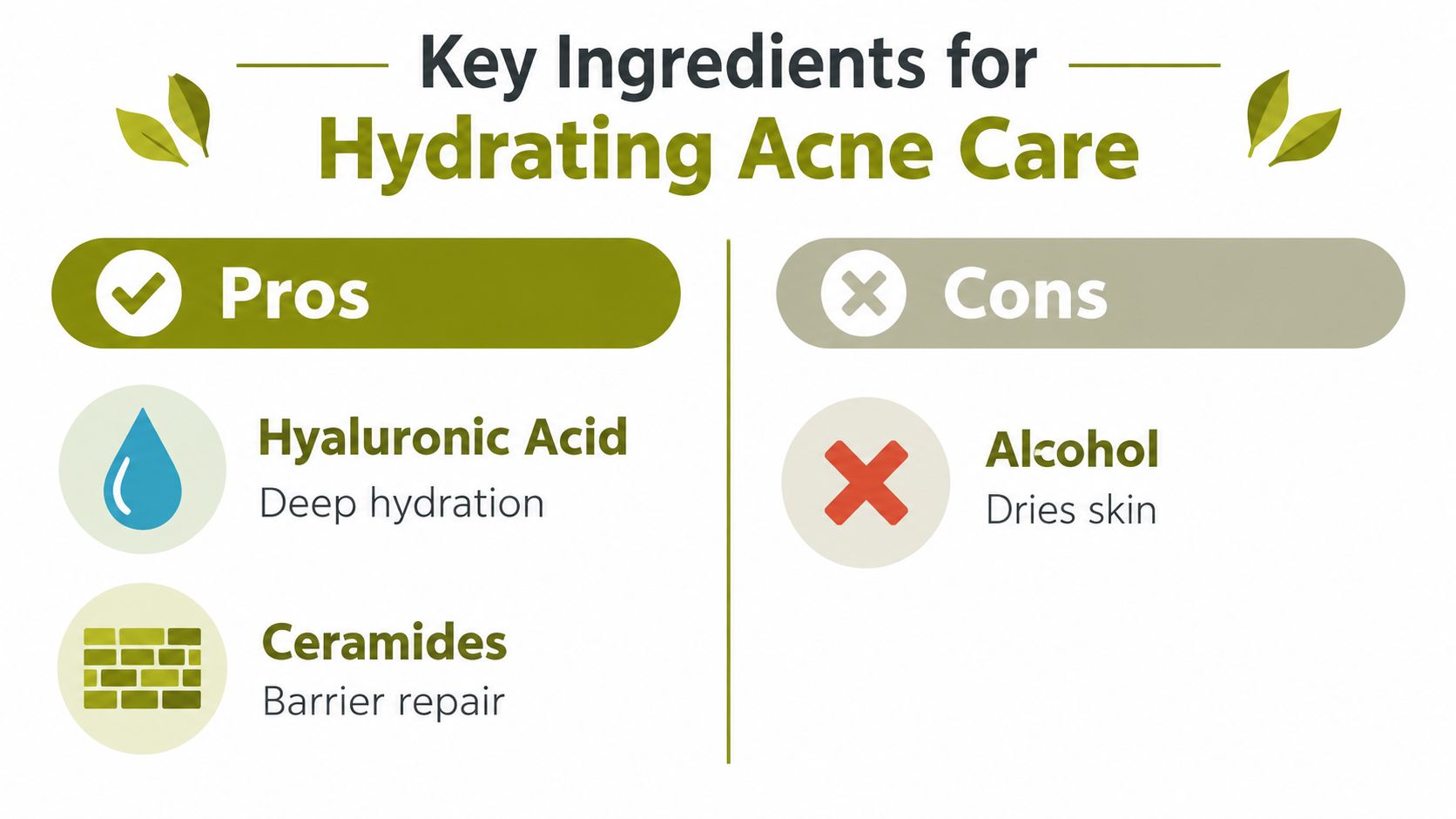
Ceramides are relevant because they're structural lipids found in the outer barrier. Moisturizers containing ceramides can help replenish part of the lipid support that dry-feeling skin lacks. Niacinamide may also be useful in some formulas, since research on ceramide and niacinamide moisturizers has assessed hydration, water loss, sebum, and surface pH, though results depend on the complete formulation.
Practical rule: If your face burns every time you apply a product, simplify first. Comfort is useful information, not a sign that you need to push harder.
A gentle cleanser, a supportive moisturizer, and one carefully chosen acne active create a more manageable foundation than several strong products used together. The skin barrier repair guide can help you understand why barrier-supportive habits matter for everyday skincare.
Key Ingredients for Hydrating Acne Care
Choosing skincare for dry, acne-prone skin can feel like solving two problems at once. A product may add water yet leave a heavy film, or target blemishes while making the surface feel tighter. The better starting point is a formula that supports the skin barrier while keeping acne treatment measured. A comfortable barrier works like a well-sealed wall: hydration stays in, and fewer irritants get through.
Ingredients that add water and comfort
Hyaluronic acid is a humectant, so it attracts and holds water at the skin's surface. It usually has a light texture and works well beneath a moisturizer. Apply the serum to slightly damp skin, then add moisturizer to help retain that hydration. This guide to using hyaluronic acid serum explains where it fits and how to apply it.
Ceramides provide lipid support for the outer barrier. They can suit skin that feels rough or tight after cleansing, particularly in a cream or lotion designed to reduce water loss. The complete formula matters more than any single ingredient, so consider the product's texture and how your skin responds.
Niacinamide can support a calmer-looking, more comfortable surface and appears in both light lotions and richer moisturizers. Since formulas differ, start with one niacinamide product instead of layering several at once. This makes it easier to tell whether the formula suits your skin.
Ingredients to approach thoughtfully
Alcohol high on an ingredient list can create a quick, refreshing feel, yet it may be uncomfortable on already dry skin. Fragrance and alpha-hydroxy acids may also worsen dryness for some people. Strong sulfates and highly foaming cleansers are not automatically unsuitable, but a tight, squeaky finish suggests that a gentler option may fit better.
“Natural” describes an origin, not a guaranteed comfort level. Essential oils, botanical extracts, and plant oils may suit one routine and irritate another. “Oil-free” also does not automatically mean non-comedogenic. Check the full formula and look for labels such as non-comedogenic, fragrance-free, and won't clog pores.
Acne actives need the same careful balance. The FDA permits benzoyl peroxide at 2.5% to 10% and salicylic acid at 0.5% to 2%. Sulfur may be used at 3% to 10%, while specified sulfur and resorcinol combinations have their own permitted ranges in the FDA OTC acne monograph. Comparing active ingredients and concentrations helps you choose one focused treatment instead of stacking several drying products.
Building a Simple Morning and Night Routine
A routine for dry acne-prone skin should feel repeatable, not like a shelf full of assignments. Keep the order simple, give each product a clear role, and change only one variable at a time.
Morning care
- Cleanse lightly. Use a gentle, low-foaming cleanser with lukewarm water. If your skin feels comfortable in the morning, rinsing with water may be enough for some people. Avoid rubbing with a towel.
- Add light hydration. Apply a hydrating toner or humectant serum to slightly damp skin. Hyaluronic acid fits well here, especially when followed by moisturizer.
- Moisturize. Choose a fragrance-free, non-comedogenic lotion or cream. Use a thinner layer on areas that feel comfortable and a little more on flaky zones if the formula suits your skin.
- Protect during the day. Finish with a facial sunscreen that feels comfortable enough to wear consistently. If a sunscreen stings or leaves you unusually dry, look for another texture rather than abandoning daytime protection.
If you're comparing textures and cleanser formats, this resource can help you compare hydrating face washes online while paying attention to fragrance, surfactants, and the finish left behind.
Evening care
At night, remove makeup and sunscreen without scrubbing. You can use a gentle first cleanse if you need it, followed by a mild water-based cleanser. A two-step cleanse isn't mandatory for everyone, and repeating a drying cleanse can create more discomfort than benefit.
Apply your treatment after cleansing according to the product directions. If you're introducing a retinoid, benzoyl peroxide, salicylic acid, or another active, start with one active and use it less often than your enthusiasm suggests. Follow with moisturizer, or apply moisturizer before the active if that helps your skin feel more comfortable and the product directions allow it.
Keep the routine readable
A simple order makes it easier to notice what your skin likes:
- Cleanse: Remove surface buildup without a tight finish.
- Hydrate: Add water with a toner or humectant.
- Treat: Use one targeted active as directed.
- Moisturize: Support the surface and reduce uncomfortable dryness.
- Protect: Use daytime sunscreen when you're leaving home.
A 2025 evaluation of a ceramide-containing cream-to-foam cleanser paired with facial moisturizer supported the value of a supportive regimen alongside topical acne therapy, while earlier evidence found that twice-daily moisturizer use for 15 days improved dryness, roughness, and flaking associated with retinoid or isotretinoin use, as described in this dermatology formulation evaluation. The practical lesson is straightforward: hydration belongs inside the routine, not only after irritation appears.
Gentle Exfoliation and Spot Treatment Strategies
If your cheeks feel tight while your pores seem congested, adding more exfoliation can make the dry-acne paradox worse. A rough scrub lifts flakes through friction, but that friction may irritate the barrier and leave skin feeling briefly smooth, then more uncomfortable. Skip scrubbing brushes, gritty particles, and vigorous rubbing over blemishes or flaky areas.
Chemical exfoliants loosen buildup without the same physical friction. Lactic acid may feel more cushioning than sharper exfoliants, while salicylic acid can help clear buildup in oilier areas. Either can still irritate dry, sensitive skin. Choose one, use it sparingly, avoid cracked skin, and pause if your face stays hot, sore, or tight.
Choosing a spot approach
Keep spot treatment on the blemish, not across dry cheeks. Sulfur can suit targeted care, and some people tolerate lower-strength benzoyl peroxide when it is applied carefully. FDA permitted over-the-counter ranges include sulfur at 3% to 10% and benzoyl peroxide at 2.5% to 10%. Check the label so you can choose an appropriate strength rather than assuming more will work better. These ranges are listed in the FDA acne product information.
Apply moisturizer around the spot and avoid layering several actives over the same area. A small application followed by observation shows how your skin responds, while treating the whole face can create dryness far from the original blemish.
The right treatment is one your skin can tolerate without making nearby areas dry and uncomfortable.
When the barrier feels raw, skip both exfoliation and spot treatments. After the surface settles, reintroduce one product at a time and keep the rest of your routine plain. In dry acne-prone skin, protecting the barrier gives targeted treatments a calmer surface to work with.
Lifestyle Factors and Trigger Management
Skincare doesn't happen in isolation. Stress, disrupted sleep, friction, sweat, and daily habits can change how comfortable your skin feels, even when your products stay the same. That doesn't mean every breakout is your fault. It means small environmental adjustments can make a gentle routine easier to maintain.
Try practical changes that don't require perfection:
- Reduce friction: Use a soft pillowcase and avoid pressing phones, hands, or tight accessories against areas that break out.
- Support hydration: Drink fluids regularly and avoid treating facial tightness as a reason to cleanse more often.
- Create a calming pause: Journaling, slow breathing, or a short mindfulness practice can help you step out of the cycle of checking and picking.
- Notice patterns without blame: Keep a simple note of new products, sleep changes, stress, and cycle-related shifts if you find that useful.

Food choices can be personal, and there's no need to build a restrictive routine around fear. Focus on regular meals, nourishing variety, and habits you can sustain. For readers exploring possible hormonal patterns, the Pause Medical acne guide offers additional context, while a skincare professional can help you make sense of persistent changes.
When to See a Professional and Patch Testing
Patch testing gives a new product a smaller introduction. Apply a little to an inconspicuous area, such as along the jaw or inner arm, and observe how your skin responds before using it across your face. Add only one new product at a time, because several changes make it difficult to identify the source of a reaction.
Pause a product if you develop persistent burning, marked redness, fissures, or worsening irritation. Painful, deep, persistent, or recurring breakouts also deserve professional attention, especially when gentle care hasn't made the situation more manageable. A dermatologist can help you choose appropriate options without forcing you into an aggressive routine.
If you're considering in-person support for sensitive skin, you can explore ProMD Health DC skin treatments as one source of information. Seek timely guidance for cracked, bleeding, or severely irritated skin rather than trying to exfoliate through it.
ArtNaturals offers skincare and wellness products organized by concerns and ingredients, including hydrating formulas and options featuring ingredients such as hyaluronic acid and niacinamide. Visit ArtNaturals to explore simple self-care choices that can complement a gentle routine for dry, acne-prone skin.