

You want skin that looks fresher and more luminous, but the last “glow” serum you tried left your cheeks feeling hot, tight, or prickly. That creates an understandable hesitation around vitamin C serum for sensitive skin. You shouldn't have to choose between a brighter-looking complexion and a comfortable daily routine.
Vitamin C can be helpful, but the formula matters as much as the ingredient name. L-ascorbic acid, the most direct form, often needs a low pH to remain stable and penetrate the skin. That acidity can feel sharp on reactive skin, while a stabilized derivative may offer a gentler experience that's easier to use consistently.
Introduction to Vitamin C Serum for Sensitive Skin
Sensitive skin rarely responds well to a “stronger is always better” approach. A serum can look impressive on the label, yet still feel unpleasant when applied. The most useful question isn't, “What's the highest percentage available?” It's, “Which formula can my skin comfortably use over time?”
Research summarized in a dermatology review explains that biologically meaningful effects generally require vitamin C concentrations above 8%, while products above 20% don't appear to add more benefit and may increase irritation risk. Reputable products are commonly formulated around 10% to 20%, but that range doesn't automatically make every serum suitable for reactive skin. This review of topical vitamin C explains why strength, acidity, stability, and skin comfort need to be considered together.

Glow and comfort can coexist
Imagine adding a few drops to your morning routine, only to notice stinging around the nose and redness across the cheeks. That reaction doesn't necessarily mean vitamin C is impossible for you. It may mean the product's form, pH, strength, or supporting ingredients aren't a good match.
A high-potency L-ascorbic acid serum can cause short-term discomfort for some users. One cited clinical summary reported stinging in 55% of participants and redness in 24% during a 3-month study, while a separate patch test involving 34 women found no erythema, dryness, or edema after testing a lotion containing 20% vitamin C over 30, 24, and 48 hours. These contrasting results show that the finished formula and testing conditions matter, not just the percentage listed on the bottle. The clinical summary on vitamin C serum side effects offers useful context.
If your skin is easily flushed, dry, or uncomfortable after new products, take a slower route. You can also read a general resource on natural skincare for sensitive skin and learn more about managing sensitive skin clinically when you want broader professional guidance.
A calmer way to begin
Start by learning the label, choosing a gentler form, and testing one new product at a time. Apply it to fully dry skin, keep the rest of your routine simple, and give your skin time to show you whether the formula feels comfortable.
The goal is not an overnight transformation. Small, consistent habits, supported by hydration and daily sunscreen, are more sustainable than repeatedly switching between aggressive products. A gentle vitamin C serum should fit into your life so naturally that using it feels like care, not a challenge.
Understanding Vitamin C Forms and Why pH Matters for Comfort
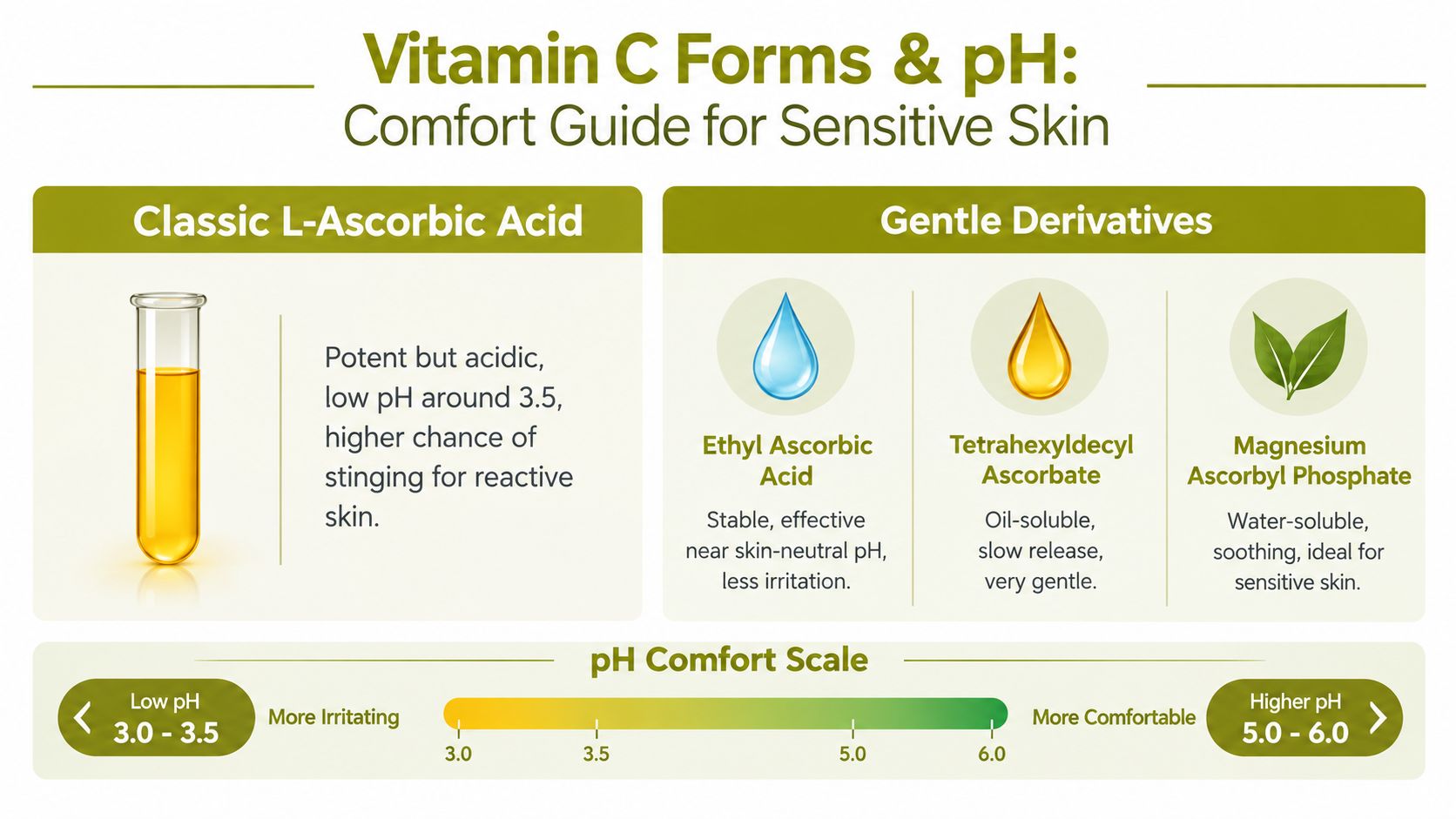
The main distinction to understand is formulation mechanics. L-ascorbic acid and vitamin C derivatives share a family resemblance, but they don't behave the same way in a serum.
L-ascorbic acid is the most bioactive form, yet it generally needs a pH below 3.5 to remain stable and penetrate meaningfully. Many references place its practical stability and penetration range around pH 2.5 to 3.5. That low-pH environment can produce a sharper sensation, especially when the skin barrier is already feeling fragile. The vitamin C pH guidance from The INKEY List explains why acidic formulas can be more challenging for sensitive routines.
How derivatives change the experience
Derivatives are modified forms designed to improve stability, formulation flexibility, or comfort. They may not provide the same immediacy of effect as pure L-ascorbic acid, but a formula that feels better is often easier to use regularly.
| Vitamin C form | What to look for | Comfort consideration |
|---|---|---|
| Ethyl ascorbic acid | A stabilized derivative | It can be formulated around pH 4 to 5.5, a range described as more suitable for sensitive skin than very acidic L-ascorbic acid formulas. |
| Tetrahexyldecyl ascorbate | An oil-soluble derivative | It can remain stable up to about pH 6.5, though its on-skin stability may depend on supporting ingredients. |
| Magnesium ascorbyl phosphate | A water-soluble derivative | It's commonly positioned as a gentler option for reactive routines. |
| Sodium ascorbyl phosphate | A near-neutral derivative | It's repeatedly described as working around pH 6 to 7, avoiding the very low-pH environment associated with more sting. |
The pH details for ethyl ascorbic acid and tetrahexyldecyl ascorbate are discussed in a clinical evaluation of topical vitamin C systems, which you can read in this formulation-focused paper. For a deeper look at L-ascorbic acid as a powder and why the form matters, explore this L-ascorbic acid skincare guide.
Why “gentle” doesn't mean automatically perfect
A derivative can be a better starting point for sensitive skin, but it still needs a well-designed finished formula. The 2026 dermatology review on vitamin C safety notes that tetrahexyldecyl ascorbate may suit sensitive skin, yet can be chemically unstable on skin unless paired with acetyl zingerone. This overview of vitamin C cream and serum considerations shows why switching to a derivative isn't the only decision. Stability, packaging, pH, and the rest of the ingredient list all matter.
How to Choose a Gentle Vitamin C Serum You Will Actually Enjoy
A serum can look mild on the front label yet feel sharp on your skin. Start with the formula's mechanics instead of its percentage alone. Identify the vitamin C form, check the disclosed strength, look for pH information, and then review the ingredients that support comfort.
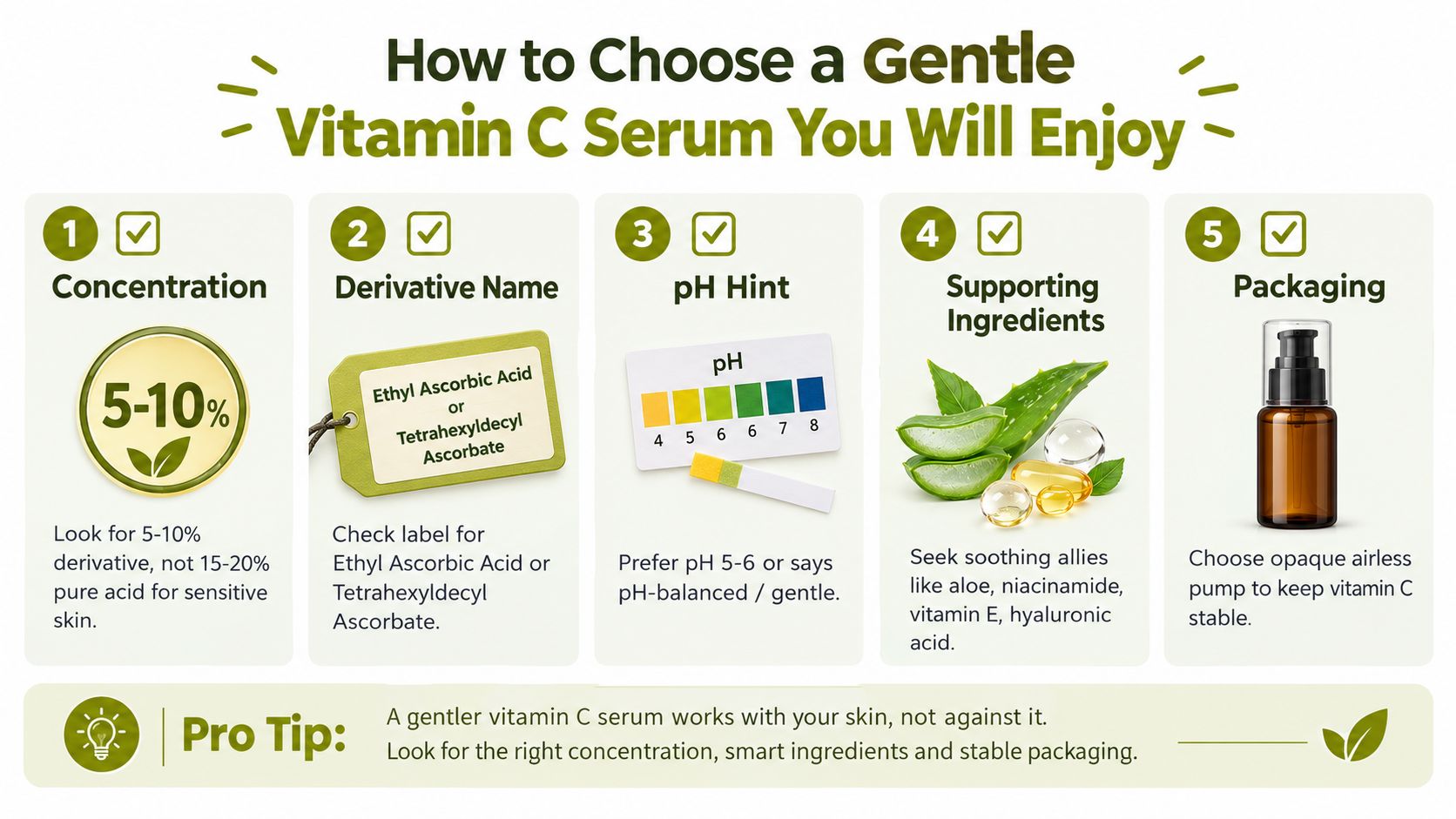
For a sensitive-skin beginner, a 5% to 10% derivative can be a more manageable starting point than 15% to 20% pure L-ascorbic acid. Low-pH L-ascorbic acid may offer a direct route to vitamin C benefits, but its acidity can make regular use harder for reactive skin. A gentle derivative at a skin-friendly pH often works better in practice because you can keep using it.
A label-reading filter
Use these checkpoints while comparing formulas:
- Start with the form: Look for ethyl ascorbic acid, tetrahexyldecyl ascorbate, magnesium ascorbyl phosphate, or sodium ascorbyl phosphate if very acidic products usually sting.
- Read concentration in context: A larger percentage does not automatically make a serum a better match. A moderate formula that feels comfortable can serve you better than a stronger product you stop using.
- Look for pH language: “pH-balanced,” “skin-friendly pH,” or a disclosed pH around 4 to 6 can offer useful clues. A derivative does not necessarily have the same acidity as L-ascorbic acid.
- Check the supporting ingredients: Aloe, niacinamide, vitamin E, hyaluronic acid, and lightweight plant oils may give the formula a more hydrating feel.
- Inspect the container: Opaque packaging and an airless pump can reduce contact with air and light, which may affect vitamin C freshness.
Match the serum to your habits
Texture affects whether a product earns a regular place in your routine. A lightweight, water-based serum may sit easily beneath moisturizer and sunscreen. An oil-soluble derivative may feel more nourishing in a dry-skin evening routine.
Clean-beauty preferences can guide the final choice, while basic formula literacy keeps the decision grounded. Look for a transparent ingredient list, clear directions, sensible packaging, and a serum that fits your budget and schedule. Words such as “maximum,” “instant,” and “ultra-strength” describe marketing, not automatically better comfort or results.
A simple visual reminder can make label shopping easier:
Patch Testing and a Slow Introduction Schedule That Respects Your Skin
A new serum can feel fine on your hand yet sting on your face. Patch testing turns that full-face gamble into a smaller trial. It cannot predict every reaction, but it can show whether the formula seems unsuitable before it joins your routine.
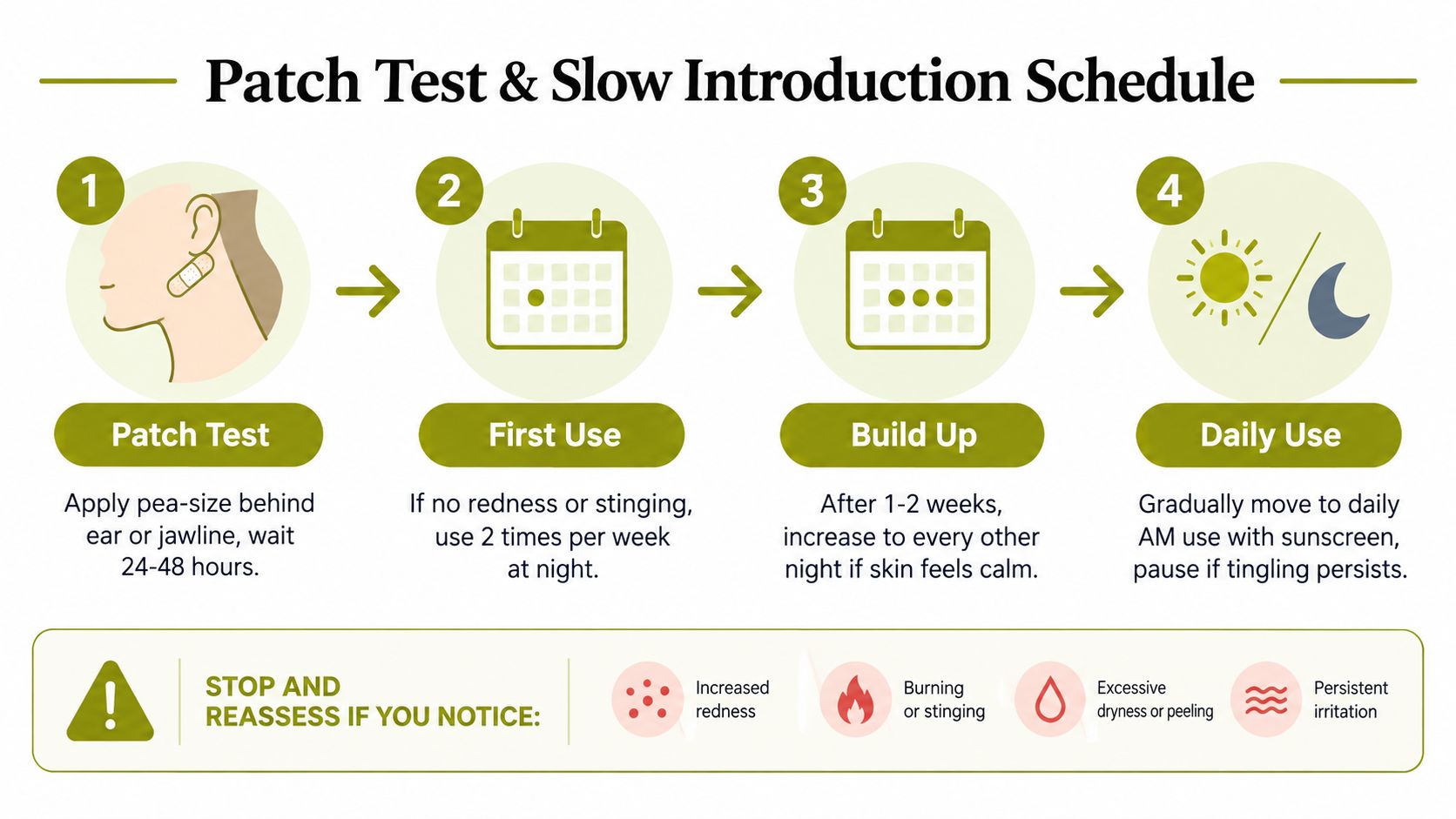
Apply a small amount behind the ear or along the jawline. Keep that patch free from other new products and watch it for 24 to 48 hours. Clear redness, ongoing stinging, swelling, or worsening dryness means you should pause rather than apply the serum across your face.
Ease in without turning skincare into homework
If the patch stays calm, use the serum at night two times per week. Apply a small amount to completely dry skin after cleansing, then use moisturizer. Dry skin can make application feel more controlled, especially with low-pH L-ascorbic acid.
A gentle derivative at a skin-friendly pH may be easier to keep using than a stronger-feeling low-pH formula. The best schedule is the one your skin can tolerate consistently.
After one to two weeks, consider every-other-night use if your skin remains comfortable. Increase frequency only when the current rhythm feels easy. Evening use may be simpler during the introduction stage, since a rushed morning can make it harder to notice how your skin is responding.
Practical rule: Brief tingling can occur with some vitamin C formulas. Persistent stinging, lasting redness, or dryness that does not settle is a reason to pause.
Let comfort set the pace
Low-pH L-ascorbic acid can be effective, but sensitive skin may experience more transient stinging or erythema with it. Clinical discussions also describe irritation as limited and temporary in some ascorbic-acid treatments, so one brief sensation does not automatically mean the product is harmful. The systematic review and clinical discussion supports observing the pattern rather than judging the formula from a single moment.
If discomfort continues, return to a basic cleanser and moisturizer routine. Once your skin feels settled, try the product less often, or choose a stabilized derivative with a more skin-friendly pH. A comfortable formula you can use steadily often serves reactive skin better than an intense one that gets abandoned.
Building a Soothing Routine Around Your Vitamin C Serum
A comfortable vitamin C routine is built around the serum, not forced around it. In the morning, cleanse gently, apply vitamin C to dry skin, add a hydrating serum if you use one, moisturize, and finish with sunscreen. This order keeps the routine simple and gives your skin a layer of hydration before the day begins.
At night, you can skip vitamin C if your skin feels tired or reactive. Cleanse, moisturize, and let the barrier-supporting basics do the work. You don't need every active in every routine, and combining several potent products can make it harder to identify what caused discomfort.
Keep the surrounding steps quiet
Avoid introducing a strong exfoliant, a retinoid, or another highly active product at the same time as your vitamin C serum. If you already use one of these ingredients, consider placing it on a different evening until you know how your skin responds.
Application technique matters too. Use a light layer rather than rubbing repeatedly, and be especially cautious with damp-skin application when using a low-pH formula, since the product can feel more intense. A gentle derivative at a more comfortable pH may offer more flexibility, but it still deserves the same thoughtful introduction.
Glow works best with support. Pair brightening steps with hydration, moisturizer, and daily sunscreen so your routine remains comfortable enough to maintain.
Protect the formula between uses
Store vitamin C away from direct sunlight and heat. Follow the product's storage instructions, close the container promptly, and pay attention to changes in color, smell, or texture. These details don't replace a stable formula, but careful storage helps you avoid unnecessary exposure.
For more guidance on application order, read this vitamin C serum layering guide. If you're exploring broader skincare categories and want to browse our skin care options, use your sensitivity level and current routine as filters rather than choosing by trend alone.
Keeping Your Glow Going With Gentle Habits and Knowing When to Pause
The most sustainable vitamin C routine is usually the one that stays pleasantly uneventful. Keep your application schedule steady, moisturize when skin feels dry, and use sunscreen each morning. Don't increase strength or frequency just because your skin handled one application well.
Daily sunscreen is especially important in a routine focused on maintaining a more even-looking, luminous complexion. Hydration also helps the skin feel more comfortable, whether that comes from a simple moisturizer, a hydrating serum, or fewer active products overall.
Recognize the signs to step back
Pause vitamin C if you notice persistent stinging, redness that lasts, or dryness that doesn't settle after returning to your basic routine. These signs don't tell you exactly what's happening, but they do give you a clear practical signal to stop pushing.
Use a simple reset:
- Pause the serum and keep cleansing gentle.
- Return to moisturizer and other familiar basics.
- Wait until comfort returns before trying again.
- Reintroduce more slowly, or select a different derivative and pH profile.
Sensitive skin isn't one single experience. Barrier-impaired, redness-prone, and eczema-leaning skin may each respond differently, so “gentle” should be treated as a starting point, not a guarantee. If your skin repeatedly reacts to new products, consider speaking with a qualified professional for personalized advice.
Vitamin C can be one supportive step in a balanced self-care routine, not a quick fix that needs to carry the entire glow goal. Choose a formula that fits your comfort level, protect your skin from the sun, and let small improvements build at a pace you can enjoy.
ArtNaturals offers skincare options that include vitamin C formulas with ingredients such as hyaluronic acid, aloe, jojoba oil, and vitamin E, depending on the product. Visit ArtNaturals to explore ingredient-focused choices, then patch test any new serum and add it slowly to your sensitive-skin routine.